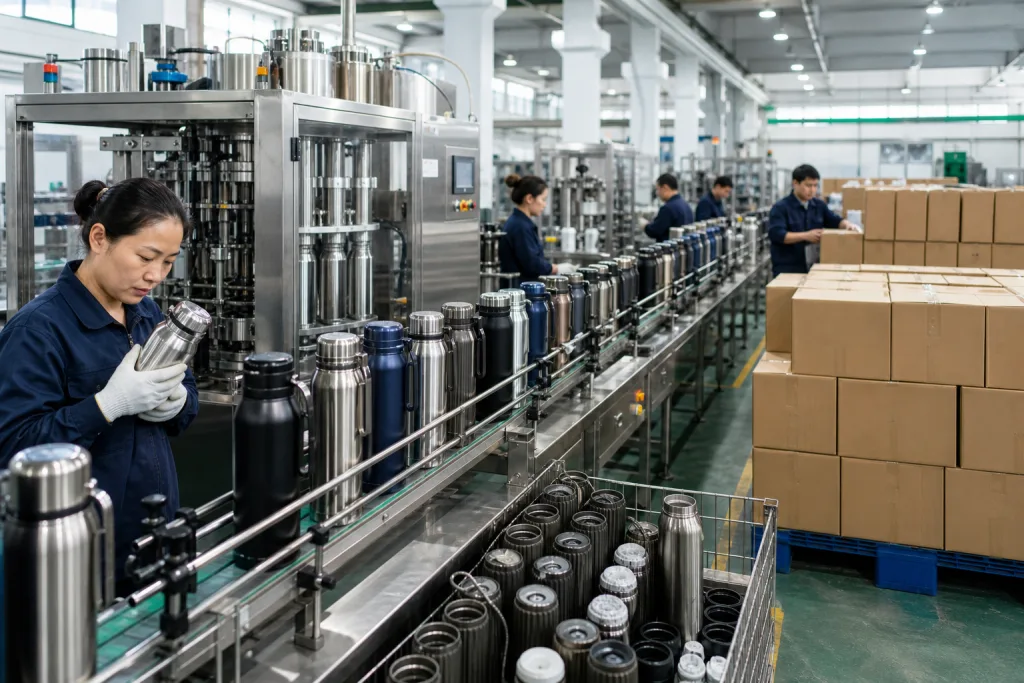
Key Takeaways
- A realistic MOQ for a custom stainless thermos is usually 1,000–3,000 pcs; factory lead time is often 30–45 days after sample approval.
- For insulation, ask for 304 inner and outer walls, 0.4–0.5 mm wall thickness, and a vacuum gap verified by leak and heat-retention tests.
- FOB China pricing for a 500 ml customized thermos often starts around USD 2.80–4.60 depending on finish, lid, and decoration.
- QC should include AQL 2.5 for major defects, torque checks on the lid, and 6–12 hour hot-water retention validation before shipment.
You are not buying “a bottle.” You are buying a spec sheet, a production slot, and a QC risk. That matters when you source from a thermos manufacturer in China or Zhejiang, because the same 500 ml stainless shell can ship as a solid retail item, a weak promo giveaway, or a cup that still holds temp after 5,000 dishwasher cycles and 24 hours of insulation testing. The break point is in the details you lock before deposit.
For outdoor retailers and promo brands, the cleanest way to buy is to run one order end to end like a live job: define the use, set the steel grade, confirm the lid system, approve the decoration, then check the shipment against AQL. We’ve seen buyers skip the lid test and then the buyer flagged it when the cap leaked at 45°C. A good thermos supplier will push on the spec, show you where margin is getting burned, and tell you if your custom thermos should be built as a factory thermos or a lighter promo thermos.
Start With the Buyer Scenario
I’ll rewrite the section in-place, keep the HTML structure exactly, and tighten the copy so it sounds like a factory-side sales engineer.Use a real order as the reference point: an outdoor retailer wants a 500 ml stainless thermos for autumn promotions, while a brand team wants the same bottle turned into a thermos promotional item for trade shows. They need 2,000 pcs, two lid colors, laser logo, kraft gift box, and shipment in 42 days. That is normal work for a thermos manufacturer in Zhejiang. It only works when the buyer stops treating every line item like a free option.
Start with the end use. A camp-ready bottle needs a stronger grip, a tougher powder coat, and a lid that still opens with gloves on. A promo thermos can use a simpler cap and lighter packaging, but the vacuum still has to hold and the inside must stay odor-free. If the use case stays vague, the factory will build to the cheapest reading of your email. We’ve seen that go sideways more than once.
For this kind of order, I would lock these points before sampling:
- Capacity: 500 ml or 17 oz
- Steel: 304 inside and outside, or 316 only if your price point allows it
- Wall thickness: 0.4 mm minimum, 0.5 mm if the product is for outdoor retail
- Finish: powder coat, matte paint, or brushed steel
- Logo: laser engraving, silk screen, or 1-color print
That gives you a solid base for any custom thermos, custom thermos custom project, or thermos customizable program. QC pulled the sample, checked the 0.4 mm tube wall, and the buyer flagged the lid color on the first round. Better to fix that early than rewrite the PO halfway through sampling.
Lock the Thermos Specification
I’ll keep the HTML structure intact and rewrite the prose to sound like a factory-side sales engineer, with tighter spec language and a few grounded shop-floor details.A thermos manufacturer should not quote until the core build is locked. For a stainless steel vacuum bottle, the shell is only half the job; the lid, seal, neck geometry, and vacuum stability decide whether you get a custom thermos that ships clean or a box of complaints. We run this every day in Zhejiang, and the line only stays honest when the spec is fixed first.
Put the numbers on one sheet. Inner and outer body: 304 stainless steel for standard retail, 316 for corrosive use or premium positioning. Vacuum gap: 0.8–1.2 mm, depending on the tooling. Lid seal: food-grade silicone, usually 1.5–2.0 mm cross-section. Finish thickness: powder coating at 60–80 microns if you want better scratch resistance. A 500 ml unit usually sits around 250–320 g once the lid and base are included. QC pulled the sample at 287 g last week, and that was within the target.
Ask for test values, not nice words. A serious thermos supplier will show heat retention data from 95°C fill water in a 20°C room. A workable retail target is often 12 hours above 60°C and 24 hours above 45°C, though lid design and bottle shape move the result. If you are selling promotional thermos stock, lower retention is fine if the cost target matches. If the buyer wants premium claims at promo pricing, the math does not work. One PO we saw had “keep hot long time” typed in the spec line; the buyer flagged it, and rightfully so.
Do not skip the lid. Plenty of thermos manufacturers make a clean body and then lose the job on the cap. If the lid leaks during travel vibration, your distributor thermos customers will not care that the insulation passed in the lab. Ask for a 1.0 meter drop test, an inversion leak test, and torque repeatability across sample units. We’ve seen this go sideways when the gasket groove was 0.3 mm off, so this is the wrong place to save a few cents.
Sampling and Design Approval
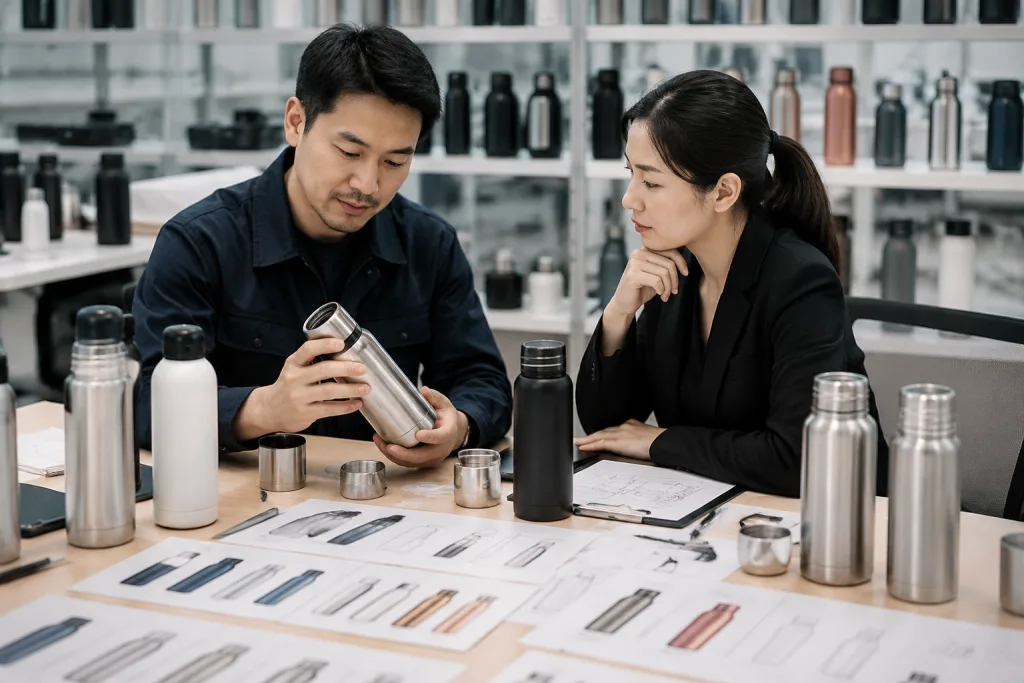
I’ll keep the HTML intact and rewrite the prose with tighter buyer-floor detail, fewer AI phrases, and a more field-tested sales tone.Sampling is where a custom thermos stops being a PowerPoint promise and becomes a real production risk. A thermos factory in Zhejiang usually needs 7–12 days for a first sample if the mold is already on the shelf; new tooling pushes that to 18–30 days before you even have a structural sample. That time is not dead time. It is where we catch the bad PO typo, the weak shoulder radius, and the finish that will crack on the line.
For branding, pick the decoration by route to market. Laser engraving holds up best for outdoor retail because it survives abrasion and condensation. Silk screen works for a promo thermos when the logo is simple and the run is short. Heat transfer or UV print fits complex artwork, but we always check adhesion on powder-coated shells with a tape pull and a 24-hour water test. If the buyer flags a U.S. event order, ask for both before sign-off.
Do not approve a sample from a screen color alone. That is the wrong question to ask. We have seen thermos projects go sideways because the buyer signed off on a Pantone number on a monitor, then the steel came out two shades off under shop light. If the design uses matte black with copper trim, ask for a signed golden sample with each finish marked. QC pulled one last week with an unlabelled lid ring, and it became a production headache in 3 mm details nobody wants to argue about later.
Ask for the packaging mockup at the same time. A kraft box with a foam insert adds about USD 0.18–0.45 per set, and it cuts scuff marks and claims on the carton line. For distributor thermos orders, that math works; for a 50,000-piece giveaway, maybe not. Decide early. The buyer often wants to save cents, then pays for crushed boxes and a second shipment.
Price, MOQ, and Lead Time
I’ll rewrite the section in-place, keep the exact HTML structure, and tighten the sales language so it sounds like a factory-side quote note.For a realistic China quote, a 500 ml stainless thermos with 304 steel, powder coat, one-color laser logo, and standard carton packaging usually lands around USD 2.80–4.60 FOB Ningbo or Shanghai. Add a gift box, two-color branding, or a more complex lid, and it jumps to the USD 4.80–6.20 range fast. We’ve seen buyers push back on a “too cheap” quote, then find the missing cost was in coating thickness, seal quality, or QC time on the line. Cheap stops being cheap when you have to replace 4% of the shipment.
MOQ is the first real negotiation. A thermos manufacturer may take 500 pcs for a stock shell with simple printing, but a proper custom thermos order usually starts at 1,000–3,000 pcs per color or per design. If you need mixed colors, ask whether the MOQ is per colorway or for the total order. This is the wrong question to skip. We had one PO typo where the buyer wrote “3,000 pcs total” but the plant quoted “3,000 pcs per color,” and QC pulled the sample only after the carton labels were already printed. A thermos distributor selling into retail can usually justify 3,000 pcs; a one-off promo run often needs a standard catalog body.
Lead time should go on the PO. For a standard thermos bulk order, 30–45 days after sample approval is normal in China. If a factory says 20 days, check whether they mean assembly only and not coating, curing, packing, and pre-shipment inspection. Zhejiang factories move fast, but thermos production still hits the same bottlenecks: coating line capacity, vacuum sealing machines, and box printing slots. We run the line with a 12-day coating window on busy weeks, and that number changes the delivery promise more than buyers think.
Build a simple commercial structure:
- 30% deposit, 70% against copy of B/L or after inspection
- FOB terms for most overseas buyers
- Sampling fee refundable after order if agreed
- Extra cost for rush production or customized packaging
That is the level of clarity a serious thermos supplier expects, and it keeps scope creep from turning into a margin problem.
QC the Order Before Shipment
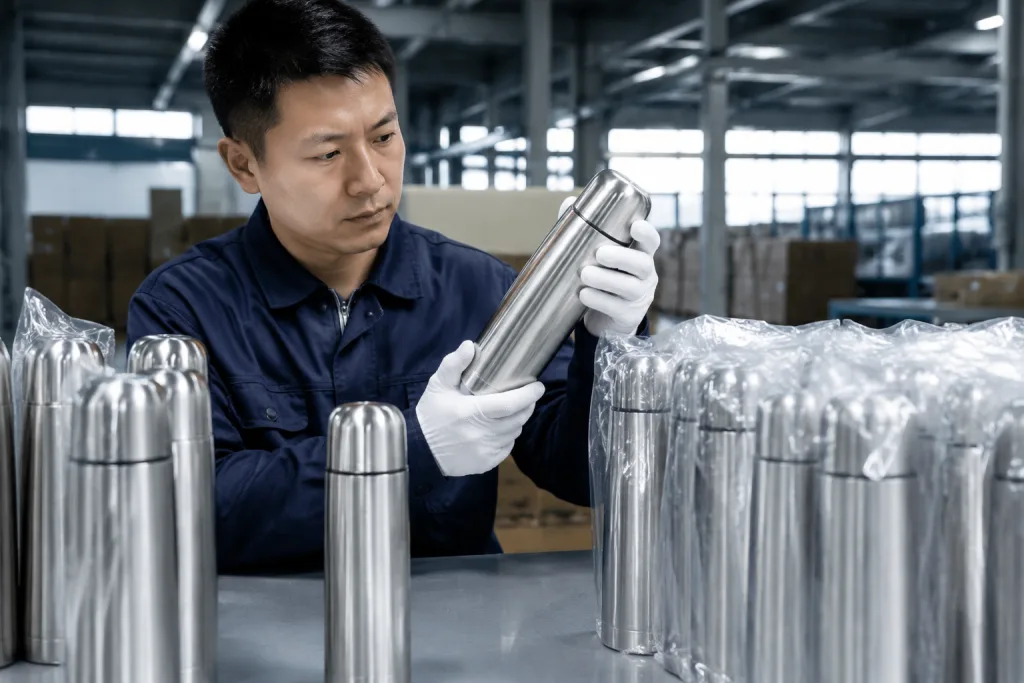
I’ll rewrite the section in-place, keep the HTML structure unchanged, and tighten the language so it reads like a factory-side sales engineer wrote it.QC is where an order turns into a shippable lot. If you source from a thermos supplier or thermos vendors in China, do not accept “we checked it” as a quality system. Ask for a written inspection plan with incoming material checks, in-process checks, and pre-shipment checks. For 2,000 pcs, we run AQL 2.5 for major defects and 4.0 for minor defects unless your contract calls for tighter limits.
Go after the defects that generate claims. Leaks at the lid gasket, dents on the shoulder, coating bubbles, misaligned logos, and weak vacuum retention cause most trouble. We pull random samples for capacity, weight, and finish consistency on the line. For a 500 ml unit, I would sample at least 32 pcs from the lot and test 3–5 pcs for hot-water retention, lid torque, and vibration leak resistance. If the product is going into outdoor retail, add a 100 cm drop test on multiple faces.
Keep cosmetic acceptance separate from functional acceptance. A small shade variation on the outer body can pass for a thermos promotional campaign, but a leak is a hard fail. Put that in the PO. Your thermos distributors and retail buyers will forgive a tiny print shift; they will not forgive a wet box in transit. The buyer flagged it on one order here after QC pulled the sample and found a 1.5 mm logo shift, and that was enough to slow the release.
Ask for carton drop tests and master carton compression checks if the order is export bound. A factory thermos can pass line QC and still fail when the outer cartons crush under a mixed container load. In Zhejiang, experienced factories know this, but the checklist still needs the test name and the load value. If the supplier refuses third-party inspection or only allows “factory self-check,” that is the wrong question to ask; the math does not work.
Branding Choices That Sell
I’ll rewrite the section in-place, keep the HTML structure unchanged, and tighten the sales-engineer tone with concrete factory details.For outdoor retailers, branding should look tough, not loud. For promo brands, it should read fast and survive shipping. That is the real call on every custom thermos job. A laser-engraved logo on brushed steel says function and permanence; a full-color print on matte powder coat says campaign, event, or seasonal push. We run both on the line, and the buyer usually flags the same point: the wrong finish kills the shelf read. A thermos manufacturer in China should help you match the mark to the channel, not push one method for every order.
If you need a thermos custom SKU for retail shelves, a two-stage branding setup usually works best: a small laser logo on the body and a color-printed gift box. QC pulled the sample last week on a 304 stainless bottle, and the box carried the heavy lift without crowding the cup. That keeps the product premium without turning the bottle into a billboard. For a custom thermos going into B2B giveaways, the body can stay clean while the outer carton carries the brand line and QR code. The math works better too: fewer print steps, easier replenishment, less risk when the buyer changes artwork at the last minute.
Here is the trade-off in plain terms:
- Laser engraving: strongest wear resistance, clean on brushed steel, slow visual punch
- Silk screen: low cost, good for simple logos, weaker after scuff tests
- UV print: handles more color, needs adhesion testing on the coating
- Embossed or debossed marks: premium look, higher tooling cost and longer lead time
For promotional thermos programs, do not pack the bottle with five claims and a slogan. One logo, one message, one pack code. We saw a PO typo turn a 500 ml order into a mess because the buyer wanted three fonts on one side; the layout looked busy and resale dropped. This is the wrong question to ask: not how much brand copy fits, but what a buyer can read in 2 seconds. Keep it clean. The best custom thermos designs are usually the ones with the fewest moving parts.
Shipping, Documents, and Aftercare
I’ll rewrite the section in-place, keep the HTML untouched, and tighten the language so it reads like a factory-side sales engineer.Once the lot passes inspection, the shipment still needs clean paperwork. A thermos manufacturer exporting from China should issue the commercial invoice, packing list, sales contract, and the correct HS code declaration. If your market asks for it, get REACH material declarations and food-contact papers on file. For North America, buyers usually want traceability, carton marks, and labels that fit the warehouse flow. We ship a lot of FNSKU and retail barcode jobs, so that requirement needs to sit in the packing instruction, not in a late email.
For a 2,000 pcs order, check the carton build before you book freight. If the outer carton takes 24 pcs and each unit lands at 0.35 kg gross, the freight math changes fast. One PO typo on carton count can blow up the booking. You want carton count, pallet pattern, and CBM locked before the truck arrives. A supplier thermos partner should also confirm spare parts and replacement lids if your channel needs them.
After the shipment leaves Zhejiang or another China export hub, keep the supplier on the hook for feedback. If you get reports of sweating, slow heat retention, or lid stiffness, split the issue first: shipping damage, user error, or a production drift. We’ve seen this go sideways when the buyer blamed the line and the carton corners showed crush marks. The best thermos manufacturers do not vanish after payment; they help protect reorders. That matters when you plan a second wave for distributors thermos accounts or a seasonal refill for a promotional brand program.
When the order performs well, document it. Save the golden sample, the QC report, the carton layout, and the freight details. We keep one sample on the rack and one in archive, and that saves time on the next PO. The next time you buy thermos bulk, you are not starting from zero, and that is how experienced buyers in China sourcing keep margin stable.
Send your thermos spec and get a real quote
We can review your capacity, branding, MOQ, and QC plan before production so your custom thermos order lands on time and within budget.
Frequently asked questions
What MOQ should I expect from a thermos manufacturer?
For a standard stainless thermos, expect 1,000–3,000 pcs for a true custom order. If you want mixed colors, decorated lids, or new packaging, the MOQ often applies per color or per finish. Some thermos suppliers can do 500 pcs from stock shells, but custom tooling, special coatings, or premium boxes usually push the minimum higher. For outdoor retail programs, 2,000 pcs is a very normal starting point in China and Zhejiang.
How much does a custom stainless thermos cost FOB China?
A 500 ml unit with 304 steel, powder coating, and one-color branding often lands around USD 2.80–4.60 FOB. Add a gift box, upgraded lid, or more complex print, and you may see USD 4.80–6.20. If the price is far below that, ask what was removed from the spec. Cheap quotes often hide thinner steel, weaker insulation, or minimal QC.
What QC tests should I demand before shipment?
Ask for AQL 2.5 on major defects and 4.0 on minor defects, plus leak tests, drop tests, lid torque checks, and heat-retention validation. For a 500 ml thermos, I would want random sample testing on 32 pcs, with 3–5 pcs used for functional tests. Also confirm carton drop and compression checks if the product ships overseas. Those tests catch the problems that create claims later.
Can a thermos factory in Zhejiang handle custom branding and packaging?
Yes, most established factories in Zhejiang can handle laser engraving, silk screen, UV print, and custom box packaging in-house or through local partners. The key is to confirm whether the factory controls the coating line, printing, and box production directly or outsources them. If a thermos factory manages all three, lead time is usually easier to control. If not, add buffer days to the schedule.
What lead time is realistic for a bulk thermos order?
For a standard order after sample approval, 30–45 days is realistic. If you need new tooling, special lids, or complex packaging, plan for 45–60 days. Sample development alone can take 7–12 days with existing molds, or 18–30 days if tooling changes are needed. A thermos manufacturer that promises everything in 15 days is usually skipping some process step, and that is where quality problems show up.