Key Takeaways
- Most thermos customized orders start at 1,000 units, with lead times of 25-35 days after sample approval.
- 304 stainless steel inner walls at 0.4-0.5 mm and 0.35-0.45 mm outer shells are common for a practical custom thermos.
- FOB Zhejiang pricing for a basic promotional thermos usually starts around USD 2.10-4.80 per unit, depending on capacity and finish.
- Use AQL 2.5/4.0 inspection, REACH-compliant inks, and carton drop testing before you release payment.
If you are sourcing thermos customized for an outdoor retail line or a promotion, the trap is simple: every supplier says yes, then the sample, MOQ, and print wear tell a different story. A stainless thermos looks plain until you check steel grade, vacuum hold, lid seal, carton drop test, and whether the logo still looks clean after 3,000 dishwasher runs or falls apart after 30. We have seen buyers lose two weeks on that mismatch.
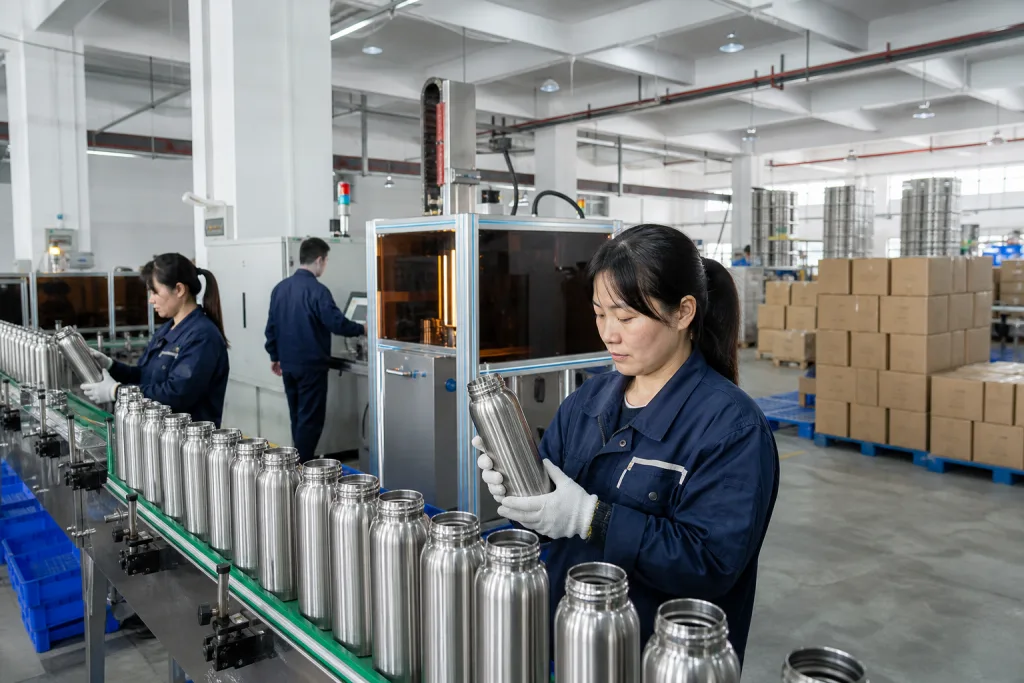
We build and export thermos products from Zhejiang, China, and the pattern is the same on our line. A serious buyer wants a custom thermos that hits the target price, leaves on schedule, and survives retail use, not just a desk sample. This guide covers the first checklist we use with procurement teams: what to spec, what to reject, and what to lock down before you approve a bulk thermos order.
What buyers ask first
I’ll keep the HTML structure exactly as-is and rewrite only the prose to sound like a factory-side sales engineer, with concrete specs and fewer AI-ish phrases.Q: What is the first thing to confirm on a thermos customized order? Start with the use case, not the print file. A retail bottle for hiking, commuting, or gift channel sales needs different build choices from a promo piece that only needs to pass one season. On the line, we treat a 500 ml retail thermos and a 500 ml giveaway bottle as two separate SKUs. The buyer often asks for “the same bottle, just cheaper.” That math does not work.
For most projects, we start with 304 stainless steel inside, 201 or 304 outside based on target cost, double-wall vacuum construction, and a screw or push lid with a silicone ring. QC pulled the sample and checked the lid torque before we talk logo placement. Ask for a real temperature curve, not a showroom claim. A proper manufacturer thermos quote should show 6-hour and 12-hour retention at one fixed ambient temperature, usually 20-25°C. If the supplier cannot name the test condition, the number is not worth much.
Checklist:
- Capacity: 350 ml, 500 ml, 750 ml, or 1,000 ml
- Inner wall: 304 stainless, 0.4-0.5 mm
- Outer wall: 201 or 304 stainless, 0.35-0.45 mm
- Seal: food-grade silicone, odor-free
- Packaging: individual box, master carton, or mailer for e-commerce
Spec the stainless thermos correctly
I’ll rewrite this section in place, keeping the HTML exactly as-is and tightening the sales-engineer tone. Next I’m swapping out the generic phrasing for sharper factory-floor detail and cleaner buyer language.Q: Which specs actually affect performance? Steel grade matters. So do the small things buyers skip on the first round. For a customized thermos, the vacuum gap, neck finish, lid threading, and coating thickness decide whether the bottle feels solid in hand or comes back with complaints. A powder-coated body usually runs at 60-80 microns if you want decent scratch resistance. Too thin, and it scuffs fast; too thick, and it chips at the rim during drop tests.
Vacuum performance is not a guessing game. Ask the thermos factory for 100% leak testing on the line and sampled thermal retention tests with the same lid you plan to ship. At our Zhejiang plant, we run about 400,000 units a month, and the cleanest jobs are the ones where the buyer signs off the technical sheet before artwork starts. We’ve seen this go sideways when a buyer changes the lid after sample approval; the thermal numbers move, and the math does not work. A thermos manufacturer can keep the shell and switch branding fast, but a new lid tool still costs time and money.
Practical spec points:
- 304 stainless for any food-contact surface
- Vacuum leak rate below the factory's accepted threshold
- Lid torque that opens easily but seals firmly
- Finish choice: matte spray, powder coat, or polished steel
- Dishwasher claim only if the factory can test it
Do not buy on wall thickness alone. We’ve seen a 0.5 mm shell pass sample and still fail in the field because the lid seal was weak.
Decoration that survives handling
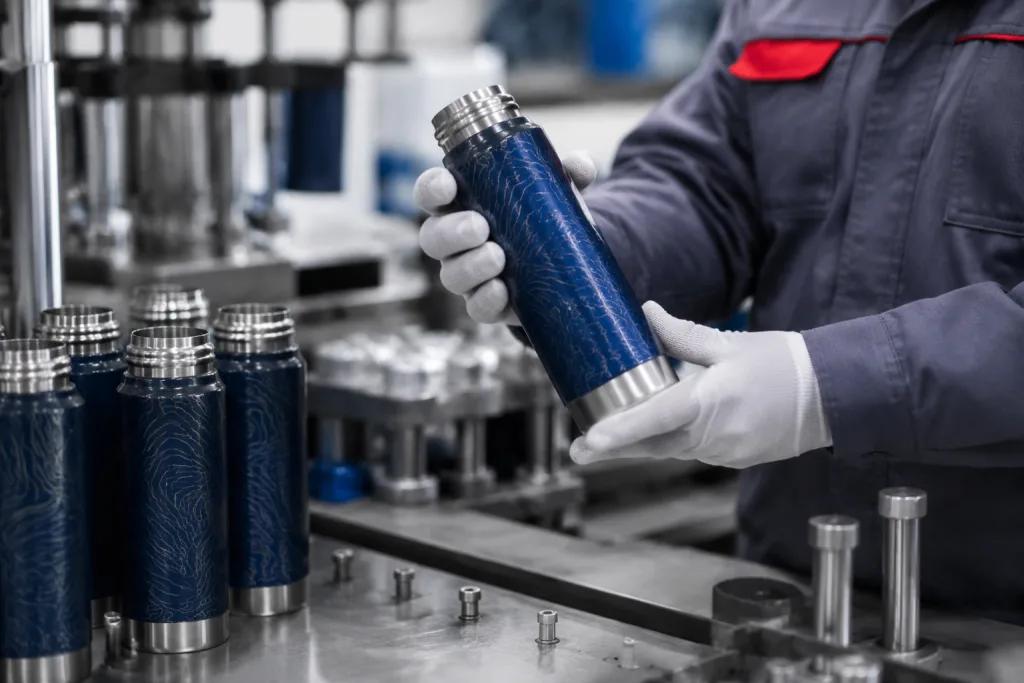
I’ll rewrite the section in-place, keep the HTML exactly as-is, and tune the copy to sound like a factory-side sales engineer.Q: Which logo method works best for thermos custom projects? The answer depends on the bottle finish and the target unit price. Silkscreen is the low-cost pick for solid color blocks on smooth coated bottles. Laser engraving gives a cleaner read on stainless steel and usually survives rough handling better. UV print gives more color freedom, but we always check scratch resistance first, especially on distributor thermos orders that bounce through 2 or 3 warehouses.
For promotional thermos campaigns, keep the art simple. One or two Pantone colors are easier to hold on the line, and they cut reject rates. If the buyer wants a full wrap, ask for a print proof and set the tolerance at ±1.5 mm. On a cylinder, 1 mm of drift jumps out fast; a slightly off-color logo gets less attention than a crooked seam. We’ve seen this go sideways on 5,000-unit runs when the file was fine but the fixture shifted during setup.
Checklist before approving artwork:
- Logo size and placement in mm
- Pantone code or CMYK values
- Print area free from seam interference
- Scratch test method and pass level
- Sample approval tied to the final production file
If you want more detail on marking methods, compare options in silkscreen vs laser engraving for custom thermos.
MOQ, price, and lead time
I’ll keep the HTML intact and rewrite only the prose with a more grounded factory-sales voice. Then I’ll sanity-check that the headings, list structure, and link stay unchanged.Q: What MOQ should you expect for bulk thermos sourcing? A workable MOQ for a thermos customized project is usually 1,000 units per color or design. We run some stock-body logo jobs at 500 units, but once the buyer wants a new lid, full-color carton, or a custom part, the number moves up fast. That is the math. The line needs time for setup, printing, and packing.
For FOB Zhejiang pricing, a basic 500 ml stainless promotional thermos usually lands around USD 2.10-4.80, depending on lid type, coating, and carton spec. One buyer flagged a typo on the PO once, and the quoted price shifted because the lid code was wrong by one digit. A retail-grade custom thermos with a thicker coating and a more complex lid sits higher. Lead time is commonly 25-35 days after sample approval and deposit, and we add 7-10 days if you need custom packaging or a new accessory. If a vendor says 10 days for a new item with custom artwork, QC pulled the sample and the schedule did not hold.
Cost drivers:
- Steel grade and wall thickness
- Lid tooling and sealing complexity
- Print colors and finish type
- Packaging structure and carton count
- Inspection level and testing requirements
If you are still setting the order volume, our MOQ guide for custom drinkware helps you lock a workable target before you ask for quotes.
Quality checks that matter
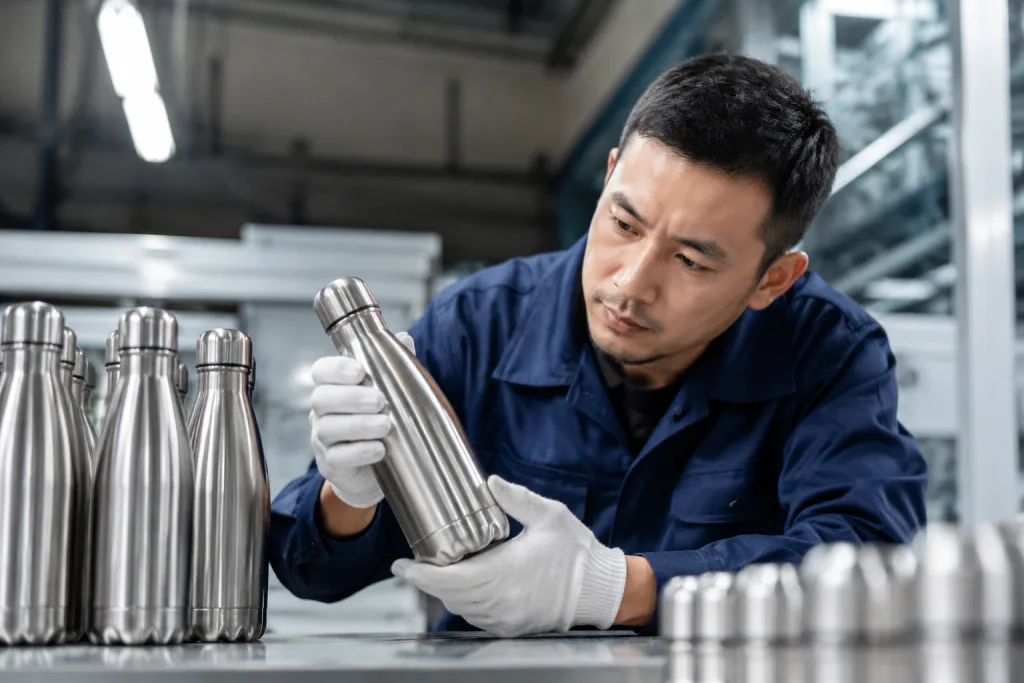
I’ll rewrite the section in-place, keep the HTML structure intact, and tighten the sales-engineer voice with more concrete factory-floor detail.Q: What should a buyer inspect before shipment? Use a real checklist, not a vague “good quality” note. For custom thermos sourcing, we check seal performance, coating adhesion, print durability, capacity tolerance, and carton strength. On export lots, we usually run AQL 2.5 for major defects and AQL 4.0 for minor defects unless the retail program asks for tighter control. That works for distributor thermos orders and seasonal promo runs.
Ask for boil-water retention data, not only hot-water retention. If the order goes to North America or Europe, ask for a vacuum leak test on 100% of units; QC pulled a sample on the line at 24 hours, and a weak seam shows up fast. If the bottles go to Amazon or DTC, lock down FNSKU labels, carton barcode placement, and case pack counts before production starts. We’ve seen the buyer flag a PO typo on carton count and the math just didn’t work. The product was fine; the pack plan was wrong.
Inspection checklist:
- Visual defects: dents, dust, print blur, color mismatch
- Functional test: leak-free inversion for 24 hours
- Drop test: carton and unit packaging
- Odor test: lid and silicone parts
- Compliance files: REACH, food contact declarations, and test reports where required
For a deeper factory capability review, see our stainless thermos manufacturing capabilities and quality control standards.
Choosing the right supplier
I’ll rewrite the section in-place, keep the HTML structure intact, and tighten the supplier language so it reads like factory-side sales copy.Q: What separates a real thermos supplier from a trading middleman? Ask for proof, not adjectives. A real thermos factory can show line photos, vacuum welding capacity, coating machines, and test records from the lab bench. A solid supplier thermos partner can also tell you which parts we make on-site and which parts we buy in. That matters, because outsourced lids and coatings can slip the schedule when Zhejiang component orders pile up before peak season.
For outdoor retailers and promo brands, the best thermos distributor is the one that stays steady on replenishment. One batch should match the next on color, lid fit, and heat retention. We ask buyers to keep the same master sample number on every repeat order. If you need certificates, ask for BSCI, REACH, and food-contact files before approval, not after. China has plenty of manufacturers thermos can work with, but the real difference is discipline: stable process, clear QC, and a lead time that holds. We’ve seen the math go sideways when a buyer skipped the sample check and then blamed the line.
Supplier screening checklist:
- Factory audit photos or video tour
- Monthly capacity and production lines
- Sample turnaround time
- Document pack: test reports, declarations, audit reports
- Response time on engineering questions
If you need branded programs or retailer packaging, review custom logo drinkware options and our stainless thermos product range.
When the order is for promotion
I’ll rewrite the section in-place, keep the HTML exactly as-is, and tighten the prose so it sounds like a sales engineer from the line wrote it.Q: How do promotional thermos orders differ from retail orders? Promotional thermos orders are about reach and unit cost. Retail orders are about margin, shelf look, and repeat buy. Buyers mix those up all the time, then the quote comes back and they act surprised. For a promo run, we usually strip it down: plain lid, thinner coating, one-color logo, and a target under USD 3.00. Retail is a different job. You pay for a soft-touch finish, gift box, and a cleaner flip lid, and that extra cost shows up fast on the line.
Start with the channel, not the bottle. A thermos promotional campaign for a sports event can run 350 ml or 500 ml, fewer colorways, and faster packing. Retail needs shelf pop, tight color control, and carton presentation that survives a store check. We had one buyer flag a PO typo on the logo code after the sample was signed off; that kind of change burns time and money. Thermos bulk buying works when the SKU stays simple and the pack plan is fixed early. Thermos custom work gets expensive when marketing moves the artwork after QC has already pulled the sample.
Channel checklist:
- Promotion: lowest acceptable cost and shortest lead time
- Retail: premium finish and stronger packaging
- Distributor: repeatability and replenishment stability
- E-commerce: drop-test packaging and barcode accuracy
If you are comparing product types, browse our travel tumbler options and sports bottle collection for adjacent line planning.
Send your thermos spec for a quick quote
Share capacity, logo file, target price, and destination market. We’ll reply with a practical thermos customized plan from Zhejiang, China.
Frequently asked questions
What is the usual MOQ for thermos customized orders?
Most thermos customized projects start at 1,000 units per design or color. If you use stock bodies with simple logo printing, some Zhejiang factories can accept 500 units, but the unit price is usually higher by 10-20%. Once you add a custom lid, special coating, or retail box, 1,000 units is the practical floor. For very large distributor thermos programs, 5,000-10,000 units improves price stability and artwork consistency.
How much does a custom thermos cost from China?
A basic FOB Zhejiang custom thermos often starts around USD 2.10-4.80 per unit for 500 ml, depending on steel grade, lid style, finish, and packaging. A premium retail version can move into USD 5.00-8.50 or more if you add complex lids, gift boxes, or multi-step printing. Freight, duties, and local fulfillment are extra. The cheapest quote is not useful if the retention fails or the logo scratches off in two weeks.
What material should I request for a stainless thermos?
Request 304 stainless steel for all food-contact surfaces. For a cost-sensitive outer shell, some manufacturers use 201 stainless on the outside, but you should confirm the coating and corrosion expectations first. For better durability, many outdoor retailers choose 304 inside and 304 outside. Ask for wall thickness in the 0.35-0.50 mm range and make sure the supplier states the exact grade on the spec sheet, not just in conversation.
How do I check quality before shipment?
Use an inspection plan with AQL 2.5 for major defects and AQL 4.0 for minor defects. Check leak performance, lid fit, coating adhesion, print quality, and packaging strength. If your thermos custom order is going to Amazon or e-commerce, also verify carton labels, barcode placement, and drop-test results. For Europe and North America, ask for REACH-compliant inks and food-contact declarations before shipment, not after the goods leave China.
Can I get custom packaging with a thermos promotional order?
Yes, but it affects MOQ and lead time. A simple white box may add little cost, while a printed color box, insert tray, or mailer can raise the unit price by USD 0.20-0.80 depending on structure. Add 7-10 days for packaging approval and production. If the order is for a seasonal promotion, lock the carton spec early so the factory can schedule packing without delay. In Zhejiang, tight packaging schedules are often the real bottleneck, not bottle production.