Key Takeaways
- A workable MOQ for custom thermos orders is usually 1,000-3,000 units, while sample runs start at 1-5 units
- 304 stainless is the normal commercial choice; 316 raises corrosion resistance but adds about 8-15% to unit cost
- A 0.5-0.6 mm inner wall and vacuum performance under 10% heat loss in 6 hours are practical benchmarks
- Printed promotional thermos orders often need 25-35 days, while laser-marked bulk thermos can ship 5-7 days faster
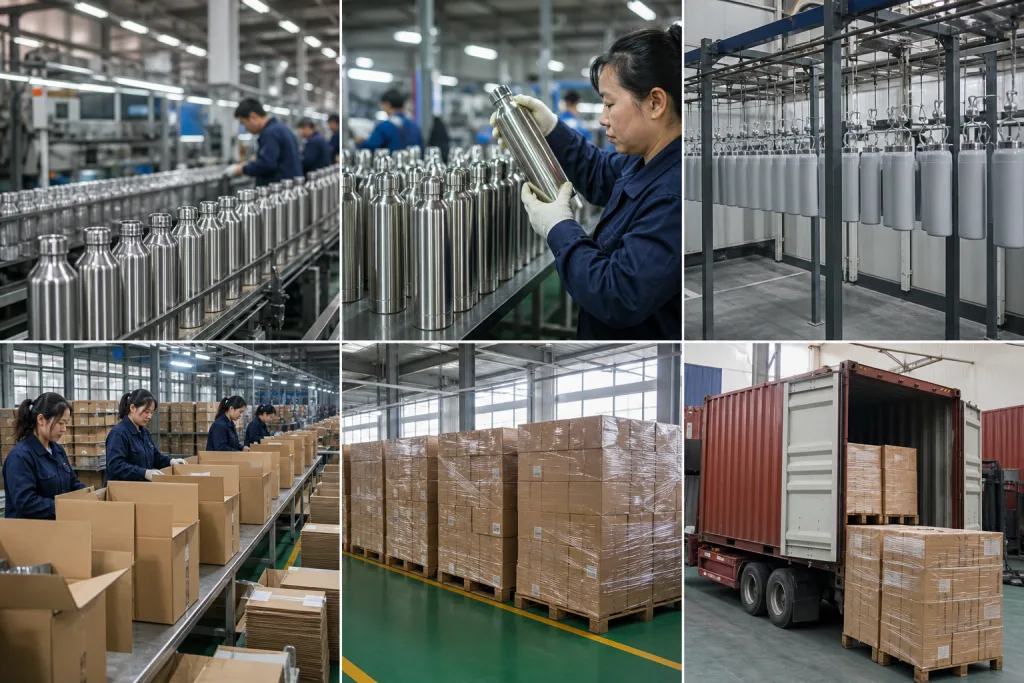
If you are sourcing suppliers thermos for outdoor retail or a promo run, the first round of quotes all look the same on paper. The gap shows up later: insulation test results, lid leak rate, coating wear, carton drop performance, and whether the line can still ship when your launch moves up by 12 days. In Zhejiang and across China, plenty of thermos factories can print a logo. Fewer can keep a spec stable after 3,000 km of truck and sea freight.
The better way to buy is plain: lock the use case first, then the stainless steel grade, then the decoration method, then the QC and logistics control you want. We run 300,000 units a month on our thermos line in Hangzhou, with sample lead times of 7-10 days and bulk lead times of 25-35 days depending on customization. QC pulled the sample last week on a 500 ml bottle and flagged a lid torque issue at 1.8 N·m, which is the kind of detail that decides whether the order is clean or a headache. Start with that factory reality before you chase the lowest number.
Start with the use case
I’ll rewrite the section in-place, keep the HTML exactly as-is, and tune the prose for a sharper factory-sales voice with concrete details and fewer AI-ish phrases.Before you talk to any thermos supplier, lock down the use case. A hiking shop does not buy the same bottle as a corporate gift program, and a stadium merch order should not be spec’d like a premium retail SKU. Skip that call, and you pay for features nobody uses or end up with a cheap factory thermos that comes back leaking after field testing. We’ve seen that go sideways on the line.
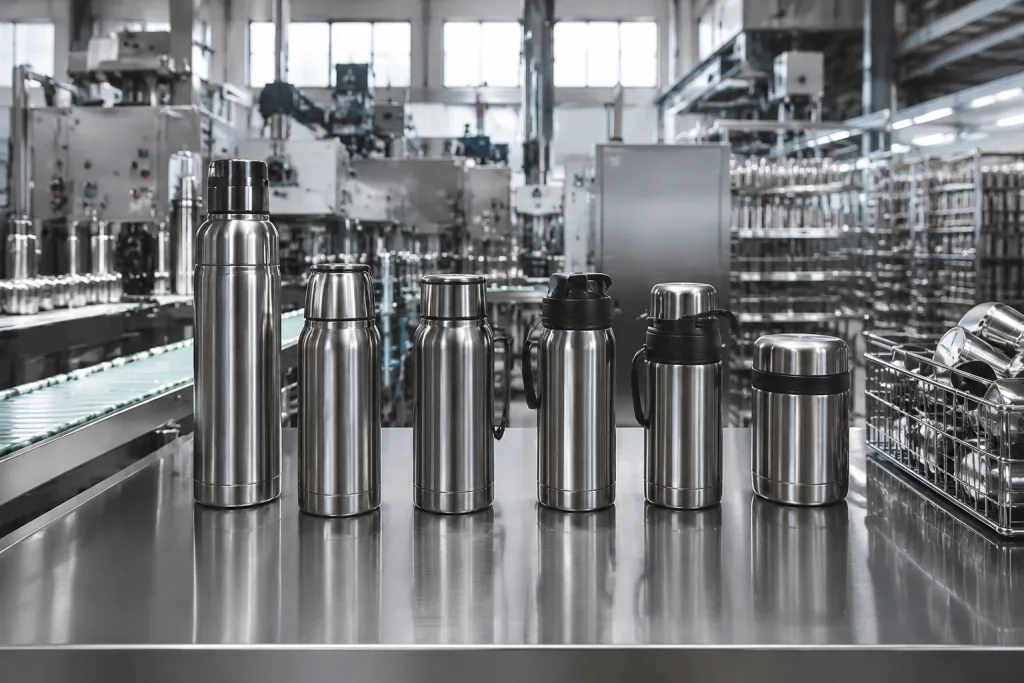
For outdoor retail, we run toward heat retention, one-hand opening, and a lid that still works after dust and mud. For promotions, the math shifts to print area, carton count, and a price that survives decoration plus packing. A promotional thermos can use a simpler lid and lighter box if the branding carries the order. A premium custom thermos for a gear brand should usually be double-wall vacuum, 18/8 or 304 stainless, and 100% leak checked before packing. QC pulled the sample at 1,000 ml and flagged a lid fit issue in 2 mm.
Use-case matrix you should ask for:
- Retail hiking or camping: 500-750 ml, 6-12 hour thermal target, powder coat or matte paint
- Corporate gifting: 350-500 ml, large logo panel, gift box, lower freight weight
- Mass promotion: simple lid, 1-2 color print, lowest landed cost per unit
- Distributor program: stable repeat supply, carton consistency, barcode-ready packaging
In Zhejiang, a lot of factories will say they can do all four, but the QC story is not the same. Ask which version they ship every week, not which one sits clean on the sample shelf. One buyer once sent a PO with “stainles” in the spec; the line caught it before engraving, which saved a rework batch.
Pick stainless steel by margin
I’ll keep the HTML structure intact and rewrite the prose with a more experienced factory-sales voice, adding a few concrete shop-floor details and cutting the AI filler.The second call is material. Buyers hear “stainless” and stop too early, but grade and wall spec decide how the cup sells and how it holds up on the line. For suppliers thermos, we usually quote 304 stainless for inner and outer shells; 201 shows up on entry-level runs when the buyer is chasing a low landed cost. For North America and Europe, 304 is the safer commercial choice. QC pulled the sample, and the paperwork is easier to defend when a buyer asks for it.
If the bottle is going into coastal retail or outdoor use, 316 is the right conversation. It handles corrosion better, but the math does not work for every program, because the price is usually 8-15% above a comparable 304 build. Wall thickness causes more trouble than most buyers expect. A 0.5 mm inner wall works for bulk orders; 0.6 mm gives better stiffness and dent resistance, and we’ve seen 0.4 mm quotes turn into complaints after the first carton drop test. Ask for the gauge in writing. The buyer flagged it once on a PO typo, and we had to correct the spec before tool-up.
What to request from a manufacturer thermos:
- Material certificate for inner and outer shell
- Wall thickness in mm, not only steel grade
- Vacuum retention test result, ideally with a defined hot-fill protocol
- Migration compliance for REACH and, if relevant, FDA-aligned food contact testing
A real thermos manufacturer answers those points straight. If they dodge the shell gauge or stay vague on testing, that is the wrong supplier thermos to back. We run this on the line with a micrometer and a vacuum gauge; if the numbers are not clear, the shipment gets held.
Choose decoration for the channel
I’ll rewrite the HTML in-place, keep the tags and structure unchanged, and tighten the prose so it sounds like a factory-side sales note.Decoration is not just branding. It changes yield, lead time, and how the product looks after 6 months in the field. A customizable thermos for retail can use laser engraving, silk screen, pad print, UV print, or full-body coating. On our line, a 12-head laser unit handles small logos fast, while silk screen still wins on simple one-color jobs. For promotions, one-color print is usually the best balance of speed and cost. For premium consumer channels, laser engraving often wins because it wears well and does not crack or peel.
If you sell through distributors, choose the decoration method based on re-order behavior. A thermos distributor or distributors thermos channel usually needs repeatability more than flashy effects. Laser marking is clean for this. We had one buyer flag a PO typo on the logo size, and the reprint would have pushed the ship date by 4 days. If the program is seasonal and short-run, a thermos promotional job can justify stronger print colors, but complex artwork can add 3-7 days of production time. That is the wrong kind of delay when your freight window is already tight.
Useful rule of thumb: one-color laser or silk screen is usually the cheapest path for 1,000-5,000 units; full-color UV printing makes sense when the branding depends on photographic detail. For a customized thermos line, ask for a decoration proof on the exact surface finish, because a glossy body and a matte body will not accept ink the same way. QC pulled one matte sample at AQL 2.5 because the ink sat 0.3 mm off center after curing. The math does not work if you approve from a screen mockup only.
Do not approve decoration from a flat artwork file alone. Ask for a sample on the actual substrate, or you may discover the logo shifts on curved stainless after mass production.
Lock down lid and leak risk
I’ll rewrite the HTML in place, keep the tags and heading structure intact, and make the prose sound like a factory-side sales engineer wrote it.The lid is where a lot of orders blow up. We’ve seen a bottle pass insulation, then come back because the cap dripped in a backpack or the gasket walked loose after 50 wash cycles. For outdoor buyers, that is the wrong place to gamble. A thermos custom piece has to survive rough use, not just look fine on a desk. Put the leak test, gasket spec, and lid cycle count in the PO before you sign off.
For hot drink thermoses, PP lids with silicone seals are standard, but the use case decides the structure. A wide-mouth lid is easier to clean and handles ice better; a narrow-mouth drinking lid holds heat longer and cuts splash. We run both on the line, and the buyer flagged one promo project because the cheap cap looked okay but failed a 1 m drop test after hot fill. If your channel is giveaways, trim cost on decoration first, not on the seal. A weak cap can sink an otherwise solid thermos factory.
Ask these questions:
- How many open-close cycles did the lid pass?
- What gasket material is used, and is it replaceable?
- Is 100% leak testing done after assembly?
- Does the cap fit stay stable after hot-fill and cold-shock?
Good thermos vendors and supplier thermos teams answer with test numbers, not sales talk. If they say “no problem” but cannot name the fixture or the cycle count, we treat that as a red flag. QC pulled a sample once and found a 0.3 mm gasket gap; that kind of miss turns into claims fast.
Buy on landed cost, not FOB
I’ll rewrite the prose in-place, keep the HTML exactly as-is, and make it sound like a real sales engineer from the shop floor.FOB pricing helps you compare offers, but it is not where your margin lives. If you are pricing thermos bulk orders, push every quote to landed cost per sellable unit. Count the product, printing, inner cartons, master cartons, pallet wrap, inland truck, export docs, and test fees. We once saw a $2.10 FOB cup land at $3.10 after freight and cartons, while a $2.35 quote from a better thermos supplier came in lower because the carton count was tighter and the breakage rate stayed under 1%.
For North America and Europe, build in compliance and channel prep from the start. If the buyer flagged FNSKU labels for Amazon, or asked for retailer carton marks, price it on the first round, not after the PO is signed. A serious thermos factory in China should pack to spec, whether the order calls for 6-piece inner cartons, 24-piece master cartons, or pallet-ready export packs. On our line, the carton sealer runs at 18 boxes per minute, and that matters when the buyer wants 12,000 units shipped in one week.
Practical price bands:
- Basic promotional thermos: often USD 1.80-3.20 FOB depending on size and print
- Retail-ready custom thermos: often USD 3.20-6.80 FOB with better lids and finish
- Premium insulated stainless build: often USD 6.80+ FOB with upgraded packaging and testing
Do not chase the lowest quote from every thermos distributor or thermos vendors claim you see online. That is the wrong question to ask. We have seen it go sideways when a buyer saved 8 cents on paper and then paid for cracked lids, slow fill rates, and a carton typo on the shipping mark.
Verify the factory before ordering
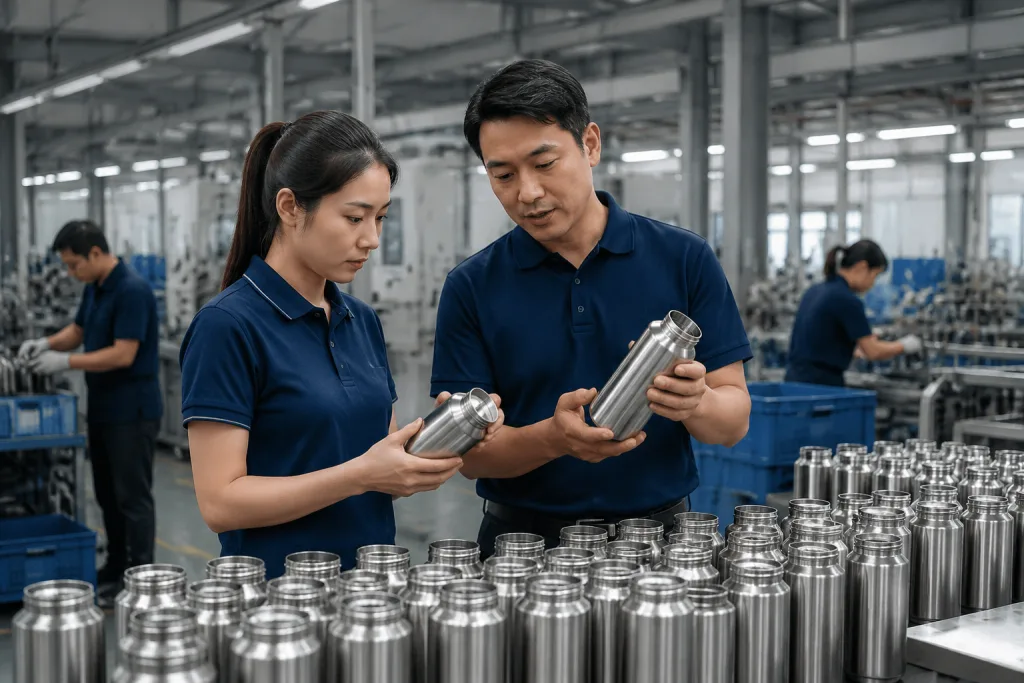
I’ll keep the HTML intact and tighten the copy so it sounds like a buyer-side sales engineer wrote it. First I’m checking for any repo instructions, then I’ll rewrite the section in place.I’ve got the target text. Now I’m rewriting the prose with tighter factory-floor language, concrete checks, and fewer generic sales phrases.Once the spec is locked, check the factory. You need to know if you are buying from a real manufacturer thermos source or a trading shell. A direct thermos manufacturer should be able to show the line, the welding or deep-draw setup, vacuum sealing control, and the final QC flow. We’ve seen buyers get burned by a shiny showroom while the actual cups were made 80 km away. If the plant is in China, ask where the forming, assembly, and leak test happen; “made in China” is not the same as process control in China.
For B2B buyers, the factory check list is not complicated: BSCI or an equivalent social compliance audit if your channel requires it, REACH for Europe, and a clear AQL standard for final inspection. On a few Zhejiang programs, we run AQL 2.5 for major defects and 4.0 for minor defects on packaged goods, but the real test is whether they hold that number lot after lot. Ask for the last inspection report, not a certificate photo on the wall. QC pulled the sample, and the first thing we check is whether the defect count matches the paper.
Factory questions that matter:
- What is monthly capacity by model, not total factory output?
- What is the MOQ for your exact decoration method?
- How many days from sample approval to shipment?
- Can you repeat stock orders in 15-20 days?
At BottleForge in Hangzhou, Zhejiang, we keep the numbers plain: 300,000 units per month capacity, 1,000-unit MOQ for standard custom runs, and 25-35 day bulk lead times. The buyer flagged a PO typo on “304 ss” versus “304 stainless,” and that kind of slip is exactly why you verify the factory before you send money. That is the kind of operating detail you want from any factory thermos partner before you commit.
Get a thermos spec that protects your margin
Send your target price, size, and channel, and we’ll map the right custom stainless build, MOQ, and lead time before you issue the PO.
Frequently asked questions
What MOQ should I expect for custom thermos orders?
For most suppliers thermos programs, a realistic MOQ is 1,000-3,000 units per color or design. If you need laser engraving on a standard body, some factories can start at 500 units, but the unit price usually rises 10-20%. For a fully custom mold or special lid, MOQ can move to 5,000 units or more. Sample orders are usually 1-5 pieces, and a good China factory should ship samples in 7-10 days.
How do I compare thermos bulk quotes correctly?
Compare landed cost per sellable unit, not just FOB. Include carton configuration, print method, testing, freight, and packaging. A USD 2.20 thermos bulk quote may become USD 3.40 landed after cartons, labels, and freight. Also check whether the quote includes 100% leak testing, because a lower upfront price can be wiped out by 2-5% returns. For distributor thermos programs, stable re-order pricing matters as much as first order price.
Is 304 stainless enough for outdoor retail?
Yes, for most outdoor retail applications 304 stainless is the right balance of cost, corrosion resistance, and buyer trust. Use 316 only when the product will see harsher salt exposure or you need a premium positioning. A typical 304 thermos with 0.5-0.6 mm wall thickness and good vacuum control can perform very well. Ask the thermos manufacturer for material certificates and heat-retention test data rather than relying on the grade name alone.
What lead time should I plan for custom thermos production?
Plan 7-10 days for samples and 25-35 days for bulk production after sample approval, assuming standard decoration. If you add complex printing, special packaging, or new tooling, add 7-15 days. A reliable thermos factory in China should be clear about this from the first quote. If a supplier promises 10-day bulk production on a custom stainless thermos, be careful; that usually means stock goods, not true custom work.
What compliance documents do I need for Europe or North America?
For Europe, REACH-related food contact and chemical compliance is the usual baseline, plus any buyer-specific testing. For North America, many brands ask for FDA-aligned food contact documentation or migration testing, depending on the channel. If you sell through Amazon, you may also need FNSKU labeling and carton prep. Good suppliers thermos partners in Zhejiang should provide test reports, batch records, and carton labels that match your market requirements.