Key Takeaways
- Use AQL 2.5/4.0 on critical drinkware defects and require torque, leak, and drop tests before mass production.
- For stainless canteen orders, specify 0.4-0.6 mm wall thickness and confirm 18/8 or 304 grade by mill certificate.
- A Zhejiang canteen manufacturer with 300,000 units/month and 25-35 day lead time can still miss quality if your print and lid specs are loose.
- Customizable drinkware failures usually start at the cap, coating, or artwork file, not the body shape.
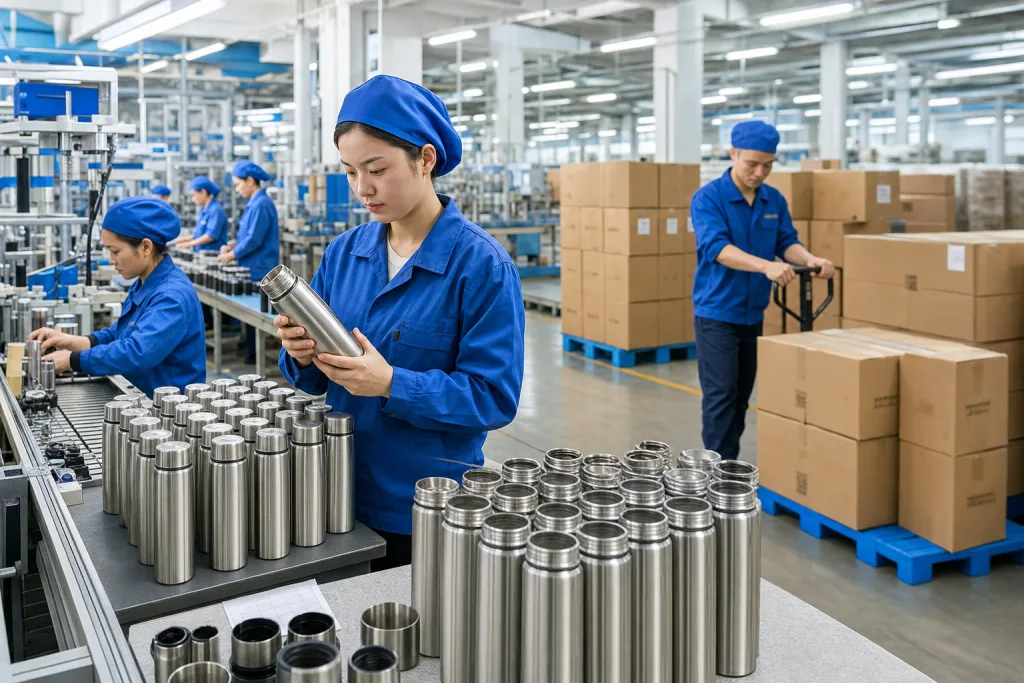
If you buy from suppliers drinkware at scale, the ugly part is not the first sample. It is the second and third run, when the line is full and the defects start to repeat. A logo that looked clean on 20 samples can ghost on 5,000 units. A lid that passed hand-torque in the lab can leak after 3 days in a warm container. We run into this all the time on the line: one PO typo on the cap color, one 0.2 mm thread drift, and QC is pulling samples before lunch. In Zhejiang and across China, the factories that keep buyers happy are not the ones promising everything; they are the ones controlling failure modes before production starts.
You need to think like a process engineer, not a catalog shopper. Whether you are sourcing custom drinkware, a custom canteen, or a custom growler, the real question is how each spec blocks a known problem: coating adhesion, thread mismatch, odor, denting, print wear, or shipping damage. A good canteen factory will discuss gauge, coating thickness, torque values, AQL, and drop-test standards without being asked twice. A weak canteen supplier will talk about colors and send pretty photos. We’ve seen buyers push back on a 1,000-piece MOQ, then get burned by a 6% leak rate; the math does not work.
What usually fails first
I’ll rewrite the prose in place, keep the HTML exactly as-is, and make it sound like a factory-side sales engineer wrote it.The first trouble usually comes from sealing, decoration, and size control. If you buy canteen customized products or customized growler units, the body is usually not the problem. The fail point sits where parts meet. A cap that is 0.3 mm off in thread pitch still looks fine in photos, then leaks on the carton line. A powder coat that runs thin gets scuffed during packing. A silk screen that misses the heat-cure window cracks after a few dish cycles.
For suppliers drinkware, we split those into three risk buckets. Sealing defects are functional, so critical SKUs need zero tolerance. Decoration defects are cosmetic, but on Amazon or retail a 2% logo failure rate can wipe out the margin fast. Dimension defects hit pallets and cartons first. If your canteen promotional item is 2 mm too tall, the master carton can lose 8 to 12 units per case layer. That is not a design problem. It is a spec miss.
Ask for the right failure data
- Leak test at 90° inversion for 2-5 minutes
- Torque target for lids, usually 8-12 N·m on metal caps
- Coating thickness, typically 60-90 microns for powder coat
- Carton compression and drop test result for export packs
Good canteen manufacturers in Zhejiang already know these numbers. The issue is that many buyers never ask for them, so the line runs on minimum effort. QC pulled the sample last week, found a lid gap at 0.4 mm, and the buyer flagged it only after packing. That is the wrong time to start checking.
Stop lid leaks before mass production
I’ll rewrite the prose in-place, keep the HTML exactly as-is, and strip the AI-ish phrasing while adding sharper factory-floor detail.Leakage is the fastest way to turn a clean purchase order into a return claim. On a custom canteen or customizable canteen, the lid system matters more than the bottle body. We’ve seen silicone rings shrink by 0.3 mm, PP caps warp after cooling, and stainless lids deform when the mold cooling water is weak. The fault often stays hidden at room temperature and shows up in a truck, a warehouse, or a humid container.
Spec the lid like a critical part. Ask your canteen factory for material grade, gasket Shore hardness, and assembly torque. For hot-fill or insulated products, require a 100% leak test on the line, not a spot check. For cold-use bottle lines, 5% sample testing can work if the SKU is mature, but only after the first three production runs pass and QC pulled the sample from the same cavity set.
“If the lid is not specified with the same care as the body, the body is just a tube.”
That sounds blunt because it is true. The cheapest canteen vendor quote often hides the most expensive part to troubleshoot. If you need distributor canteen or distributor growler programs, keep one lid family per body family. Mixing parts from multiple molds looks flexible on paper. We’ve seen it go sideways: fit variation, extra QC hours, and more buyer-flagged complaints.
For export orders, I want a written acceptance target: zero leakage after 3 inversions, a 24-hour room-temperature hold, and 50-cycle open-close testing. That is the right baseline for suppliers drinkware that want repeat orders, not one-off shipments. One typo on a PO can even move the lid code to the wrong SKU, so lock the spec before the line starts.
Decoration problems kill margins
I’ll rewrite the section in place, keeping the HTML exactly as-is and tightening the sales-engineer voice with more concrete production detail.Artwork looks simple until it hits the line. Two failures eat margin fast: poor adhesion and poor registration. On custom drinkware, especially canteen promotional orders, buyers often approve a render that will not hold up in real production. We’ve seen metallic ink on a textured powder coat pass a proof, then start flaking after a 50-rub test. Laser engraving can look sharp on brushed stainless, but it turns ugly on low-grade matte coating when the surface chemistry is off.
For a canteen customized order, define the decoration by process, not by hope. Tell the canteen supplier whether you want silkscreen, laser engraving, UV print, or heat transfer. Lock the artwork file in vector format, give Pantone references, and require a 1:1 placement template. If the logo sits near the curve of a custom canteen, set a distortion tolerance up front. Otherwise, the print can drift 1-2 mm and the buyer will flag the whole batch.
- Silkscreen: best for 1-2 spot colors, lower cost at 500+ units
- Laser engraving: durable, but depends on base finish
- UV print: better for gradients, more sensitive to abrasion
- Heat transfer: useful for complex graphics, slower cycle time
A disciplined canteen manufacturer in Zhejiang will ask for print area, curing method, and test rub counts. If they do not, you are probably talking to a trading layer, not the factory. We run that check on the shop floor with a sample board and a caliper, and it saves a lot of back-and-forth later.
Material grade is not a label
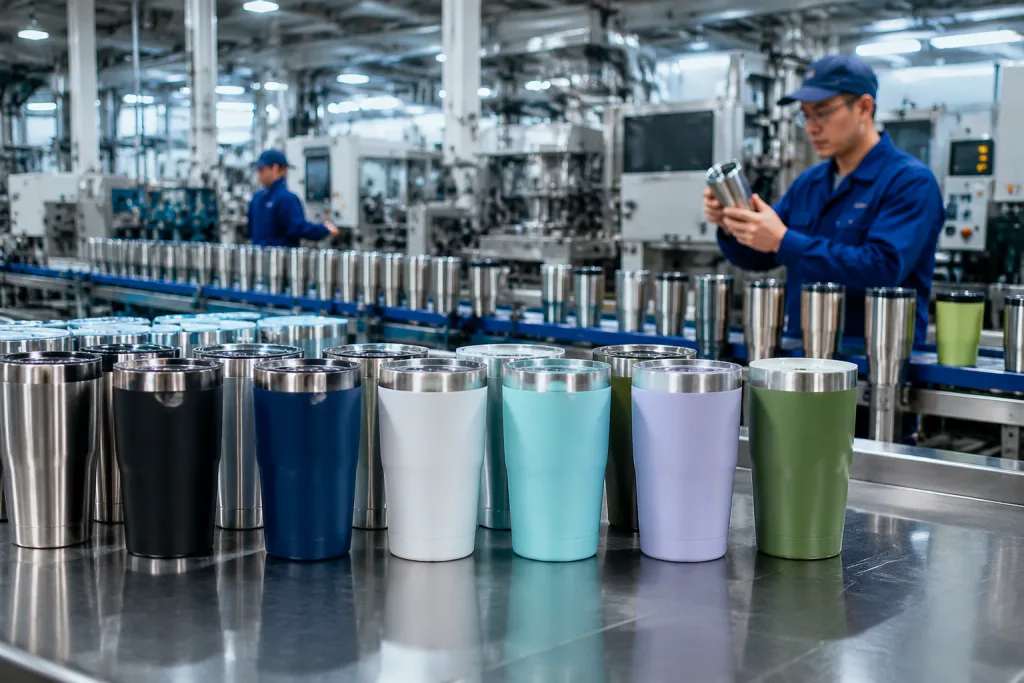
I’ll keep the HTML structure intact and rewrite the four paragraphs in a more grounded supplier voice, with concrete shop-floor detail and fewer generic phrases.One of the easiest sourcing mistakes is trusting the spec sheet more than the metal in hand. We’ve seen a canteen factory stamp “304 stainless” on a quote and still ship mixed coil stock when purchasing is chasing a lower RMB price. For buyers in Europe and North America, the grade, thickness, surface finish, and paper trail all matter. A mill certificate beats a polished sample every time.
For stainless custom canteen products, I usually push 0.4-0.6 mm wall thickness, depending on size and whether the body is single-wall or insulated. Below that, dent resistance falls off fast. Above that, cost goes up, weight climbs, and the deep-draw press starts giving you headaches. On a customized growler, the neck finish and weld seam matter as much as the shell. We once had QC pull a sample that looked fine, then the pressure test failed at the weld after thermal cycling.
Do not lump all customizable drinkware together. A plastic sports bottle and a double-wall insulated tumbler fail in different ways. Cold brittleness can crack a cap, a bad forming setup can leave ripples on a stainless shell, and salt spray will expose a weak paint line fast. Ask the canteen manufacturer for the test method, not just the result. REACH-compliant materials, food-contact paperwork, and dye lot traceability are the floor, not a bonus. The buyer flagged it when the carton label and batch code did not match the PO.
In China, the better suppliers drinkware teams keep incoming inspection records by coil batch and molding lot. That means a check sheet, a caliper reading, and a lot number you can trace back in 30 seconds. That is the discipline you want before you scale, because the math does not work any other way.
Packaging failures arrive at the warehouse
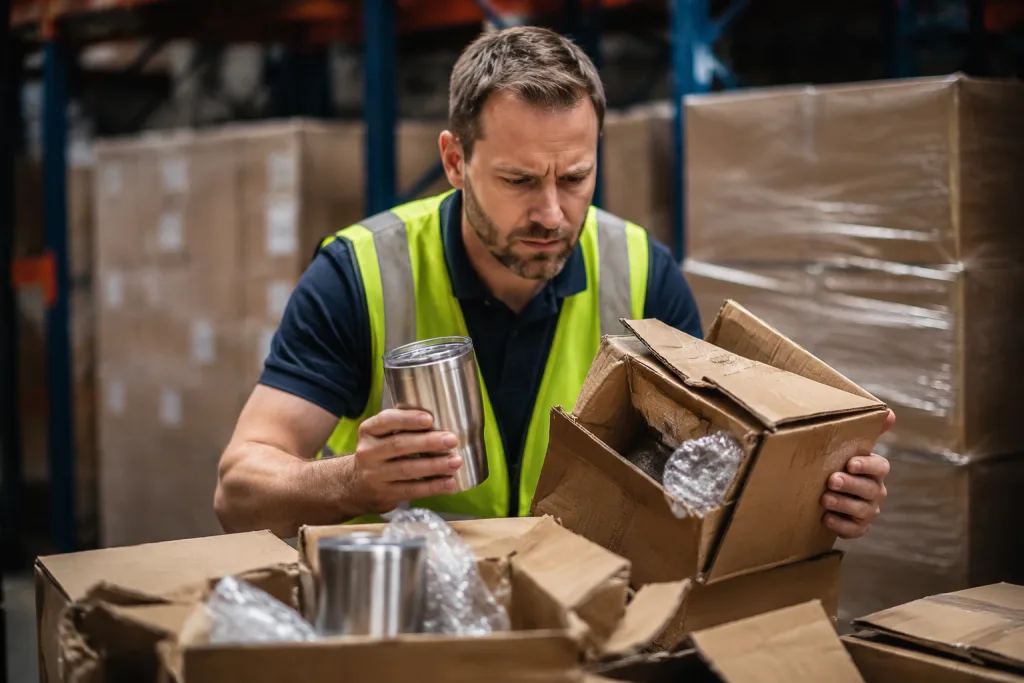
I’ll rewrite the four paragraphs in-place, keep the HTML unchanged, and tighten the language to sound like a real factory sales engineer.Buyers often miss where the damage starts. QC passes the lot, the line looks clean, then the cartons land with scuffed bodies, bent lids, or crushed corners. That is not a freight riddle. It is packing spec work. If your canteen distributor program uses the wrong inner tray or weak carton compression, export transit will show it in the first 2,000 km.
For custom drinkware, the pack has to match the finish. High-gloss coating needs separated cavities or PE bags with scratch protection. Laser-engraved stainless is more forgiving, but loose packing still gives you edge dents. We had one Amazon FBA buyer flag a 2 mm lid rub on the PO, and QC pulled the sample straight back to the packing bench. If you are buying canteen suppliers’ stock for FBA, the outer carton must survive truck handling, warehouse rework, and label application. Plan FNSKU placement, suffocation warnings, and carton barcodes before the run starts.
A serious canteen vendor should quote packing count, master carton size, gross weight, and drop-test target. If the carton is too large, freight jumps. If it is too small, the product rubs in transit. The math does not work either way. On distributor drinkware programs, a 1% packing failure rate can turn into 3%-4% customer complaints once repacking and reshipment hit the warehouse. One bad 12-day sea leg can erase the savings from a cheaper inner tray.
This is where a Zhejiang factory with real export rhythm earns its keep. A plant that ships 300,000 units per month usually runs a tighter line than a trading desk that calls a carton supplier at the last minute. We saw one PO with “24 pcs/ctn” typed as “42 pcs/ctn”; the carton sample failed before the first full run. That is the wrong question to ask: price is not the issue if the pack falls apart on arrival.
How to write a safer spec
I’ll keep the HTML structure intact and rewrite the prose to sound like a real export sales engineer, with tighter wording and a few factory-floor details.The best buyer specs stay short, blunt, and testable. Do not hand over a marketing brief and expect the canteen manufacturers to turn it into production control. Say what matters, what can change, and what must not fail. For suppliers drinkware, a safe purchase order reads like a line sheet with checks, not a sales note.
Start with the product build: material, capacity, wall thickness, lid type, coating, print method, and packout. Then lock down the acceptance points: AQL level, leak test, drop test, odor check, visual standard, and color tolerance. For a custom growler, add pressure handling or thermal shock if the use case needs it. For a customized canteen, state whether a dent under 0.5 mm is still passable. If the buyer and factory do not put that in writing, the fight shows up after shipment and the math does not work. QC pulled a sample with a 1.2 mm lid gap last month, and that batch stayed on hold.
- Material: 304 or 316 stainless, BPA-free PP, or Tritan where needed
- Inspection: AQL 2.5 major, 4.0 minor is common for export goods
- Testing: leak, torque, drop, adhesion, and carton compression
- Documentation: REACH, food-contact, and batch traceability
If you are comparing canteen suppliers, ask one direct question: “What do you reject on the line?” That answer tells you more than a polished brochure. A good canteen manufacturer gives numbers and a clear MOQ. A weak one gives comfort talk. We have seen this go sideways when the PO said “same as sample” and the buyer flagged a typo in the lid code two days before loading.
Send your spec, we’ll flag the weak points
Get a fast review from a Zhejiang factory team that handles custom drinkware, canteen manufacturer specs, and export QC every week.
Frequently asked questions
What MOQ should I expect from suppliers drinkware?
For standard custom drinkware, many factories in Zhejiang start around 1,000 to 3,000 units per SKU. A basic canteen promotional order with one logo color may go lower, but once you add multiple print positions or custom lids, 3,000 units is more realistic. For a custom growler with tooling changes, expect higher minimums because setup time is the real cost. A serious canteen factory will explain MOQ by process, not just by product. If they quote 300 units for a complex custom canteen, check whether it is true factory production or a mixed sample batch.
How do I compare canteen manufacturer quotes fairly?
Compare them on the same spec sheet, not just the unit price. Look at material grade, wall thickness, coating type, lid material, logo process, carton count, and whether the quote includes testing and packaging. A quote at USD 2.10 and another at USD 2.65 may differ because one uses 0.4 mm steel while the other uses 0.6 mm, or one includes 100% leak testing and the other does not. Ask for FOB terms, lead time, and inspection standard. Otherwise, you are comparing two different products.
What QC checks matter most on a canteen customized order?
Leak testing, torque control, decoration adhesion, and dimensional fit matter most. For a customized canteen, I would also check lid interchangeability, gasket compression, and carton drop performance. Use AQL 2.5 for major defects and 4.0 for minor ones as a starting point. If the SKU is new, ask for first-article approval plus a pilot run of 100-300 units. In China, better canteen manufacturers will also keep batch records for coating, print, and gasket lots, which helps if you need root-cause analysis later.
Can I source canteen distributor inventory for faster delivery?
Yes, but you trade speed for customization. Distributor canteen stock works when you need fast movement, simple logos, or market testing. If you need a custom canteen with exact Pantone matching or a special lid, stock inventory usually creates compromise. A distributor drinkware program can ship in 7-14 days if the stock is in warehouse, while custom production from a Zhejiang factory often takes 25-35 days after sample approval. The key is to confirm whether the distributor is holding real factory stock or just acting as a pass-through seller.
What should I ask a canteen supplier before ordering?
Ask five things: factory capacity, material source, inspection method, packaging spec, and lead time. A good canteen supplier should tell you their monthly output, for example 300,000 units, and the actual production slot for your order. Ask whether they can provide REACH or food-contact documentation, and whether the product passes leak and drop tests. If you are buying customized drinkware, request an approved sample with signed references for color, logo position, and cap fit. That reduces disputes more than any verbal promise.