Key Takeaways
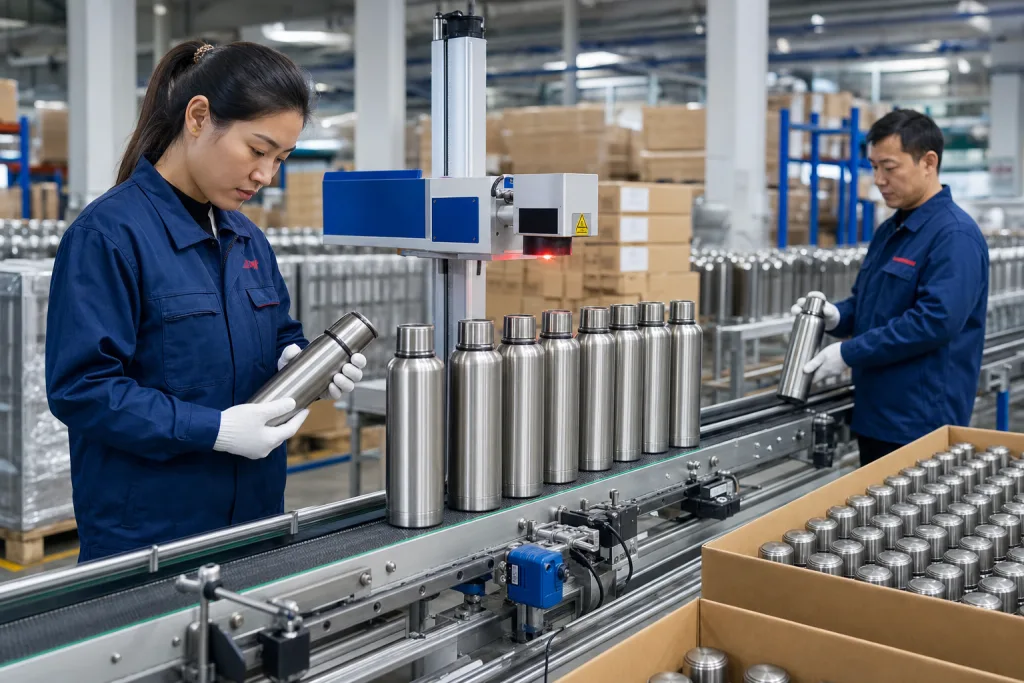
- MOQ for a typical stainless thermos customization run is 1,000 units; standard lead time is 35-45 days after sample approval.
- Wall thickness at 0.35-0.45 mm and 18/8 stainless steel reduce denting and taste transfer in retail and promotional thermos programs.
- Leak, vacuum, and coating failures are the top three risks; ask for AQL 2.5 for critical defects and 100% lid torque checks.
- A serious thermos supplier should document REACH, food-contact compliance, and carton drop-test results before mass production.
If you buy a supplier thermos for outdoor retail or promotion, the first shipment is usually not where the job starts. The real trouble starts when a lid leaks in a truck cupholder, a coating chips in transit, or a vacuum seam gives up after 30 days. That is where margin goes missing. In Zhejiang and across China, we see the same thing: buyers sign off on a clean sample, then lose control of tolerances, steel grade, and assembly checks once the run hits 10,000 units.
A good custom thermos program is not about adding a logo and hoping the line behaves. It is about locking down the failure points before tooling, then writing the spec around them. If you want a bulk thermos order that holds up under retail returns, Amazon complaints, or distributor claims, you need to know what breaks in a thermos factory and how we stop it. That is the real job when you buy from a thermos manufacturer in China, especially when the MOQ is 1,000 units and the approved-sample lead time is 35 days.
Why thermos programs fail first
I’ll rewrite the section in place, keep the HTML structure untouched, and make the prose sound like a factory-side sales engineer wrote it.Most thermos failures do not start in shipping; they start in the spec sheet. A buyer asks for a customizable thermos, we quote a clean unit price, and nobody pins down acceptable vacuum loss, lid wobble, or coating peel. Then the first run lands and the rejects are spread across too many buckets to sort profitably. For outdoor retail, that kills margin fast because the bottle gets used hard in cold weather, with gloves on and wet hands. For promotional brands, it is worse. The product carries your logo and your reputation at the same time.
The common failure points are plain: the cap leaks because the silicone ring is 0.5 mm undersized; the body dents because the steel gauge is too thin; the finish scratches because powder coat curing was rushed; the insulation drops because the vacuum draw was unstable. We run these checks on the line in Zhejiang, and the good factories build controls around them instead of selling on looks. When you source a thermos supplier, ask for the steel grade, wall thickness, and lid structure before decoration. If the factory cannot explain why one lid seals better than another, that is a red flag. The math does not work.
- Leak path: lid seal, thread engagement, gasket compression.
- Thermal path: vacuum quality, neck reduction, solder or weld integrity.
- Retail path: coating durability, carton compression, drop resistance.
Seal failures and lid tolerances
I’ll rewrite the section in-place, keep the HTML structure unchanged, and tighten the prose so it reads like a factory-side sales engineer wrote it.The lid is where most warranty claims start. A thermos custom job usually runs with a flip lid, screw lid, or push-button lid, and each one carries a different failure point. Flip lids are handy for outdoor buyers, but the hinge wears faster and the seal takes more abuse. Screw lids ship safer, yet a sloppy thread pitch or a gasket cut 0.3 mm too thin will bite you later. Push-button lids look clean, but if spring force drifts across a 5,000-unit lot, the buyer flags it fast.
Spec this area hard. We normally run a silicone gasket at 50-60 Shore A, with visible compression after closure and no extrusion at the seam. Thread engagement should stay smooth through 20 consecutive open-close cycles with zero cross-threading. For a thermos distributor or thermos vendors program, that matters more than a fancy molded cap. If the lid has more than 0.5 mm side play, users feel it right away. The math does not work. On the line, QC pulled the sample, checked torque, inverted the bottle for 24 hours, and rejected anything with seepage at the cap line. A good thermos factory does not wait for the claim email.
Practical spec: require 100% leak testing for finished units, not random pull tests only. For promotional thermos orders, this one step cuts most chargebacks.
When you buy thermos bulk for a campaign, do not approve the first sample just to save a day. Ask for three sample lids from different cavity positions or assembly shifts. We’ve seen this go sideways: one cavity closes clean, the next one sits loose, and the PO typo says “1 lid” when the buyer meant “1,000 lids.” If they all close differently, the program needs rework before shipment.
Vacuum loss and heat retention
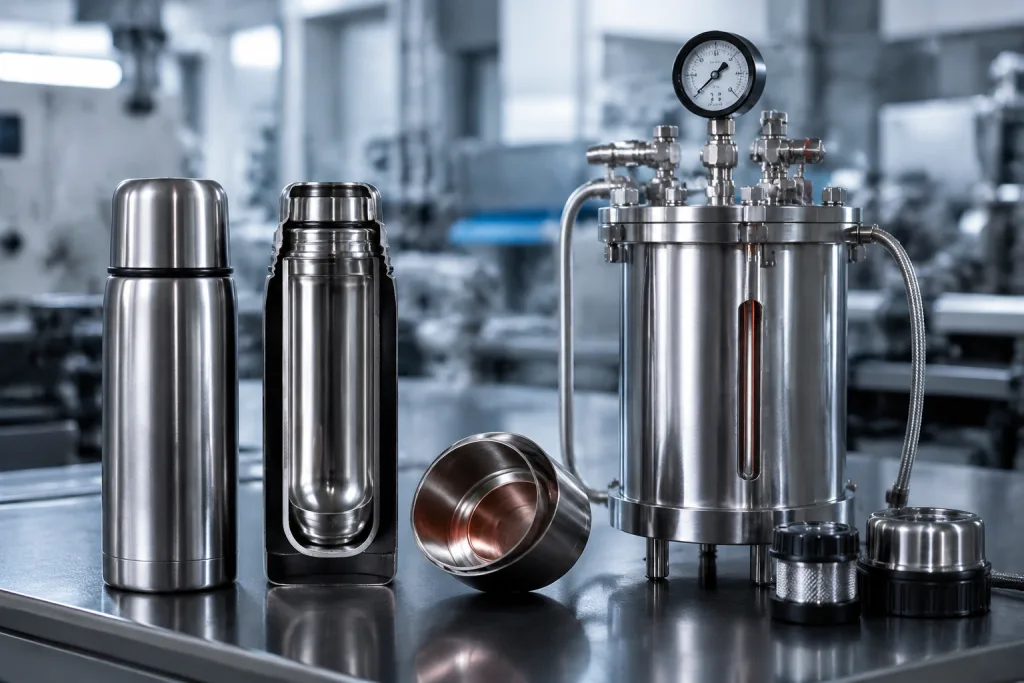
I’ll rewrite the three paragraphs in-place, keep the HTML tags intact, and strip the AI-ish phrasing while adding a few factory-floor specifics.Insulation sits at the core of a stainless thermos, and it is also where weak factory control shows up first. A proper double-wall body uses 18/8 stainless steel, usually 304 for the inner liner and outer shell, with a vacuum gap that stays stable across the lot. If the seam weld wanders, the vacuum drops even when the sample passes. We have seen that happen on the line. That is why a manufacturer thermos order needs process checks, not just incoming material control.
For a standard 500-750 ml bottle, ask for hot retention of 6-12 hours and cold retention of 12-24 hours, based on cap design and room temperature. “Keeps drinks hot all day” is a weak answer. Ask for the start temp, ambient temp, and the reading interval. A solid thermos manufacturer in China should show the test sheet and the fail line. If the factory has no vacuum leak test, no infrared check at the weld seam, and no thermal log, the job is not ready for serious distribution.
In China, the better thermos manufacturers pair sample approval with batch sampling under AQL standards. For insulation, we keep AQL 2.5 on appearance and tighter internal checks on heat retention; the math does not work any other way. On one PO, the buyer flagged a 12 mm cap typo, and QC pulled the sample before packing. If you are building a promotional thermos line, focus on fewer returns, not a 6-cent unit saving. Winter retail will expose a weak bottle fast.
Coating chips and print wear
I’ll rewrite the section with a more natural sales-engineer tone, keep every HTML tag and list structure intact, and preserve the technical specifics already in the copy.Decoration failures look small on paper, then they hit sell-through. A customized thermos or thermos customized with a matte powder coat can leave the line looking sharp on day one and come back scratched after a few weeks in a backpack. Screen print and laser marking do different jobs: screen print holds stronger color, laser gives a cleaner permanent mark, and both depend on surface prep. QC pulled one oily sample last month, and the adhesion dropped fast when the bake was off by 10-15°C. This is the wrong question to treat as a finish issue.
Ask the supplier what coating thickness they actually hold. For powder coat, 60-80 microns is the working range we run. Go thinner and the steel starts to show through; go thicker and edge chips show up sooner on impact corners. If you want a customizable thermos for retail, ask for tape test or cross-hatch adhesion before approval. For print, we ship better when the buyer asks for abrasion testing and dishwasher simulation, because a matte lid that looks good on a desk can fail in carton rub after 5,000 pieces. Some thermos suppliers in China can nail one sample. Keeping that finish stable from Hangzhou to Europe is where the math gets real.
- Use laser engraving for a permanent logo with no ink wear.
- Use powder coat only after the cure cycle is confirmed by batch.
- Require carton and product rub tests for any matte finish.
Carton damage and transit abuse
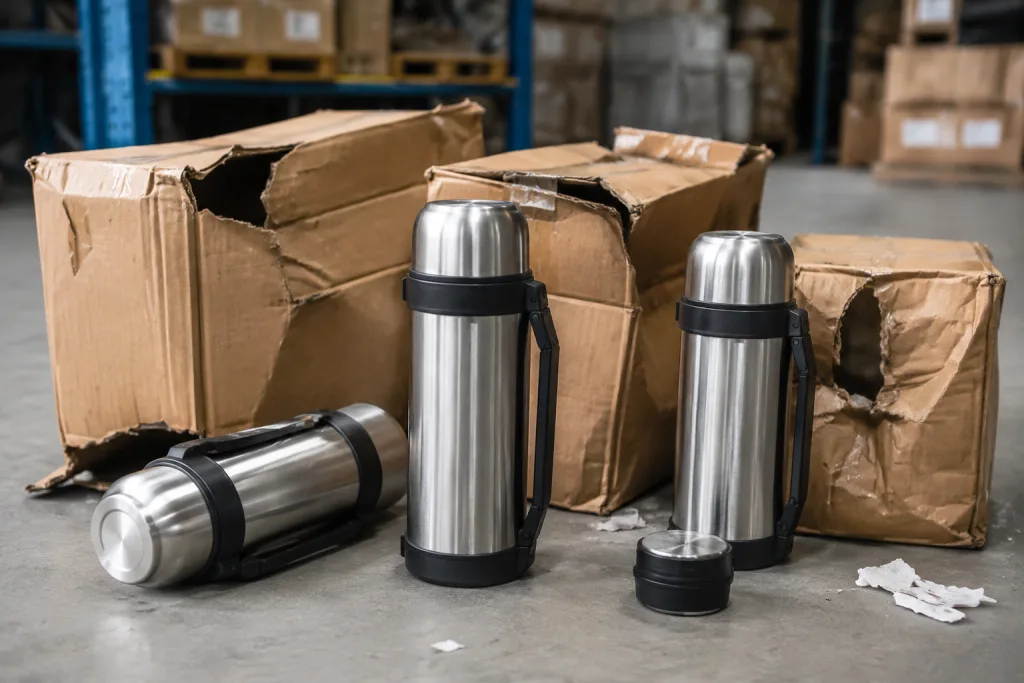
I’ll rewrite the prose only, keep the HTML tags intact, and make it sound like a factory-side sales engineer wrote it.Retail buyers often blame product quality when the real problem is the carton. A stainless bottle can leave our line with a perfect body and still reach the DC dented if the outer case is weak. We see this on bulk thermos shipments all the time: the factory chases pack count, then forgets compression strength. A 24-piece master carton with 3 mm dividers may save freight volume, but if the case fails a 1-meter drop, the pallet is done. That hurts margin faster than a bad lid.
Set the shipping spec before we run production. Ask for inner tray protection, bottle-to-bottle spacing, and a carton BCT that matches stacked pallets. If the goods go to Amazon or a retail DC, ask for an ISTA-style drop sequence or at least a 5-edge drop test. For a thermos distributor order, this is not a side detail. A good thermos factory in Zhejiang should show transit pressure, humidity, and vibration data; if they only talk about foam thickness, the math does not work. QC pulled a sample with crushed corners once, and the buyer flagged it before shipment.
We usually run a pilot of 200-300 pieces before a full 10,000-unit order. That shows carton failures in real transit, not just on a clean sample table. If the outer box bows, we fix the board grade or change the insert. A new bottle mold is the wrong question to ask.
Compliance and buyer controls
I’ll keep the HTML intact and rewrite only the prose, with tighter buyer-language and a few factory-floor specifics.Compliance is where a professional buyer stops sounding casual. If you sell into Europe or North America, a thermos needs more than a clean finish. Ask for food-contact compliance, REACH files for coatings and inks, and the ASTM or ISO reports behind the material and thermal claims. If the exterior is painted, we check the coating system against the real use case, not a brochure promise. If you add a silicone straw lid or gasket, ask for material declarations on each contact part. A serious thermos supplier should answer fast and in writing. We’ve seen this go sideways when the buyer accepted a verbal “all good” and QC later found the ink spec never matched the PO.
Control is also contract work. Put the defect definition in the purchase order: leaks, cosmetic chips larger than 1 mm, off-center logos, and thermal failure all need a line item before ship. Tie sample approval to AQL, and make sure the pre-production sample matches the mass-production stack, from the liner thickness to the cap insert. For a supplier thermos program, I’d approve the plainer sample with full test data before I’d sign off on a glossy one with no report. The math doesn’t work the other way. That matters even more for thermos promotional runs, where buyers get pushed to move fast and skip the paper trail.
Our Hangzhou team in Zhejiang runs OEM and ODM thermos work at about 120,000 units per month, with MOQ from 1,000 units for one logo and 3,000 units when the decoration changes the process. QC pulled the sample against the line sheet last week, and that check is what keeps repeat orders on track instead of turning them into rework.
How to spec your next order
I’ll keep the HTML intact and rewrite the prose in a more grounded factory-sales voice, with concrete specs and fewer marketing phrases. Next I’m editing the three paragraphs to make them sound like a real supplier engineer wrote them.If you want fewer surprises, build the order around failure control. Start with a body spec: 18/8 stainless, 0.35-0.45 mm wall thickness, double-wall vacuum, and a finish that matches the sales channel. Add lid requirements next: gasket material, torque range, drop behavior, and leak test method. Then lock packaging and compliance. That is the gap between a casual thermos supplier and a reliable thermos vendor. It is also the gap between a one-off import and a reorderable line your team can place again without rehashing every detail.
For outdoor retailers, we run grip, impact resistance, and lid retention first. For promotional brands, we run decoration quality, color match, and carton crush strength first. Do not let unit price run the whole deal. A USD 0.20 swing on 10,000 pieces matters less than a 2% return rate. We’ve seen that math go sideways fast. On the line, a 1.2 mm lid gap or a missed laser logo position can turn into a buyer complaint before the first container lands. If your current thermos manufacturer cannot name the QC checks in plain language, stop on process before you talk logo placement.
When you compare thermos manufacturers or thermos distributors, use one test: ask for the top three failure points and how they catch each one on the line. We usually hear the weak answers in under 2 minutes. The better the answer, the less you pay later.
Spec your next thermos order properly
Send your target price, volume, and lid style. We’ll turn it into a production-ready thermos custom plan with QC checkpoints and packaging specs.
Frequently asked questions
What MOQ should I expect for a supplier thermos order?
For a standard stainless supplier thermos program, MOQ usually starts at 1,000 units per design and color. If you need special lid tooling, a new mold, or deeper decoration changes, 3,000 units is more realistic. At our Hangzhou factory in Zhejiang, standard lead time is 35-45 days after sample approval, with 120,000 units per month capacity. For promotional thermos runs, lower MOQ often means higher unit cost because the setup work is the same.
What stainless steel grade should I request?
Ask for 18/8 stainless steel, commonly 304 on the inner wall and outer shell. For food contact, that is the safest baseline for a custom thermos or bulk thermos line. Wall thickness should usually sit around 0.35-0.45 mm depending on size and target price. If a thermos supplier offers thinner steel to cut cost, check dent resistance and vacuum stability first. Thin steel can look fine in sample form and still fail in retail handling.
How do I test leak resistance before ordering?
Require a 100% leak test on finished units, not just sample testing. The simplest control is inversion for 24 hours with room-temperature water, plus a torque check on the lid. For a thermos customized for travel or outdoor use, add shake testing and cap-cycle testing at least 20-30 open-close cycles. AQL 2.5 is acceptable for appearance, but leak-related defects should be treated as critical and inspected far more tightly.
What decoration method lasts longest on a promotional thermos?
Laser engraving is usually the most durable because it marks the metal directly and does not rely on ink adhesion. Powder coating with screen print can also work well if the bake cycle and surface prep are controlled. For a customized thermos or thermos promotional order, ask for tape test results and abrasion data. If your logo must survive heavy retail handling, laser is the safer choice, even if the look is less colorful.
Can a thermos factory in China handle both retail and promo orders?
Yes, but the spec should differ. Retail needs stronger packaging, more repeatable decoration, and better carton performance. Promotional thermos orders often focus on logo speed and cost, but they still need the same leak and insulation controls. A capable thermos factory in Zhejiang should manage both if it has stable assembly lines, in-house QC, and documented compliance. Ask for production photos, testing records, and packaging samples before you place a large order.