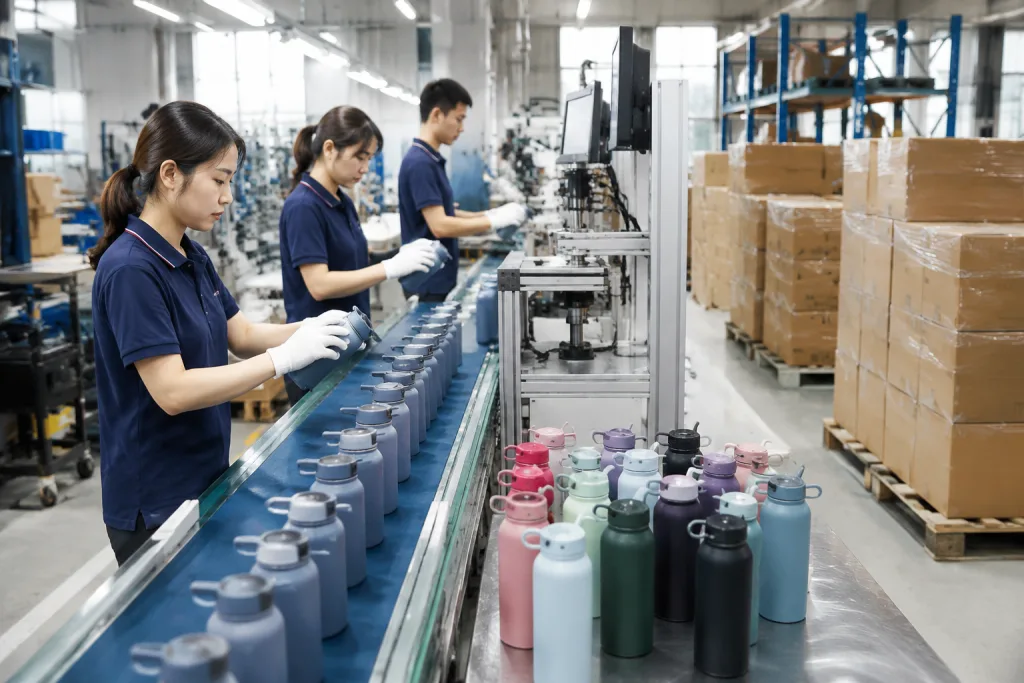
Key Takeaways
- Most silicone sport bottle custom projects need 3,000-5,000 pcs MOQ and 35-45 days lead time after sample approval.
- A sensible FOB target for a 750ml customized drinkware bottle is often USD 2.10-4.20 depending on cap, print, and packaging.
- For food-contact bottles, ask for REACH, LFGB or FDA documentation, plus leak and drop tests before bulk.
- Put wall thickness, cap type, logo method, and carton spec on the PO; vague orders create expensive disputes.
If you are buying a silicone sport bottle custom for retail, promo, or distributor supply, the hard part is not finding a factory in China. The hard part is getting a bottle that survives first production, passes REACH and food-contact checks, and still leaves you enough margin at FOB. We have seen 1.8 mm walls drop to 1.4 mm on the line, and the math stops there. Logo placement comes later. The PO needs the real spec: wall thickness, cap torque, leak test method, and the exact color code.
At BottleForge in Zhejiang, we see the same pattern every week. A canteen distributor asks for a custom drinkware range for spring launch, then sends an RFQ that says only “500ml silicone bottle, good quality.” QC pulled the sample and found a 0.6 mm flash on the cap edge; the buyer flagged it, and they were right. This is the wrong question to ask first. A proper silicone sport bottle custom project starts with use case, then material, then tooling, then sample sign-off, then bulk QC. Get that order wrong and we ship delays, not bottles.
Start with the use case
Start with the use case before you ask for a quote. A silicone sport bottle custom for the gym is not the same job as a hiking canteen, a corporate gift, or a youth sports item. The wall thickness, mouth opening, and cap lock all move with the use. For active use, we usually run 500ml to 750ml, 1.8-2.5mm silicone wall, and a cap that will not pop open in a gym bag. For promo programs, the math changes fast; weight and print area matter more than heat holding. We had one buyer flag a 22mm mouth as too narrow for protein powder, and they were right. QC checked that sample on the bench with a caliper, and it failed the first test.
Write the RFQ like a buyer who has seen the line before. Put in capacity, target market, annual volume, and whether you want single-color, two-tone, or translucent silicone. If you are a canteen distributor or a distributor drinkware buyer, say whether this is shelf stock or a campaign run. QC pulled a sample on one order because the PO said 650ml and the buyer meant 750ml. A Zhejiang canteen supplier quotes faster when the brief is tight, and leaving this vague is the wrong question to ask on day one. We ship cleaner numbers, fewer back-and-forth emails, and the line stops wasting time on guesswork.
- Capacity: 500ml, 650ml, or 750ml
- Use case: gym, hiking, office, promo, or travel
- Material: platinum silicone, food-grade PP cap, stainless insert if needed
- Decoration: screen print, laser mark, or embossed logo
Build the RFQ like a spec sheet
A weak RFQ gets a weak quote. Simple. For a silicone sport bottle custom job, send bottle OD, wall thickness, drawing tolerance, and cap type in the first email. We had one buyer flag a PO typo on the cap note, and the line caught it because the sample cap measured 52 mm, not the 55 mm in their file. Molded logo? Say it plain. That is a tooling job, not decoration, and the extra cost usually lands in the USD 300-900 range depending on geometry.
Our Zhejiang team asks for a short checklist on day one: target FOB price, packaging format, and test requirements. If you need ASTM drop testing, write it down. If your market needs LFGB, REACH, or FDA paperwork, put that in the RFQ too. We run faster when the spec is clean. A buyer once asked us to “make it premium”; QC pulled the sample and the note meant nothing on the production sheet. For a 10,000 pcs launch, add the campaign date and carton count per master box so we can line up the packing table and the carton sealer without guesswork.
Good RFQ inputs are not bureaucracy. They protect your margin.
Useful line items for the RFQ:
- Product code and capacity
- Silicone hardness, usually 50-70 Shore A
- Logo method and logo size in mm
- Packaging: polybag, color box, or mailer
- Target shipment term: FOB Ningbo, FOB Shanghai, or DDP if applicable
Compare quotes on real costs
Once the quotes land, do not rank them by unit price alone. A silicone sport bottle custom at USD 2.35 FOB with a plain polybag can beat USD 2.10 with a custom box if your retail plan needs shelf-ready cartons. We had a buyer flag a PO because the carton spec was 72 x 72 x 235 mm, but the quote only showed the bottle. Ask for a line-by-line quote. The math is simple.
For most custom drinkware orders, I split the cost into five lines: product, decoration, packaging, testing, freight assumptions. That is the clean way. If a supplier says a customized growler style item is cheaper at 5,000 pcs than 3,000 pcs, ask where the saving comes from. On the line, we have seen it tied to material yield, mold shot count, or a price that only works on a repeat order. A serious canteen vendor in Zhejiang will spell that out instead of hiding behind “factory price.” We run this check with a 3.2 mm wall sample on the bench. The wrong question is “what is your lowest price?”
Watch for these quote traps:
- Tooling not included
- Print setup charged per color
- Carton size left blank
- Sample fee not deductible from bulk
- Leak-test standard not stated
Approve samples with hard numbers
Sampling is the gate. We catch the misses there, not after 5,000 pieces are packed. A solid silicone sport bottle custom sample usually lands in 7-12 days after artwork and structure are locked. We run fit, odor, squeeze recovery, seam finish, cap alignment, and leak checks on the bench. For sports use, fill it, shake it, invert it for 30 seconds, then drop it from 1 meter onto a hard floor. QC pulled the sample last week and the cap popped loose on the second drop. That is the kind of issue you want early.
Do not approve a sample because it “looks close.” That is the wrong question to ask. Approve it against numbers you can defend. For a canteen customized order, we want capacity tolerance within +/- 5%, print registration within 1.0 mm, and no leakage after 20 inversions. On one run, the buyer flagged a 0.8 mm logo shift and the math held up, so we reworked the plate before mass production. If the order is a canteen promotional run, test the decoration with 50 rub cycles or the print will wear off before the campaign ends. A China factory that cannot handle that test is telling you something.
Sample sign-off should include:
- Signed sample photo set
- Approved cap color and bottle color code
- Test record with date
- Any deviations written into the PO
Write the PO like a contract
The purchase order is where the job turns real. Loose PO, loose build. If the PO is vague, the factory follows the last email, not your target. For a silicone sport bottle custom order, write the product name, color, capacity, decoration file name, packaging spec, and inspection standard into the PO itself. We had a buyer flag a 32 oz bottle as 30 oz on the PO once, and QC pulled the sample on the spot. That typo burned two days. For a canteen distributor, add the market SKU and barcode rule. If Amazon FNSKU labels are needed, say so on the PO. Skip it, and you end up hand-repacking cartons in the warehouse.
I also put bulk acceptance criteria on the PO. AQL 2.5 for major defects and 4.0 for minor defects is common for consumer drinkware, but the risk profile still decides the call. Put the approved sample number on the PO, state the carton drop test if relevant, and define whether overrun or underrun is allowed by 3% or 5%. The math does not work if that is left open. We run 50,000 pcs per month on standard models, and the line stays clean only when the paperwork is tight and the ship date is fixed. One buyer wrote "ship ASAP" and then pushed back on 12 days versus 18 days. That line cost a week.
PO line items should cover:
- Product and SKU
- Material and color code
- Decoration file and position
- Packaging and carton count
- Inspection standard and ship date
Bulk production needs checkpoints
Bulk production leaves no room for guessing. We run a simple gate on the line: raw material intake, first-piece signoff, mid-line check, then final AQL 2.5 before release. On a silicone sport bottle, color shift and cap fit catch most rejects. QC pulled one sample last month and found a 1.2 mm gap at the lid seat. That bottle stayed in the workshop. For retail drinkware, we also check barcode scan rate, carton marks, and master carton cube. A carton that is 5 cm larger on each side changes freight math fast.
In our Zhejiang workshop, a normal run is 35-45 days after sample approval for a 3,000-10,000 pc order, depending on tooling and packaging. We ship on that timing only when the spec stays still. The buyer flagged a typo on a PO once, and the cap color code changed by one digit; the batch had to wait. This is the wrong question to ask if someone says, "Can you squeeze it in?" The line cannot fix a bad PO. If you work with a canteen supplier that also runs a custom growler or customizable growler line, ask how they stage mixed orders on the same shift. We have seen that go sideways. Bad scheduling gives you print mismatch and a warehouse mess.
Use this checkpoint list during production:
- Raw material certificate on file
- First-piece sample signed off
- In-line inspection every 2 hours
- Final inspection report before balance payment
Choose the right partner type
A seller is not a partner by default. A canteen vendor that only resells stock items can handle a rush promo order, but it falls apart on a silicone sport bottle custom job once tooling, wall-thickness checks, and compliance docs start stacking up. We run a 24-cavity mold and a 5000 pcs MOQ for a reason. For real control, you want a canteen manufacturer or, better, a canteen factory that can show material traceability, in-line QC, and test records from the line. The label matters less than proof: audit reports, production photos, and lab files. On one order, the caliper showed a 1.8 mm wall on the sample and the buyer pushed back in five minutes.
If you source from China, ask for BSCI if social compliance is on your checklist, and ask for food-contact documents if your market requires them. Europe usually wants REACH on the table. North America often needs FDA-related material data, but paperwork alone does not tell you whether the factory is holding the resin lot, the pigment batch, and the cure time in control. QC pulled the sample on a 70 Shore A body last month and the buyer flagged it because it felt too stiff against a 50 Shore A version. That is the kind of detail that separates a real supplier from a sales desk in Zhejiang. This is the wrong question to ask if you only look at the company name. We’ve seen that go sideways on a PO where "sillicone" was typed wrong and nobody caught it until pre-production.
In practice, the best fit usually looks like this:
- Canteen promotional buyer: stock-component vendor with a 7-day ship window
- Distributor canteen buyer: manufacturer with stable repeatability on each 3000 pcs lot
- Brand owner: factory with tooling, testing, and artwork control at one desk
Send your spec and get a real quote
We quote from drawings, target price, and market requirements, not vague photos. If you need a Zhejiang canteen manufacturer, we can turn your RFQ into a workable PO.
Frequently asked questions
What MOQ should I expect for silicone sport bottle custom orders?
For most silicone sport bottle custom projects, a realistic MOQ is 3,000 pcs for a single color and 5,000 pcs if you need custom molding, multi-color printing, or special packaging. Smaller trial runs are possible, but they usually push unit cost up by 15% to 30%. If you need a canteen custom or custom canteen shape with new tooling, expect a separate tooling charge and a longer setup cycle. A serious canteen factory in Zhejiang should tell you the MOQ before sample work starts.
How long does sampling and bulk production take?
Plan on 7-12 days for a pre-production sample after artwork and structure are confirmed. Bulk lead time is usually 35-45 days after sample approval for a 3,000-10,000 pc order. If you add molded logos, special cartons, or extra testing, add another 5-7 days. In China, the fastest projects are the ones where the buyer approves color, logo, and packaging in one round instead of dragging the process across several revisions.
What price range is normal for customized drinkware bottles?
For a silicone sport bottle custom order, FOB pricing often lands around USD 2.10-4.20 per piece depending on size, wall thickness, cap complexity, print colors, and packaging. A simple promo bottle with polybag is cheaper than a retail-ready customized drinkware item with color box and barcode labels. Tooling, if needed, is usually separate. If a quote looks too low, ask what was removed from the spec; the missing line items usually show up later.
Which compliance documents should I ask a canteen supplier for?
At minimum, ask for food-contact material declarations and REACH support for Europe. If you sell into the U.S., ask for FDA-related material declarations and basic migration data. For quality control, request AQL inspection reports, leak-test records, and, if relevant, drop-test results. If the supplier has BSCI and ISO-style quality documentation, that helps, but paperwork alone is not proof. You still need sample approval and a clear PO.
How do I avoid mistakes on the purchase order?
Write the PO with the same detail you want in the final shipment. Include SKU, capacity, silicone hardness, cap style, logo file name, print position, packaging format, carton count, AQL level, and ship date. Attach the approved sample photo and any written exceptions. For distributor drinkware programs, include barcode and FNSKU needs. The best way to avoid disputes is to remove guesswork before the canteen manufacturer starts mass production.