Key Takeaways
- Typical MOQ for silicone polypropylene bottle wholesale starts at 3,000-5,000 pcs per SKU, with 30-45 day lead time after sample approval.
- FOB pricing for a 500-650 ml PP bottle with silicone sleeve usually lands around USD 1.20-2.80 depending on mold, decoration, and cap structure.
- For food-contact exports, ask for REACH, LFGB where needed, and migration test reports; do not rely on a declaration alone.
- AQL 2.5 major / 4.0 minor is standard for bulk drinkware, but decorated orders should add a 100% visual check on logo placement.
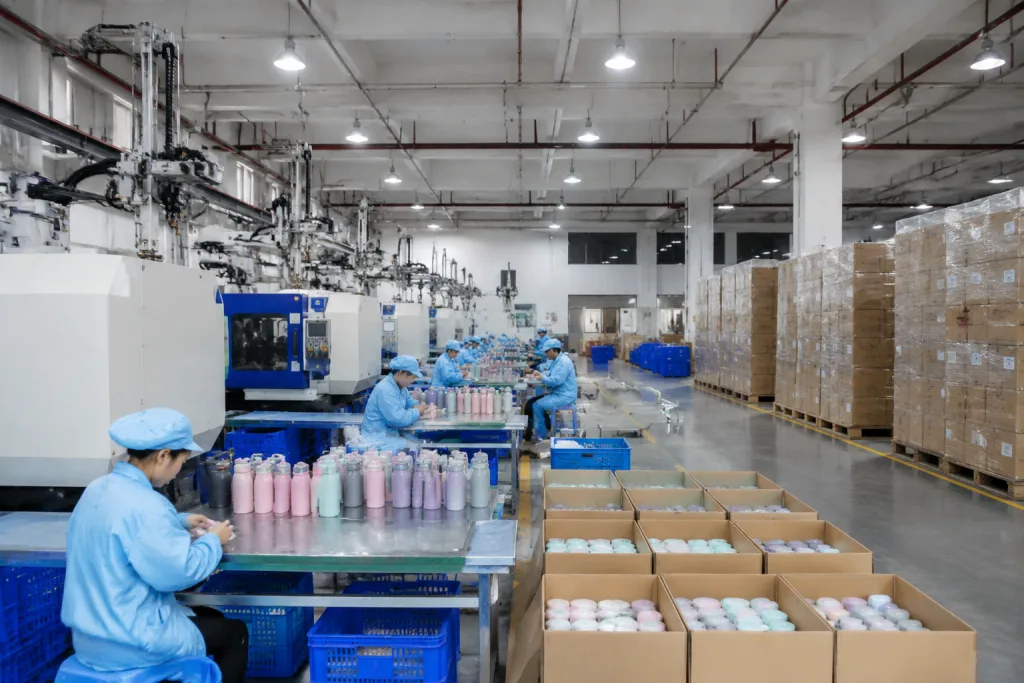
You are not buying a bottle. You are buying a repeatable order that has to pass spec, compliance, margin, and delivery without burning 30 days in email. That is the gap between a clean sample and a silicone polypropylene bottle wholesale program that actually lands on your dock on time. We run this with tooling, cycle time, and rejection rates, not brochure talk. On one line, a 1.2 mm overmold held; at 1.5 mm, the buyer flagged the weight. That detail decides the order.
If you are comparing bulk drinkware for retail, promotions, or private label, shape is the easy part. Silicone overmold thickness, polypropylene resin grade, lid seal geometry, carton drop results, and whether the print survives 50 dishwasher cycles hit landed cost fast. A solid supplier gives you MOQ, lead time, and test standards before you ask twice. A weak one hides behind vague promises and calls it flexibility. The math does not work. We have seen this go sideways on a PO with a lid typo, and QC pulled the sample before the line ran.
Start With the Use Case
Before you quote a silicone polypropylene bottle wholesale order, lock down what the bottle has to do in the buyer’s hand. A 500 ml gym bottle for retail is a different job from a 750 ml promo canteen for a trade show, and both sit apart from a bulk canteen order for school or outdoor channels. Same resin stack. Different line setup. Wall thickness, lid style, leak test target, and print method all shift once the use case is clear.
Start with four numbers: capacity, target retail or wholesale price, annual volume, and market compliance. For EU distribution, we run REACH checks, food-grade silicone, and a lid that survives repeated hot-wash cycles. For a bulk growler, cap torque, handfeel, and carton density matter more than color count. QC pulled the sample at 58 mm neck finish after the buyer flagged a loose cap in the first carton. That is the right way to run it. Asking for a price first is the wrong question.
In Zhejiang, a good factory will push you to pick one main use case first, then build the structure around it. We see this go sideways when a bottle is asked to be wholesale drinkware, a canteen bulk item, and a premium gift on one PO. The math does not work. You end up with a 1.2 mm wall, a fussy lid, and a unit cost that kills the margin before the first shipment leaves Hangzhou.
Choose the Right Material Stack
Silicone polypropylene bottle wholesale is a two-material call: PP for the body or cap structure, silicone for the grip, sleeve, gasket, or bite-safe parts. PP is light, stable, and cheap to mold. Silicone gives better hand feel and seal, but it adds one assembly step and one more QC check. We run that line every week. The buyer usually flags flash first, then bond lines, then odor.
For a 550 ml bottle, a common PP wall is 0.8-1.2 mm, with a silicone sleeve around 1.5-2.5 mm depending on the mold. On one run, QC pulled the sample at 1.0 mm and found the sleeve fit was fine, but the cap thread needed a 0.2 mm adjustment. If the bottle is for cold drinks only, that stack is enough. Hot-fill is a different job. PP softens under heat faster than stainless, so the spec should say that plainly instead of pretending the bottle can do everything.
- PP body: light, low cost, and workable for 3,000+ pcs MOQ orders
- Silicone parts: better grip and sealing, with more hand work on the line
- Color matching: solid Pantone tones need a tighter tolerance than translucent finishes
- Odor control: ask for pre-production venting if the bottle carries a heavy silicone sleeve
If you are comparing alcohol flask bulk or beer tumbler bulk style requests, do not assume the same material stack will pass. We have seen that go sideways when a buyer wanted a soft-touch sleeve for a promo bottle, then complained the mouthfeel was wrong for a bar channel. PP and silicone are fine for casual drinkware, but the spec has to match the use case. China factories in Zhejiang can ship fast. The math does not work if the material promise is off.
Price the Order Like a Buyer
A pricing talk that starts with “what is your best price” burns time fast. On wholesale drinkware, the number comes from the BOM, the decoration, the tooling, and the pack-out. A 500-650 ml silicone polypropylene bottle wholesale order with one-color print, one-color sleeve, and a standard carton usually lands around USD 1.20-2.80 FOB China. Add a custom cap shape, two-piece silicone, or gift box packing, and the quote moves up fast. We’ve seen buyers push back on that, then the PO comes back with a typo on carton count and the math still does not work.
Use this framing instead:
- Material cost: resin grade, silicone compound, color masterbatch
- Tooling: new mold often runs USD 4,000-12,000 depending on complexity
- Decoration: silkscreen is cheaper than laser or wraparound print, but not always more durable
- Packing: polybag, box, insert, master carton, and palletization all add up
If your program is canteen wholesale or wholesale growler for a seasonal campaign, ask for a stepped price at 3,000 / 5,000 / 10,000 pcs. That tells you whether the factory is serious about scale. QC pulled the sample on our line at 1.5 mm wall thickness and found the print rubbed after the third wipe. That changes the quote. A factory in China with 120,000 units per month can still price badly if the BOM is unclear; scale does not fix a weak spec. Better suppliers in Zhejiang break out each component and give you a clean FOB number instead of hiding labor inside “miscellaneous.”
Sample Before You Commit
Sampling is where you find out whether a supplier knows the line or just talks a good game. For a silicone polypropylene bottle wholesale order, ask for a pre-production sample, not a hand-polished showpiece. We run this every week in Hangzhou. The sample has to match the real mold, the real silicone hardness, the final print method, and the carton size you will actually ship.
Use the sample round to check three things that decide a bulk order:
- Leak and seal: fill it, invert it, shake it, then leave it overnight at room temperature
- Fit and finish: cap alignment, seam line, logo position, and gate marks
- Odor and feel: silicone smell, PP surface texture, and whether the bottle feels cheap in hand
If you are sourcing beer growler wholesale bulk or beer growler in bulk for a beverage brand, a cap that is 0.5 mm loose can blow up the whole job. We've seen that go sideways. For a promo bottle, a weak thread may pass on a desk and fail in a bag. Ask for two units from each cavity if the tool is multi-cavity; QC pulled the sample last month and found a 1.2 mm logo shift between cavities. A solid factory will take that request and give you a 7-10 day sampling cycle after mold readiness. A weak supplier sends one pretty piece and hopes the buyer does not ask for a second.
Do not approve a sample that only looks right. Approve the one that holds up in normal use, shipping, and storage.
Control the Factory QC
Quality control is not a certificate. It is a set of checks tied to your risk. For wholesale canteen or wholesale drinkware orders, we run incoming resin review, in-process molding checks, decoration adhesion checks, and final packing control. QC pulled the sample before the lid press was set, and that is normal on a busy line. If a factory cannot tell you where defects are caught, they are sorting them, not controlling them.
For a typical order, ask for this structure:
- Incoming material check: PP and silicone lot verification, odor check, COA review
- In-process inspection: flash, short-shot, sink marks, cap thread fit
- Final inspection: AQL 2.5 major, 4.0 minor, with added logo position control
- Functional test: 100% leak test on caps, or at least a documented sample rate for multi-cavity lines
For drinkware wholesale programs sold into Europe and North America, ask for REACH compliance and the relevant food-contact migration documents. If the product uses colorants or additives, ask what changed since the sample. We had a PO with “sillicone” typed three ways, and the buyer flagged it before we cut steel. That matters because the math does not work when a resin swap slips in after approval. In Zhejiang, the real problem is usually a last-minute material change or a rushed packing shift. Bad QC explains it after shipment.
If you are running alcohol flask wholesale bulk or beer tumbler wholesale bulk as a broader drinkware mix, keep a separate QC sheet for each SKU. We ship too many mixed cartons to treat this as a theory. One wrong lid or insert in a carton is enough to turn a clean 2,000-piece run into a claims file.
Plan Packaging and Cartons
Packaging is where a lot of buyers leave margin on the table. A silicone polypropylene bottle wholesale order can ship clean and still pack badly, then the freight bill bites. If the bottle is bulky, carton loading drops and unit cost climbs. We saw it on a 550 ml run with a 58 mm cap; the line fit looked fine on paper, then the pallet count jumped from 20 to 24 and the math got ugly. That matters for Amazon, retail, or distributor stock.
Ask the factory for carton count, carton dimensions, and pallet pattern. A 60-piece master carton can cut packaging cost, but if the carton wall is weak or the outer size is off by 8 mm, damage and freight wipe out the gain. We had a buyer push back on a beer growler wholesale order because the master carton came in 2.5 kg over target, and the numbers stopped working. For wholesale growler programs, the body is larger and the cap area takes more abuse in transit. This is the wrong question to ask if you only look at unit price. We run a lot of 3-ply and 5-ply tests on the box line, and the result is usually plain.
Do not ignore labeling. If you need FNSKU, item barcodes, or retail-ready stickers, say so before production starts. Re-labeling in the U.S. or Europe is slower and costs more than doing it in Zhejiang, and we have seen PO typos like “FNSKU” turn into a week of email back-and-forth. If the buyer asks for canteen wholesale and wholesale canteen labels in one shipment, the factory should give carton-level identification and SKU segregation. That is basic discipline, not a premium service. QC pulled the sample and caught a mixed-SKU carton on a 24-slot packout.
The best wholesale drink bottle for your channel is the one that survives warehousing without repacking. If the bottle moves as drinkware bulk into distribution, a clean outer carton and a readable master label save receiving time and cut claims. QC pulled one carton set last month and found crushed corners after a 1.2 m drop test. We ship less headache that way, and we keep the line on spec.
Ship It Without Surprises
Shipping terms decide how much control you keep. Most silicone polypropylene bottle wholesale buyers start on FOB China because it gives a clean price check on the same 20GP basis. Once the line is stable, some buyers switch to DDP, but that only works after the bottle spec, carton drop test, and destination rules are locked. For a new program, FOB is the honest start. The math does not work any other way.
Lead time for a standard order is 30-45 days after sample approval and deposit. If the mold is new, add 15-25 days for tooling and trial shots. We ran one PP cap at 18 days from first steel cut to OK sample, and QC pulled the sample at 0.8 mm flash. A plant in Hangzhou or anywhere in Zhejiang should show capacity by line, not by sales talk. If they quote 120,000 units per month, ask how many cavities are on your SKU and how much of that month is already booked. The buyer flagged one PO typo on the carton count, and it pushed the ship date by 4 days.
For procurement managers, the final pre-shipment file should include:
- signed sample reference
- packing list and commercial invoice
- inspection report with photo records
- test reports and compliance declarations
- carton labels and barcode file
That file keeps a simple wholesale drinkware order from turning into a dispute. We ship against those docs because the warehouse needs facts, not guesses. One missed HS code or a bad carton mark can stall receiving for 7 days. We've seen that go sideways fast. This is where buyers usually ask the wrong question. The real issue is whether the paperwork matches the line, the carton count, and the booking before the truck leaves.
Match Channel to Product
Not every buyer wants the same bottle. A retail brand wants a clean cap line and pad-print registration within 0.2 mm. A distributor cares about landed cost and repeat orders. A promo buyer wants stock colors, 7-day turnaround, and canteen bulk pricing. We run this split every week at the assembly table. Match the channel to the product before the RFQ goes out.
If your category includes bulk canteen, bulk growler, alcohol flask bulk, or beer tumbler bulk requests, split the end use from the material stack. A promo beer tumbler in bulk may need a different seal than a branded wholesale growler on a retail shelf. A compact alcohol flask wholesale order often cares more about pocket fit and decoration wear than grip. QC pulled the sample on a 58 mm cap last month, and the buyer flagged wobble after 200 open-close cycles. The math does not work if you bundle all four products into one quote.
A solid supplier in China will narrow it fast. In Zhejiang, the better teams think like production engineers and export people at the same time. They will tell you when a silicone polypropylene bottle wholesale project is one SKU and when it is three different products wearing the same name. We had a PO last quarter with “wholsale” in the spec and a missing seal color code; the line stopped for half a day while we cleaned it up. That honesty saves rework. It also protects margin.
If you want the order to move cleanly, choose one channel, one bottle structure, and one quality standard. We ship cleaner on MOQ 3,000 than on a mixed 800-piece test with three lids. Simple. The wrong question is how many lid options you can squeeze in. The right one is which version your buyer will reorder in 12 days instead of 18.
Send your spec and get a real quote
Share capacity, target price, artwork, and destination. We will quote the right silicone polypropylene bottle wholesale structure, not a generic catalog number.
Frequently asked questions
What MOQ should I expect for silicone polypropylene bottle wholesale?
For a standard silicone polypropylene bottle wholesale order, expect 3,000-5,000 pcs per SKU. If the mold already exists and decoration is simple, some Zhejiang factories may start lower, but the unit price usually improves only after 5,000 pcs. For custom colors or new tooling, 8,000-10,000 pcs is more realistic. A serious supplier should also tell you the cavity count, monthly output, and whether the MOQ changes for repeat orders. If they cannot, they are not pricing the real job.
How much does a PP bottle with silicone parts usually cost FOB China?
For a 500-650 ml bottle, a reasonable FOB China range is USD 1.20-2.80 per piece depending on mold cost, cap complexity, decoration, and carton format. A plain body with one-color print is at the lower end. Multi-part silicone, premium packaging, or custom lid geometry pushes the cost up. If you are comparing bulk drinkware quotes, ask each supplier to separate material, labor, decoration, and packaging. That is the only way to see whether the quote is real or just padded to look competitive.
Which tests should I ask for before shipment?
Ask for food-contact compliance documents, typically REACH for Europe and relevant migration testing based on your market. For the physical side, request leak testing, cap torque checks, drop testing, and a final inspection under AQL 2.5 major / 4.0 minor. If the product has printed logos, ask for adhesion or abrasion checks. For beer growler wholesale bulk or similar larger formats, carton drop testing matters more because transit damage rises with size and weight. A clean test file should match the approved sample exactly.
What lead time is normal for a custom order from China?
For a standard custom order from China, plan 30-45 days after sample approval and deposit. If a new mold is required, add 15-25 days for tooling and trial, so the total can land around 45-70 days. In Zhejiang, efficient factories can move faster on repeat tooling, but only if your artwork, carton spec, and compliance file are already fixed. The biggest schedule risk is not molding speed; it is slow approval of samples, labels, or packaging details.
Can I mix canteen wholesale and growler wholesale in one program?
You can, but only if the structure, size, and packaging logic are close enough to share production resources. A canteen wholesale SKU and a wholesale growler SKU often need different lids, carton sizes, and QC checks, so combining them can create confusion rather than savings. If you are building a broader drinkware wholesale line, keep each SKU separate on the RFQ and ask for pricing by cavity, by carton, and by finish. That gives you a clean comparison and avoids cross-shipping errors at the factory or warehouse.