Key Takeaways
- Tooling costs for custom silicone molds typically range from $1,500 to $5,000 USD, significantly lower than injection molding for rigid components.
- MOQs for custom colors start at 1,000 units, while fully custom shapes may require 3,000+ units to justify the mold utilization.
- Standard lead time from mold creation to delivery is 45-60 days, with sea freight accounting for 30-40 days.
- Silicone raw material costs can fluctuate by 10-15% based on oil prices, requiring a locked-in quote validity period.
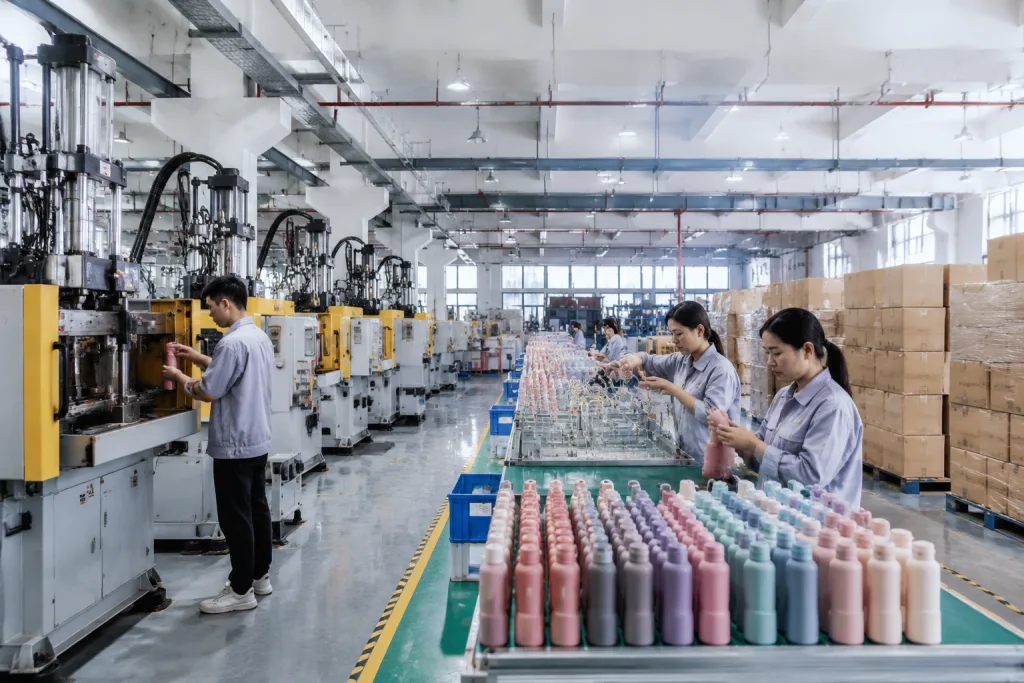
Buying silicone bottles is not the same as buying 304 stainless tumblers. The upfront tool cost is lower, but the price moves fast once you ask for a custom cap, a logo pad, and a Pantone match. We run this in Hangzhou every week. A 1,000 pcs order and a 5,000 pcs order sit in different cost bands, and that is the first thing a buyer usually misses.
This guide breaks down the cost drivers and lead-time traps we see in Zhejiang. A 48-cavity mold, a 1.2 mm wall spec, and an MOQ change can move landed cost more than the ex-works line on the PO. QC pulled the sample on Tuesday and found a gate mark at the finish edge. The buyer would have flagged it anyway. This is the wrong question to ask if you are trying to build a budget with the factory.
Mold and Tooling Cost Realities
Send a custom design to a silicone drink bottle factory, and the first line on the quote is the mold fee. Normal. For stainless steel hydroforming, tooling often clears $10,000 USD because the dies are heavy and the press setup takes more time. Silicone compression molds sit lower. For a standard customizable bottle shape, we usually quote $1,500 to $4,000 USD, depending on wall detail and cavity count. On the line, the buyer always asks why a simple bottle still needs tooling. The math does not move.
Do not read "affordable" as "short-lived." We have seen that go sideways. A good mold from a Zhejiang factory can run 50,000 to 100,000 cycles if the steel and venting are right. If your MOQ is 500 pcs, tooling cost per unit climbs fast. Ask the vendor to split mold cost from unit price. We ran into a PO once with the mold fee buried in the bottle price, and the buyer flagged it after sample approval. Own the mold if you may switch factories later. That matters more than people think.
Prototype vs. Production Molds
Some drinkware suppliers offer a lower-cost prototype mold, usually 30-50% of production mold cost, so you can check shape and hand feel before you commit. QC pulled the sample on a single-cavity tool last week, and that is the key point: this is for sampling, not for a full run. You still pay for the production mold when the order goes live. Plan for that from day one if you need physical samples first. A buyer once wanted 200 pcs from a prototype tool. That was the wrong question to ask.
Unit Price Breakdown by MOQ Tiers
The price curve on silicone parts is steep. We run that line every week. A buyer taking 1,000 units pays a much higher unit rate than one taking 10,000, because flash trimming and hand inspection still eat time. QC pulled the sample, found a 2 mm burr on the rim, and that rework lands in the quote. Here is the tiered price structure you can expect from a Zhejiang factory:
- 1,000 - 2,999 units: Highest unit price. The small-run surcharge sits here, and that is normal. Good for a pilot order or a first market test. The MOQ is tight, and the line still needs setup time.
- 3,000 - 9,999 units: Standard pricing tier. Most custom canteen projects land here. The line runs cleaner, and labor gets spread across more pieces. We usually see the unit rate settle once the trimming jig is dialed in.
- 10,000+ units: Volume discount range. Raw material buying gets easier, and mold setup cost is split across more units. At this level, the math starts to move in your favor.
Ask the supplier for a price-break sheet. This is the right question to ask. It shows the exact quantity where the unit price drops, so you can judge whether moving from 5,000 to 7,000 units is worth it. On one PO, the buyer flagged a typo that read 5,000 instead of 7,000, and the math moved by $0.20 per piece. Across one container, that gap adds up fast. We have seen this go sideways on a 40HQ when nobody checked the quantity line twice.
Material Grades and Safety Certifications
Silicone grade sets the bill. We see it on the line every week. Food-grade silicone is the floor for a custom drink bottle, whether the order is a 5,000-piece canteen promo run or a retail SKU. It has to be BPA-free and backed by LFGB (Europe) or FDA (USA) paperwork. A real silicone drink bottle manufacturer should hand over raw material batch certificates before the buyer signs off.
Low quotes usually hide a catch. QC pulled one sample last month and the ash content was off by 3% after burn testing. That is a bad sign. Some canteen vendors push industrial-grade silicone or fillers to shave cost, and the math does not work once REACH or ASTM testing starts failing. We ship enough cartons to know the gap is only about $0.10 to $0.30 per kg, but one customs hold or recall costs far more. Ask for raw material test reports, not a sales promise.
Compliance Tip: For EU shipments, LFGB is the cleaner target. It is stricter than FDA, and we have seen buyers get blocked on this point after the PO had already been printed with a wrong SKU code. Testing runs about $200-$400 per SKU, and that fee is part of market entry, not an extra.
Production Timeline: From Deposit to Delivery
Time costs money in drinkware. Buyers miss the real lead time, then the PO slips and the launch date slips with it. We run this every week in Hangzhou, and the line usually moves tighter than the buyer expects:
- Mold Making & Sampling (15-20 days): We cut the mold on the CNC, QC pulled the first sample, and we sent it by DHL or FedEx. One buyer missed a 2 mm cap groove on the drawing, and that typo added three more days.
- Confirmation & Raw Material Prep (5-7 days): Colors get signed off, then we book silicone and packaging. The buyer flagged a Pantone change at 6 p.m., and the line stopped until we checked the master batch again.
- Mass Production (15-25 days): For 3,000 units, we usually finish in 15 days; 10,000 units takes about 25 days. That is the math. It does not bend because someone wants a faster ship date.
- Quality Inspection (2-3 days): We run AQL 2.5 before packing, then recheck lid fit and wall thickness with calipers. On one lot, QC found a 1.5 mm flash line near the base, so we pulled the batch back.
- Sea Freight (30-40 days): North Europe and the US West Coast sit in this window under normal booking conditions. One 40HQ booking moved two days because the buyer asked to split cartons, and that added handling at the port.
From wire transfer to warehouse arrival, plan on 65 to 90 days. In peak season from August to November, add 10-15 days or the schedule will bite you. Air freight works for urgent promotional orders, but it can push logistics cost to 3x or 4x the sea rate. We have seen buyers push for a 20-day launch plan on a silicone bottle run, and the math does not work unless they accept higher freight and a narrower QC window.
Logistics: FOB vs. DDP Pricing
Incoterms decide who carries the risk, who books the vessel, and who pays if customs holds the container. Most silicone bottle factories in China quote FOB, usually Ningbo Port or Shanghai Port. We run that on the line every week. Under FOB, we get the cartons to the port, then you handle ocean freight, insurance, and import clearance. Clean split. Your forwarder can price-shop instead of swallowing one bundled number. QC pulled a sample carton at 420 mm by 320 mm by 280 mm last week, and that size goes straight into the booking math.
DDP is a different ask. We ship to the door, duty paid, and that fits a buyer with no logistics desk and no China agent. The buyer flagged one DDP quote because the local tax line looked padded by 8%, and the math did not work. We've seen that go sideways before. For a custom growler or a 20,000-piece order, FOB usually lands better on total cost, often 5-10% lower than DDP once the freight invoice and duty are in front of you. A PO typo on one batch turned "Shanghai" into "Shanghi," and the truck booking had to be fixed before we could move it.
Packaging and Accessory Costs
The bottle is only part of the bill. Packaging usually takes 15-25% of FOB, and we have seen it hit the top end when the buyer asks for retail-ready packing on a 500 ml canteen. A plain polybag runs about $0.02 per unit. A color box with a Euro hook slot lands around $0.15 to $0.40, depending on carton weight, like 350gsm or 450gsm. The math does not move by wishful thinking. We checked one run with a tape gauge at 2 mm board tolerance, and the extra print pass showed up on the invoice fast.
Accessories stack up fast. Carabiners, brushes, extra lids all come from sub-suppliers, so we run them through one PO when the MOQ and color match. QC pulled the sample last month and flagged a loose clip on the brush pack; that kind of miss is how margin slips away. If you need a special filter or a new lid mechanism, expect a separate setup fee and a lead time bump. Ask for a BOM that breaks out the silicone body, cap, hangtag, and every insert. We have seen buyers miss a typo on the PO, then argue about who pays for the reprint. The buyer flagged a “500ml” line on a 500 ml order once. Same fight, every time.
Quality Control Standards and AQL
Set the quality bar before the line starts. That is how we avoid a fight after shipment. AQL, short for Acceptable Quality Level, is the number buyers put into inspection plans. For a custom growler or bottle, most buyers write AQL 2.5 for major defects like leaks, tears, or failed seals, and AQL 4.0 for minor issues like small cosmetic marks. We run a 12-point leak check on the bench, and that catches the parts that look fine until pressure hits them.
Silicone brings a few defect types we always put on the table with a canteen supplier:
- Flash/Parting Lines: Extra material at the mold seam. We trim it by hand, and a 0.3 mm edge can turn into a buyer complaint fast. The wrong question is whether it looks “close enough.”
- Dust/Particles: Silicone grabs dust. Cleanroom assembly costs more, but QC pulled the sample and the particle count dropped. That is the tradeoff. On one line, we wiped the parts with IPA wipes every 20 minutes.
- Discoloration: Pigment mix goes off when the batch is not blended right. The buyer flagged it on a Pantone match before. Fair point. A 2 kg color masterbatch change can shift the tone if the mixer time is short.
SGS or Intertek usually charges about $300 per man-day, and a standard inspection takes 1 day. We have seen this go sideways on a 5,000-unit order when the PO typo changed the shade code from one digit to another, so this is not the place to save money. The math does not work. A fresh inspection beats a costly re-run.
Managing Payment Terms and Cash Flow
For a silicone drink bottle order, 30% deposit and 70% balance before shipment is still the standard setup. We run it that way because the line has already paid for molds, silicone sleeves, carton printing, and sample pulls before the first carton leaves packing. A buyer once asked for 30 days open account on a 5,000-piece PO; the math does not work. On a first order, credit terms stay off the table. After 3 to 5 clean orders, we can talk about 30% deposit and 70% against the Bill of Lading (B/L) copy.
For orders above $50,000 USD, Trade Assurance or a Letter of Credit (L/C) gives both sides tighter control. QC pulled the sample on a 750ml bottle run and caught a cap-color mismatch before packing, which is exactly the kind of miss these terms should catch early. Do not send 100% by wire transfer up front. That is the wrong question to ask. We have seen it go sideways when the buyer flagged a PO typo and wanted the whole order reworked after the line was already set.
Request a Detailed Quote for Your Custom Bottle
Send us your specs. We provide a transparent cost breakdown including tooling, unit price, and logistics within 24 hours.
Frequently asked questions
What is the typical MOQ for a custom silicone bottle?
The standard MOQ for a custom silicone bottle is 1,000 to 3,000 units per color. If you require a custom shape requiring a new mold, the MOQ may be higher (3,000-5,000 units) to ensure the factory recovers the tooling setup costs. Stock shapes with custom logos can sometimes be ordered at 500 units.
Can I get a sample before mass production?
Yes. Most canteen manufacturers provide existing samples for free, with the buyer paying shipping. For a customized canteen with a new shape, you must pay for a prototype mold ($500-$1,500) and wait 10-15 days for the sample. This step is crucial for verifying dimensions and wall thickness.
How long does shipping take from Zhejiang to the US?
Sea freight from Ningbo Port (Zhejiang) to Los Angeles takes approximately 20-25 days, while shipping to the East Coast (New York) takes 35-40 days. Add 7-10 days for customs clearance and drayage. Air freight takes 5-7 days but costs significantly more.
Are silicone bottles dishwasher safe?
Yes, high-quality food-grade silicone bottles are generally dishwasher safe and heat resistant up to 230°C (446°F). However, always verify this with your canteen supplier, as specific pigments or accessories (like lids) may have different temperature tolerances.
Can I mix different colors in one order?
Most canteen factories allow color mixing within an order, but usually with a minimum per color (often 500-1,000 units). If you order 3,000 units, you can typically split them into 3 different colors. This helps a canteen distributor offer variety without holding excessive inventory of a single SKU.