Key Takeaways
- Lid thread mismatch accounts for over 30% of custom shaker bottle returns; always request a thread gauge report.
- Tritan vs. PP material choice significantly impacts the MOQ, often shifting it from 3,000 to 10,000 units.
- AQL 2.5 is standard for minor cosmetic defects, but critical functional leaks require AQL 0.65.
- Dishwasher safety claims fail when wall thickness drops below 1.2mm; verify with a destructive test.
- Vortex mixer inserts require separate mold tools, adding 15-20 days to the standard lead time.
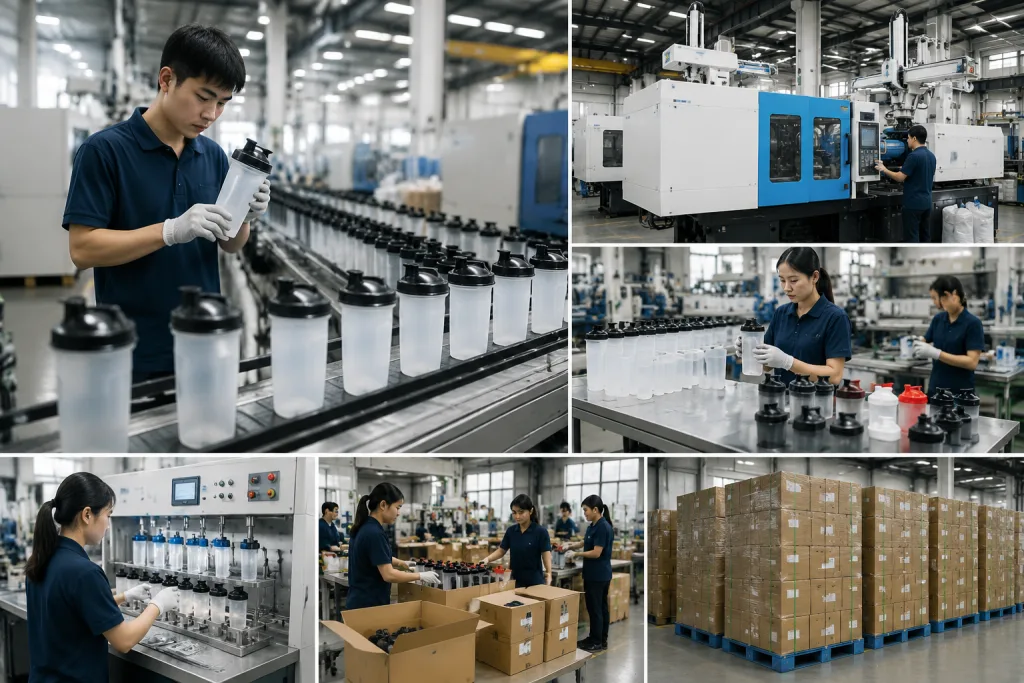
You found a shaker bottle supplier directory online, sent the deposit, and the first carton lands with leaking caps and warped cups. We see that every month. A 500 ml sports bottle can look clean in a listing and still fail on the line if the lid thread is off by 0.3 mm or the PP resin blend is wrong. The buyer flags it before shipment two. The split between a clean private label launch and dead stock starts at the spec sheet. We run the molds before we trust the picture.
This guide covers the failure points we see in bulk gym water bottle production. QC pulled the sample, checked the neck finish with a go/no-go gauge, and caught the issue in the first 20 pieces, not after a full run. We stay on the details that keep defects out of the crate instead of sending you to a long list of factories. If you source a distributor shaker bottle for a gym chain or a custom made shaker bottle for your own brand, this is the part that matters. We ship from Hangzhou, and we’ve seen the same typo on a PO turn into a 12-day delay. The math does not work when the cap code is wrong.
Lid Thread Tolerances and Leak Prevention
The cap-to-body joint is where most distributor shaker bottles fail. The bottle can look fine on the shelf, but if the threads drag or cross-start, the first complaint comes from the end user. We saw it on the line when the injection machine held 235°C instead of 225°C, and the neck came out 0.3 mm warped. That is enough to miss the seal.
For a custom logo shaker bottle, do not stop at artwork approval. Put the thread standard in writing, then ask for a `go/no-go` gauge report before mass production. We had one buyer flag a PO with a typo on the neck spec, and the sample ran loose on the first 20 caps. European and North American buyers usually ask for a coarse, deep thread because they want faster opening. That is the wrong question to ask if someone says, "Can you just make it fit?" We ship too many replacements for that shortcut. On untested batches from smaller workshops, leak rejects have run near 15%; on ISO-certified lines, they stay below 1%.
Specifying the Seal
The gasket matters just as much as the thread. A low-cost customized gym water bottle often swaps in TPE, and after 6 months it goes hard and starts weeping at the cap. Put this in the PO: `food-grade silicone gasket, Shore A hardness 50-60`. The math works. It adds about $0.02 per unit, and QC pulled the sample with no drip after the 1-meter shake test. We have seen this go sideways when a buyer tried to save half a cent and skipped the gasket callout.
Material Warping in Thin-Walled Bottles
Weight cuts look fine on a spec sheet. On the line, thin walls start moving fast. If a bulk gym water bottle drops under 1.0mm, it shifts in transit, and the bottom cartons take the load first. We had one EU shipment where QC pulled the sample and the lower 20% had gone oval after a 1,100 kg stack test.
For a custom made shaker bottle that gets daily shake, wash, and toss cycles, we build at 1.2mm to 1.5mm wall thickness. That range holds shape and gives the logo a cleaner face. A 0.8mm wall can burn through under laser engraving, and silk screening on a warped panel peels off after a few dishwasher runs. The buyer flagged it once on a PO that said "shaker botlle" with no thickness callout. The math doesn't work if you chase a lower unit price and then eat rework. We ship fewer headaches that way.
Standard production lead time in Hangzhou is 25-30 days, and a custom wall thickness request usually adds 5 days for mold adjustment and first-article checks.
Mixer Component Failures in Shaker Bottles
The mixer is the first part buyers notice. Wire ball, grid, or vortex insert, it decides whether a custom shaker bottle mixes clean or lands in the complaints pile. We run these parts on a separate line from the bottle body, and that split is where the trouble starts. One buyer sent a PO with “stainless steel bal” typed wrong, and QC pulled the sample before packing because the finish was already spotting after a 24-hour salt test.
Rust is the usual mess. A supplier will mark the mixer ball as “stainless steel,” then ship 200-series steel that stains after a few cycles with protein powder and water. That is the wrong question to ask. The math does not work if the ball fails in week two. For a bulk shaker bottle order, call out 304 (18/8) stainless steel on the spec sheet, or switch to a one-piece plastic vortex insert. Plastic keeps rust off the table, and the line likes it because the part comes out of injection molding in one shot. Tooling is the catch. We usually see 5,000 units MOQ for a custom vortex insert versus 1,000 units for a standard wire ball, and shipping weight drops by 8 to 12 grams per bottle.
Logo Adhesion and Print Durability
A custom sports water bottle carries your logo from desk to gym bag to the sink. If the mark peels after one wash, the ad spend is gone. We see that on the line when a PP body comes in with no flame or corona treatment. Polypropylene sits around 30 to 35 dynes, so ink sits on the skin and lifts fast.
Ask the shaker bottle supplier how they prep the surface before print. If they go straight onto untreated PP, the 3M tape test shows it in 10 seconds. We run flame treatment on every custom logo shaker bottle here. The torch head leaves a fine bite, and QC pulled the sample after a weak pull value at 180 degrees. The buyer flagged it. That batch never shipped.
- Silkscreen: Good for 1-2 colors. Fast, clean, and it holds up on simple marks.
- Heat Transfer: Better for gradients or tight detail. Setup costs more, but the print reads better on curved walls.
- 3D Relief Printing: Higher-end feel with a raised edge. Add about $0.10-$0.15 per unit.
Always ask for a wash-test sample. We run ours through a commercial dishwasher 50 times, then check edge lift and color fade under a loupe. If the logo blurs, reject the pre-production sample. We've seen this go sideways too many times. That's the right call.
Odor and Residue in New Bottles
A custom gym water bottle that smells like burnt plastic hurts the brand on arrival. We have seen buyers flag it on day one. The usual cause is plain: the mold cool-down got cut short to save 20 minutes on the line, and the polymer kept bleeding odor after ejection.
This is a checkpoint for any distributor fitness water bottle order. Do not trust a sniff test alone. Ask for REACH compliance papers that cover Volatile Organic Compounds (VOCs), then check the batch yourself. In our Hangzhou facility, QC pulls one sample from every 500 units, and we hold custom made shaker bottle orders on ventilated racks for 48 hours before packing. That adds 2 days, but the math works. The bottles ship clean.
Packaging Collapse and Carton Integrity
Sourcing a bulk fitness water bottle is not just about the bottle. Cartons have to survive a 40-day sea run and courier abuse after that. We had a buyer flag a pallet collapse on the floor in Ningbo because the master carton was built for shelf display, not export stacking. That is carton compression failure, plain and simple.
For a bulk shaker bottle, standard export cartons often sit at 200lbs burst strength. That is weak for Amazon FBA. Their warehouses stack high, and the bottom layer gets punished. We ship 275lbs burst strength cartons for FBA loads, and we ask for individual polybagging with vent holes. No holes, and condensation builds up when the container swings from hot to cold. QC pulled a sample with mildew on the label once; the math does not work if you ignore that moisture.
Drop Test Standards
Require a drop test report before PO release. Drop the carton from 1 meter onto all six faces and corners. If the custom sports water bottle cracks or the cap pops, the pack-out is too tight or the dividers are too thin. We run this check on the line with a tape measure and a sample carton, because this is where sloppy packing shows up fast.
Managing MOQs Across Multiple SKUs
MOQ is the first wall for a new brand. A factory may quote 5,000 units for a custom fitness water bottle, then the buyer asks for three colors and the math falls apart fast. We run this on the injection line all the time: one color change means purging the barrel, and you lose 8 to 12 kg of resin before the next shot comes out clean.
Ask for a color-run charge instead of a full MOQ for each shade. In practice, that can be a $100 setup fee per color and 2,000 units per color inside a 6,000-unit total order. QC pulled the sample after a blue-to-red change, and the first 30 pcs had faint streaks, so this is the place to push back, not after the PO is signed. For a customizable fitness water bottle line, that split order lets you test demand without tying up cash in one finish.
Be direct about your forecast. If you can show 50,000 units next year, suppliers will usually take the first shaker bottle order more seriously and may drop the setup fee or spread it across the run. We saw a buyer flag a PO typo on color codes and it cost a full day, so send clean specs from the start.
Ready to spec your custom bottle?
Send us your requirements. We will review your specs and provide a production plan that avoids common failure modes.
Frequently asked questions
What is the standard lead time for a custom shaker bottle order?
Standard lead time is 25-35 days from deposit receipt. This includes 7-10 days for mold creation or adjustment if you are ordering a custom made shaker bottle, followed by 15 days for mass production. Shipping to North America adds another 20-30 days by sea. Air freight is possible for urgent bulk gym water bottle orders but increases costs by 400-500%.
Can I get a sample before placing a bulk order?
Yes. We provide existing samples within 3 days. For a custom logo shaker bottle with your specific mold, a pre-production sample (PPS) takes 7-10 days. We require sample approval before starting mass production on any customized sports water bottle to ensure the print quality and color match your branding guidelines.
What certifications should I require?
For the US market, FDA compliance is mandatory for food contact materials. For Europe, you must have LFGB or REACH certification. If you are a distributor fitness water bottle selling to large retailers, BSCI or Sedex audits are often required to verify ethical manufacturing. ISO 9001 certification indicates the factory has quality management systems in place.
How is pricing structured for bulk orders?
Pricing is tiered based on volume. A 1,000 unit order of a custom sports water bottle might be priced at $1.50 FOB. At 5,000 units, the price drops to $1.10. At 10,000 units, expect $0.95. Prices fluctuate with raw material costs; PP and Tritan prices are tied to oil markets. Always ask for a validity period on the quote, usually 15-30 days.
What payment terms are standard?
Standard terms are 30% deposit, 70% balance before shipment. For established distributors shaker bottle relationships with a proven track record, this can move to 30% deposit, 70% against documents (D/P). Letter of Credit (L/C) is accepted for orders exceeding $30,000. Never pay 100% upfront unless you have a long-standing relationship with the supplier.