Key Takeaways
- Tritan and 304 stainless steel are the two primary material choices for durability in a school water bottle bulk order.
- Standard MOQ for custom logo kids bottle orders in Zhejiang factories typically starts at 1,000 units per color.
- ISO 9001 and BSCI audits are non-negotiable for verifying a reliable children water bottle manufacturer.
- Drop tests and lid fit checks should constitute 80% of your AQL 2.5 inspection criteria.
- Lead times for custom school water bottle projects average 25-35 days from sample approval.
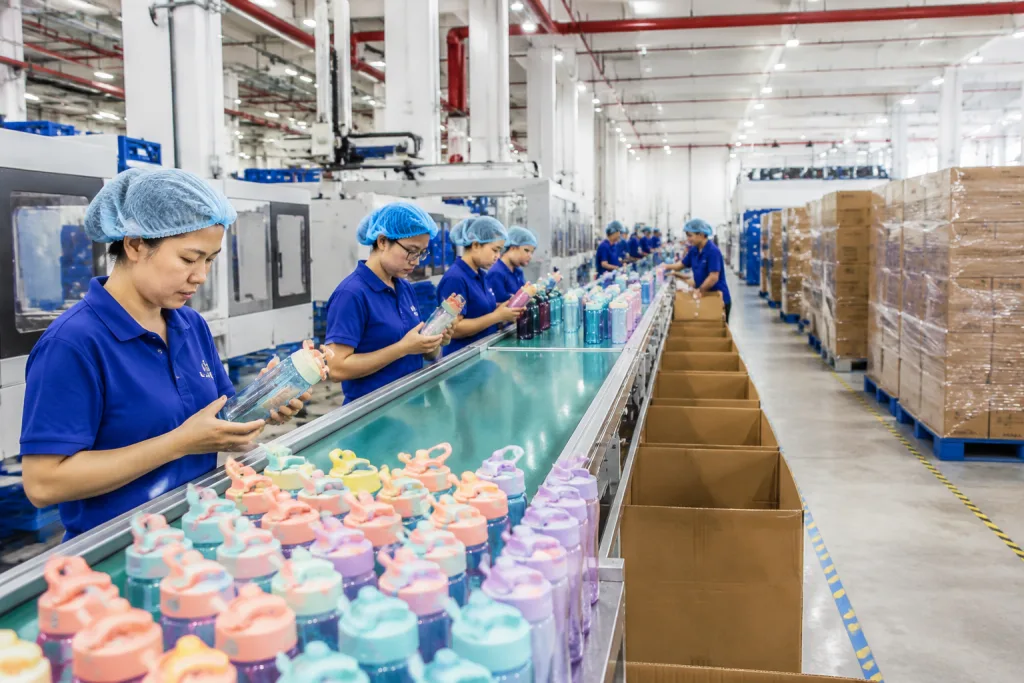
A procurement officer from a California school district called our Hangzhou plant last spring with a straight ask: 5,000 units for a district sustainability push. The volume was fine. The RFQ was not. It said “standard plastic bottle,” and that can mean a 22 g throwaway cup on one end or a BPA-free Tritan bottle with a 38 mm lid and a gasket that actually seals. We’ve seen this go sideways. QC pulled the sample, and the first thing the buyer flagged was the cap feel, not the color.
This guide covers that same bulk order problem. We break down the specs that matter for a kids water bottle order, the safety paperwork North American buyers ask for, and the QC checks that keep a school bottle from failing after one term. The math does not work if you skip the basics. A bottle that looks fine on the PO can still fail a drop test at 1.2 m, and then you are back at the line sorting complaints.
Defining the Right Material for K-12 Durability
For a children water bottle factory, material comes first. On K-12 orders, that choice sets scrap, breakage, and replacement claims. We usually narrow it to two picks for a bulk school water bottle: food-grade Tritan plastic or 304 stainless steel. We run both on the line, and the MOQ pressure changes the call fast.
Tritan, meaning Eastman Tritan copolyester, is the clear rigid option we ship for a lot of school jobs. It is BPA-free, dishwasher safe, and takes impact better than cheap PET. For elementary school packs where weight matters, it usually wins. A 14oz bottle sits around 90 grams on our scale. QC pulled the sample last month after a buyer flagged a wall-thickness typo on the PO; the spec was 1.2 mm, not 1.0 mm. Left on a playground, Tritan can still show stress cracks after about 12 months. That is the tradeoff.
304 stainless steel is the other lane. It takes abuse. A single-wall bottle resists dents but will sweat with cold water, while a vacuum-insulated build holds cold water for 12 hours and pushes unit cost up fast. For a bulk children water bottle order for high school students or sports programs, steel is the cleaner buy. We often spec a powder-coated finish for grip and to hide small dents from the line. The math does not work if the buyer wants the lowest unit price and the longest life in the same box.
Material Cost Comparison
At our Zhejiang factory gate, a 14oz Tritan bottle usually lands at $1.20 - $1.80 FOB, while a comparable vacuum-insulated steel bottle runs $2.50 - $4.00. As a children water bottle supplier, we push buyers to look at cost per use, not just the PO line. We shipped one school program where the Tritan replacement cycle was 12 months and the steel run stayed in service for 3 years. Same logo, different bill. This is the wrong question to ask if the buyer is only chasing the lowest piece price.
Nailing Down the Lid Mechanism and Safety
The lid fails first. On the line, we keep seeing stripped threads, cracked seals, and loose caps after a 1.2-meter drop test; one missing gasket can turn a full carton into scrap.
For a plastic bulk kids bottle, we run a screw-on cap with an integrated carry loop. Make the loop part of the mold, not a clip-on piece that snaps off in a lunchbox. For steel bottles, a straw lid moves faster in school, but the straw should be food-grade silicone and the lid body polypropylene (PP). The bite valve has to hold up when younger students chew on it. We had a buyer flag a valve that looked fine in photos but failed after 3,000 open-close cycles. The math does not work if the part dies on day one.
Safety is the gate. Every custom made kids bottle must pass migration limits tied to the exact material mix in your PO. In the US, FDA compliance is the baseline. In Europe, REACH compliance is mandatory. A reputable children water bottle manufacturer will send test reports for the actual resin or steel grade in your order, not a blanket factory certificate. Check the batch number against the production run; QC pulled a sample once and found the report matched a different 5,000-piece lot.
Always ask for a "choking hazard" assessment on any bottle with detachable parts. Small silicone seals and loose caps are a bad fit for the K-2 age group.
The Customization Process: From Logo to Packaging
Branding turns a plain bulk kids water bottle into a school item people keep track of. On one district order, the buyer wanted the school logo on the front and a blank name box on the back. Good call. That 18mm x 45mm space cut lost-and-found returns fast, and the name sticker killed the usual PO typo mess where 300 bottles land in one class.
For a custom logo kids bottle, we run three decoration methods:
- Silkscreen Printing: Best for 1-2 colors and repeat orders that stay stable. The ink goes through the screen and gets cured on the line. Cost is roughly $0.05 - $0.10 per position. We use it a lot on Tritan bottles.
- Laser Engraving: Permanent, clean, and hard to scratch off. No ink at all. Cost is $0.10 - $0.15 per position. It works best on stainless steel.
- Heat Transfer: Full-color print with better mascot detail. Setup takes more time, but QC pulled the sample and the edge registration held on complex artwork.
With a children water bottle vendor, ask about the "setup fee" and "plate fee" first. These are one-time charges for the print tools, and the math does not work if they hide them until the sample stage. A normal fee is $30-$50 per color per position. Tell us the print area too. On a 14oz bottle, a wrap print usually gives 50mm height x 120mm width, and we had a buyer flag it because the logo would not fit under the school motto.
Packaging is the last step, and it changes the carton count. For a bulk kids water bottle order, standard packing is 1 unit per polybag, 50 units per carton. If the bottles go straight to parents, like a fundraiser sell-through, we switch to a color box or sleeve. That adds $0.15 - $0.30 to unit cost and pushes carton volume up; on one run, the outer carton jumped from 58cm to 64cm, and freight went up with it.
Understanding MOQ and Production Timelines
MOQ is the first number school buyers push back on. Fair. Our Zhejiang line runs 300,000 units a month, and the injection machine does not care about a last-minute PO typo like “300 pcs” when the carton spec says 3,000.
For a stock bottle with no logo, we can ship 200-500 units. A custom logo kids bottle usually starts at 1,000 units per color. If the buyer wants a Pantone body color, MOQ moves to 3,000 units because the resin needs one dyed batch, not a mixed run. We had a district buyer push back on that last spring, then QC flagged color drift on the first 80 pieces, and the math still did not work.
The schedule is clear if the artwork is clean and the deposit lands on time:
- Sampling: 5-7 days to make a pre-production sample.
- Mold Adjustment (if needed): 10-15 days.
- Mass Production: 20-25 days.
- QC and Loading: 3-5 days.
For an August school delivery, we need the design locked and the deposit paid by late May. Wait until June and the schedule slips from 12 days to 18 days, then the rush fee lands at 10-15%. QC pulled the sample, and if the lid torque is off by even 2 mm, the line stops until we fix it.
Quality Control Standards for Drinkware
Open a supplier’s site and you see the same claim on every page: "high quality." That means nothing. We set the bar with AQL. For school water bottle bulk orders, we usually run AQL 2.5 for major defects and AQL 4.0 for minor ones. QC pulled the sample on the line, and the bad parts showed up in the first 20 pieces.
What counts as a major defect?
- Leakage from the bottle body or lid.
- Sharp edges or burrs on the mouth rim.
- Logo in the wrong place, or a spelling mistake on the print file.
- Strong chemical odor, which usually points to curing trouble.
Minor defects are easier to accept: a 2 mm scratch on the body or a slight color shift between two batches. Still, check them. The math does not work if you accept loose standards and then eat a 5,000-unit recall. We tell buyers to send a third-party inspector to the children water bottle factory in China before shipment, and $250-$300 per man-day is cheap next to one bad container. One buyer said the carton photos looked fine. The buyer flagged it only after 300 units came back with lid scuffs.
For kids bottles, ask for a Drop Test. Fill the bottle with water, then drop it from 1 meter onto a concrete floor. A Tritan bottle should take 3 drops without cracking; a stainless steel bottle should take 5 drops without the bottom warping enough to leak. We run this with a steel tape and a marked test plate, not guesswork. We have seen buyers push back on that, then the first carton split in transit.
Selecting the Right Supplier Partner
Not every supplier works the same. We run into trading companies and direct factories every week. A trader may quote a lower MOQ and show 200 SKUs, but they do not control the line. A direct children water bottle manufacturer usually gives tighter pricing and faster answers when QC pulled the sample at 9 a.m.
Check the business license first. If the scope says “manufacturing” or “processing,” you are looking at a factory. If it says “trading” or “import/export,” it is a middleman. Ask for workshop photos too, and look for injection molding machines, not a staged office shot with two sample cups on a desk. This is the wrong question to ask if you stop at the brochure.
For a school water bottle bulk order, we normally suggest a factory with BSCI (Business Social Compliance Initiative) certification. It shows the site has passed checks on worker safety and labor practices, which is what many North American school districts ask for in their vendor file. We had one buyer flag a missing audit PDF on a PO, and the order sat for 12 days instead of 18 days because nobody could release it.
Communication tells you a lot. If a supplier keeps pushing a “similar” design instead of opening new tooling for your exact custom school water bottle, they are not set up for custom work. We have seen that go sideways fast. A good partner will catch small issues early, like a logo sitting 2 mm too close to the lid thread, before the line starts.
Logistics: Getting the Bottles to Your Door
Shipping a bulk kids water bottle order from China to North America or Europe takes a real bite out of the budget. The cartons are heavy. A 20ft container usually takes about 20,000 to 25,000 14oz bottles, depending on how the inner box is packed. For the 5,000-unit order we quoted last month, LCL (Less than Container Load) made more sense, and the scale showed 1,260 kg before pallet wrap.
Most children water bottle manufacturers quote FOB (Free on Board) prices. The price stops at the port, like Ningbo or Shanghai. You pay ocean freight, insurance, and customs clearance. That split looks clean on paper, but the buyer flagged the forwarder bill on a 3,200-unit order, and the math does not work any other way.
Ocean freight moves fast and then turns ugly. In late 2024, a 20ft container from Shanghai to Los Angeles sat around $2,000 to $4,000 depending on the booking week. Do not trust the supplier's freight guess. We run our own quotes through a forwarder, because one PO typo on the destination port can add 3 to 5 days before the line even moves - we saw that delay on a shipment marked "Long Beach" instead of "Los Angeles."
For a bulk children water bottle, the HS Code has to match the material. Plastic bottles are usually 3923.30. Steel bottles are 7610.10. Wrong codes bring customs holds or fines. A professional children water bottle distributor handles this, but if you buy direct, it is on you. QC pulled the sample, checked the carton marks, and caught a mismatch before it went out; the carton said 24 pcs, the PO said 20.
Ready to source your school water bottle bulk order?
Submit your specs or reference images today. Our team in Hangzhou will provide a detailed quote and production timeline within 24 hours.
Frequently asked questions
What is the typical lead time for a custom children water bottle order?
Standard lead time is 25-35 days from the time the pre-production sample is approved and the deposit is received. This includes 5-7 days for sampling and 20-25 days for mass production. During peak season (April-June), lead times can extend to 45 days. Always add a 2-week buffer to your schedule for unforeseen delays, especially when shipping to North American ports.
Can I order a bulk school water bottle with different colors in one shipment?
Yes, but this affects the MOQ. Most manufacturers require a minimum run per color, usually 1,000 units. If you want to split a 5,000 unit order into 5 different colors, you can do so, but you may incur a "color change" fee or a higher unit price. It is more cost-effective to limit the color palette to 2-3 options.
Are your bottles BPA-free and safe for children?
All bottles produced at our Zhejiang facility are BPA-free. We use FDA-approved materials for the US market and REACH-compliant materials for Europe. For Tritan bottles, we provide Eastman certification. For stainless steel, we use food-grade 304 (18/8) steel. We can provide LFGB test reports for silicone components upon request.
What is the warranty or return policy for defective bulk kids bottles?
We offer a 1-year warranty against manufacturing defects. If the products fail AQL standards upon third-party inspection, we will replace the defective units or refund the value of the defective goods. We do not accept returns of custom logo kids bottle orders simply due to a change in design preference. All claims must be supported by photos or an inspection report.
How do I ensure the logo on a custom kids bottle doesn't scratch off?
Specify the coating requirement. For silkscreen printing, a UV coating can be applied over the ink to increase scratch resistance. For stainless steel, laser engraving is permanent and cannot scratch off. For plastic, if durability is a top priority, we recommend "in-mold labeling" (IML) where the design is fused into the plastic during molding, though this has a higher tooling cost.