Key Takeaways
- Tritan and Polypropylene offer distinct cost-to-performance ratios; Tritan costs ~15-20% more but eliminates odor retention.
- Standard MOQ for custom logo protein shakers is 3,000 units; stock designs lower this to 500-1,000 units.
- Lead times in Zhejiang factories average 25-35 days for production, plus 15-20 days sea freight to Europe.
- Wire ball mixers cost $0.08-$0.12 per unit to include; plastic mesh grids are cheaper but less effective.
You have probably stared at 20 spreadsheets, chased 3 quotes, and still watched the lowest unit price turn into the highest claim rate. Sourcing protein shaker wholesale stock is not about grabbing the cheapest line; it is about tooling cost, FDA or LFGB paperwork, and whether the cartons land on time. A 20-cent win on paper disappears fast when QC pulled a random sample and the lid started leaking after a 1.2-meter drop test. We saw that on a Monday run.
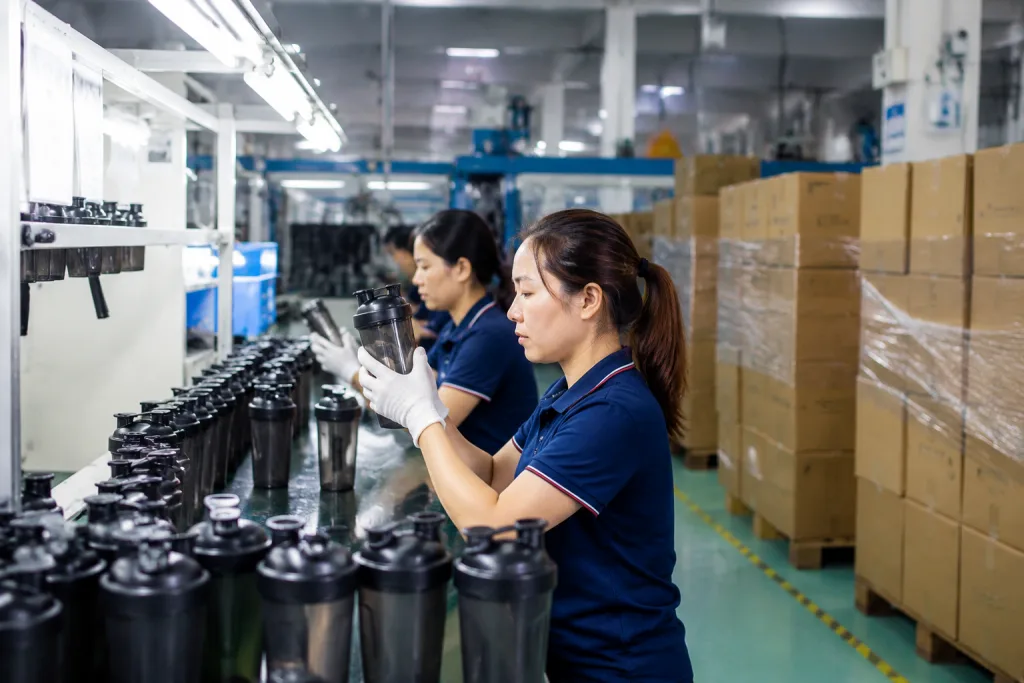
Here in Zhejiang, where a lot of global bulk drinkware volume runs through the line, consistency is what pays the freight. We ship a standard 28oz shaker and the buyer still flags a 0.3 mm mold mismatch, because that is where the headache starts. This section lays out the trade-offs before you sign the PO; the math does not work any other way. One typo on the PO, one off-spec cap, and the whole shipment gets noisy.
Material Selection: Tritan, PP, or Stainless Steel?
The first sourcing call is material. For protein shaker wholesale orders, buyers usually land on Tritan or PP, and the gap shows up on the line fast. PP is the budget pick. It runs well at low MOQ, holds up in daily use, and the mold cost stays sane, but it can keep whey odor after a few weeks; QC pulled a sample that still smelled after 30 washes, so this is the wrong question to ask if you care about premium positioning. If your buyer wants the lowest landed price, PP works, but say plainly that odor retention comes with it.
Tritan costs about 15-20% more than PP, and the buyer sees why once we ship samples. It has glass-like clarity, stays BPA-free, and does not pick up stains the way PP does. For North America gym chains and retail programs, Tritan is the safer sell. We ran 1.5 meter drop tests on the bench, and the cup still looked clean after abuse; that is what keeps it on shelf instead of in the returns pile.
The Stainless Steel Alternative
Do not skip 18/8 stainless steel if the brand wants a premium tag. Sourcing drinkware wholesale in stainless shifts the conversation from plastic smell to heat retention and wall thickness. A standard 28oz plastic shaker sits around $0.80-$1.10 FOB, while a double-wall stainless build moves to $3.50-$5.00. The math does not work for every account. We see this go sideways when a buyer asks for the stainless look at PP pricing; the polish line, laser logo, and vacuum weld all add real cost. It fits brands that also buy for wholesale growler or beer tumbler wholesale programs, since the same forming and finishing setup carries over.
On quote requests, spell out the grade and test standard. For PP, we ask for food-grade and REACH for Europe, and the purchase order should not say “PP cup” with no spec. For Tritan, ask for Eastman Tritan™ by name, not a generic copolyester, because one buyer flagged a typo on the PO and we had to stop the line before molding 5,000 pcs. The difference shows up in a 1.5 meter drop test, and the lab result is not subtle.
Mixing Mechanism Trade-offs: Wire Ball vs. Plastic Grid
The mix matters. A protein shaker lives or dies on how it breaks powder, and we ship two setups for wholesale orders: a stainless steel wire ball and a fixed plastic grid. The wire ball is the cleaner pick for whey and pre-workout; it rolls through the bottle, breaks clumps fast, and that matters when the buyer is comparing 12 oz samples on a bench. On our line, one wire ball adds about $0.08-$0.12 per unit. Buyers notice. Most best wholesale drink bottle orders in fitness take the ball, because the shelf price needs room to look earned, not padded.
The plastic grid is the cheap route. It sits in the lid, cuts one metal part, and trims assembly by a few seconds per bottle. QC pulled the sample with a 38 g scoop of mass gainer, and the grid left lumps after 12 shakes. That is the problem. If you are buying alcohol flask bulk items or plain water bottles, a grid is fine; for a shaker, trying to save a dime usually turns into one-star feedback and a buyer note about powder stuck in corners. We've seen that go sideways more than once.
Assembly is where quotes go sideways. We run 200,000 units per month in Zhejiang, and the wire ball insertion uses a simple feeder, but it is still a separate packing step. The buyer flagged one PO that said “shaker cup” and left out the mixer, so the unit price looked better only because the accessory was missing. Put it in writing. Make the FOB line state whether the wire ball or grid is included, or the math does not work.
Volume Thresholds: Understanding MOQ Tiers
MOQ is the first cash hit. That number moves the deal. For a custom-molded protein shaker where you own the mold, we usually run 3,000 to 5,000 units per color. That keeps the line moving and pays back tooling. If you are testing a market, that ask is steep. We have seen buyers push back, then sit on slow stock for 6 months. A stock mold is the cleaner play. It is an existing factory mold, and we can print or spot-brand it. MOQ usually drops to 500-1,000 units.
For wholesale canteen or shaker orders, MOQ often follows each colorway. If you want 2,000 black shakers and 2,000 red shakers, the buyer flagged it right away: the factory may add a color-change fee or ask for a bigger total run. On our side, the mixer hopper and barrel setup do not like frequent swaps. We run better once you cross 10,000 units total. Under that, the math does not work. Keep it to one or two colors. That is the practical move.
Pro Tip: If your volume is under 1,000 units, you are likely buying from a distributor or wholesaler, not a manufacturer. True factory direct pricing only kicks in at higher volumes.
For related products like a beer growler wholesale order, MOQ changes fast. Glass and stainless growlers use different tooling, and a custom glass growler often sits at 5,000 units because breakage risk eats margin. QC pulled the sample and found a 1.2 mm lip variance once, and that changed the quote on the spot. Ask one direct question: does the MOQ cover the bottle only, or the full set with lid, mixer, and packaging? We ship a lot of orders where the PO typo says one thing and the carton count says another.
Customization Complexity: Logo Application Methods
Logo method sets cost and lead time. For protein shaker wholesale orders, screen printing is our default because it handles 1 to 2 colors cleanly and stays put on a curved cup wall. On a 1,000 pcs job, QC pulled the sample after 24 dishwasher cycles when the ink edge lifted. No top-coat, no deal. The math does not work.
Laser engraving is the other route, and we run it a lot when the same buyer is placing alcohol flask wholesale orders too. It will not rub off, but it is a one-color process and reads best on stainless steel or darker plastic. On Tritan, the mark looks sharp, yet the cycle time slows down and the unit price climbs. The buyer flagged a quote gap of 12 days vs 18 days, and that came straight from the laser station.
For multi-color logos, heat transfer or water transfer is what we use when the artwork has fine lines or gradient fill. They cost more. That is the point. If the brand needs photo-level detail, this is the lane. Ask for a strike-off first. We run 5 to 10 samples with the actual logo, check alignment with a steel ruler, and only then move the full drinkware bulk lot. One PO typo on a Pantone code can throw the batch off, and we have seen that go sideways.
Compliance and Safety: REACH, FDA, and BSCI
Compliance is not optional for Europe and North America. For the EU market, your bulk canteen or shaker needs REACH paperwork matched to the exact resin or pigment batch. We saw a buyer accept a nice-looking factory stamp, then get burned on the first customs check. Ask for a third-party report from SGS or Intertek, plus the test scope and material code. On our line, a valid REACH report usually runs $200-$400 per material, and one report can cover several shipments if the formula stays unchanged. QC pulled the sample at 9.8 mm wall thickness, and that number went straight into the file.
For the US, FDA compliance is the baseline. The material needs to meet GRAS, and the claim has to match the polymer we run on the line. If the shaker is for children, CPSIA testing for lead and phthalates sits as a separate line item. That usually adds $300-$500 before production starts. The math does not work any other way. One missed report can turn into a claim after the buyer flags a label issue or QC finds a sharp edge at the 1.2 mm rim. We had one PO with "FAD" typed instead of FDA, and the buyer spotted it in five seconds.
Social compliance matters too. A lot of major retailers ask for a BSCI audit before they place a PO, and they check the audit date, not just the logo. A BSCI-audited factory in Zhejiang may quote 3%-5% more per unit than a non-audited shop, but that premium buys fewer headaches when a retailer asks for the latest report. We saw one case where the buyer caught an expired audit by one month, and the order stalled for 18 days. For wholesale drinkware, verify the factory status, scope, and expiration date before you lock the deal. The wrong question is whether the stamp looks clean. The audit file from our warehouse desk was 26 pages, and that was the part the buyer actually read.
Packaging and Logistics: FOB vs. DDP
Freight is the last big cost line. Shakers are bulky and light, so carton space matters more than kilos. A 28oz shaker usually runs 50-60 units per carton. Last month, we moved a quote after a 5 mm box change, and the rate moved with it. A 20ft container usually takes 30,000-35,000 units, and a 40ft HQ can reach 50,000 units. Shipping can eat 15-25% of landed cost. The math does not lie.
Most China factories quote FOB, which puts freight from the port on your side. If you are new to importing canteen bulk or shakers, DDP is the cleaner call. The supplier handles transport and customs to your door. We had a buyer flag a port surcharge after the vessel rolled three days late, and that kind of surprise is why DDP costs more. We run that lane every week. It buys time and fewer headaches.
Packaging changes the numbers fast. Brown export cartons are tight. Retail color boxes usually add depth, and that cuts units per carton. We have seen shipping cost jump 10% on a box that went from 120 mm to 135 mm. For beer growler bulk orders, dividers matter or the line gets crushed in transit. QC pulled the sample and found one carton listed 8.2 kg gross while the PO typo said 2.8 kg. Ask for the packing list before you confirm, with carton size and gross weight on it. That is the right question to ask.
Quality Control: Defining AQL Standards
How many defective units do you accept? Zero sounds clean, but it falls apart on a 10,000-unit run. Put the AQL in the contract before the line starts. For protein shaker wholesale orders, we write 2.5 for major defects like cracks, holes, or the wrong logo, and 4.0 for minor defects like light scratches or dust inside the bottle. On a 10,000-unit lot, QC pulled 200 samples with calipers on the bench, and 14 defects still triggered rejection. The math does not lie.
Common defects in shaker production include:
- Splay marks: Silver lines on the plastic surface from moisture in the raw material. We saw this after the dryer was set 8°C too low.
- Flash: Excess plastic at the parting line where the mold halves meet. A 0.3 mm gap on the mold face is enough to leave a sharp edge.
- Short shots: Incomplete filling of the mold, which leaves weak spots. The buyer flagged this on a 600 ml cup when the wall under the logo came out thin.
Bring in a third-party inspection agency before shipment. In Zhejiang, a day on site often runs $200-$300, and one bad batch costs far more in returns and rework. We have seen this go sideways when the PO had the wrong shade code, and the buyer still wanted a clean report. That is the wrong question to ask. If you are sourcing beer tumbler wholesale items with powder coating, add an adhesion test to the checklist. Hit the finish with a dull object. It should not chip.
Ready to source high-quality protein shakers?
Contact our team in Hangzhou to discuss your specifications, request a quote, and receive a digital sample within 48 hours.
Frequently asked questions
What is the typical lead time for a custom protein shaker order?
For a custom order, mold creation takes 15-20 days. Once the sample is approved, mass production takes 25-35 days depending on the quantity (e.g., 20,000 units). Shipping via sea freight to Europe or North America adds another 25-35 days. Total lead time from deposit to delivery is approximately 70-90 days. Stock items with simple logo printing can ship within 15-20 days.
Can I get different lid types for the same bottle body?
Yes, this is a common strategy to create product variations. You can use one bottle mold with different lid options—such as a standard screw cap, a flip-top straw lid, or a storage compartment lid. However, each lid style requires its own mold. If you order 5,000 bottles, you might split them into 2,500 units per lid style, but the factory may charge a setup fee for the line changeover.
How are protein shakers typically packaged for retail?
Standard packaging is a polybag inside a brown master carton. For retail, you can upgrade to individual color boxes or blister cards. Color boxes add $0.15-$0.25 to the unit cost. Ensure the box design accounts for the bottle's shape; tapered bottles require specific box dimensions to prevent crushing. Master cartons usually hold 50-60 units and must meet drop test standards for international shipping.
Is it cheaper to source from Vietnam compared to China?
While labor costs in Vietnam can be lower, the supply chain for raw materials like Tritan and stainless steel is less mature. Many factories in Vietnam still import raw materials from China, which can offset labor savings. For complex <strong>protein shaker wholesale</strong> orders requiring specialized tooling and mixing components, Zhejiang remains the most cost-effective and efficient hub due to the complete local supply chain.
What payment terms are standard for first-time orders?
Standard terms are 30% deposit upon order confirmation and 70% balance before shipment. For established relationships, this can shift to 30% deposit and 70% after inspection or against documents. Never pay 100% upfront. Use trade assurance platforms or letters of credit for larger orders to protect your investment against non-delivery or quality disputes.