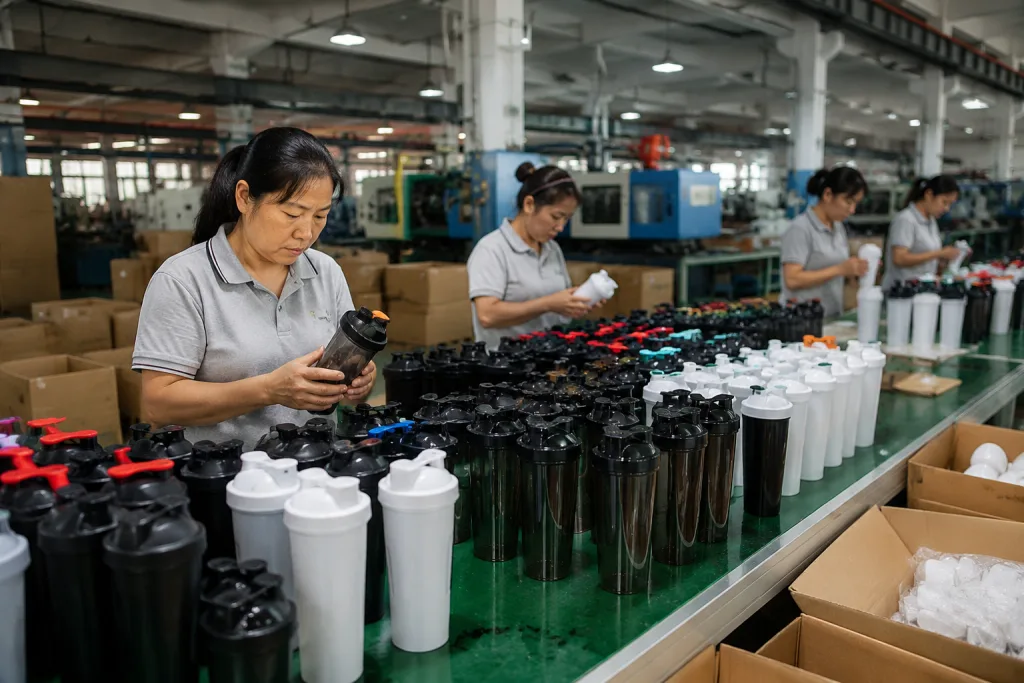
Key Takeaways
- Most protein shaker customizable orders land at MOQ 1,000-3,000 units, with FOB China pricing from USD 1.25-3.80 depending on material and print.
- A practical lead time is 25-35 days after sample approval; rush jobs under 20 days usually cut corners on packing or inspection.
- For export, ask for REACH compliance, LFGB where needed, and AQL 2.5/4.0 inspection on appearance, leakage, and assembly.
- If you also source canteen custom or customized drinkware, use one factory in Zhejiang to consolidate molds, print files, and carton standards.
You are not buying a bottle. You are buying a repeatable part that has to survive drops, carton compression, 60-degree dishwasher water, and the buyer who opens box 8 and finds a lid that weeps on day three. A protein shaker customizable order looks simple until the spec sheet lands on my desk. Then the real questions show up: material, 500 ml or 700 ml, cap torque, mesh insert type, print method, and whether the line can hold Pantone on 5,000 units without drifting into three shades.
If you are a procurement manager, brand owner, or distributor, treat the order like a small production run. That is the right lens. At BottleForge Industrial, QC pulled the sample with a 0.5 mm gap at the flip cap, and the buyer flagged it before we packed the pallet. We ask for target capacity, carton standard, drop test, and how much logo wear you will accept after 50 dishwasher cycles. That is the level you need if you want a protein shaker customizable order that ships on time and does not come back with leak claims.
Start With The Use Case
The first mistake is asking for a “protein shaker” without saying how it will be used. We had a buyer send that exact line on a PO, then add “same as last year” in the remarks. Same as what? A shaker for gym retail is not the same thing as a shaker packed into a supplement subscription box, and neither fits a giveaway for a canteen distributor. Define the job first. Decoration comes later.
For a protein shaker customizable order, I start with five points: 600 ml or 800 ml, PP or Tritan body, stainless steel ball or fixed mixer grid, screw cap or flip cap, and whether it must fit a car cup holder. QC pulled a 600 ml sample on the line and the caliper read 72 mm at the base; that was the difference between passing a holder test and getting flagged by the buyer. Skip the use case and the brief goes sideways. The choice changes tooling, assembly time, and freight density. A 600 ml PP shaker usually weighs 120-160 g, while a double-wall stainless shaker can go past 350 g and cut carton counts by 20-30%.
If your customer is a canteen vendor or canteen supplier selling to gyms, sports clubs, or wellness brands, write the order as customizable drinkware with performance requirements. We run that way because the math does not work any other way. A sample carton with a 1.5 mm wall spec ships differently from a gift item, and the factory quote will miss the mark if the brief is loose. Keep the spec sheet honest.
- Retail use: prioritize leak resistance and shelf appeal
- Subscription use: prioritize low unit cost and carton efficiency
- Promotional use: prioritize logo area and fast sampling
Choose The Right Material
Material drives margin. We run PP, Tritan, and stainless steel on shaker lines every week. For a 600 ml PP shaker at 3,000 units, a clean FOB number from a China canteen factory sits around USD 1.25-1.80. Tritan usually lands at USD 2.10-3.50 because the resin costs more and the cup looks cleaner on shelf. Stainless steel starts higher, often USD 3.20-5.80, and powder coating or laser engraving will push it up again.
For Europe, ask for REACH and the food-contact declaration before you talk color. We have seen buyers skip that step, then QC pulled the sample and the file was dead on arrival. The checks that matter are resin grade, wall thickness, and whether the masterbatch is food-safe. On PP bodies, 1.8-2.2 mm works. Below 1.8 mm, the cup feels thin and twists in hot water; above 2.2 mm, cycle time goes up and the line slows.
For a canteen customizable line that includes shakers, tumblers, and a custom canteen range, keep the material stack tight. One paint system. One print spec. One carton size. The buyer flagged a PO typo on carton count once, and the rework cost more than the margin on that order. The math does not work when every SKU asks for a different coating or label setup, and we have seen that go sideways fast.
Do not ask for “best material.” Ask for the material that matches your retail price, target market, and compliance file.
Lock The Lid And Mixer
Most leak claims start at the lid, not the bottle body. For a protein shaker customizable order that has to survive real use, we write the closure spec the same way we run the line: screw-on lid, TPE gasket, thread depth, and cap torque. A cheap snap lid looks fine on paper. It fails fast. A flip cap should pass 1,000 open-close cycles. If you add a metal whisk ball, call out 304 stainless steel with a 30-45 mm diameter, matched to bottle size. The buyer usually pushes for the cheapest cap. That is the wrong question to ask.
For powder mixing, the usual picks are a mesh insert, stainless ball, or internal agitator. Mesh is quieter and cheaper, but QC pulled the sample and found residue trapped in the screen after one rinse. Stainless balls mix well, but they rattle. We’ve seen that complaint come back in retail. If the buyer wants a premium customized growler style shaker for sports retail, dual-wall construction can improve hand feel, but only if the cap and threads stay tight under a 90% fill test. One typo on a PO can ruin the run; we once saw a 38 mm neck called out as 48 mm, and the math does not work.
We test lids by filling to 90% capacity, inverting for 60 seconds, then shaking 120 cycles by hand or fixture. Simple. If a canteen distributor wants lower returns, this is the spec worth paying for. It costs less than remaking 500 units after a bad shipment, and one cracked gasket on the line can turn into a full claim. We ship fewer surprises that way.
Print The Logo Without Guesswork
Your logo method changes cost and shelf read. On PP and Tritan, silk screen stays the default for flat-color branding. We run it every week. Laser engraving works on stainless and some coated surfaces, but it is not the right call for every custom drinkware job. For a protein shaker customizable order that has to move fast, we keep the logo at 1-2 spot colors and hold the print area at 50-70 mm wide. That cuts misregistration, and the unit price stays sane.
For a canteen promotional run, buyers often ask for a full-wrap graphic. Fine, if the artwork is strong and the MOQ is real. The line pays for it in setup time and tighter color control. On our Zhejiang line, QC pulled the sample and checked Delta E against the signed master before we released the run. If you need repeat orders, lock the Pantone, the print position, and the curing method. We had one buyer flag a PO typo that moved the logo 8 mm to the left; that kind of drift turns a reorder into a new job.
For customized drinkware across multiple categories, we keep one print standard for protein shakers, custom canteen bottles, and custom growler SKUs. It makes reorders cleaner and stops surprise costs on the next run. The math works. If the buyer wants three decoration methods on one order, that is the wrong question to ask. A 12-day repeat with the same screen beats an 18-day reset with fresh art files.
- Silk screen: lowest cost for 1-2 colors
- Laser engraving: durable for metal bodies
- UV print: better for complex artwork, higher setup discipline
Build A Packaging Spec
Packaging is where buyers burn cash. They treat it like a checkbox on the last page. A protein shaker customizable order needs a carton spec before the line starts. We had one buyer flag cap scuffing on a 560 ml sample after QC pulled the sample with a 1.2 m drop test, and the fix was a tighter inner box pocket around the lid. For retail, keep side pressure off the cap and stop the body rubbing in transit. For e-commerce, run a drop-resistant mailer or a master carton that can take the last mile. Ask this late, and the math gets ugly.
For a 600 ml shaker, we usually pack 1 piece in an OPP bag, 24 or 48 pieces per carton, with carton size tied to container loading. If the carton is 15 mm too tall, cube space disappears. If it is too thin, the cap gets crushed. We saw that on a PO typo once: the buyer wrote 48 pcs/carton but paired it with the 24 pcs carton size, and the numbers did not line up. A good canteen supplier in China gives a loading plan for a 20-foot or 40-foot container, not just a unit price. Freight moves fast. Faster than the product cost.
If you also sell canteen customized products, push the factory to keep carton artwork and barcode placement standard across the line. We run this on distributor programs where warehouse scanning and FNSKU labeling are part of the daily drill, and a 3 mm barcode shift can send cartons back for rework. One carton template. Less mess. The buyer usually wants different labels for each SKU, but we have seen that go sideways fast.
QC The Order Like A Factory
This is the point that separates a real canteen factory from a trading-only quote. For a protein shaker customizable order, we run checks at three gates: incoming material, in-line assembly, and final random inspection. AQL 2.5 fits leakage and missing parts. AQL 4.0 works for print offset if the buyer signs off on it. That is the right question to ask.
At BottleForge Industrial in Zhejiang, we run shaker orders at 50,000 units per month across drinkware programs, and the same misses keep coming back: cap mismatch, weak gasket squeeze, carton crush from bad stacking. QC pulled the sample with a 0.2 mm feeler gauge, and the buyer flagged a lid torque typo on the PO once, so we know where the line slips. Sign one golden sample, lock one leak test method, and record lid torque. For stainless or coated bodies, add a rub test and a dishwasher run if that channel expects it.
For North American buyers, ask for ASTM-referenced food-contact confirmation where applicable, plus a clean declaration of coatings and inks. For Europe, keep the REACH file current. A factory that answers in 24 hours usually beats one that only throws out a low quote. We have seen this go sideways on a 3% return rate.
Cheap on the invoice is expensive when the return rate reaches 3%.
Price It Against Real Margins
Price starts with the use case, not the first number the supplier throws out. For a basic PP protein shaker customizable order at 3,000 units, we usually see USD 1.25-1.80 FOB China, and the spread comes from print count and packaging. Tritan models sit around USD 2.10-3.50. If you want better cartons, add USD 0.10-0.35 a set. Retail boxing and insert cards push it up again. Stainless or double-wall styles often start above USD 3.20 and can reach USD 5.80 when the lid has extra parts. On the line, QC pulled the sample at 72 mm and 310 g, and the buyer still tried to shave 8 cents off the quote. The math does not work.
If you buy for a canteen distributor or a distributor growler program, unit price alone is the wrong question. We’ve seen this go sideways. Compare landed cost, breakage rate, and sell-through. A quote that is 4% higher can still win if it cuts damage by 1-2% and lets you keep shelf price. Freight from China to Europe or North America moves with the season, so ask your canteen vendor for packed CBM, not just gross weight. Last month the buyer flagged a PO typo on the carton count, and that one line changed the sea freight by USD 260.
Build the buying file with target FOB, target landed cost, carton quantity, and reorder trigger. That gives the factory one clean brief and stops the back-and-forth. We run quotes faster when the file is tight. A Zhejiang factory can usually price in one pass if the MOQ, pack spec, and ship-to port are all on the same sheet. The tape measure is on the table, and that is where the real number starts.
Plan The Reorder Path
The clean orders are the ones you can repeat without reopening every spec. After the first run, we keep the same mold, packing, art file, and inspection sheet. Simple. This is where reorder trouble starts. A buyer changes cap color, logo position, and carton format in one PO, then asks why the second lot lands 2 mm off the first. We have seen that go sideways on the line.
For a protein shaker customizable program, I keep a reorder file with six fixed items: capacity, body material, lid drawing, print method, carton spec, and approved sample photo. Put the reorder MOQ in writing. 1,000 to 2,000 units is normal for China reruns, but if you need 600 or 800, say it before sample sign-off. QC pulled the sample when the buyer flagged a typo on the PO, and that saved us two days before we shipped.
If you work with a Zhejiang canteen vendor that already runs protein shaker customizable, canteen customized, and custom growler jobs, the next PO is a repeat job, not a new sourcing round. That is the wrong question to ask. We ship faster when the file is locked and the buyer stops moving the target after approval.
Send your shaker spec and get a real quote
Share capacity, material, logo method, and target MOQ. We will return a production-ready quote, sample plan, and export packing spec.
Frequently asked questions
What MOQ should I expect for a protein shaker customizable order?
For most factories in China, a realistic MOQ is 1,000-3,000 units per color or per print version. If you choose a simple PP shaker with one logo color, some Zhejiang suppliers may accept 500 units, but the unit price usually rises by 15-30%. Tritan and stainless versions often start at 1,000 units because of material and assembly costs. If you want mixed colors, ask whether the MOQ is per design or per color, because that changes the quote fast.
How long does production usually take?
A normal lead time is 25-35 days after sample approval and deposit. If the order needs new tooling, custom packaging, or a complex print layout, plan on 35-45 days. Rush orders under 20 days are possible in China, but they often narrow your options on carton spec, inspection, or packing style. For Zhejiang factories with steady capacity, a repeat protein shaker customizable order is much easier to place than a first-time project.
What quality checks should I require before shipment?
At minimum, ask for incoming material verification, in-process assembly checks, and final random inspection under AQL 2.5 for critical defects. Leakage test every sample lot, verify lid torque, and confirm print adhesion after rub testing. For export to Europe, request REACH-related declarations where applicable. For retail programs, I would also ask for carton drop testing from 80-100 cm and a photo report of the packing line. That is basic discipline, not luxury.
Can I mix protein shakers with custom canteen or growler products in one shipment?
Yes, and it is often the smart move if you are a canteen distributor or distributor drinkware buyer. The factory can consolidate shakers, canteen customized items, and a custom growler line into one container if the carton sizes are planned early. The key is to keep the sampling and artwork files separated by SKU. Mixed loads save freight, but they only work when the factory gives you a proper loading plan and each product has a locked packing spec.
What is a reasonable FOB price for a basic shaker?
For a basic 600 ml PP shaker with one-color logo and standard packaging, USD 1.25-1.80 FOB China is a fair working range at 3,000 units. Tritan versions usually move to USD 2.10-3.50, while stainless or double-wall styles often run USD 3.20-5.80 depending on finish and lid type. If a quote comes in far below that, check what is missing: thicker material, food-contact paperwork, better gasket, or proper packing are usually the first things cut.