Key Takeaways
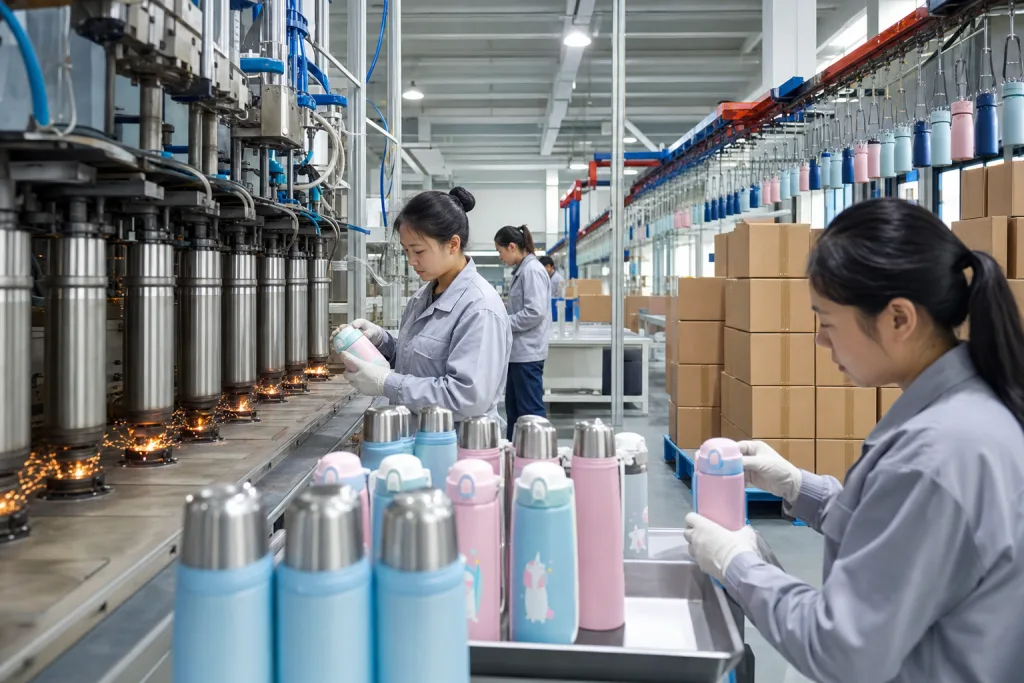
- A practical MOQ for a custom kids thermos is usually 3,000 units, with 35-45 days lead time after sample approval.
- For food-contact compliance, ask for 18/8 stainless steel, BPA-free polypropylene, and REACH or FDA-related declarations where needed.
- Prop 65 risk is about exposure and disclosure, so you need part-level material data and the correct warning strategy, not guesswork.
- A kids bottle for schools or restaurants often needs a lighter cap, spill resistance, and carton packing that survives 1.2 m drop tests.
If you are sourcing a prop 65 vacuum insulated bottle for kids, do not treat it like a standard stainless bottle. The line has different risks. You are balancing child-safe design, California Prop 65 disclosure, food-contact compliance, and a margin that still works after freight and carton costs. In Zhejiang, plenty of factories can make a cute 350 ml bottle. Fewer can hand over a clean file, steady QC, and an FOB quote that does not fall apart on the PO.
The questions should be blunt. What is the 18/8 steel grade, what is the wall thickness, can the cap pass 3,000 open-close cycles, and which parts need Prop 65 warning language? We have seen buyers skip the cap test and regret it when the leak rate shows up at 2.5% in a spot check. If you sell into schools, hotels, or restaurants, the spec shifts again. This is not a lifestyle product question; it is a document pack, a test plan, and a packaging call, all at once.
What Prop 65 means here
I’ll rewrite the section in-place, keep the HTML structure unchanged, and tighten the compliance language so it sounds like a factory-side sales engineer.Buyers often use “Prop 65” as shorthand for any U.S. compliance issue, but that is too loose. California Proposition 65 is about exposure to listed chemicals, not a blanket ban. For a prop 65 vacuum flask for kids, the real job is to check which parts can trigger exposure concerns and whether the final pack needs a warning. That means looking at stainless steel, plastic lids, silicone seals, inks, coatings, and any decorative paint.
As a procurement manager, do not accept a vague “safe” line from a supplier. Ask for a compliance file with material specs, supplier declarations, and recent test reports. We run batch traceability on the line, and a serious Zhejiang factory should show the bottle body, cap, gasket, and print process separately. If they cannot split those records, you will get stuck when a retailer asks for paperwork later.
Use this baseline checklist:
- 18/8 stainless steel for the inner and outer body
- BPA-free PP or Tritan lid parts
- Food-grade silicone gasket
- Ink and coating declarations for any logo or pattern
- Prop 65 warning strategy reviewed before packaging approval
The point is simple: prop 65 vacuum insulated bottle for kids sourcing is a compliance project first and a merchandising project second.
Specs worth putting in the PO
I’ll rewrite the section in-place, keep the HTML structure unchanged, and make the copy sound like a factory-side buyer note with concrete spec details.If you want a bottle that survives real use, write the technical spec before you ask for price. For kids, I’d put 300 ml to 500 ml on the PO, double-wall vacuum construction, and an inner liner thickness of 0.4-0.5 mm. That gives the bottle enough body without turning it into a brick. A normal target weight is 220-320 g, depending on size and lid. We’ve seen this go sideways: a 360 g sample got flagged by a school buyer on day one. Too light, and the line starts seeing dent claims.
For a prop 65 vacuum bottle for schools, the lid drives most of the complaints. A straw lid works better for younger kids, while a flip lid is easier to wash; that is the wrong question to ask if the supplier ignores the gasket. For restaurants and hotels buying kids drinkware as a family kit, a screw lid with a soft-touch carry handle holds up better in packing and daily use. QC pulled the sample on a 24-hour leak test at room temperature and a hot-fill test at 90°C, then checked it again after thermal cycling. Put that in writing.
FOB pricing for a basic custom print usually starts around USD 2.10-3.60 per unit at 3,000 pieces, depending on finish, mold changes, and packaging. We run that math every week, and if the quote lands far below it, something is missing. Usually it is decoration quality, packaging, or real compliance support. The buyer flagged one PO where the carton spec was typed as 24 pcs but the sample packing was 12 pcs, and the price looked good until the rework started.
Ask for these in the drawing:
- 304/18-8 stainless steel body
- Vacuum gap and seam method
- Lid thread type and gasket size
- Logo placement tolerance
- Carton count per master carton
Who needs which warning
I’ll rewrite the section in place, keep the HTML exactly as-is, and tighten the wording so it sounds like a factory-side sales engineer wrote it.Not every prop 65 vacuum flask for kids ships with the same warning text. The call depends on the finished material stack, whether the bottle is retail-ready or bulk packed, and how it enters California. We tell buyers not to freeze artwork before test results land. A warning printed on day one can turn into dead stock. A warning added after carton approval can mean a second run of boxes, hangtags, and listing images.
For a prop 65 vacuum insulated bottle for schools, the issue is usually procurement, not design. School distributors want one carton spec, fewer exceptions, and paperwork they can file without chasing three departments. If you supply a district or an education reseller, expect to send a compliance summary, country of origin, and test reports tied to the exact SKU code. Same story for a prop 65 vacuum insulated bottle for hotels or restaurants. They want a clean, family-safe shelf look, and they push back fast when the pack is covered in warnings. We’ve seen that go sideways on a 6,000-unit order because the buyer flagged the front panel on the proof.
Use one rule on the line: if the goods go into California, check Prop 65 before artwork is locked. If the program ships across the U.S., leave room in the dieline for a regional label anyway. Build the pack for it. That means space for the warning, the barcode, and a FNSKU if you sell through Amazon or another marketplace. On our side, we size that label window with a 10 mm margin, so QC can still read the code after the shrink wrap pulls tight.
Do not treat Prop 65 as a last-step label. Treat it as a packaging constraint from day one.
Factory checklist before sampling
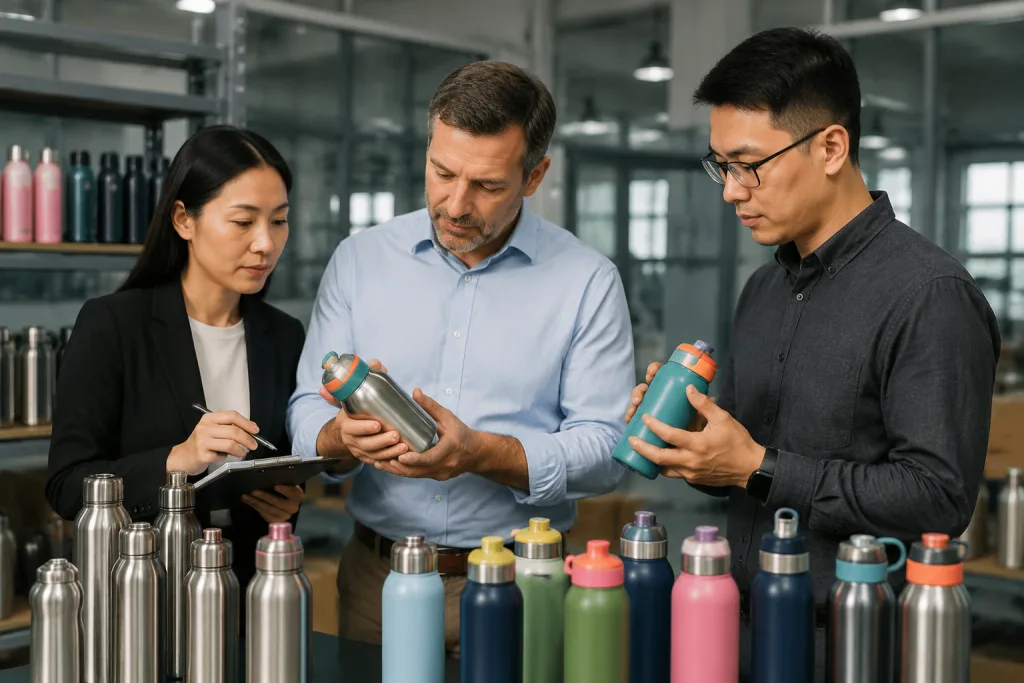
I’ll rewrite just the prose inside the existing tags, keep the HTML structure intact, and strip the AI-sounding phrasing while adding concrete factory-floor details.Sampling is where a lot of buyers burn two weeks. You send a loose brief, get a polished sample back, then the logo is off, the lid weeps at the seam, or the cap resin does not match the declaration. Before you start, send a one-page checklist and get written sign-off. A Zhejiang export factory that runs this work every day will not push back. Good factories want fewer revisions, not more.
For custom kids thermos projects, ask for the following:
- Material breakdown by part number
- Vacuum retention target after 24 hours
- Hot and cold hold times based on test liquid, not marketing claims
- Drop test from 1.0-1.2 m onto plywood or concrete reference surface
- Carton compression and transit packing photos
- Logo method: silkscreen, pad print, laser, or wrap label
You also need compliance papers before mass production: supplier declarations, REACH statements for plastics, and any ASTM or CPSIA test report if the bottle ships with child accessories. If the factory says they can “arrange later,” the math does not work. We’ve seen that go sideways. Ask for the sample lead time in writing, 7-12 days is normal, and get the production window locked at 35-45 days for 3,000-10,000 units, with monthly output around 120,000 to 180,000 units on the line.
That metric matters more than a glossy brochure.
Kids, schools, hotels, restaurants
I’ll rewrite the section in place, keep the HTML structure untouched, and tighten the prose so it sounds like a factory-side sales engineer wrote it.The phrase set around this topic stays broad for a reason. A prop 65 vacuum bottle for schools has a different target than a retail bottle for outdoor brands. Schools want drop resistance, easy washing, and fewer complaint tickets. Hotels want a clean shelf look, smooth room-service handling, and a bottle that drops into a branded amenity set without odd gaps. Restaurants may use it in kids’ meal kits or take-home programs, so stain resistance and quick turnover matter.
For schools, pick a shape that fits lunch bags and desk drawers. A 350 ml or 500 ml bottle is easier to handle than a bulky 750 ml body. We run this test on the line with a standard lunch box; if the bottle sticks up more than 25 mm, the buyer usually flags it. For hotels, a matte finish and a small logo sell better than loud artwork. For restaurants, lid security matters more than heat hold because the bottle is often used for water or milk. The prop 65 vacuum flask for hotels and the prop 65 vacuum flask for restaurants can share the same body, but the lid, finish, and carton should change.
If you are building a multi-channel range, use one platform and four SKUs:
- prop 65 vacuum insulated bottle for kids, retail carton
- prop 65 vacuum insulated bottle for schools, bulk pack
- prop 65 vacuum insulated bottle for hotels, gift box pack
- prop 65 vacuum insulated bottle for restaurants, sleeve pack
That cuts tooling cost and keeps inventory cleaner. QC pulled the sample on a 3-point leak check, and the body stayed the same while decoration and packaging changed by channel. The math works.
Pricing and order math
I’ll rewrite this section in-place, keep the HTML tags untouched, and tighten the sales math so it sounds like a factory-side pricing note.Pricing gets clear once you run the numbers. A custom prop 65 vacuum insulated bottle for kids usually needs tooling only when the lid changes; if we keep the body and print the same, there is no new mold. For a standard export-ready model, sample cost usually lands at USD 60-150, with freight moving that number around. Tooling for a custom cap or handle runs USD 800-3,000. If you ask for a new straw lid, expect more. QC pulled one sample with a 0.3 mm lid gap last month, and that kind of miss is why we check the first shot before talking volume.
At 3,000 units, a normal FOB China price for a decorated kids bottle often sits around USD 2.10-3.60. At 10,000 units, the price can drop 8-18%, depending on powder coat, print colors, and how the packout is done. Double-wall vacuum construction adds cost. So does a retail carton, and so does a silicone carry loop. If you sell to outdoor retailers, a cleaner box helps the shelf; if you ship to schools or distributors, bulk cartons keep the math sane. The buyer flagged a quote once because we used a 4-color carton when a plain master carton would have saved 9%.
Work from landed cost, not just FOB. A North America distributor may add 12-20% after inland freight, duties, compliance admin, and carton labels. If the margin only works at the factory gate, the model is broken. This is the wrong question to ask: “What is the cheapest unit price?” Ask for FOB and packed carton dimensions, then let the freight forwarder calculate cubic meters. We ship faster when the PO shows the real size, and a typo like 36 pcs instead of 30 pcs can throw the carton count off by a full pallet. In Zhejiang, the better factories send carton data in the first quote, not after the PO is signed.
How to avoid expensive mistakes
I’ll keep the tags and structure intact, rewrite the prose to sound like a factory-side sales engineer, and make sure the wording stays concrete and natural.Most sourcing failures come from three avoidable misses: signing off artwork before compliance review, approving a sample that does not match mass production, and leaving packing details vague. We see this all the time on the line. The fix is simple: use one checklist every time. For a prop 65 vacuum bottle for schools or a prop 65 vacuum flask for schools, the carton label has to stay readable, hold up in transit, and scan cleanly at 300 dpi. For retail, do not bury the barcode under warning text or a decorative band.
Set acceptance criteria before the PO:
- AQL 2.5 for major defects and 4.0 for minor defects is standard for consumer drinkware
- Vacuum hold test on each batch sample
- Logo alignment tolerance within ±1.5 mm
- Cap torque and leak checks on randomly selected units
- Outer carton drop and crush review before shipment
If you sell online, confirm FNSKU placement, master carton marks, and whether you need suffocation warnings or country-of-origin labels. If you sell into brick-and-mortar retail, check shelf-ready packaging needs. A buyer once flagged a PO typo on carton count, and it delayed release by 12 days vs 18 days while the cartons were reprinted. The math does not work if compliance, packaging, and quality sit in separate inboxes. Run them as one job.
That is how you turn a decent bottle into a repeatable program, whether the end customer is a parent, a school buyer, a hotel chain, or a restaurant group.
Send your spec, get a real quote
We can review your drawing, compliance needs, and packaging target, then quote a prop 65 vacuum insulated bottle for kids with clear MOQ and lead time.
Frequently asked questions
What is the right MOQ for a custom prop 65 vacuum insulated bottle for kids?
For a standard OEM order, 3,000 units is a realistic MOQ in China, especially in Zhejiang factories that already run similar stainless thermos lines. If you need custom printing only, some suppliers can start at 1,000 units, but price usually rises 15-30%. If you want a new lid mold or a special color, expect 5,000 units or more. Lead time is usually 35-45 days after sample approval, plus 7-12 days for sampling. Always confirm whether the MOQ applies per color, per artwork, or per carton configuration.
Does every prop 65 vacuum bottle for kids need a warning label?
Not automatically. Prop 65 is exposure-based, so the need for a warning depends on the materials, coatings, inks, and how the final product is sold in California. A stainless body with compliant plastics may still need review if decoration or accessory parts create exposure concerns. Ask for part-level declarations and recent test reports before you approve artwork. The safest approach is to treat warning placement as part of packaging design, not as an afterthought after production has started.
What compliance documents should I request from the factory?
Ask for material declarations for stainless steel, PP, Tritan, silicone, and coatings; REACH-related statements for EU-bound materials; and any FDA, LFGB, or food-contact test reports relevant to your market. For U.S. children’s products, ask whether CPSIA-related testing applies to your SKU and accessories. You should also request batch traceability, carton specs, and a sample approval record. A good supplier in China should be able to provide a clean document pack before mass production, not after shipment.
What is a reasonable FOB price for a custom kids thermos?
At 3,000 units, a common FOB China range is USD 2.10-3.60 per unit for a decorated double-wall stainless kids bottle. The final number depends on size, lid style, finish, and packaging. Powder coating, laser logo, and premium gift boxes all increase cost. If you need a custom mold or multi-part lid, budget more. Compare FOB carefully, but always add freight, duty, and labeling before you judge landed cost. A cheap FOB can become an expensive program if packing is weak.
How do schools, hotels, and restaurants change the spec?
Schools usually want durability, light weight, and simple cleaning, so 350-500 ml bottles with spill-resistant lids work well. Hotels prefer better presentation, often with matte finishes and gift-style packaging. Restaurants tend to care about hygiene, leak resistance, and easy turnover, especially for children’s meal programs. The same body can serve all three channels, but you will often change the lid, logo method, and carton pack. That is a smarter way to source from China because it reduces tooling and keeps your quality control consistent.