Key Takeaways
- 304 stainless thermos units usually start at MOQ 500 pcs, while fully custom lid tooling can push it to 3,000 pcs
- A realistic FOB China price for a 500 ml promotional thermos is USD 2.80-5.90 depending on finish, cap, and decoration
- Typical factory lead time in Zhejiang is 20-35 days after sample approval, plus 35-45 days ocean transit to the US or EU
- For export compliance, ask for REACH, LFGB where needed, and drop-test or vacuum-retention data before you place bulk thermos orders
For a promotional vacuum bottle US buyers keep, the mockup is the easy part. The leak test decides the order. We ship enough of these to know where the fight sits: thermal hold, print wear, freight math, and whether a 3,000-unit run stays under 8 rejects. A 350 ml bottle that holds 12 hours hot and 24 hours cold is a clean baseline. QC pulled the sample, checked the cap gap at 0.3 mm with a caliper, and that told us more than the rendering ever could.
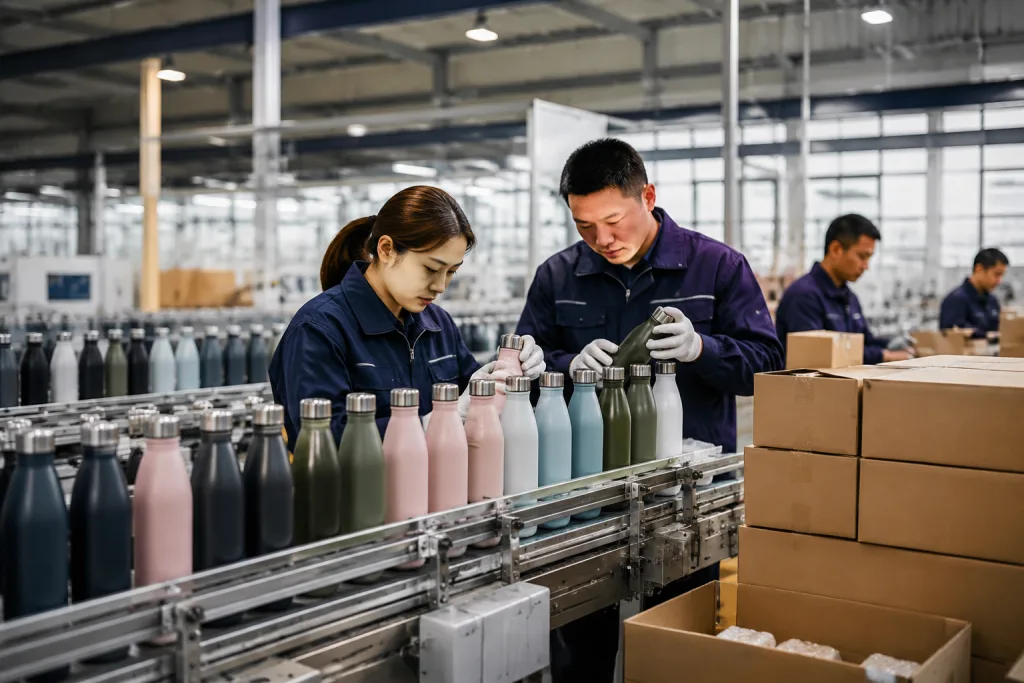
From our Zhejiang factory, the pattern is the same each season. Outdoor buyers want a shell that takes a knock; promo teams want a landed cost that stays inside budget and a logo that still reads after 50 dishwasher cycles. The math does not work any other way. We run 304 and 316 stainless on the line, compare wall thickness, MOQ, and lead time, and we have seen a PO typo on the carton count turn a clean order into a week of back-and-forth.
How to rank thermos options
A top-five list only works when the rules are blunt. We score each promotional thermos on five points: thermal retention, leak risk, decoration wear, landed cost, and supply reliability. That is the clean way to judge a promotional vacuum bottle US program without getting fooled by a shiny sample from the showroom. A bottle that looks premium but comes back with 2% cap failures gets expensive fast. A plain bottle with a stable 0.35 mm inner wall, a clean seam weld, and a repeatable powder coat usually wins the bulk order. We have seen this go sideways on the line.
Run a simple filter. First, confirm the material: 304 is standard for most custom thermos programs; 316 fits salty or acidic use, but it adds about 8-15% to cost. Second, ask for insulation results in hours, not brochure talk. QC pulled the sample at 65 mm neck height, and that number matters more than a pretty render. Third, check how the logo goes on. Laser engraving holds up better than silkscreen on a thermos customized for outdoor use, while a full-color wrap works on lighter retail runs. If the supplier cannot show QC checkpoints and AQL sampling, you are buying hope, not data. The math does not work.
In Zhejiang, the good factories do not promise magic. They quote what they can run every month, and they show you the production line.
Best overall retail thermos
The best retail thermos for outdoor stores is a 500 ml double-wall stainless steel bottle with a screw cap, powder-coated body, and laser logo. We run this format a lot because it looks clean on shelf and does not give the buyer headaches in use. 500 ml is the sweet spot. It holds coffee or cold water without turning into a brick in a backpack, and we can pack 24 pcs per master carton without wasting carton space.
For this category, ask for 304 stainless steel, 0.4 mm wall thickness on the outer shell, and vacuum hold around 12 hours hot and 24 hours cold. QC pulled the sample on the line with a cap torque tester and a 1-meter drop test on concrete, and weak caps show up fast there. MOQ is usually 1,000 pcs for standard colors, and FOB China often lands around USD 3.20-4.80. The buyer once flagged a carton typo on a PO, so this is the wrong question to ask: whether the SKU is fancy. The math works because it sits between promo price and real retail value.
Best low-cost giveaway bottle
If the job is volume, the low-cost pick is a 350 ml straight-wall thermos with a basic twist lid and one-color pad print. We run this spec for trade shows, membership packs, and event bundles where unit cost wins. Straight shape matters. On our line, it packs 12-16% more units per carton than a chunky travel tumbler, and the freight math goes sideways if you chase a fancier profile. A buyer once pushed for a tapered body, then came back after the pallet count dropped.
Keep the decoration plain. Silkscreen usually lands below laser engraving on a 500 pcs run, but QC pulled the sample for a 24-hour rub test and an adhesion check before we signed off. Full-wrap artwork kills the price fast. MOQ is usually 500 pcs from a Zhejiang thermos supplier with stock shells, and FOB China often starts near USD 2.80-3.60, depending on lid color, box art, and whether you want individual polybags or retail cartons. We had a PO typo on carton qty once; the buyer flagged it before the line started.
Best premium branded bottle
For brand owners who want a cleaner shelf read, we point them to a tapered 500-750 ml bottle with matte powder coating, a stainless cap detail, and laser engraving. It reads like a finished product. Not a giveaway. Engraving does not peel, and that matters when the bottle sits in a truck door pocket or gets dragged through daily outdoor use. Keep the body simple. We run into coating rejects fast once the shape gets fancy, and carton packing density drops when the contour gets clever. One plant note: 18 mm shoulder radius packs cleaner than a sculpted waist.
This premium thermos needs tighter process control. Ask for coating thickness at 60-80 microns, vacuum leak test records, and Pantone tolerance if the brand color has to land on target. QC pulled the sample on the line with a micrometer, and the buyer flagged a 0.3 mm cap mismatch before we packed the first carton. BSCI audit, REACH declaration, and a traceable batch code are standard for serious buyers in Europe and North America. MOQ is usually 1,000-2,000 pcs. On a Zhejiang line running 80,000-120,000 units per month across multiple lines, the finishing process stays under control; if it does not, the math does not work. We have seen this go sideways on a PO typo for the cap color.
Best for outdoor use
The best bottle for outdoor retailers is a rugged 600-750 ml model with a wide mouth, carry handle, and a lid that opens one-handed. That is the spec we ship when the buyer wants a promo thermos that survives a parking-lot drop, not a desk display piece. Wide mouth means ice drops in fast, powder does not cake at the neck, and the bottle rinses out without a brush fight. The handle changes the feel right away. On trails, worksites, and road trips, that matters more than chasing two extra hours on the heat test.
Check the lid seal first. We run food-grade silicone, and QC pulled the sample when a 1.2 mm seal groove came back loose after a 24-hour leak check. A 0.45 mm shell holds up better than a thinner promo shell, and the math does not work any other way once dent claims start landing. If you are buying thermos bulk for a regional chain, ask for salt-spray or abrasion testing on the coating, especially on dark matte finishes that show wear fast. FOB China pricing is usually USD 4.10-6.20 depending on lid construction. The buyer flagged a PO typo that dropped the handle spec, and we caught it before the line ran.
Best gift set configuration
The clean set is bottle, matching box, printed instruction card. We run that combo on promo vacuum bottle orders because the line keeps moving when the buyer stops piling on five extras. A 500 ml thermos does not need the top SKU on the shelf; it needs a tight cap fit, a clean silk-screen hit, and packaging that stays within 2 mm. A plain cylinder box or kraft gift carton usually adds USD 0.35-0.90 per set. The math works.
This is the right place for a custom thermos with a lid color swap or sleeve, but keep the spec tight. We had one buyer flag a Pantone shift on the cap, and QC pulled the sample because the sleeve sat 1.5 mm high. One loose detail turns into delay. A solid thermos promotional order should split bottle, gift box, and shipping carton into separate sign-offs. For US fulfillment, check the outer carton against your FBA or warehouse pallet pattern before we ship. On a 2,000-piece run, 7 extra days in pre-production costs less than fixing a bad PO typo after the line starts.
What China suppliers should prove
Check the factory, not the brochure. A real thermos factory in China should show three things on the first call: the inspection report, the material declaration, and the sample approval record. We had one buyer flag a PO that said “304 innner” on the drawing; QC pulled the sample, found the lid gasket spec missing, and the order stopped there. If the seller cannot say whether the liner is 304 or 316, or cannot break down the lid parts, you are talking to a trader, not a thermos manufacturer. We ship from Zhejiang, and repeat orders come from stable QC, not from a rock-bottom quote.
- AQL sampling standard, usually AQL 2.5 for critical defects and 4.0 for major defects
- REACH and food-contact declarations for the target market
- Drop test, vacuum hold, and leak test data by batch
- Packaging spec with carton quantity, gross weight, and barcode placement
Ask for monthly output, running lines, and confirmed lead time in peak season. That is the right question. On our line, a 12-day sample run can turn into 18 days once the buyer adds a two-color logo and a matte powder coat, so the math has to match the process. A serious factory in China gives you a straight answer, not a guess. If someone offers 7 days for a fully printed custom thermos, they are selling a schedule that will slip the first time QC checks the vacuum seal.
How to buy without surprises
The clean way to buy a promotional vacuum bottle US program is to lock the spec before you ask for samples. We write it down first: size, lid type, steel grade, finish, logo method, carton count, target price. One buyer sent a PO for 22 oz, then asked for 18 oz pricing. That line item got kicked back the same day. The math does not work. Once the line starts, changing from a screw lid to a push lid or from matte to powder coat adds cost and burns 7 to 12 days on the line.
For the US market, check the after-sales mess before you place the order. If a bottle is handwash only, print it on the artwork and on the carton. If you ship through distributors or retailers, lock barcode and FNSKU placement early; QC pulled the sample once because the sticker sat 8 mm off-center and the buyer flagged it. For Europe, do not skip REACH and food-contact papers. One master sample, one production sample, one packed sample. That is how we run a thermos distributor order without claims after arrival.
Get a real quote for your thermos program
Send your size, decoration method, and target market. We will price the spec, confirm MOQ, and map a production schedule from our Zhejiang factory.
Frequently asked questions
What MOQ should I expect for a promotional vacuum bottle US order?
For standard 304 stainless steel bottles, MOQ is usually 500-1,000 pcs. If you want a custom lid, printed gift box, or unusual color, the order often moves to 2,000-3,000 pcs. In Zhejiang, stocked bodies and standard caps let a factory stay lower on MOQ. The real issue is not only the quantity; it is whether you are changing tooling. A simple logo change keeps cost and lead time down. A fully customized thermos build takes longer and usually costs more per unit.
What is a realistic FOB China price for bulk thermos orders?
For a 500 ml promotional thermos, a realistic FOB China range is USD 2.80-5.90 per piece. The low end is a basic body, simple cap, and one-color print. The higher end usually includes powder coating, engraving, color-matched parts, or a gift box. 316 stainless and special lids add cost quickly. When you compare quotes from suppliers in China, make sure you are comparing the same steel grade, carton count, and decoration method, otherwise the quote spread is meaningless.
Which logo method lasts longest on a custom thermos?
Laser engraving lasts the longest on a stainless thermos because the mark is cut into the surface instead of sitting on top. On powder-coated bottles, the engraving can expose the steel underneath and still look clean after heavy use. Silkscreen is cheaper, often by USD 0.08-0.25 per unit, but it needs good curing and rub resistance testing. For outdoor retail, engraving is usually the safer choice. For a thermos promotional giveaway where cost matters more, silkscreen can still be the right answer if the artwork is simple.
How long does a thermos manufacturer in China need to produce?
For a standard thermos custom order, production time is usually 20-35 days after sample approval and deposit. If you change tooling, add special packaging, or need peak-season capacity, expect longer. Ocean freight to the US often adds 35-45 days, depending on port congestion. A factory in Zhejiang with multiple lines may quote faster, but you should still plan around actual packing and inspection time. A rushed schedule usually shows up later as missed print alignment or cap fit issues.
What compliance documents should I request?
At minimum, ask for material declarations, food-contact statements, and REACH documentation if the bottles are going into Europe. For the US, also ask for any relevant FDA food-contact statements from the supplier. If you are buying through Amazon or a retailer, keep carton labels, barcode placement, and item master data ready. An inspection report using AQL 2.5 for critical defects is normal for a serious thermos supplier. If the product is going into a regulated channel, ask for batch traceability and test records before shipment.