Key Takeaways
- Typical MOQ for a promotional polypropylene bottle US order starts at 3,000 pieces, with 25-30 days lead time after sample approval.
- A 500-650 ml PP canteen usually lands at USD 0.72-1.45 FOB China depending on lid, print, and insert packaging.
- For logo durability, laser or 1-color silkscreen is better than full-wrap print when the bottle is used 50+ times.
- If you need REACH and LFGB-style documentation, ask early; compliance paperwork can add 2-4 days before production starts.
If you are buying a promotional polypropylene bottle US program, the bottle is usually not the problem. The gap sits between sales claims, compliance checks, and what your distributor can land on time. We ran a batch last month with a 1.2 mm wall spec, and QC pulled two samples that looked fine on the line but failed after drop tests. Polypropylene is simple on paper, but the wrong wall thickness, cap style, or print method turns a low-cost giveaway into a complaint. That is the wrong question to ask. You need a bottle that ships intact, clears basic food-contact checks, and still leaves room for logo value.
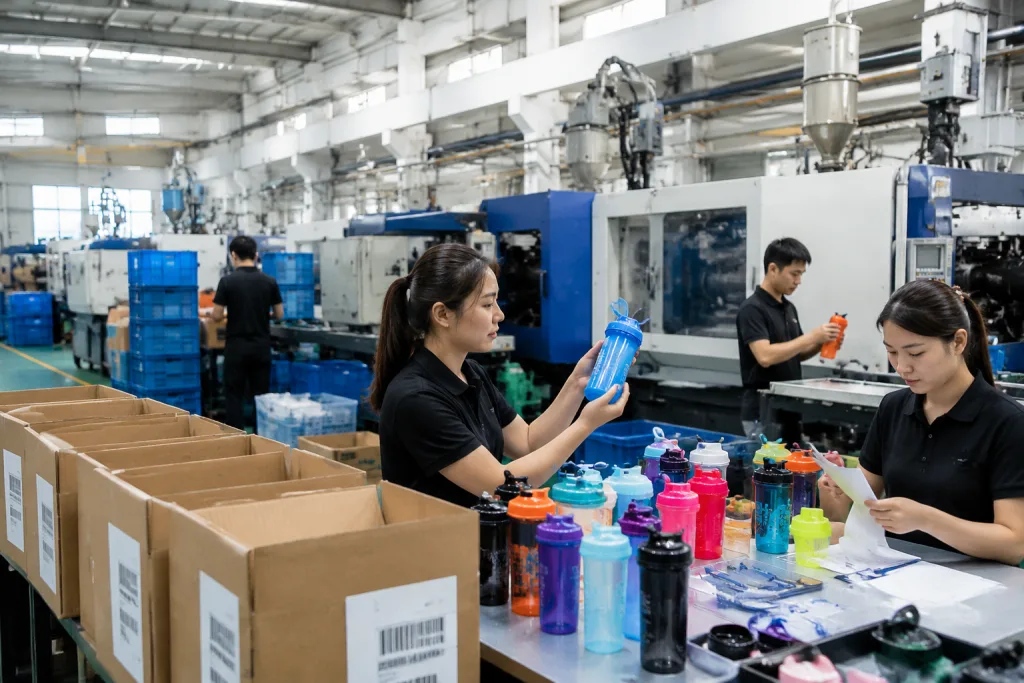
We build custom drinkware in Zhejiang, China, and the pattern stays the same: buyers want a clean spec, a realistic MOQ, and no surprise on lead time. A good canteen manufacturer gives you a fast quote once capacity, closure, and decoration are fixed; a weak one sends a pretty sample and dodges the details. We once saw a PO with “poly prop” typed three different ways, and the buyer flagged it before tooling started. We ship this every week, and the math does not work if the spec is fuzzy. This guide breaks the options the way procurement actually uses them: use case first, then cost, then the details that matter in China and the US.
What PP Bottles Really Compete On
Most buyers fixate on color chips and miss the numbers that protect margin. For a promotional polypropylene bottle US program, asking whether PP is cheap is the wrong question. Landed risk decides the bill. Check capacity, wall thickness, cap seal, print area, and carton pack-out. A 600 ml bottle with a narrow neck is a different buy from a 750 ml wide-mouth canteen custom piece, even if the drawing looks close. We once had a buyer flag a 3 mm neck typo on the PO, and that turns into rework fast.
Here is the split we run on the Zhejiang factory floor. MOQ matters here.
- Entry promo PP bottle: 350-500 ml, 1-color print, USD 0.58-0.88 FOB, good for event giveaways and tight budgets.
- Mid-tier canteen promotional: 500-650 ml, better cap, USD 0.72-1.45 FOB, fits retail-adjacent use and repeat handling.
- Higher-value customizable drinkware: matte finish, dual-color body, carry loop, USD 1.20-2.10 FOB, where the buyer wants more shelf pull.
If the bottle is going into a distributor program, watch stacking efficiency and carton count per 20-foot container. QC pulled the sample on a 14,000-unit run because the lids scuffed at 18 cartons high. That was the issue, plain and simple. One nice sample does not pay the freight.
Spec Table That Buyers Actually Use
Use a spec table and make the call on paper. It shuts down the usual back-and-forth where every canteen supplier says the same thing. We run this layout on US promo quote sheets, and the buyer usually spots the gap in 2 minutes. Simple. A 0.8 mm wall note or a 3,000 pcs MOQ tells the real story faster than sales talk.
| Spec | Promo PP Bottle | Reusable Canteen | Custom Growler Style |
|---|---|---|---|
| Capacity | 350-600 ml | 500-1,000 ml | 1,000-1,500 ml |
| Typical MOQ | 3,000 pcs | 5,000 pcs | 3,000 pcs |
| FOB China price | USD 0.58-1.45 | USD 0.90-2.60 | USD 1.50-3.80 |
| Lead time | 25-30 days | 30-35 days | 30-40 days |
| Decoration | Silkscreen, pad print | Silkscreen, laser, wrap label | Laser, screen, label |
The table shows the split we see on the line: if you are buying a canteen custom piece for events, do not pay retail-style money for retail-style extras. QC pulled the sample on a 1.5 mm wall check last week, and the cap still passed after 20 open-close cycles. For a distributor drinkware order, that is where the margin sits. The math does not work any other way.
When the brief calls for a canteen customizable setup, ask for a written sample standard: color chip, print Pantone, lid torque, and carton drop spec. We had one PO with a typo on the carton mark, and the buyer flagged it before the line started. That saved a reprint. You need repeatable, not perfect.
Best Fit by Use Case
Different buyers need different answers. A promotional polypropylene bottle US job for a 10,000-piece trade show run is not the same as a campus resale program shipping 48 cartons a week. We had a buyer flag a PO typo on carton marks once, and that was enough to show why use case beats habit every time.
1. Events and giveaways
Pick a 400-500 ml canteen promotional bottle with a snap cap or screw cap. Keep FOB at USD 0.58-0.90, stay with one-color print, and pack 48 or 60 pcs per carton. The line runs clean on this spec. This is the right call for a canteen vendor chasing volume, not image.
2. Corporate onboarding
Go with a 500-650 ml customized canteen with a carry loop and matte body. It still stays on budget, but it looks sharper in a Teams call and on an office desk. QC pulled the sample and found the 2 mm wall looked flatter under matte PP, which is why a small color shift can carry harder than a new mold.
3. Distributor programs
If you are a canteen distributor or distributor drinkware buyer, watch carton compression, reorder consistency, and a stable lead time of 25-30 days. The math does not work if the pallet shifts in transit or the second order drifts by 7 days. A good custom canteen here should be dull and repeatable.
4. Retail-adjacent promos
When the bottle needs to read like a sellable product, step up to a customizable growler format or a larger custom drinkware line. It costs more, and that is the point. We ship these with tighter print registration, because a 0.5 mm logo shift will get noticed on shelf faster than a low price will get forgiven.
Materials, Walls, and Closures
PP is forgiving, but it is not magic. Grade, wall thickness, and cap geometry decide whether the run stays clean or turns into a complaint pile. For a canteen customized for promotion, we usually spec food-grade polypropylene at 1.2-1.6 mm on smaller bottles and 1.5-1.8 mm on larger bodies. Drop below 1.0 mm and the bottle starts to feel flimsy. We saw that in a 3,000-piece run when cartons rubbed the side wall and left scuff marks before the buyer even opened the case.
The closure does more than most buyers expect. A screw cap with a silicone ring cuts leak claims, while a plain press cap is fine for light giveaways. If the bottle is meant to be a custom growler or customized growler style item, do not save USD 0.05 on a weak lid. The math does not work. QC pulled the sample, and the cap failed after 8 turns on the torque gauge, right where the thread started to strip.
Before approval, ask the canteen factory for three things: cap torque range, drop test data from 1 meter, and a photo of the body gate line. That is the real check. We ship repeat orders, not one nice sample. On the line in Hangzhou, a PO typo on “1.5 mm” came through as “1.0 mm”; the buyer flagged it before production, and that saved a messy rework at 5,000 units. The caliper does not lie.
Printing, Branding, and File Prep
Logo work is where promo orders go sideways. We see it on the line every week. A canteen promotional item with a crowded logo, gradient art, and tiny legal text usually prints badly on PP. One buyer sent a 3-color mark with a 0.6 mm line weight, and QC pulled the sample because the edge fill broke up. The safe picks are one-color silkscreen or two-color silkscreen on a flat panel. Laser is for metal. Do not expect every decoration method to work on plastic custom drinkware.
If you want a canteen customized for a US brand, send vector art, Pantone references, and placement dimensions in millimeters. We run a 500 ml bottle with a print zone around 45-70 mm wide and 25-40 mm tall, depending on the curve. Those are the numbers that matter. Keep the message short. One bold logo beats a dense label every time, and the math does not work once the wrap starts bending around the body. The buyer often pushes for a bigger logo, but that request blows past the usable panel on this mold.
Practical rule: if the artwork cannot be read at 1 meter, it is too busy for a promo PP bottle.
For canteen distributors and canteen suppliers, clear files save days. We usually confirm artwork and the production drawing in 24-48 hours if the file is clean. If the PO says "centered" but the buyer means 12 mm off the handle, the buyer flags it and we lose a day. For a custom canteen with multi-step branding, plan another 2-3 days for proofing. This is where sloppy copy causes trouble. QC pulls the sample fast when the file shows a 0.2 mm hairline that will not survive screen setup.
Compliance for the US Market
US buyers often ask for the wrong document first. They ask for a certificate before they state how the bottle will be used. For a promotional polypropylene bottle US shipment, the file set changes if it is for food contact, infant use, or plain adult beverage storage. We run this check on the line before anything moves, because a 12 oz cup and a lunchbox bottle do not get the same paper trail. At minimum, ask for food-contact declarations, material composition, and traceable production records. A buyer once flagged a PO that said “PP bottle” but skipped the intended use; the math does not work if you try to backfill compliance after booking.
If you sell through retail or Amazon, add carton labeling, country-of-origin marking, and FNSKU planning to the file. We ship this with a barcode scan at packing, and QC pulled the sample when the outer carton showed one wrong label position by 8 mm. A factory that knows export will pack master cartons, inner bags, and pallet loads to cut damage. In Zhejiang, that is standard work. A missing FNSKU on one box is enough to stall receiving.
For larger orders, lock AQL inspection terms before production starts. A common setup is AQL 2.5 major and 4.0 minor, but the right number depends on the channel. Distributor canteen programs can live with a little more cosmetic variation than retail shelf stock. Set it upfront or you will argue later. We have seen that go sideways on a 5,000-piece lot when the buyer wanted retail-grade finish after approval on a sample with a small gate mark.
Pricing, MOQ, and Lead Time
The buying math is plain if you keep the numbers in front of you. For a standard promotional polypropylene bottle US order, we run 3,000 pieces per color and logo setup as the floor. Mix lid colors or ask for a new mold, and 5,000 pieces is the number. QC pulled a sample on the last run with a 0.5 mm gate mark. The buyer flags that after the PO is signed, and then everybody loses a day.
Lead time is 25-30 days after sample sign-off for a plain item. Add 5-7 days if you need color matching, custom packaging, or a printed insert card. Shipping from China to the US adds 18-35 days, depending on port and freight mode. We had one buyer quote sell-in using factory days only, then the carton missed the vessel cut and the margin was gone. This is the wrong question to ask. A tape measure on the packing bench tells the story faster than a sales deck.
Pricing starts low on paper. A basic canteen supplier may quote under USD 1.00 FOB, but landed cost moves with carton size, freight, and duty. A clean spec sheet with gross weight, carton count, and CBM saves time; we ship that sheet with a 10 kg master carton note because the math does not work any other way. One PO typo on a 40HQ booking can wipe out a good quote fast, and we have seen that go sideways on the line.
When To Move Beyond PP
PP works when the brief is price, lead time, and a plain pad print. It starts to fail when the buyer asks for a retail shelf finish, 12-hour heat hold, or a heavier hand feel. At that point, a custom growler, customizable growler, or stainless makes more sense. We run 0.5 mm wall checks on the line for that exact reason. Match the bottle to the job.
If the customer wants a canteen custom program for giveaways, stay with PP and spend on artwork and carton layout. If the brief is a customized drinkware line for chain stores, move up a tier and use a thicker body or a hybrid cap. For distributor canteen programs, this is the wrong question to ask: novelty loses to consistency. MOQ 3,000 is where the math starts to work. We had one PO with “carton layoout” typed in twice; the buyer still wanted the fixed price, and that typo told us they were rushing the order.
As a canteen manufacturer in China, we push back when the spec asks PP to copy a premium bottle it cannot carry. QC pulled the sample on a 500-unit drop test, and the buyer flagged a cap scuff that would have turned into a claim later. That kind of blunt talk saves revision cycles. A good canteen distributor knows the real target: on-time delivery, clean handling, and a sample that still matches after 500 shipments.
Get a quoted spec in 24 hours
Send your capacity, target price, logo file, and packing needs. We will return a factory-level quote with MOQ, lead time, and compliance notes.
Frequently asked questions
What is a realistic MOQ for a promotional polypropylene bottle US order?
For most factory runs, 3,000 pieces is the practical starting point for a single color and one logo position. If you want mixed lid colors, custom packaging, or a new mold detail, 5,000 pieces is more realistic. In Zhejiang, China, many canteen manufacturers can sample faster than they can commit line time, so approval speed matters. On a clean spec, lead time is usually 25-30 days after sample approval.
How much does a custom PP canteen cost FOB China?
A basic 350-500 ml promo bottle usually lands at USD 0.58-0.88 FOB China. A 500-650 ml canteen customized with a better cap or matte finish often reaches USD 0.72-1.45. Larger custom growler-style PP items can move to USD 1.50-3.80 depending on capacity and closure. Freight, duty, and carton configuration will change the landed number, so ask for gross weight and CBM before you compare suppliers.
What compliance documents should I ask for?
For US-bound custom drinkware, ask for material declaration, food-contact confirmation, and traceability to batch level. If your program needs it, request REACH-related screening and any FDA-oriented supporting tests your importer requires. For retail and Amazon, also confirm carton markings and country-of-origin labels. If your channel requires it, add AQL 2.5 major and 4.0 minor to the inspection agreement before production starts.
Which decoration method lasts best on polypropylene?
For PP, one-color silkscreen usually gives the most balanced result between cost and durability. Pad print works well for smaller logos and curved zones. Full-wrap graphics can look busy and often wear faster. If the bottle is handled 50+ times, keep the artwork simple and avoid tiny reversed text. A practical print area is often 45-70 mm wide, depending on the body curve and the canteen shape.
Should I buy a canteen custom program from a factory or a trading company?
If you need speed and a simple spec, a canteen factory is usually the cleaner path because you get direct control over tooling, production, and QC. A trading company can help if you are combining multiple SKUs or need consolidation, but it adds another layer. For distributor canteen and distributor drinkware programs, direct factory communication in Zhejiang, China usually reduces mistakes on artwork, packing, and sampling.