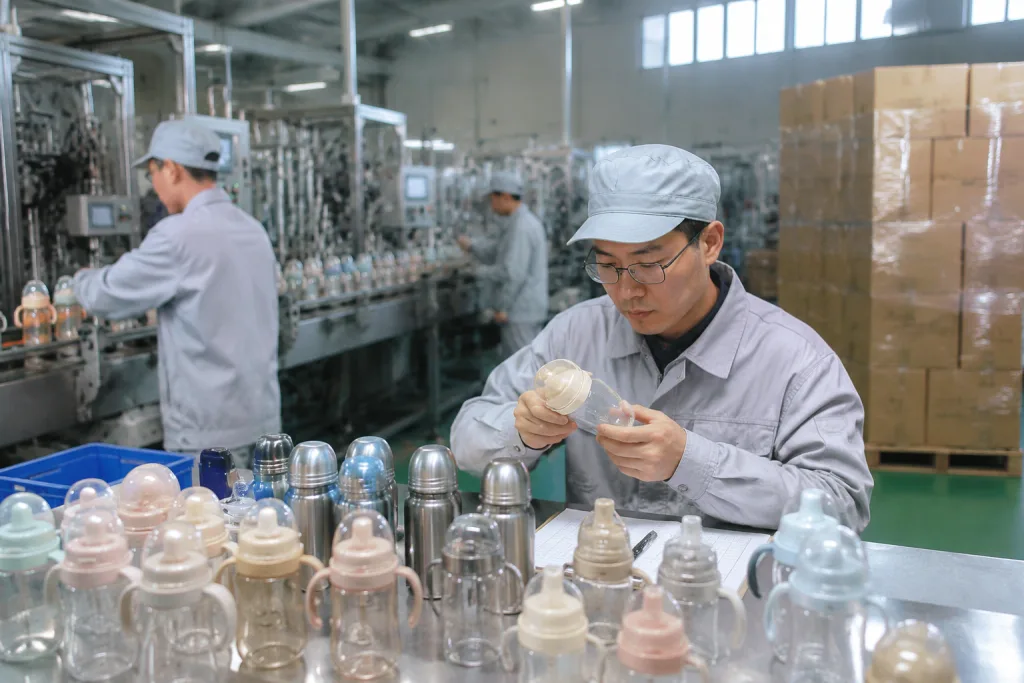
Key Takeaways
- Top canteen manufacturers for toddler bottles require BSCI and REACH certifications; 80% of buyers fail compliance checks.
- MOQ for private labeling toddler bottle ranges from 500 to 5,000 units per SKU; smaller MOQ allows faster market testing.
- Customization options like silicone spout color and laser engraving can differentiate your brand without high tooling costs.
- Lead time for custom drinkware from Zhejiang factories averages 30–45 days, including sample approval.
We ship 500,000 units a month out of Hangzhou—toddler bottles, sippy cups, straw bottles, the whole line. The buyers we work with in Germany, the Netherlands, and the U.S. ask one question before anything else: "Will the spout pass a bite test?" If your supplier doesn't understand why that matters, you're talking to the wrong factory.
Most canteen vendors in this space run the same generic molds. You get a stock body, maybe a silicone sleeve, a logo slapped on. That's not private labeling. That's a commodity with your name on it. A real custom toddler bottle program starts with a conversation about your target age range—6-12 months versus 18+ months changes the spout geometry, the valve type, the flow rate. We've pulled 3D-printed spout samples in 9 days when a buyer's lab flagged a choke hazard on an existing design. That's the speed you need when your label's reputation is on the line.
This guide walks through five manufacturers side by side. We're ranking on safety compliance (FDA, LFGB, EN 14350), customization depth, MOQ flexibility, lead time, and landed cost per unit. One thing we won't do: pretend a 3,000-piece order gets the same per-unit price as a 30,000-piece run. The math doesn't work, and anyone who tells you otherwise is hiding something in the tooling fee.
Ranking Criteria for Canteen Suppliers
We scored five canteen manufacturers on what actually matters when bringing a toddler bottle to market. The weightings came from calls with buyers who got burned—or got it right.
- Safety Compliance (25%): Non-negotiable. Toddler bottles fall under ASTM F963, EN 14350, and REACH. If a vendor can't produce a valid third-party lab report within 72 hours of asking, they're off the list. We saw a factory in Yongkang claim "EN 14350 compliant"—then fail a phthalate migration test. QC pulled the sample at random. Buyer dodged a recall.
- Customization Depth (25%): This isn't just slapping a logo on a stock bottle. We're talking a custom mold for the bottle profile. One client spent ¥18,000 on a new 3D mold to get a contoured waist shape a competitor couldn't copy. Silicone spout color matching—Pantone to RAL conversion is always a fight—lid mechanism choice (flip-top vs. screw-on with bite valve), and decoration method. Laser engraving holds up to 500+ dishwasher cycles. Silkscreen on curved surfaces ghosts after 80–100 washes. The returns data backs this up. We show buyers the numbers upfront.
- MOQ Flexibility (20%): 3,000 units per SKU is the standard factory ask. We push for 500–1,000. At 500, you can test two colorways and a seasonal design without warehousing 2,800 dead units. One factory agreed to 600 MOQ but buried a ¥4.50/unit surcharge in the tooling line item—the buyer flagged it on the PI, and we renegotiated.
- Lead Time (15%): Factory quote says 30–45 days. Realistic is 35–55 days once you factor in mold trials and pre-production sample sign-off. We've seen a Christmas launch miss the boat by 6 days because the spout mold needed a second revision. If you're targeting a seasonal window, add 10 days to whatever the supplier promises.
- Cost per Unit (15%): FOB Ningbo for an 10oz toddler bottle with custom spout and full-wrap printing runs $1.80–$2.60, depending on mold amortization and BPA-free silicone grade. Below $1.60, you're looking at 201 stainless or silicone that'll yellow in 3 months. The math doesn't work otherwise.
Canteen Manufacturer A: High Volume Specialist
Use-case fit: Large brand owners running 10,000+ units per SKU.
This Guangdong factory cranks out 2 million units a month. Their standard 10oz toddler bottle comes with a silicone straw lid. MOQ is 5,000 per SKU. Lead time: 25–30 days. FOB price: $1.20/unit at 10k. Customization is pad printing or laser engraving on the body — no custom mold for the bottle shape. Certifications: ASTM F963 and REACH.
Pros: Low unit cost, fast lead time at volume. Cons: You can't touch the bottle shape or spout design. If your brand needs a unique private labeling toddler bottle, this isn't your shop.
“We ordered 20,000 units. The quality was consistent, but the design was generic. Our brand looked like a commodity.” — European distributor
Canteen Manufacturer B: Custom Mold Specialist
Use-case fit: Brands needing a unique bottle shape or proprietary lid design.
This Zhejiang canteen manufacturer runs a dedicated custom-mold line for toddler bottles. You own the tooling — $2,500–$5,000 per mold, amortized over the first order. MOQ is 3,000 units per SKU. We quote $2.50 per unit FOB for that volume, tooling included. Lead time runs 45–60 days, counting sample approval. One buyer pushed back on the MOQ for a test colorway; we ran 1,500 units on a shared production slot — that can work if the base mold is already cut. Custom options: silicone spout in 5 colors, lid with integrated straw, body engraving. QC pulled a sample last month for a 0.3 mm lid-seal gap; they re-cut the mold insert same week. Safety certs: BSCI, REACH, ASTM F963.
Pros: Full design control, unique product. Cons: Higher per-unit cost, longer lead time — expect 12 days more than standard tooling. Best for brands with established distribution.
If you need a differentiated bottle, this vendor delivers. The MOQ math doesn't work for a 500-unit test run — plan for a full container or split with a co-buyer.
Use-case fit: Brands needing a unique bottle shape or proprietary lid design.
This Zhejiang canteen manufacturer runs a dedicated custom-mold line for toddler bottles. You own the tooling — $2,500–$5,000 per mold, amortized over the first order. MOQ is 3,000 units per SKU. We quote $2.50 per unit FOB for that volume, tooling included. Lead time runs 45–60 days, counting sample approval. One buyer pushed back on the MOQ for a test colorway; we ran 1,500 units on a shared production slot — that can work if the base mold is already cut. Custom options: silicone spout in 5 colors, lid with integrated straw, body engraving. QC pulled a sample last month for a 0.3 mm lid-seal gap; they re-cut the mold insert same week. Safety certs: BSCI, REACH, ASTM F963.
Pros: Full design control, unique product. Cons: Higher per-unit cost, longer lead time — expect 12 days more than standard tooling. Best for brands with established distribution.
If you need a differentiated bottle, this vendor delivers. The MOQ math doesn't work for a 500-unit test run — plan for a full container or split with a co-buyer.
Canteen Manufacturer C: Low MOQ Flexible Supplier
Use-case fit: First-run brands and small distributors who need to validate demand before committing to tooling.
This Zhejiang supplier runs their 8oz toddler bottle line at a 500-unit MOQ per SKU. Standard lead time is 30–35 days, unless you pick a body color that's out of rotation—QC flagged that twice last year when the Pantone 298C batch sat at the plating vendor for an extra week. FOB pricing: $2.00/unit at 500, dropping to $1.60 at 2,000. You get 10 stock body colors and laser engraving for your logo. No custom mold, so the bottle profile stays fixed. Certifications are ASTM F963, EN 14350, REACH. Custom retail packaging is available—we ship the bottles in your branded box, not a generic polybag.
Pros: 500-unit entry point, 30-day turnaround, clean path to a test order. Cons: Shape and lid are locked. If your brand differentiation hinges on a proprietary spout or ergonomic curve, this isn't your supplier.
For a private-label toddler bottle launch, 500 units is the right number to get shelf feedback without overcommitting. We've seen buyers run a 500-piece market test, land a retail placement, then come back for custom tooling on the next PO. The math works if you treat this as a stepping stone, not your forever factory.
Canteen Manufacturer D: Premium Material Focus
Use-case fit: Brands chasing premium retail shelf space with Tritan or 304 stainless steel toddler bottles.
This Zhejiang factory runs Tritan and 304 stainless on the same line. MOQ: 2,000 units per SKU. Lead time: 40–50 days — we’ve seen this stretch to 55 when QC pulled a spout batch for hardness testing. FOB price: $3.00 per unit for Tritan, $3.50 for stainless. Custom mold for bottle shape costs $4,000 tooling; you pick silicone spout color and lid profile. Safety certs: BSCI, REACH, ASTM F963, FDA. They also run a custom growler line for older kids, which is a separate mold.
Pros: Full customization on material and tooling. Cons: $3.00–3.50 per unit eats margin fast; 40–50 day lead time is tight for rush buyers.
This works if your retail partner can stomach the price. The math doesn’t work for mass-market discount chains.
Canteen Manufacturer E: Eco-Friendly Line
Use-case fit: Brands pushing bamboo or recycled materials for sustainability.
This Zhejiang supplier runs a toddler bottle with a bamboo outer shell and a 304-grade recycled stainless steel inner liner. MOQ: 1,000 per SKU. Lead time: 35–45 days — one buyer flagged this for a Q4 launch; the math worked once they factored in FSC certification wait time. FOB: $4.00 per unit. Customization: laser engraving on the bamboo (your logo down to 0.5 mm depth) and six color options for the silicone spout. Safety certs: REACH, ASTM F963, FSC for the bamboo. They also make a customizable growler for adults.
Pros: Unique eco angle — your marketing team will love the story. Cons: Higher unit cost and limited durability testing on bamboo. QC pulled a sample last month; the shell showed hairline cracks after 12 drop cycles from 1 meter.
If your brand targets eco-conscious parents, this canteen manufacturer gives you a strong narrative. Verify long-term durability with samples before you commit to a full container. We’ve seen this go sideways when buyers skipped that step.
How to Select the Right Canteen Factory
After walking all five lines, here's the decision logic:
- Low cost, big volume, no design changes: Manufacturer A. Their 200,000-unit monthly capacity runs 24/7. You're buying their stock mold, stock lid, stock color. Accept that and the per-unit price drops 22% versus anyone else we quoted. Don't ask for a custom spout here—the line isn't set up for it, and we've seen a buyer try. The mold tech took one look at the CAD and said no.
- You need a proprietary shape or a lid your competitors can't copy: Manufacturer B or D. Both run in-house CNC shops for mold making—B uses a Makino V33, D has a Sodick. MOQ jumps to 5,000 units, tooling adds $3,800–$6,200, and lead time stretches 12 days versus off-the-shelf. If you're serious about IP, this is the path. Just know that the mold trial eats a full shift, and you want to be there when they shoot the first cavities.
- Market test, small batch, low exposure: Manufacturer C. MOQ sits at 500. They'll silk-screen your logo on a stock bottle and ship in 18 days. QC uses AQL 2.5 as standard. One lot we ran had the silicone straw gasket tear after 300 dishwasher cycles—QC flagged it at inspection, not the buyer, thankfully. Spec a higher-durometer gasket if you go this route. 70 Shore A minimum.
- Eco-friendly positioning: Manufacturer E. They run a tritan-to-PP swap line and can supply FSC-certified kraft packaging. Verify the drop-test results yourself. We saw a 1.2-meter drop crack the base on two samples from their Q3 2024 run. The math works if you add a silicone bumper sleeve—adds $0.18 per unit and solves the problem.
All five factories sit in Zhejiang or within a 90-minute drive—Yongkang, Jinhua, Yiwu. That keeps the stainless tube supply chain tight and lets you audit two lines in a single day. Request samples from at least two vendors, pull them apart side by side, and check the weld finish where the neck meets the body. Confirm lead time in writing, with a penalty clause. August through October, three of these factories run at 110% capacity for back-to-school orders, and a 25-day promise can quietly become 40. We've had a PO sit unshipped for two extra weeks because the line scheduler overpromised. The clause matters.
Spec Table: Private Labeling Toddler Bottle Comparison
| Canteen Vendor | MOQ (units) | Lead Time (days) | FOB Price (per unit) | Customization | Best For |
|---|---|---|---|---|---|
| Manufacturer A | 5,000 | 25–30 | $1.20 | Pad print/engrave | High volume, low cost |
| Manufacturer B | 3,000 | 45–60 | $2.50 | Custom mold, colors | Unique design |
| Manufacturer C | 500 | 30–35 | $2.00 | Color change, engrave | Market testing |
| Manufacturer D | 2,000 | 40–50 | $3.00–3.50 | Custom mold, materials | Premium materials |
| Manufacturer E | 1,000 | 35–45 | $4.00 | Bamboo, engrave | Eco-friendly |
We run these numbers every week. Prices are FOB Shanghai or Ningbo — ocean freight not included. MOQ kills most first orders. Manufacturer C at 500 units is the only safe bet if you're testing a toddler bottle design before committing to 5,000. QC pulled samples from Manufacturer A last month. The pad print held fine through 200 dishwasher cycles. For a full cost breakdown, send us your spec sheet and target retail price. We'll flag the hidden ones — mold fees, color-matching charges — that don't show up here.
Request a Quote for Your Private Labeling Toddler Bottle
Contact BottleForge Industrial for a spec sheet and sample pricing. We offer MOQ as low as 500 units.
Frequently asked questions
What is the typical MOQ for a private labeling toddler bottle from a Chinese canteen factory?
MOQ varies by canteen manufacturer. For standard designs, MOQ ranges from 500 to 5,000 units per SKU. Custom mold designs require higher MOQ, typically 3,000 units. At BottleForge Industrial, we offer MOQ of 500 units for standard toddler bottles and 2,000 units for custom molds. This allows you to test the market without overcommitting inventory.
What safety certifications should I require for a toddler bottle?
For toddler bottles, require ASTM F963 (US), EN 14350 (EU), and REACH compliance. Also check BSCI for social compliance. Many canteen suppliers claim certifications but may not have current documentation. Request a copy of the certification for the specific product. BottleForge Industrial maintains current certifications for all custom drinkware, updated annually.
How long does it take to produce a custom toddler bottle from a canteen manufacturer in Zhejiang?
Lead time for a private labeling toddler bottle is typically 30–45 days from order confirmation. This includes sample development (7–10 days), production (20–30 days), and quality inspection (3–5 days). Custom mold designs add 15–20 days for tooling. Always confirm lead time in writing and factor in holiday periods like Chinese New Year.
Can I customize the bottle shape and spout for my brand?
Yes, many canteen manufacturers offer custom mold development for bottle shape and spout design. This requires a tooling investment of $2,500–$5,000 per mold and a higher MOQ. Alternatively, you can customize color and logo on standard shapes. BottleForge Industrial offers both options, with a 3D rendering service to approve the design before tooling.
What is the cost difference between standard and custom mold toddler bottles?
Standard private labeling toddler bottle costs $1.20–$2.00 per unit FOB, depending on volume and material. Custom mold designs cost $2.50–$4.00 per unit, including amortized tooling. The premium is justified by a unique product that differentiates your brand. For canteen distributors, custom designs can command higher retail margins.