Key Takeaways
- A practical MOQ for pp drink bottle custom projects is 3,000-5,000 pcs per color, with better pricing above 10,000 pcs
- New private mold development usually adds USD 1,800-6,500 and 25-45 days before mass production
- Silkscreen logo is often USD 0.03-0.08 per color per side; heat-transfer wrap can add USD 0.18-0.45 per bottle
- Plan 35-55 days from approved sample to FOB shipment for standard PP bottles, longer if testing or custom packaging is required
Custom PP drink bottle sourcing looks simple until you ask us to hold one FOB price for 60 days. Then the quote moves with PP resin grade, existing mold condition, flip-top versus screw cap tooling, silk-screen versus heat-transfer printing, carton size, and whether the shipment needs REACH, LFGB, or ASTM files. Last month QC pulled a 650 ml sample with 0.35 mm parting-line flash on the cap; the buyer still called it “same bottle, lower price.” Wrong question. For retail shelves, promo giveaways, or distributor stock, the low unit price is only one line on the landed-cost sheet.
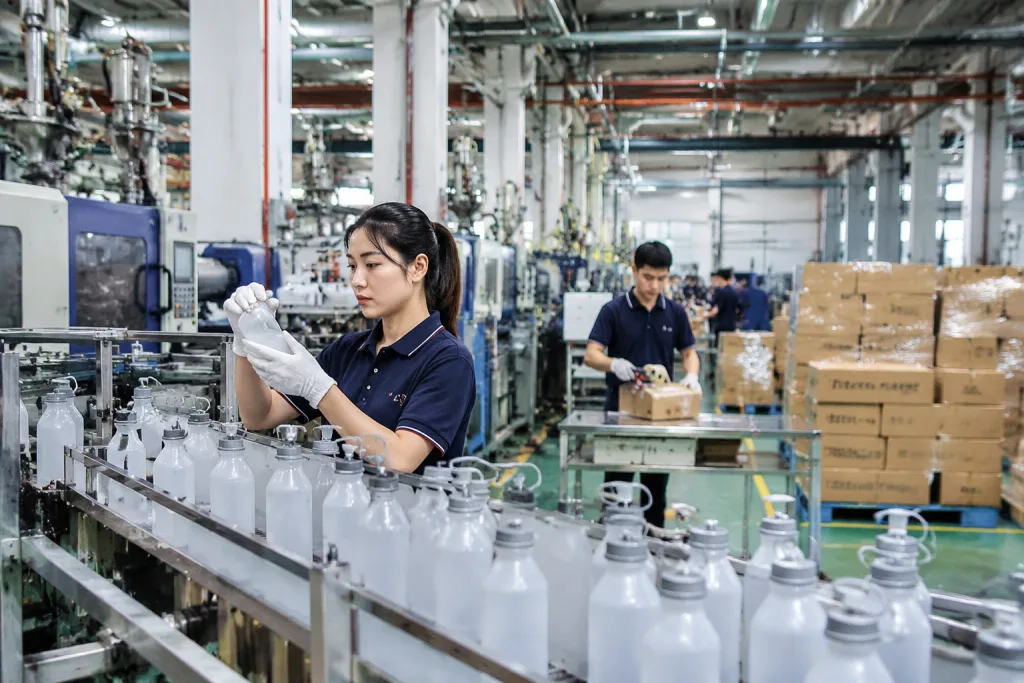
From our Hangzhou, Zhejiang factory, we ask for 3 items first: target capacity, annual volume, and delivery date with the real ship window. Simple. A 5,000-piece canteen promo order and a 50,000-piece retailer program should not share the same mold plan, and the packing spec changes once a supermarket DC says cartons must stay under 12 kg. We run the line differently. We’ve seen this go sideways when the PO says 500 ml but the approved sample reads 520 ml on the filling gauge, then the buyer flags the mismatch during pre-shipment inspection. China production is fast when the spec is locked before sampling.
Start With The Real Cost Base
For a pp drink bottle custom order, the base bottle is rarely the part that breaks the budget. Cost jumps when the cap changes, the strap becomes woven, the color needs Pantone matching, or the buyer asks for retail packaging with an EAN barcode label. A plain 600 ml PP bottle from an existing mold may sit around USD 0.55-0.95 FOB China at 10,000 pcs, depending on wall thickness and lid structure. A heavier 900 ml canteen custom style with a leak-resistant flip cap can move into the USD 1.05-1.80 range before branding. We check weight first. Always. On our line, QC puts the first shot on a 0.01 g digital scale; last month QC pulled a 600 ml sample at 64 g when the buyer’s PO expected 72 g, and that 8 g gap changed the whole quote.
PP resin pricing moves, but it does not explain every quote gap. If one canteen supplier is 25% lower than the other 3 quotes on your desk, don’t start with the unit price. Start with bottle weight. A bottle at 58 g and a bottle at 78 g are not the same product, even if both are sold as 750 ml. Ask for the gram weight. Ask again before deposit. Wall thickness around 1.2-1.8 mm is common for reusable PP drink bottles; thin bodies deform in carton compression and during hot container loading, more so when a 40HQ sits on the Ningbo yard for 2 days in August. We’ve seen this go sideways: the buyer approved a photo sample, the line packed 24 pcs per carton, and the bottom layer showed oval bodies after a 32 kg compression test. Cheap was not cheap.
The real cost drivers are resin grade, injection cycle time, component count, lid sealing system, print area, packaging spec, and testing scope. The math starts there. Food-contact PP for EU or North America needs a separate quote from low-grade promotional material, otherwise the comparison is junk. We normally ask buyers to confirm the use case: a 30-day campaign, a school program, retail shelves, or a distributor canteen catalog. That answer changes the sensible specification. For school use, we push harder on cap hinge life and drop testing; one buyer flagged a 0.3 mm mismatch on the flip lid because children could pick at the edge, and our mold technician had to polish the shut-off face before the next T1 sample.
MOQ Tiers Change The Quote
MOQ is the number where we stop bleeding on setup. On a PP bottle line, a color change means purging the barrel, re-mixing masterbatch, re-registering the silkscreen, and re-doing QC sign-off—about 2.5 hours of dead time. At 3,000 pcs per color on a stock-mold PP bottle with a one-position logo, we're essentially breaking even. At 5,000 pcs, the line settles in. Color matching tightens up. We batch the lids with the bodies instead of running them separately, and you skip the packaging surcharge. At 10,000 pcs, you're paying for factory efficiency, not a small-batch handling premium.
Our Hangzhou floor pushes roughly 420,000 PP bottles a month across six mold families. Big number, misleading number. Capacity splits by mold, by color, by lid type—and a single mold changeover eats half a shift. A buyer once asked why "high monthly capacity" didn't mean next-week delivery. Answer: your mold needs a line slot, not a brochure number. Budget 12–18 days from PO confirmation to ship-out. Anyone promising "fast delivery" without asking which mold you're on hasn't run a line.
- 3,000–4,999 pcs: Works for a canteen promo or a one-off event run. Unit price stings. Custom packaging stays basic—polybag, maybe a sticker label. We've had buyers try to squeeze a full-color box at 3,000 pcs and the packaging cost alone ate 18% of the landed price.
- 5,000–9,999 pcs: This is where most first launches land well. Two-color logos print cleanly, color-matched lids are doable, and we can run a simple white box. Lead times hold steady here—we're not shuffling your slot to fit a 50,000-pc order.
- 10,000–29,999 pcs: Distributor orders start making real sense. Carton printing, insert cards, hang tags—all become cost-effective. QC can pull AQL 2.5 across the batch without slowing the line. One buyer ran 18,000 pcs with three SKUs and we turned the whole order in 14 days.
- 30,000 pcs and up: Annual contract territory. Private-label mold tweaks, staggered shipments, stock replenishment programs. We ran a 35,000-pc order last quarter with custom-molded lid inserts and bi-monthly deliveries—the line essentially becomes yours.
Here's what trips buyers up: six colors at 1,000 pcs each is not "6,000 pcs." That's six line setups, six QC sign-offs, six packaging runs. Price it as a design choice with a cost attached, not a volume order. We've seen this mistake on POs more times than I can count.
Tooling And Mold Decisions
The fastest route is using an existing mold and customizing color, logo, packaging, and accessories. That is what most buyers actually mean when they ask for a customizable canteen. You get a proven bottle shape, lower risk, and mass production can start after sample approval. Existing mold projects need 7–12 days for pre-production samples if custom color and print are involved.
A new private mold is a different animal. You go down this road when you need a unique silhouette, a specific grip profile, an oddball volume like 680ml, an integrated straw, or a cap system no standard factory catalog covers. For PP injection molding, a private bottle and cap mold set runs USD 1,800 to USD 6,500 for a straightforward design. Complex lids with multiple parts, silicone seals, or hinge-cycle testing push that number north fast. Mold drawing, CNC work, texture, trial shots, and revisions typically take 25–45 days. We once had a buyer request a flip-top cap with a pressure-release valve. The mold alone ran 52 days and the first T1 sample leaked at the valve seat — the tolerances were off by 0.15mm. QC pulled the sample and we had to re-machine the cavity.
Watch out for "free mold" offers. A vendor absorbs tooling cost only when the order volume is large enough — 50,000 to 100,000 pcs is the band we see — or when the mold stays factory-owned. If your brand needs exclusive use, write that into the purchase contract. Ownership, storage conditions, maintenance cycles, and replacement cavity costs need to be pinned down before you wire the deposit. We've seen contracts where a "free" mold sat in the factory's tool room for two years. The buyer wanted to move production to Vietnam. The factory demanded USD 4,000 just to release it. The buyer paid.
For most first orders, we recommend existing molds unless your retail buyer specifically requires an exclusive shape. Spend the first budget on color matching, packaging, AQL 2.5 inspection, and LFGB compliance testing. A custom 64oz growler might justify private tooling because size and handle ergonomics directly affect perceived value on a shelf. A basic PP sports bottle does not. The math is simple: USD 4,500 for a mold that adds USD 0.15 per bottle across 30,000 pcs — that is a 5% margin hit you cannot recover on a USD 3.50 wholesale bottle. We've had buyers push back on this exact spreadsheet and end up with stock molds and better packaging. They shipped on time and came back for reorders. The custom mold buyer? Still tweaking cavity #3.
Logo And Decoration Pricing
A bottle quote lands in your inbox at USD 1.85. Clean price. Then you add wraparound artwork, individual barcodes, a color box, a hang tag, and a second logo on the lid. Now it's USD 2.59 and the ship date slid 10 days. We've watched a 40% quote jump happen in 72 hours because artwork approval went three rounds with the buyer's marketing team in London.
For PP bottles, silkscreen printing handles simple logos at the lowest unit cost. One-color, one-side placement runs USD 0.03–0.08 per bottle at 5,000 pcs. Two-color jumps to USD 0.06–0.15, and the variable is registration tolerance — tight registration on a curved PP body slows the line. Heat-transfer printing makes sense when the artwork has gradients or covers a larger area, typically USD 0.18–0.45 per bottle. In-mold labeling looks clean and won't peel, but you need 20,000 pcs minimum per design and a 25-day lead on the label mold. Asking "what's the cheapest decoration?" is the wrong question. Ask what survives your supply chain. Heat transfer delaminates above 60°C in a commercial dishwasher — we pulled samples after 30 cycles and the edges lifted.
Laser engraving on PP is underwhelming. The mark comes out shallow and grey, nothing like the crisp etch you get on 304 stainless. Pad printing works for curved lid tops or small capacity marks on the base. If the project is a retail canteen with a large graphic, send AI or PDF vector files and specify Pantone C or U references. "Blue like the mockup" is not a production standard. We rejected a 3,000-pc run last year because the buyer's "blue like the mockup" matched zero Pantone chips in the QC light booth. Re-ground the ink, lost a week of production time, and ate the freight delay.
Artwork approval eats more calendar days than most buyers budget for. Plan 2–3 days for dieline confirmation and 3–5 days for printed samples. If your distributor canteen program needs FNSKU labels, retail barcodes, or multilingual warning text, lock those in before sampling. Changing label placement after cartons are printed is pure waste. A client spent USD 400 re-running cartons because the German warning text was 2 mm undersized on the first run. The box factory doesn't care whose fault it is — they invoice either way.
Packaging, Compliance, And Hidden Charges
Packaging is where the quote falls apart. A bulk-packed PP bottle — OPP bag, export carton, no frills — runs USD 0.03–0.08 per unit. Step up to a color box and the spread widens fast: USD 0.12–0.35 depending on paper weight, print coverage, and box dimensions. Kraft box with a foam insert, barcode sticker, instruction leaflet? USD 0.20–0.55. We ship tens of thousands of units a season, and the math is simple. A canteen distributor who saves USD 0.05 on packaging and then eats a chargeback for crushed cartons spent money, not saved it. We've watched a buyer in Frankfurt repack 3,000 bottles by hand because the outer carton collapsed in transit. That labor cost more than the packaging difference.
Compliance is a line item buyers forget until the freight forwarder asks for paperwork. EU-bound PP drink bottles need LFGB or EU 10/2011 food-contact testing. Add REACH screening on pigments, inks, and any accessory — silicone ring, nylon webbing, the little tether on a kids' lid. US market runs on FDA food-contact suitability. Kids' bottles trigger CPSIA and ASTM checks, and the age grading on the packaging changes which sections apply. A single material test through a third-party lab here in Zhejiang costs USD 180–450 per color or material set. Last quarter a buyer paid USD 900 because they tested the bottle body and assumed the cap silicone was covered. It wasn't. Lab flagged it, retest had to run separately.
One certificate does not cover every variation. Switch the pigment from white to pastel blue, swap the silicone ring for TPE, and the existing report no longer matches the shipped product. We keep material declarations and batch records on file, but you tell us the target market first. Germany, France, Canada, and the US do not ask for the same paperwork. We've seen a French buyer reject a shipment because the logo ink wasn't REACH-listed. Same bottle, same factory, sold into the US without a hitch. The difference was a three-line entry on a lab report nobody pulled at the PO stage.
Budget for inspection. A final random inspection at AQL 2.5 for major defects and 4.0 for minor defects costs USD 180–320 per man-day in Zhejiang. One inspector, your line, one day. It's cheaper than finding leaking caps after the container clears the port. We pulled a sample two months back where the thread fit failed on 8 out of 125 pieces. That's a USD 280 inspection catching a return that would have cost the buyer freight both ways.
A Sensible Production Timeline
A 50-day custom pp drink bottle project doesn't start on deposit day — it starts with the spec sheet. Send us a complete brief with capacity, material grade, lid type, logo dimensions, packaging spec, test market, and MOQ, and you'll have a quote back in 1–2 working days. Send us a single photo with "quote this" and we'll reply with six questions. That loop eats a week. We lost a Dubai promo buyer last July exactly this way — three rounds of clarification pushed sampling past their event date.
Existing mold projects follow a rhythm we run about 40 times a year. Price and spec locked in 2–4 days. Custom color and logo sample takes 7–12 days. Buyer approval runs 2–5 days. Mass production: 20–35 days from deposit and signed-off sample. Inspection, balance payment, and FOB warehouse or port arrangement add another 3–7 days. Door to door, 35–55 days from approved sample to FOB shipment. The 55-day end usually means a 10,000-unit order with multi-color silk screen and a buyer who takes four days to sign off.
Private mold work tacks 25–45 days onto the front end, and I tell buyers to budget for at least one round of mold revision. First trial shots come back with shrink marks on the body, a lid that doesn't seat flush, or a hinge that snaps at 200 cycles instead of 2,000. Fixing that adds 7–15 days. This isn't a supplier problem — it's PP shrinkage at 1.5–2.5% and cap sealing tolerances we hold at ±0.05mm. CAD renders don't show you the flow marks around the gate or the sink opposite a thick boss. On canteen-style bodies over 750ml, the real trial shot tells us what the simulation missed.
Peak season kills schedules faster than mold trouble. Most canteen vendors in Zhejiang are booked solid by late August for summer promotions and Q4 retail. If you have a hard delivery date, give us the required ship date and incoterm up front. FOB Ningbo and FOB Shanghai have different vessel cutoffs. DDP air freight into Amazon FBA with carton labels and FNSKU prep is a different animal from a loose bulk order — we ship one or two FBA-ready projects every week, and the labeling alone adds a day on the line. Treating it like stock inventory is the wrong math.
Choosing The Right Factory Partner
Most buyers think they're buying bottles. They're not — they're buying control over about 12 small decisions that determine whether a shipment lands clean or turns into a claims nightmare. A solid factory partner pushes you to lock in the boring stuff before tooling starts: bottle weight tolerance (±2 g or ±5 g?), cap torque (12 in-lb or 18?), leak test method (air pressure or water bath?), carton drop height (1.2 m or 1.5 m?), color tolerance (Delta E < 1.5?), logo adhesion (tape test at 90 degrees), and spare parts coverage. A weak supplier nods yes to everything, then renegotiates quality once the line is running. We've seen this go sideways too many times.
If your retailer demands social compliance or quality management docs, ask whether the factory holds BSCI, ISO 9001, or a comparable audit record. For food-contact PP, request material traceability and actual test reports — not just certificates. Check whether those reports cover the full bill of materials: PP resin, masterbatch, lid seal, ink. We had a buyer last year whose test report covered the bottle body only. The leak came from an untested lid gasket. One missing test, one angry retail buyer. For multi-season custom drinkware lines, recordkeeping matters as much as the first price.
For distributor growlers or larger hydration products, evaluate lid reliability before you obsess over body finish. A bottle that photographs perfectly but leaks at a 45-degree tilt inside a shipping carton is a claim waiting to happen. We run leak checks both in-process and at final inspection, sampling to AQL 2.5 unless the buyer specifies stricter levels. QC just pulled a sample batch last month — all passed visual, but one dripped on tilt. Caught it before container loading. That's the difference between a factory that checks and one that ships and hopes.
Compare several canteen manufacturers, but compare against the same spec sheet. Ask each vendor to quote identical parameters: capacity, gram weight, resin grade, decoration method, packaging, testing, MOQ, and lead time. Skip this step and you're comparing guesses, not quotes. We see buyers in Hangzhou save USD 0.08 per bottle on paper, then lose double that through repacking, late delivery, or failed retail documentation. The math doesn't work.
Send Your PP Bottle Spec For A Firm Quote
Share capacity, quantity, logo method, packaging, target market, and delivery date. We will return MOQ, FOB price, and realistic lead time.
Frequently asked questions
What is the normal MOQ for a pp drink bottle custom order?
For an existing mold, 3,000 pcs per color is a workable starting MOQ, but 5,000 pcs is more practical for stable production and print setup. At 10,000 pcs, the unit price usually improves because resin purchasing, color mixing, carton printing, and machine setup are spread across more units. For private mold projects, expect 20,000-50,000 pcs as a sensible first order unless you pay tooling separately. If you need four colors, calculate MOQ per color, not just total order quantity. A 12,000-piece order split into six colors may still be treated like six small batches.
How much does a custom PP bottle cost FOB China?
A standard 600-750 ml PP bottle from an existing mold often ranges from USD 0.55 to USD 1.20 FOB China at 10,000 pcs, before complex packaging. A heavier canteen customized style with a better lid, strap, silicone seal, and two-color logo can sit around USD 1.20-2.10. Retail packaging may add USD 0.12-0.55 per unit. Testing, inspection, and FNSKU labeling are usually quoted separately. If a quote is far below market, ask for bottle weight in grams, resin grade, carton packing method, and whether food-contact test reports are included.
Can I use the same supplier for PP bottles and custom growler items?
Sometimes, but do not assume it. PP bottles are usually injection molded plastic products, while a custom growler may be stainless steel, PETG, Tritan-style copolyester, or glass depending on your market. The tooling, testing, decoration, and leak standards differ. A good canteen factory may handle PP bottles very well but outsource stainless growlers. That is acceptable if the canteen supplier is transparent and controls inspection. Ask who owns the production line, what monthly capacity is available, and whether the same QC team checks both product types before shipment.
How early should I start if I need summer promotional delivery?
For a simple canteen promotional order using an existing mold, start 70-90 days before your required warehouse date. That gives you time for quotation, sampling, artwork approval, 20-35 days of mass production, inspection, and ocean freight. If you need private mold work, add another 35-60 days. For North America or Europe, sea freight plus inland delivery can easily take 30-45 days after FOB handover. Rush air freight can solve timing, but it may add USD 1.50-4.00 per bottle depending on size and destination.
What quality checks should I require before paying the balance?
Require a final random inspection before balance payment, especially for first orders. Use AQL 2.5 for major defects and 4.0 for minor defects as a normal baseline. The checklist should include capacity, bottle weight, color, logo position, print adhesion, cap fit, leak test, odor check, carton marks, barcode scan, and drop test where packaging is retail critical. For PP drink bottles, also check deformation after carton compression and lid sealing after repeated opening. If your canteen distributor program ships to multiple retailers, keep approved samples and inspection photos for each PO.