Key Takeaways
- A workable PP thermal bottle MOQ is usually 3,000-5,000 pcs per color for custom logo orders
- Ask for PP grade, liner structure, cap material, silicone ring hardness, and temperature claim in writing
- AQL 2.5/4.0 inspection is practical for drinkware wholesale shipments above 10,000 pcs
- Logo, packaging, and carton strength can change landed cost by 8-18%, not just pennies
Polypropylene thermal bottle wholesale looks simple until the quotes hit your inbox. One supplier prices a 1.2 L canteen at USD 2.10, another at USD 1.46, and both write “food grade PP thermal.” Same words. Different bottle. Last month, we opened the costing sheet and found a 0.8 mm thinner inner liner plus a 14 g lighter cap on the cheaper offer. The buyer then added a 1.2 m drop test, QC pulled the sample, and the math collapsed.
For procurement managers, price is the wrong first question to ask. The real risk sits in odor complaints, cracked caps, weak heat retention, and export cartons that arrive crushed before your retailer even checks the barcode. We see this weekly in Hangzhou. From our Zhejiang factory, 7 out of 10 sourcing problems start with unclear line items, not bad faith. One pre-production sample looked fine on the desk, but the silicone ring measured 2.3 mm on the caliper instead of 2.8 mm. A tight spec sheet catches that before the line starts in China.
Material line: PP is not one spec
A quote that says “PP thermal bottle” is not enough. Ask for the material line. For food-contact drinkware bulk orders, the body should be written as virgin polypropylene, not recycled PP, unless the item is for non-food use. We ask the resin supplier for the lot COA before we run the first color sample on the injection line; one missing line on that PDF can hold a 20,000 pcs order for 3-5 days. It happens. For Europe, ask for food-contact documents under EU 10/2011 where applicable, plus REACH screening for restricted substances. For North America, request an FDA food-contact declaration and, for children’s items, CPSIA-related lead and phthalate limits.
PP sells because it is light and handles drops better than brittle plastic. On our quoting sheets, the bottle body usually lands 18-35% below stainless steel. Do not ask it to behave like a vacuum flask. That is the wrong question to ask. PP can soften under high heat if the factory picks the wrong grade, and the line shows it fast: oval mouths checked by caliper, loose threads, caps that wobble by 0.4-0.6 mm on the thread gauge. A common operating claim for PP bottles is 0-80°C liquid temperature. If someone offers “boiling water safe” without resin data, slow down. Ask for the melt flow index, supplier material declaration, and whether the inner wall uses PP or PE.
For canteen wholesale programs, the cap and gasket matter as much as the body. We normally specify food-grade silicone rings at 50-60 Shore A hardness, then QC pulls 8-12 samples for upside-down leak testing after assembly. Too soft, and the bottle leaks after compression. Too hard, and users complain the cap is difficult to close. We have seen this go sideways when a PO only said “silicone ring” and the buyer flagged leakage after the first 600 pcs carton inspection. For a bulk canteen going into camping, school, or promotion channels, write the gasket hardness, cap torque target, and leak-test method into the purchase order before paying the deposit.
Buyer impact: two bottles can look identical in a PDF but differ by 15-25% in material cost once virgin PP, silicone quality, and food-contact compliance are specified. The math doesn’t work if the cheap quote skips those three lines.
Capacity, weight, and real usability
Capacity is the second place buyers get burned. A “1000 ml” polypropylene thermal bottle can be brimful capacity, normal drinking capacity, or a number someone copied onto the carton label at 6 p.m. Define usable capacity at the normal fill line for retail orders, not the overflow point. On a 1.0 L bottle, we usually record 930-970 ml after QC checks the fill line with a 1 L graduated cylinder; neck shape and lid depth make the difference. Small gap. Big complaint. We have rejected cartons where the hang tag said 1000 ml but the bottle gave only 940 ml in normal use. The buyer noticed and asked for a debit note.
Wall thickness belongs on the spec sheet. For a single-wall PP canteen, 1.5-2.0 mm is common. For a double-wall insulated PP bottle, you may see 1.8-2.5 mm outer wall with an air gap or foam layer. More PP gives better stiffness, but the math does not always work: cycle time moves from about 38 seconds to 46 seconds, carton weight goes up, and freight cost follows. If your product is sold as the best wholesale drink bottle for outdoor promotions, underweight construction gives you denting and a cheap hand feel. QC pulled one 780 g sample last year because the shoulder collapsed after a 1.2 m drop test. We run that test on a plywood board, not a soft office floor.
Handle design should match the job. A wholesale canteen for sports teams needs a wide carry handle and a fast-open cap; we test it with a full bottle because an empty sample lies. A school bottle needs a controlled flow spout, usually checked by turning the bottle 45 degrees over a white inspection tray. A growler wholesale item for events needs a wider mouth for ice and cleaning, even if it is plastic rather than metal. Do not approve a mold drawing only by capacity. Ask for total height, base diameter, mouth inner diameter, cap thread type, full bottle weight, and packed carton weight; one buyer flagged a PO typo where “mouth dia. 45 mm” became “54 mm,” and the lid tooling quote changed the same afternoon. This is the wrong place to guess.
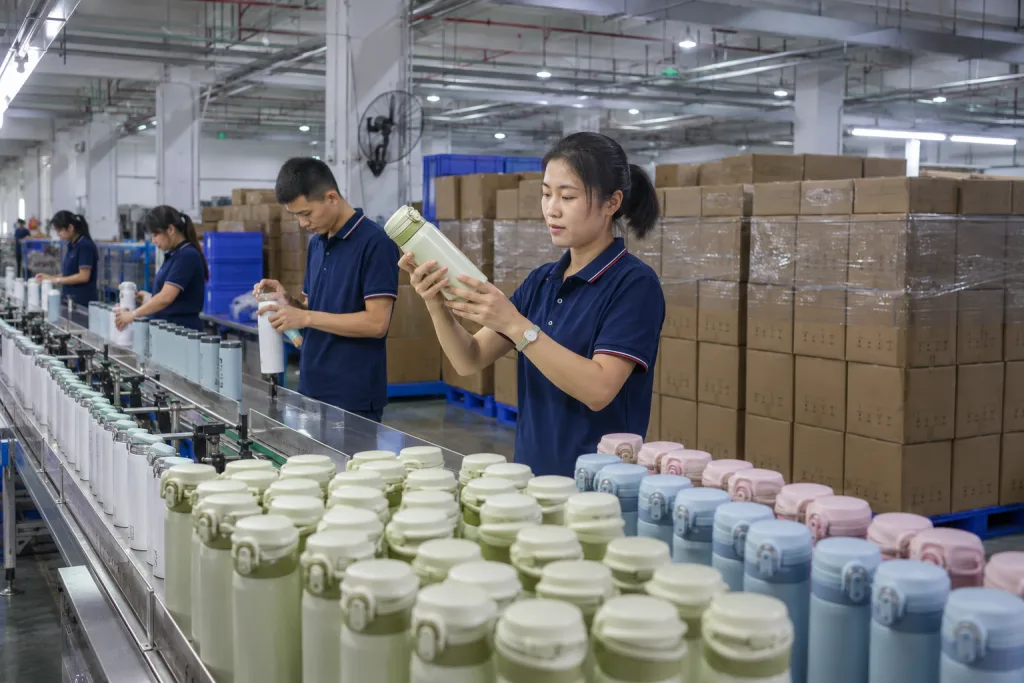
At our Zhejiang facility, a typical custom PP thermal bottle project starts from 5,000 pcs per color, with sample confirmation in 7-10 days if no new mold is needed. Those numbers tell you fast whether the supplier’s MOQ and line schedule fit your launch calendar. We ship on dates, not promises. Last month the line held 12 days vs 18 days because the buyer approved the color chip on the first round and did not change the carton mark after the PO was released.
Insulation claim and test method
Polypropylene thermal bottle wholesale buyers sometimes expect stainless-steel performance because “thermal” is printed too casually on Alibaba listings. Wrong question. A PP thermal bottle usually works through double-wall molding, trapped air, PU foam filling, or a separate inner liner. It slows heat loss. It is not a 12-hour vacuum flask. On our line, QC checks the section cut with a vernier caliper and usually sees 1.2-2.0 mm wall thickness on PP parts, not the vacuum gap you get with 304 stainless bottles.
Put the test method inside the RFQ. Use plain numbers: fill with 95°C water, close the cap, test in a 20°C room, then record liquid temperature after 2 hours and 4 hours. A fair plastic double-wall bottle might stay above 50-60°C after 2 hours, depending on capacity, mouth diameter, lid seal, and whether the foam shot filled cleanly around the shoulder. Cold retention reads better with ice water, so state whether the test starts with ice cubes or only 4°C water. We have seen buyers flag a carton claim of “keeps hot 8 hours” when the factory sample dropped to 48°C at the 2-hour mark in a 20°C lab.
If you are buying beer tumbler wholesale bulk, beer growler wholesale bulk, or promotional growler bulk items, be exact. PP is the wrong material for carbonated pressure unless the cap, thread, and gasket are built for that load. For beer growler in bulk programs, confirm whether the bottle is for short-term cold beverage service or sealed carbonation. We run into this often: 8 out of 10 plastic growler-style RFQs are for events, shelf display, or non-pressurized use, not brewery refill systems. The math does not work when a buyer asks for a cheap PP item to behave like a pressure-rated growler, and the buyer usually flags it only after the first leak test.
For alcohol flask wholesale or alcohol flask in bulk inquiries, confirm regulatory fit and market wording before sampling. PP can handle a range of drinks, but high-alcohol liquid, flavor oil, or acidic cocktails may need migration testing. If the product will touch alcohol, do not accept a generic “food grade” line on the PI. Ask for a migration test with the right simulant and contact time; QC once pulled a sample after a 24-hour soak because the cap liner picked up odor from a citrus flavor mix.
Cap, leak test, and drop test
About 7 out of 10 field complaints on plastic thermal bottles start at the cap, not the bottle wall. We see it in return photos: water around the push button, a gasket sitting proud by 0.3 mm, or a hinge pin walking out after 3 weeks. The cap assembly may use a PP outer cap with a PE inner plug, plus a silicone gasket, hinge pin, spring, push button, straw, or strap. Too many small parts. On the line, one missed spring direction or one gasket with a flash burr can turn into 200 customer complaints after delivery. For drinkware wholesale into retail chains, keep the cap as simple as the drinking action allows.
A practical leak test is plain work: fill to 95% capacity with room-temperature water, close the cap with normal hand torque, invert for 30 minutes, then shake horizontally for 30 seconds. We run this on a white tray so a 1 ml leak shows up fast. For travel products, add a 1 m drop test on base, side, and cap corner. For a bulk canteen ordered for outdoor use, we usually run five filled drops at 1.0 m onto plywood or concrete, depending on the end market. Concrete is harsh. It exposes weak cap corners before 3,000 units leave Hangzhou.
Thread engagement should be specified by turns or by design drawing. Do not leave it as “normal thread” on the PO; we have seen that go sideways. A shallow thread can pass a bench test and still fail after 200 open-close cycles in consumer hands. Silicone gasket compression should be even, with no flash line cutting into the seal; QC checks this with a caliper and a fingernail before approving the sample. For straw lids, request flow testing and pull-force testing. A straw that pulls out at 10 N may pass for a low-cost event bottle, but the math does not work for kids or sports retail.
For canteen bulk orders shipping to Europe and North America, use an inspection standard such as AQL 2.5 for major defects and AQL 4.0 for minor defects. Define critical defects as leakage, strong odor, sharp edges, wrong material, and failed barcode scan. The buyer flagged one carton last year because the EAN sticker scanned to the old SKU, not because the bottle leaked. Small label issue, big hold. In China, this inspection language cuts arguments because the factory, trader, and third-party inspector check against the same defect table.
Decoration line changes the economics
Logo method is not a cosmetic footnote. It changes MOQ, lead time, reject rate, and how the bottle looks on a retail shelf. For polypropylene bottles, we run silkscreen printing, heat transfer, in-mold label for new mold projects, or sticker labeling for budget promotions. Laser engraving belongs on metal, not PP. If a supplier says they engrave plastic, ask for a 10 pc counter sample and rub the mark with 3M 600 tape after curing. QC pulled one sample last year where the “engraving” was silver ink and came off in strips.
Silkscreen works best for one or two colors. On a curved 1 L canteen, a one-color logo may add USD 0.05-0.12 per pc depending on print size, screen mesh, and ink coverage. Heat transfer handles gradients and full-color artwork, but it may add USD 0.18-0.45 per pc and needs abrasion testing before bulk. Simple wins here. For promotional wholesale drinkware, one-color printing gives fewer rejects on the line and fewer arguments during AQL 2.5 inspection. For retail brand owners, full wrap artwork only makes sense when the carton, barcode label, and product photos support a higher shelf price. Otherwise the math does not work.
Ask about ink adhesion on PP. PP has low surface energy, so corona treatment or primer may be needed before printing. We check it with a dyne pen, then run a tape test and a 50-cycle rub test before pre-production approval. If your bulk drinkware order will be washed often, read the dishwasher wording twice. About 8 out of 10 printed PP bottle projects we ship are marked hand-wash recommended unless the ink, curing time, and process have been validated. Buyers sometimes push back on that sentence, but hiding it creates claims later when the logo fades after 15 wash cycles.
Packaging is part of the decoration decision. A plain polybag works for beer tumbler bulk used at events. A printed color box is usually needed for beer tumbler wholesale retail. Color boxes can add USD 0.12-0.35 per pc and increase carton cube by 10-25%. We have seen this go sideways when the PO says “bulk pack” but the AI artwork file includes a retail box layout. Fix it before mass production. Your FOB China price and ocean freight calculation should include the box size, carton CBM, and packed weight before artwork approval.
Carton, barcode, and logistics details
For polypropylene thermal bottle wholesale, the export carton line needs master carton size, pcs per carton, gross weight, net weight, carton material, and pallet plan when the buyer requests it. A standard 1 L PP double-wall bottle usually runs 24 pcs per carton on our packing table; a tall swing handle or color retail box often cuts that to 12 or 18 pcs after we check the caliper, tape the carton mockup, and measure the outside size in mm. Plastic looks cheap to ship. Wrong question. The bottle is light, so carton cube drives the freight bill long before weight becomes the problem.
Use 5-ply export cartons for most sea shipments. For heavier bulk growler or wholesale growler programs, ask for 170-200 lb burst strength or matching edge crush performance, then have QC pull one carton for a drop test before the first batch is sealed. If cartons are going to Amazon FBA or a distributor warehouse, write out FNSKU labeling, carton barcode, country of origin marking, and any suffocation warning on polybags. Label placement is not something to settle on production day. We had one PO say side panel while the artwork file marked front panel; the buyer flagged it at inbound and the line had to stop for relabeling.
FOB Ningbo and FOB Shanghai are both common for Zhejiang factories. For Hangzhou-area shipments, Ningbo usually makes more sense, but the final number still depends on the sailing schedule and the forwarder quote that week. We ship after carton weighing. The floor scale prints gross weight before cartons move to the staging area, and QC keeps the weight sheet with the carton photos. Our regular output for plastic and stainless drinkware combined is about 600,000 units per month, with normal mass production lead time of 25-35 days after deposit and artwork approval. Peak season before summer promotions can add 7-14 days, especially when barcode files arrive late or one digit on the EAN needs correction.
If you compare drinkware bulk quotes, ask for unit price and packed carton data together. A USD 0.08 cheaper bottle can lose its advantage if it ships 30% fewer units per cubic meter; the math does not work once the forwarder calculates CBM. For North American distributors, check whether the bottle can be packed to your inner case requirement, such as 6 pcs per inner and 24 pcs per master. QC pulled samples for this exact setup last month, weighed the 24 pcs master at the packing table, and the inner case saved the buyer warehouse relabeling and repacking labor.
Commercial terms worth locking early
A clean RFQ for canteen wholesale or polypropylene thermal bottle wholesale lets us quote the job behind the number: target FOB or CIF price, annual forecast by quarter, first order quantity, color split with Pantone number, logo method with size in mm, packaging style, test requirements, destination port, and required delivery date. If the email says only “best price for 10,000 pcs,” we can answer in 20 minutes. The price will be weak. Our sales desk still has to confirm whether the cap is full PP or uses a silicone gasket, whether the master carton must pass a 76 cm drop test, and whether the buyer wants a 4-color gift box or a plain brown carton with a 5-layer K=K spec.
Typical payment for custom wholesale drinkware from China is 30% deposit and 70% balance before shipment, or against copy of bill of lading for approved customers. Tooling, if needed, is usually paid 100% before mold cutting, because the CNC shop will not start steel work on a promise. No deposit, no cutting. For existing molds, the cost is often only the sample fee and printing setup, such as a silk-screen plate or pad-printing fixture. A realistic pre-production sample timeline is 7-14 days; new mold development can take 30-45 days before pilot sampling. We run the first sample through a digital scale weight check, lid-fit check with the actual gasket, and a 24-hour upside-down leak test before we let the buyer approve it.
State price validity in the quotation. PP resin, carton paper, exchange rate, and freight can move within a quarter; we have seen a USD 0.06 bottle margin disappear after one carton paper increase. For repeat alcohol flask wholesale bulk or beer growler wholesale programs, ask for 60-90 day price validity and a resin adjustment clause once the order is container-level. Pretending the price will stay fixed for half a year is the wrong question to ask. The math does not work when the line is buying PP resin by the ton and we ship 40HQ containers with less than 3 cm of carton headroom.
Write the approval chain before the deposit lands. Golden sample, artwork proof, color standard, barcode file, inspection checklist, and shipping mark should be approved before mass production; file names need to be clear enough that QC does not open the wrong PDF. A good China supplier will not be offended by this. We prefer it. Last year a buyer flagged one PO typo where “matte black lid” became “black bottle,” and QC pulled the sample before 6,000 pcs went into packing. When your PO defines the bottle line by line, the factory can build the product you meant to buy, not the cheapest version that matched a loose keyword search.
Send your PP bottle spec for review
We will check material, MOQ, logo, packaging, testing, and FOB China pricing before you commit to a purchase order.
Frequently asked questions
What MOQ should I expect for polypropylene thermal bottle wholesale?
For an existing mold with one-color logo, a practical MOQ is usually 3,000-5,000 pcs per color. If you need a custom body color, special cap color, or full-color heat transfer, expect 5,000-10,000 pcs. New mold projects are different; 20,000 pcs annual volume is a more realistic starting point because tooling and setup costs need to be absorbed. For mixed-color drinkware wholesale orders, ask whether the factory allows 2,500 pcs per color under one 10,000 pc PO. Some Zhejiang factories will accept that if the resin color change is not complicated.
Is a PP thermal bottle suitable for hot water?
Yes, if the correct food-grade PP is used and the temperature claim is defined. Many PP thermal bottles are sold for liquids up to 80°C. Some can handle short contact with higher temperatures, but you should not approve a boiling-water claim without resin documentation and migration testing. Ask the supplier to test with 95°C water in a 20°C room and report the temperature after 2 and 4 hours. Also check cap deformation and odor after heat exposure. PP is not a vacuum stainless flask, so keep marketing claims realistic.
Can I use PP bottles for beer growler bulk promotions?
You can use PP growler-style bottles for cold beverage promotions, events, and non-pressurized short-term service, but be careful with carbonation. A true beer growler in bulk program for sealed carbonated beer needs pressure-rated design, cap testing, and suitable material validation. Many plastic beer growler wholesale products are decorative or intended for immediate consumption, not long storage. If alcohol contact is involved, request migration testing using the correct simulant. Also define whether the bottle is reusable, hand-wash only, and suitable for brewery filling equipment.
What quality inspection standard should I use?
For bulk drinkware shipments, AQL 2.5 for major defects and AQL 4.0 for minor defects is common. Critical defects should have zero tolerance and include leakage, unsafe sharp edges, strong chemical odor, wrong material, missing country of origin marking, and barcode failure. For a 10,000 pc order, third-party inspection usually happens when at least 80% is packed and 100% is produced. Add functional tests: 30-minute inversion leak test, drop test at 1 m, cap cycle test, print adhesion tape test, and carton drop test.
How much does logo and packaging change the unit price?
For PP drinkware bulk orders, a one-color silkscreen logo may add about USD 0.05-0.12 per pc. Heat transfer or full-wrap artwork can add USD 0.18-0.45 per pc, depending on size and reject rate. A plain polybag is cheap, but a printed color box often adds USD 0.12-0.35 per pc and increases shipping volume by 10-25%. If your target FOB price is USD 1.80, decoration and retail packaging can easily move the final price above USD 2.20, so quote them from the beginning.