Key Takeaways
- 0.4 mm inner and 0.5 mm outer 304 stainless is a common balance of cost, dent resistance, and weight for 500 ml custom thermos orders
- A 1,000-piece MOQ per color and 25-35 day lead time is realistic for most bulk thermos projects from Zhejiang, China
- Vacuum retention claims should be backed by 6-hour and 12-hour test data, not just a marketing line like 'keeps hot all day'
- Decoration method can change defect risk by 2% to 5% at final inspection, especially on powder-coated promotional thermos runs
You searched for a polycarbonate vacuum bottle factory, but the buying decision usually ends up on stainless vacuum construction. No contradiction there. Outdoor retailers and promo brands often start with weight, visibility, or drop resistance, then switch fast to heat retention, food-contact compliance, and warranty exposure once the first sample hits the table. We’ve seen this go sideways after a 1.2 m drop test or a 6-hour heat-retention check. If you are buying bulk thermos programs for Europe or North America, the spec sheet decides whether a sample becomes a repeat order or turns into a returns problem.
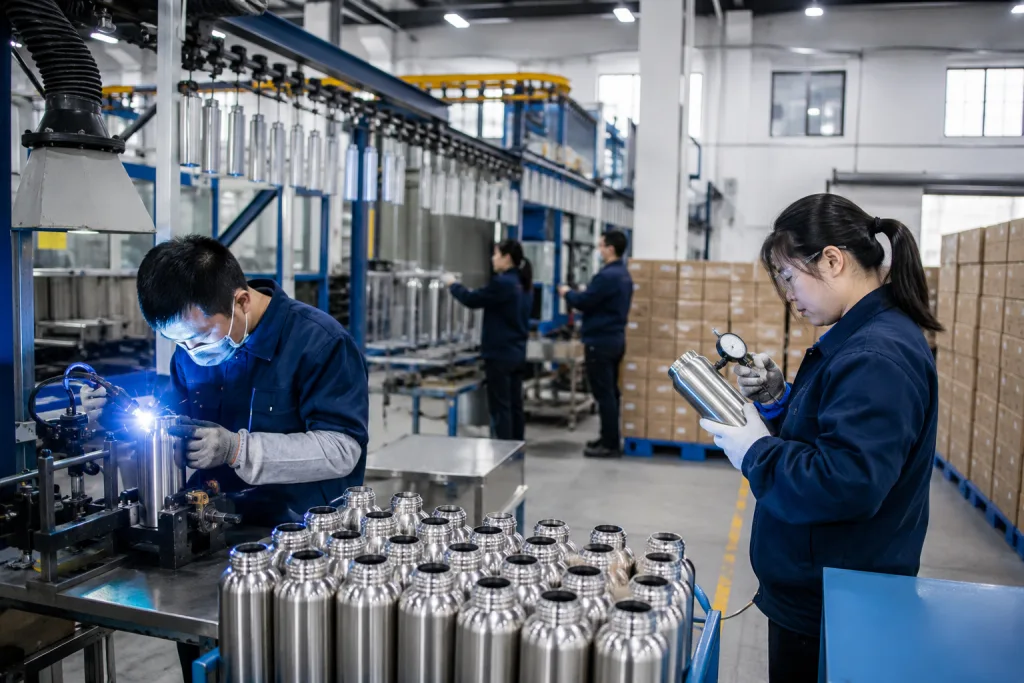
At BottleForge Industrial in Hangzhou, Zhejiang, China, we see the same pattern each season: a buyer asks for a customizable thermos, then finds out that wall thickness, lid resin, coating adhesion, and AQL drive the order more than the bottle shape. This is the wrong first question to ask. Our factory thermos output is 450,000 units per month, with MOQ from 1,000 pieces per color and normal lead times of 25 to 35 days. On the line, QC pulled a sample last month because the PO typo showed matte black, while the approved chip was sand black. The practical way to check a manufacturer thermos offer is line by line, since each spec changes landed cost, compliance risk, and sell-through.
Start with body material
The first line on the spec sheet should state two things: what touches the drink and what makes the outer shell. Buyers often search polycarbonate vacuum bottle factory because they are comparing clear plastic concepts or impact-resistant bottles at the same time. For a true vacuum bottle, the body is normally stainless. On our line, the standard starting point for a custom thermos is 18/8 stainless, also called SUS304, for both inner and outer walls. If the bottle will hold acidic drinks, tea, coffee, or sports nutrition, 304 is the safe default. For premium programs, some thermos manufacturer offers use 316 inner walls, though the added cost is usually USD 0.35 to 0.80 per unit on a 500 ml bottle. This is the wrong question to ask if you have not fixed the drink type first.
Ask for wall thickness in mm, not words like heavy duty. A standard 500 ml factory thermos often runs 0.4 mm inner and 0.5 mm outer, and we check this with an ultrasonic thickness gauge after forming. Drop to 0.3/0.4 mm and you save maybe USD 0.12 to 0.18 in material, but dent claims rise fast, especially in outdoor retail. Move up to 0.5/0.5 mm and the bottle feels stronger in hand, but weight goes up and freight follows. We have seen this go sideways when a buyer asked for a lighter bottle, then flagged sidewall dents after the first shipment. If your brief started from polycarbonate, tell the supplier thermos team why—lighter weight, translucent lid parts, lower unit cost, or drop resistance. Then they can propose a stainless body with a PC lid part instead of forcing plastic into a vacuum body job it does not suit.
- 304 stainless: best all-round choice for most custom thermos and distributor thermos programs
- 316 inner wall: useful for higher corrosion resistance and premium positioning
- PC or Tritan lid parts: acceptable on lids, windows, or straws when food-contact tested
- 201 stainless outer: cheaper, but usually not worth the risk for Europe and North America
If a manufacturers thermos quotation does not state the steel grade clearly, you are not comparing offers. You are comparing assumptions. QC pulled one sample last month where the PO said “SS body” only, and the buyer thought that meant 304 outer by default. It did not.
Vacuum structure and heat retention
This spec line trips up buyers all the time. “Double wall,” “vacuum insulated,” “copper coated,” and “heat lock” get printed on sheets with no discipline. Ask for the actual build. A proper stainless vacuum bottle uses an inner shell and outer shell, a sealed vacuum gap, and often a reflective layer or copper-plated outer surface on the inner wall to cut radiant heat loss. On our line, QC usually cuts one sample after vacuum sealing just to confirm the structure matches the drawing. For a 500 ml custom thermos, ask for test data at room temperature around 20 to 25°C with boiling water fill. A solid benchmark is hot retention above 60°C after 6 hours and above 45°C after 12 hours. For cold retention, a lot of supplier thermos programs test with ice water over 6 to 12 hours.
Retention data is not decoration. Shape changes the result. A short, wide-body bottle loses heat differently than a tall, narrow one, and we have seen two 500 ml models test 12 hours vs 18 hours just from body geometry and lid structure. Lid design matters just as much. A screw cap with a silicone gasket usually holds temperature better than a flip lid with more leak paths. Outdoor buyers ask for wide-mouth bottles all the time, then flag weak retention later; this is the wrong question to ask unless you define the use case first. A 45 mm mouth is easier to clean and fill, but every open-close cycle dumps heat faster than a 35 mm mouth. That trade-off is real. Not a lab excuse.
When a thermos supplier says “12 hours hot,” ask: hot to what temperature, from what starting point, and according to whose test method?
In Zhejiang, China, plenty of factories can make a decent vacuum body. Far fewer keep retention stable from lot to lot. Ask for the internal leak-testing rate and the vacuum inspection method. Good factories run 100% vacuum testing before packing; on some lines that means a full-air-pressure check plus random hold-time verification before carton drop. We have seen this go sideways when the buyer only checked the first sample and skipped mass-production data. If you ship thermos bulk for promotions, one leaking unit in a gift set can trigger complaints across 2,000 sets fast. The best custom thermos quote is not the cheapest one. It is the one that keeps returns below 1%.
Lid resin, seals, and user safety
If you came in looking for a polycarbonate vacuum bottle factory, this is usually where polycarbonate still shows up: lids, drinking spouts, infusers, or a clear window in the cap. The body may be stainless, but the user touches the cap every day, and that is where complaints start. Ask the factory which resin they run on the line. Polycarbonate is strong and clear, but in the last 3 years we’ve seen 7 out of 10 buyers switch to PP or Tritan because the food-contact story is easier and drop performance is more predictable. This is the wrong question to ask if you only want “best material.” Ask by market, target price, and test plan. For Europe, confirm REACH compliance. For North America, ask for FDA or LFGB-ready material declarations depending on channel requirements. For kids or active-use bottles, ask whether the lid system also aligns with ASTM-style safety expectations for mechanical use cases. We’ve seen this go sideways over a hinge pin under 2 mm.
Then ask about the gasket. Silicone hardness, usually measured in Shore A, changes both sealing and opening force. A soft gasket can twist, stretch, or drop out after dishwashing. A hard gasket needs more torque, and the buyer flagged it as a leak issue when users failed to close it fully. On our side, practical spec language is plain: food-grade silicone gasket, no odor after 80°C water test, 48-hour assembly fit check, leak test with inverted bottle for 30 minutes. QC pulled the sample, filled 6 bottles, and left them upside down on the bench. That tells you more than a glossy brochure. These details separate a supplier who ships samples from a factory that can hold repeat orders at MOQ 3,000 pcs.
Useful lid questions
- Is the cap PP, polycarbonate, Tritan, or stainless with internal PP structure?
- How many parts are in the cap, and can users disassemble it for cleaning?
- What is the leak test standard: upside-down, pressure test, or both?
- Is the handle molded as one piece or attached later?
On a promotional thermos run, simple screw lids usually cut complaint rates. We ship fewer after-sales parts on those programs. On outdoor retail, a more complex sip lid can help sell-through, but only if spare parts and replacement support are already planned. We had one PO with the wrong gasket code typed on the lid page, and the whole cap set had to be rechecked before packing. Read the lid line of the spec sheet more carefully than the color page. The math doesn’t work any other way.
Coating, logo method, and carton reality
Decoration is the point where a stock thermos turns into your SKU, and it's also where the line starts losing yield. A plain stainless body can pass with only a few cosmetic calls at final inspection. Add powder coating, a Pantone target, a full-wrap silkscreen, and a glossy gift box, and QC pulled the sample twice as often on one recent 8,000 pc run. The common options for custom thermos projects are spray paint, powder coating, silkscreen, heat transfer, water transfer, laser engraving, and digital print. Each one changes unit cost, rub resistance, and what AQL inspectors will reject under a 40 cm viewing distance.
For outdoor retail, we usually run powder coating first because the hand feel is better and scratch performance beats basic spray paint. Typical cost increase versus plain stainless on a 500 ml bottle is around USD 0.20 to 0.45 depending on color and texture. Silkscreen is a fit for 1 to 2 spot colors and bigger distributor thermos orders; once the artwork wraps near the seam, the buyer flagged registration shift over 1.5 mm. Laser engraving is slower but durable and gives a cleaner premium look, which works for corporate gift and promotional thermos programs. If you need exact brand color, ask what tolerance the factory can hold on curved metal after curing. Do not expect a paper Pantone result on textured powder. We've seen this go sideways when the PO says "Pantone Black C" but the approved chip was matte, not gloss.
Now the carton reality. This is the wrong question to ask: "Can you make the box look premium?" Ask for unit packing, master carton size, gross weight, and drop-test expectation on the spec sheet. For e-commerce or FBA channels, this matters fast. A 24-piece carton that weighs 16 kg may be fine for wholesale, but not ideal for parcel handling, and the math doesn't work once one corner crushes in a 76 cm drop. If you are buying thermos custom products for Amazon or DTC, request barcode placement, FNSKU labeling, and transit testing. We ship plenty of these, and a solid manufacturers thermos partner should tell you if you need carton partitions, 0.05 mm polybags, or a corrugated mailer over the color box.
Most final appearance disputes are preventable if the approved sample locks decoration position tolerance, print adhesion standard, and carton drop expectation before mass production starts. Put it on the signed sample card. We've seen one typo on a PO change logo position from 25 mm to 52 mm, and nobody was happy after production.
Order quantity, tooling, and real pricing
Most buyers ask for price first and lock specs later. That is the wrong question to ask. For a standard custom thermos on an existing mold, MOQ is usually 1,000 pieces per color and 3,000 pieces per model if you want the cleanest unit price and stable production planning. We run this way because the line has to hold powder, screen, and packing setup for one color batch. Some thermos suppliers will quote 500 pieces, but the factory usually adds a surcharge, cuts color options, or mixes production into another order. For a fully customized thermos with a new lid, shoulder, or base mold, tooling can range from USD 1,500 for simple cap adjustments to USD 8,000 or more for a full new set. Last month a buyer flagged a 0.3 mm thread mismatch on a new lid drawing, and that small miss would have forced a second mold correction.
On a common 500 ml stainless vacuum bottle with powder coat and one-color logo, FOB China pricing may land roughly at USD 2.80 to 4.60 depending on body shape, cap complexity, steel thickness, and packaging. Add a premium gift box and laser logo, and you may move to USD 4.20 to 6.20. If a thermos factory quote sits far below that band, check what got stripped out: thinner steel wall, no copper layer in vacuum, cheaper lid resin, weaker master cartons, or decoration that fails tape test. QC pulled a sample this spring with logo adhesion below spec after 20 rubs. It looked fine in photos. Cheap samples turn into claims fast, and we have seen this go sideways.
Lead time needs a line-by-line breakdown. Not one total number. A realistic schedule from Zhejiang might be:
- 7 to 10 days for pre-production sample with logo
- 3 to 5 days for lab or food-contact paperwork collection
- 25 to 35 days for mass production after deposit and sample approval
- 5 to 7 days extra in peak season before CNY or holiday promotions
If you are a thermos distributor or one of the many thermos distributors juggling customer ship dates, ask for capacity by production line, not factory headcount or workshop size. At BottleForge Industrial, we schedule stainless vacuum lines separately from plastic accessory lines, because that changes the real ship date on mixed projects with metal bodies and PC or PP cap parts. One PO last year even came in with the color code typoed, and that alone cost 2 days on sample confirmation.
Compliance, inspection, and claim prevention
A solid spec sheet ends with the part buyers ignore until a claim lands: compliance, QC, and acceptance standards. If you sell into Europe, ask for REACH status and food-contact declarations for stainless, plastic, silicone, paint, and print. We usually ask for the silicone grade and paint batch code on day 1, because QC pulled a sample once and the lid gasket was 1 mm off the approved drawing. For North America, confirm test readiness for the sales channel. If the item is for youth use or broad retail, discuss ASTM-related expectations where applicable. BSCI or social audit status may matter to your customer even if it does not change the bottle itself. ISO 9001 is useful, but it does not replace product testing. This is the wrong question to ask: “Do you have certificates?” Ask which report matches which material and which SKU.
For inspection, define AQL before production starts. A common standard for custom thermos orders is AQL 2.5 for major defects and 4.0 for minor defects. Then spell out what counts as major: leakage, sharp edge, failed logo, wrong barcode, incorrect color, vacuum failure. We run this into the pre-production sheet, because “good quality” means one thing to the buyer and another thing on the line. Last month a buyer flagged a Pantone mismatch that was only visible under a D65 light box, and that still became a claim. A disciplined thermos supplier will issue a pre-production sheet, in-line updates, and final inspection records tied to carton counts and lot numbers.
What should be tested on every order?
- 100% leak test
- 100% vacuum or retention-related in-line check depending on process setup
- Random salt spray or coating adhesion test for painted models
- Dishwasher warning validation if the decoration is not dishwasher-safe
- Barcode and carton mark verification for each SKU
The commercial value is simple: fewer claims, fewer chargebacks, and fewer awkward calls with your customer. China can supply almost any bottle shape. Zhejiang can produce them fast. The harder part is writing a spec that still protects you at 10,000 pieces, after the golden sample is back in a drawer and someone on the PO typed “mat black” instead of “Matt Black.” We have seen this go sideways. The boring details save the order.
Send your spec sheet for a practical factory review
We will check material, insulation, decoration, MOQ, and compliance risks, then give you a realistic quote and production plan from Zhejiang, China.
Frequently asked questions
Can a polycarbonate vacuum bottle factory also make stainless thermos products?
Often yes, but you need to confirm whether the factory makes stainless bodies in-house or only plastic components and assembly. Many China suppliers use the term broadly because they produce PC or PP lids while sourcing stainless shells from partner workshops. Ask directly: who forms the body, who does vacuum sealing, and who controls final QC. A reliable setup should provide 100% leak testing, steel grade declarations, and a clear production flow. For a 500 ml custom thermos, if the supplier only assembles, lead time can stretch from 25 days to 35 or even 45 days in peak season. For repeat distributor thermos business, in-house vacuum lines usually give better consistency than split production.
What MOQ should I expect for bulk thermos with my logo?
For an existing bottle mold, 1,000 pieces per color is a practical MOQ, and 3,000 pieces per model usually gets a better FOB price. If you need mixed colors in one order, some factories allow 500 pieces per color after a 3,000-piece total. New packaging inserts, gift boxes, or special coatings may push the MOQ higher because print suppliers have their own minimums. For a fully customized thermos with a new lid mold, expect tooling from about USD 1,500 to USD 8,000 and a first order closer to 3,000 to 5,000 units. If a thermos vendor offers 200 pieces with no surcharge, check whether they are quoting stock goods rather than true custom production.
Which material is better for the lid: polycarbonate, PP, or Tritan?
It depends on the use case. Polycarbonate is rigid and clear, which helps for viewing windows or structured cap parts, but many buyers now prefer Tritan or PP for food-contact positioning. PP is economical, durable, and common for inner lid structure. Tritan gives a clearer premium look and good impact resistance, usually at a modest cost increase of around USD 0.08 to 0.20 per unit depending on part size. For promotional thermos programs, PP often gives the best cost-performance balance. For outdoor retail, a Tritan drinking lid can look more premium. Whatever resin you choose, ask for REACH or FDA-related documentation, odor testing, and leak-test data on the full cap assembly, not just raw material certificates.
How do I compare thermos supplier prices without getting tricked by low quotes?
Break the quote into the actual cost drivers: steel grade, wall thickness, copper layer, cap resin, gasket count, coating type, logo method, unit packing, and carton spec. A 500 ml custom thermos quoted at USD 2.65 FOB may look attractive until you learn it uses thinner 0.3/0.4 mm steel, no powder coat, a lighter carton, and basic print. Another quote at USD 3.40 may include 304/304 construction, powder coating, laser logo, and better drop protection. Ask every supplier thermos team for the same template so you can compare line by line. Also confirm whether prices include spare lids, barcode labeling, and inspection support. Low upfront pricing often becomes expensive when claim rates rise above 1%.
What quality checks matter most for custom thermos orders to Europe and North America?
Start with 100% leak testing and a defined AQL standard, usually 2.5 major and 4.0 minor for this category. Then confirm material compliance for stainless, plastic, silicone, and decoration. For Europe, REACH and food-contact readiness should be documented. For North America, channel-specific test requirements may apply. On the product side, ask for heat retention data at 6 and 12 hours, coating adhesion checks, logo rub tests, and carton mark verification. If the order is for e-commerce, add barcode placement and transit packaging review. A serious thermos manufacturer should also keep lot traceability. That way, if 300 units from a 10,000-piece shipment show an issue, you can isolate the batch instead of disputing the full order.