Key Takeaways
- A usable RFQ for PETG sport bottles should define 12-15 line items, including capacity, wall thickness, logo method, test standard, and carton pack
- Typical MOQ from a Zhejiang petg sport bottle factory is 3,000-5,000 units per color, with sample lead time of 7-10 days and bulk lead time of 25-35 days
- For bulk orders, set AQL at 2.5 major and 4.0 minor, and require leak, drop, odor, and dishwasher-position checks before shipment
- Entry FOB pricing for a 650 ml PETG sport bottle often lands around USD 1.20-2.10 depending on lid tooling, decoration, and order volume
You are not buying a bottle. You are buying repeatable output: Pantone color that stays on target, lids that do not leak after a 1.2 meter drop test, cartons that hold up through ocean freight out of Zhejiang, and a landed cost that still works after testing and duty. A clean catalog does not prove that. What matters is how the factory runs tolerances, document control, and engineering changes on the line. We’ve seen this go sideways over a 0.3 mm thread mismatch.
Most sourcing problems start early, not at shipment. The RFQ is vague, QC pulled the sample without a leak test, or the PO says “blue bottle” instead of “PETG body, 650 ml, wall 2.2 mm, PMS 2995C.” That typo-level detail matters. One buyer flagged “sky blue” after mass production, and the math did not work on rework. If you are buying custom drinkware for retail, promotions, or distributor canteen programs in Europe or North America, the process below is the practical route from first inquiry to bulk shipment from China.
Start with a usable RFQ
If you ask a petg sport bottle factory for pricing, do not send a screenshot plus “please quote.” We see this every week. You get a number that dies in 48 hours because the sales team guessed the wall thickness, guessed the lid, and never checked with the mold shop. A usable RFQ should read like a short PO before you choose the supplier. In Zhejiang, the factories that answer clean RFQs well are usually the same ones that run the line with fewer surprises.
For custom drinkware, put the commercial terms and the product specs in the same RFQ. This is the right question to ask early. At minimum, specify:
- Body material: PETG, food-contact grade, BPA free
- Capacity: for example 650 ml filled to brim, 600 ml nominal
- Body weight or wall thickness: such as 135 g body or 2.2 mm wall
- Lid type: screw lid, flip straw, carry loop, or one-touch
- Color: clear, translucent, or Pantone reference
- Decoration: 1-color silkscreen, heat transfer, or wrap sticker
- Packaging: polybag, egg-crate, white box, or retail color box
- Compliance: REACH, LFGB, CA Prop 65 where required
- Testing: leak test, drop test, odor check
- Trade term: FOB Ningbo or EXW Hangzhou
- Target quantity: 3,000 / 5,000 / 10,000 units
- Required delivery date: warehouse-in date, not “ASAP”
If you are a canteen distributor, canteen vendor, or distributor drinkware buyer, tell the factory where the bottle will be sold and how it will be used. That changes the recommendation fast. A retail shelf item needs tighter color control, better print registration, and cleaner packaging; QC pulled the sample on one order last year because the white box barcode was 3 mm off center. A gym promotion may accept a thin-wall bottle. A retail custom canteen program usually will not. We have also seen buyers flag a carry loop only after sampling because the bottle had to fit a vending rack.
Ask the supplier to quote tooling separately from unit price. New lid molds can run from USD 2,500 to USD 8,000 depending on complexity. Simple logo screen charges might be USD 35-60 per color per design. If those charges are buried inside one blended quote, the math does not work, and you cannot compare suppliers fairly. We ship cleaner quotations when the mold fee, sample charge, and unit price are split line by line.
Screen the factory before samples
Before you pay for samples, find out whether the supplier runs the line or sits in an office forwarding catalog PDFs. A trader is not the problem by itself. Hidden control is. For custom canteen and customized drinkware projects, you need to know who owns the mold schedule, who sets the screen-printing jig, and who signs off assembly after QC pulled the sample.
Ask shop-floor questions. Skip brochure talk. You need straight answers on capacity, process range, and QC discipline. This is the right screen, and we’ve seen this go sideways when a buyer asked only for price and lead time:
- Monthly output: for example 400,000 to 600,000 sport bottles per month
- MOQ: often 3,000 units per color for standard models, 5,000+ for custom lids
- Lead time: 7-10 days for pre-production sample, 25-35 days for bulk after deposit and art approval
- Audit status: BSCI, Sedex, or customer social audit if relevant
- Quality system: ISO-style incoming, in-process, and final inspection routines
- Testing ability: in-house leak test and drop test, plus third-party lab support
If you sell into Europe, ask how they track REACH compliance and color masterbatch lots. Ask for the batch record, not a loose statement. If you sell into the US, ask about FNSKU labeling, carton mark control, and Amazon prep. We ship to both markets, and small details decide whether goods move cleanly: barcode position off by 8 mm, outer cartons above the buyer’s 15 kg limit, or a PO typo in the carton mark that the buyer flagged before loading.
A good supplier does not answer every request with “no problem.” They should tell you if your spec raises rejection risk, slows printing speed, or pushes MOQ up. That is sales engineering, not negativity.
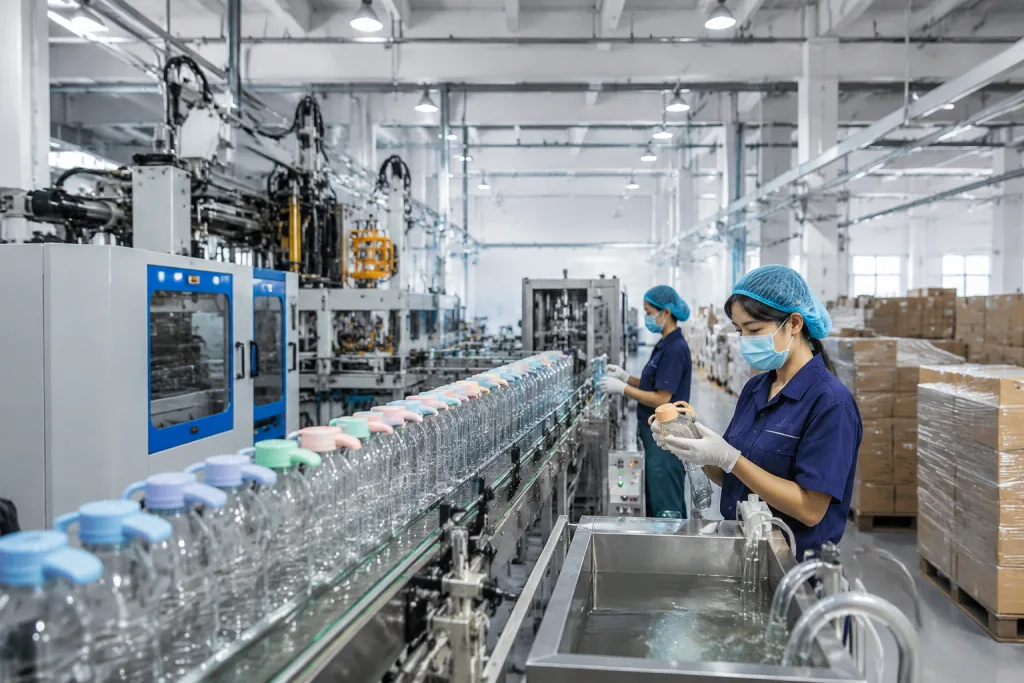
Ask for same-day photos or short videos of injection molding, bottle blowing or forming, printing, assembly, and packed goods. A real canteen supplier or canteen manufacturer in Zhejiang can usually send this fast, often with the machine tag or mold number visible. If they dodge process details and keep pulling the talk back to low price, the math doesn't work. Trouble usually shows up later in sample delay, color mismatch, or packing mistakes on the first bulk run.
Lock the sample with measurable checks
Buyers get loose at sample stage, and that is where claims start later. A bottle can look fine in a phone photo and still fail on thread fit, gasket compression, odor, or logo adhesion. On our line, QC pulled a sample last month that looked clean on screen but cross-threaded after 1.5 turns on the torque jig. For a petg sport bottle factory, sample approval needs measured checks and written remarks, not “approved, looks good.”
Ask for at least three sample types:
- Stock sample: checks the base shape, bottle feel, and lid opening/closing
- Pre-production sample: checks your exact color, logo size, print position, and packaging details
- Golden sample: signed control sample kept by buyer and factory for production comparison
For a customized canteen or customizable drinkware program, test the sample the way the end user will. Fill it to the shoulder, shake it 20 times, leave it inverted for 2 hours, then check the thread, spout, and carry loop area for seepage. Drop-test from 1.0 to 1.2 meters onto tile or concrete with the bottle empty and lid closed. PETG takes more abuse than some buyers expect. A weak lid still splits, pops open, or spits out the silicone ring. We have seen this go sideways after a buyer pushed for a thinner cap wall to save $0.03.
Your sample checklist should cover:
- Capacity tolerance, for example plus or minus 3%
- Net weight tolerance, often plus or minus 5 g
- Logo position tolerance within 2 mm
- Color match against Pantone under D65 light
- Odor after 24 hours closed storage
- Thread engagement smoothness and torque feel
- Dishwasher top-rack suitability if claimed
- Barcode scan readability if retail packed
This is also the point to confirm whether PETG is the right material. PETG fits clear sport bottles and canteen customizable projects where shelf appearance matters and buyers want impact resistance without going to Tritan. If the spec calls for high heat resistance or insulated performance, PETG is the wrong question to ask. Move to a stainless custom growler or another customizable growler format. We tell buyers that directly, even on a 3,000-piece MOQ project, because the math does not work if returns start after launch.
Put every change into one revision sheet. One file. If comments are spread across 10 emails, the line will miss one, and the buyer will flag it after mass production starts. We once got a PO with the logo height typed as 22 mm in the file and 28 mm in email notes; that cost two days. One approved sample sheet with photos, dimensions, and comments is cheaper than 3,000 wrong units.
Write the PO line by line
After sample approval, the PO needs to kill guesswork. Most China sourcing disputes are not fraud cases. We’ve seen them start from a thin PO, then the line fills the blanks with its own standard: wrong Pantone, logo shifted 3 mm, carton overweight at 15.2 kg. Easy to avoid.
A strong PO for a petg sport bottle factory should include clear line items like these:
- Item code: BF-PETG-650-01
- Description: 650 ml PETG sport bottle with PP flip lid and silicone seal
- Body color: Pantone 2995C translucent blue
- Lid color: black matte, carry loop gray
- Material: PETG body, PP lid, food-grade silicone gasket
- Unit weight: 168 g plus or minus 5 g
- Decoration: 1-color white silkscreen, 35 x 70 mm, front center
- Packaging: 1 pc/polybag, 50 pcs/master carton, no inner box
- Carton spec: max 14 kg, 5-layer export carton
- Marks: item number, color, made in China, FNSKU if needed
- Quantity: 5,000 pcs blue, 5,000 pcs smoke gray
- Price term: FOB Ningbo, USD 1.46/pc
- Tooling: none or listed separately
- Lead time: 30 days after deposit and sample approval
- Inspection standard: AQL 2.5/4.0, 0 critical
- Test requirements: 100% leak check, random drop and odor test
If you buy for canteen distributors, distributor canteen tenders, or a canteen promotional event, add the delivery split on the PO. Write it line by line. Example: 3,000 units plain pack to Warehouse A, 2,000 units retail-boxed to Warehouse B, with separate shipping marks. QC pulled a sample once where the PO said “split delivery” but missed the carton count per address, and the buyer flagged it after 600 cartons were sealed. Fix it before production. After sealing, the math doesn’t work.
For customized growler or custom growler programs handled by the same supplier group, keep separate POs by material family. This is the right way to run it. PETG sport bottles, stainless items, and glass bottles do not share the same scrap rate or inspection points. Stainless may need weld and vacuum checks; glass has breakage risk in transit; PETG usually gets more focus on leak test, odor, and print adhesion. We’ve seen mixed paperwork go sideways fast, including one PO typo where 304 stainless notes were copied onto a PETG bottle order.
Control production, testing, and packaging
After the PO is placed, stay on it until ex-factory. We usually suggest 3 checkpoints: one before mass production, one on the line, one before shipment. That is the safe rhythm. A supplier making custom canteen orders every week should accept that without drama. If they push back on basic visibility, that is the wrong question to ignore.
For bulk production, ask for these milestones:
1. Material and color approval
Request a confirmation photo or sample chip for resin color, lid color, gasket color, and print ink before full run. PETG color shift happens fast if the masterbatch ratio moves by 0.2% on the mixer. We have seen buyers flag a lid that looked fine under factory light but turned greener under store LEDs.
2. First articles from line
Ask the factory to send photos of the first assembled units with measured dimensions and logo placement. Put a caliper in the photo. Put a ruler on the print. This is where QC pulled the sample and found upside-down prints, the wrong loop color, or an old gasket version still sitting by the injection machine.
3. Mid-production inspection
At 20% to 50% completion, verify cosmetic consistency, thread fit, and leak performance. If you use a third-party inspection, define the protocol in advance. AQL 2.5 major and 4.0 minor is common for custom drinkware. For premium retail, some buyers tighten major to 1.5. We have seen this go sideways when the buyer asked for leak testing but never wrote the method, and the line used a simple inverted 30-minute check while the importer expected air-pressure testing.
Packaging is not a side issue. It drives freight claims and shelf presentation. For canteen customized orders and customizable canteen retail packs, check carton drop resistance, insert fit, and barcode placement. Cartons over 15 kg create handling trouble and more compression damage in long-haul transit from Zhejiang ports. Our packing team usually runs a drop test from 76 cm, and if the divider board shifts, we stop and fix it before the next 2,000 sets.
Ask for a finished pack photo set: unit pack, inner arrangement, outer carton marks, pallet wrap if applicable. For Amazon or DTC replenishment, confirm FNSKU label size and carton content labels before sealing. We ship good bottles every week, but sloppy labeling still kills a shipment. Last month a buyer flagged one PO because the carton mark showed 24 pcs instead of 36 pcs, a plain packing typo that would have caused a warehouse short-receipt.
At BottleForge Industrial, our export lines in Zhejiang typically run PETG and sports bottle programs with 30-day lead times on standard models and monthly capacity above 500,000 units, but the rule stays the same anywhere in China: the production plan stays clean only if the approval chain stays clean. The math does not work any other way.
Ship only when the paperwork matches
The last step is not paying the balance. It is checking that the goods, cartons, and documents match line by line. We see buyers lose margin here every month, usually on simple misses: 1 carton count off, 0.3 CBM wrong on the packing list, or a PO typo in the item code. A clean shipment file saves trouble with customs, the forwarder, and your warehouse team.
Before release, match these items against the PO:
- Commercial invoice description and quantity
- Packing list carton count, gross weight, net weight, and CBM
- Carton marks and SKU labels
- Inspection report with defect summary and photos
- Compliance documents requested by your market
- Booking window and port cut-off
For FOB shipments from China, confirm whether the supplier delivers to Ningbo or Shanghai and who pays local charges beyond the agreed term. This is where the buyer flagged it on one order last month: FOB Ningbo was on the PO, but the booking was pushed to Shanghai because space got tight. The extra local charges came out to USD 380. The math doesn't work if nobody confirms this before release. If you use a canteen distributor network, make sure carton pack counts fit your downstream split. A factory pack of 48 sounds fine on the line, but it creates repacking if your distributor canteen system sells in 24-unit case logic.
Review overrun and underrun tolerance before production, not after QC pulled the sample. For decorated custom drinkware, plus or minus 5% is common unless otherwise agreed. If your campaign or retail launch needs an exact count, write “no overrun, no underrun” into the PO. Expect a longer lead time, sometimes 12 days vs 18 days once we hold the line for exact quantity and final count.
The best canteen vendors and canteen suppliers in Zhejiang win repeat orders because they keep the file clean and the shipment quiet. Low drama matters more than a small price cut. We ship smoother on the second order if the first one has controlled samples, clear PO lines, and spec details down to carton size and label position in mm. We've seen this go sideways when the first PO was loose. That is when annual buys, shared tooling, or a broader canteen manufacturer program start to make sense, including a custom growler, glass, or steel line under the same quality system.
Send your PETG bottle RFQ and get a real quote
Share capacity, lid type, logo file, target quantity, and deadline. We will review specs, flag risks, and quote the cleanest production route from Zhejiang.
Frequently asked questions
What MOQ should I expect from a petg sport bottle factory?
For a standard 500-700 ml PETG sport bottle using an existing mold, MOQ is usually 3,000 units per color and 5,000 units per order. If you need a new lid, custom body shape, or complex retail packaging, expect 5,000-10,000 units. Some canteen suppliers in China will offer 1,000-piece trial orders, but the unit price can rise by 12%-25% and color options will be limited. If you are buying as a canteen distributor or distributor drinkware program manager, ask for MOQ by SKU, by color, and by print design. Those are not always the same number, and that difference affects your inventory plan.
How much does a custom PETG sport bottle usually cost?
A practical FOB China range for a 650 ml PETG sport bottle is USD 1.20-2.10 per unit on 5,000-10,000 pieces. A simple screw lid and one-color print sit near the lower end. Flip straw lids, carry loops, gradient color, double print positions, or retail gift boxes push the price up. Tooling for a fully new lid can add USD 2,500-8,000 one time. If you are sourcing custom drinkware for retail rather than canteen promotional use, budget for third-party testing and stronger packaging too. Ask every canteen manufacturer to separate unit cost, mold cost, print charges, and carton upgrades so your quote comparison is real.
Is PETG a good material for custom sport bottles in Europe and North America?
Yes, for the right use case. PETG is clear, impact resistant, and suitable for many sport bottle and customizable canteen projects. It performs well where visual clarity and toughness matter. It is not the best option if you need high-temperature filling, vacuum insulation, or boiling-water use. For Europe and North America, ask the factory for food-contact declarations and any REACH, LFGB, or CA Prop 65 support relevant to your market. Also verify odor performance and dishwasher-position claims on the actual sample. Many buyers approve PETG for lifestyle and fitness use, then shift to stainless for premium retail or custom growler programs.
What quality checks should I require before shipment?
At minimum, require 100% leak testing during assembly and a final inspection to AQL 2.5 major, 4.0 minor, with 0 critical defects. Add random drop testing from 1.0-1.2 meters, odor checks after 24 hours closed storage, logo adhesion checks, color verification, and thread fit inspection. If the order is retail packed, also check barcode readability and carton drop resistance. For larger runs above 10,000 units, a mid-production inspection at 20%-50% completion is worth the cost because it catches color drift and print problems before the whole batch is finished. Good canteen factories in Zhejiang usually accept this as normal process control.
How long does the full sourcing process usually take?
If the model is existing and the artwork is simple, plan about 7-10 days for pre-production samples, 2-4 days for your approval cycle, and 25-35 days for bulk production after deposit. Shipping time depends on route, but ocean freight from China to Europe or North America often adds 20-40 days port to port, plus local clearance and delivery. A new mold can add 20-35 more days before sample approval. If you need a customized canteen launch by a fixed date, work backward from warehouse-in date and build in at least one extra week for document checks, inspection scheduling, and possible sample revision.