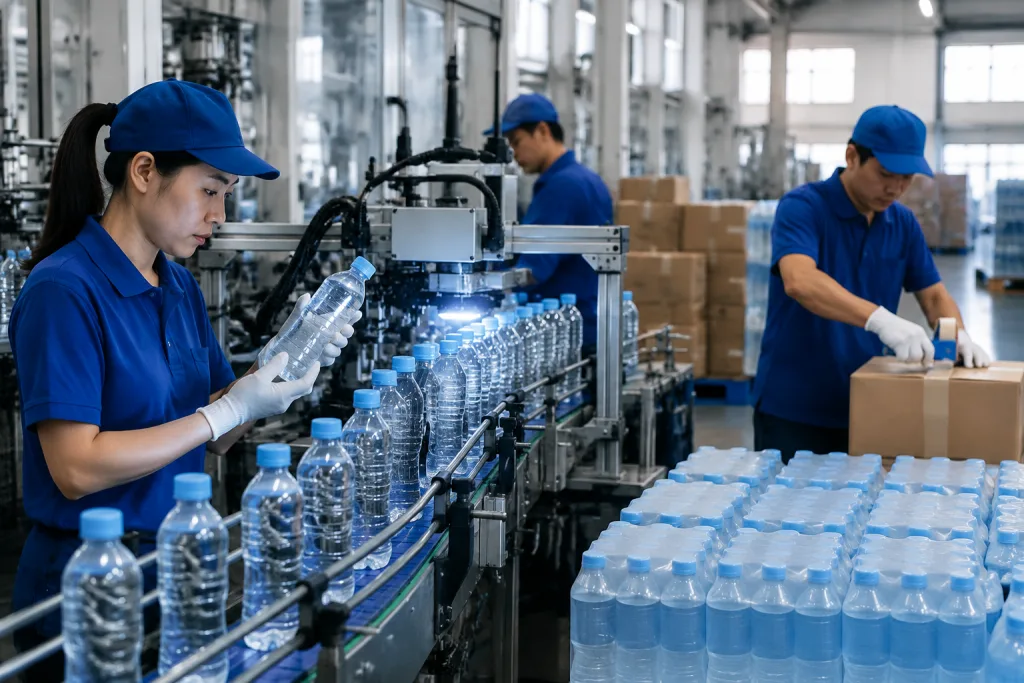
Key Takeaways
- For existing PC bottle molds, MOQ usually starts at 3,000 units per color, with FOB China pricing often around USD 0.85-1.90 depending on size and decoration.
- A new bottle mold typically adds USD 3,500-9,000 and 20-35 days before mass production starts.
- Common production lead time is 25-40 days after sample approval and deposit; peak season in Zhejiang can push this to 45 days.
- Logo decoration can change unit cost by 5-22%, especially when moving from 1-color silkscreen to wrap printing, heat transfer, or retail-grade packaging.
You usually ask about price first. For pc water bottle custom, that is the wrong question to ask. Ask price at what MOQ, with which logo method, and under which compliance rule. A quote of USD 1.18 means nothing if it covers a 500 ml body with no logo, no drop test, and no retail packing. We run this math every week, and the spread is not small: the same bottle can land at 12 days vs 18 days once silk print, insert card, and carton mark are fixed. For buyers in Europe and North America, the job is simple on paper and messy on the line: control unit cost, transit time, and claim risk. QC pulled the sample last month on a 1.2 mm wall body because the cap fit went loose after the drop test.
At BottleForge Industrial in Zhejiang, China, we see the same pattern every week. A buyer wants a custom canteen or customizable drinkware project, then loses 3 to 5 days because nobody locked MOQ tiers, mold status, logo method, or test scope. We have seen POs marked "3000 pcs" while the target packout needed 3600 with inner boxes of 24, and then the buyer flagged the shortage after booking. If you want a clean sourcing plan from a canteen manufacturer or canteen supplier in China, start with the numbers that move cost and delivery first. Mold open or existing mold. MOQ 1000 or 3000. Screen print or heat transfer. This is where projects stay on track, or go sideways fast.
What really sets the unit price
If you are buying from a canteen factory or canteen manufacturer, do not price all PC bottles like one SKU. They are different builds. A 600 ml straight-wall bottle with a standard PP lid does not cost like a 1,000 ml sports bottle with a carry loop, infuser insert, and printed retail box. On our line, even the neck finish check changes by 0.3-0.5 mm between these programs, and that shifts scrap, cycle time, and packing labor.
For a practical FOB Zhejiang, China range on an existing mold, start here:
- 500-700 ml basic PC bottle: USD 0.85-1.20 at 5,000 units
- 750-1,000 ml ergonomic PC bottle: USD 1.10-1.60 at 5,000 units
- Bottle with straw lid, sleeve, or shaker insert: USD 1.45-2.20 at 5,000 units
- Gift box or shelf-ready retail pack: add USD 0.18-0.65 per set
The main cost drivers are resin grade, bottle weight, lid complexity, decoration, and packaging, but this is the wrong question to ask if you skip gram weight. PC resin matters. Bottle wall thickness matters more on a lot of quotes. A 650 ml body at 55-60 g lands cheaper than the same-looking bottle built at 75-85 g for impact strength. We run drop tests at the sample stage, and buyers selling into gyms, campuses, or outdoor retail usually accept the extra resin after they see the failure rate.
Decoration is where buyers miss the budget. QC pulled the sample last month on a two-side print because registration drifted 1.5 mm, and the buyer flagged it right away. A one-color silkscreen logo might add only USD 0.04-0.08. A two-side print, heat transfer wrap, or metallic effect can add USD 0.12-0.35. If you are building custom drinkware for promotion, low-cost printing is usually enough. If you are building a premium customized drinkware line, the math does not work if you save six cents on print and lose shelf appeal on the box finish.
Low unit price is easy. Low unit price with stable color, leak control, and repeatable print registration is harder. We have seen this go sideways after mass production starts. That is what you should compare between canteen suppliers.
MOQ tiers that change the economics
MOQ is not a punishment from a canteen supplier. It is basic factory math. We spread setup scrap, Pantone matching, screen-print make-ready, and carton fill rate across the order, or the line cost jumps fast. For pc water bottle custom, common MOQ logic in China looks like this:
- Existing mold, standard color: 3,000 units per item
- Existing mold, custom Pantone body color: 5,000 units per color
- Multiple logo versions on one bottle: often 1,000 units per artwork, within a 5,000-unit total
- Retail box with custom artwork: usually 3,000-5,000 sets
- New mold project: 10,000 units is common for first production
Buyers get burned here. A buyer asks a customizable canteen factory for four colors at 1,000 units each, then compares that price to a plain 5,000-unit single-color quote from another canteen vendor. That math does not work. On our side, each color change means purge loss, extra label checks, and a fresh first-article signoff; QC pulled the sample last month because the blue body was 1.2 mm off spec at the neck after a rushed switch.
If you are a canteen distributor or one of several canteen distributors handling 6 or 8 customer accounts, use one bottle body and change only the lid color or logo. We run this program all the time. It gives you a cleaner path to a canteen customizable program without sitting on dead stock across four separate SKUs, and the buyer flagged this exact issue on a PO that mixed black, coral, navy, and mint in one month.
For promotional orders, a canteen promotional brief should state whether MOQ is based on shipped units or produced units. Ask this early. Professional canteen vendors usually allow a small overrun or underrun, often within 3-5%, because the line packs by master carton count, not by perfect spreadsheet quantity. If your event date is fixed, get the delivered quantity tolerance in writing before deposit; we have seen this go sideways when the PO said 5,000 pcs but the booking target was 4,850 shipped.
When a new mold makes sense
Not every custom canteen needs a new mold. Most first-time buyers should stay off tooling unless the bottle shape itself sells the brand. We run against existing platforms first because China already has thousands of workable options, and the math doesn't work on a fresh tool for a 5,000-piece launch. A skilled canteen manufacturer can swap a lid, add a silicone sleeve at 1.5-2.0 mm wall thickness, change the surface texture, or rework decoration and get you close to the target look without paying the tooling bill.
When you do need a new mold, expect these cost buckets:
- Blow mold or injection-blow tooling for bottle body: USD 3,500-6,500
- New cap or closure tooling: USD 2,000-5,000
- Secondary fixtures, print jigs, gauges: USD 300-1,200
Development timing is usually 20-35 days for tooling and first trial, then another 7-12 days for revised samples if fit or leak performance needs adjustment. We ship trial parts after the first T0 run, and QC pulled the sample more than once for a cap torque issue at 0.8 N.m or a straw cut length off by 2 mm. If the lid has moving parts, straws, or silicone seal changes, add time. That is normal. We've seen this go sideways only when a factory promises 12 days for work that usually takes 20.
For a buyer sourcing customized canteen, customized growler, or customizable growler programs, ask who owns the mold and where it is stored. This is the right question. In Zhejiang and elsewhere in China, the clean answer is simple: ownership follows the signed tooling agreement, and the factory keeps maintenance records, usually with mold ID, last run date, and repair notes from the tool room. The buyer flagged it once on a PO where "mold ownership" was typed as "model ownership." That typo matters. If a supplier dodges the topic, slow down.
A new mold makes sense when annual volume is above 50,000-100,000 units, when you need a protected silhouette, or when a retailer brief cannot be met with a stock platform. For one seasonal program at 8,000 units, use an existing mold. We have seen buyers spend the budget on tooling, then cut the gift box from 1,200 gsm board to a cheaper packout and hurt the whole launch. Put the money into better packaging, testing, and photography instead.
Lead-time map from concept to shipment
Most buyers do not need a fast-delivery slogan. You need a date-by-date calendar. For an existing mold pc water bottle custom order from Zhejiang, China, we usually run it like this, and the line will ask for your artwork file before the first sample even hits the color booth:
Existing mold program
- Day 1-3: confirm bottle model, size, lid, and target quantity; MOQ and neck size need to match the selected cap
- Day 3-7: quotation, artwork check, and Pantone review; the buyer flagged logo line thickness below 0.3 mm more than once, so we check that early
- Day 7-12: pre-production sample or digital mockup; QC pulled the sample and checks color, print position, and lid fit
- Day 12-18: revised sample approval if needed; this is where a cap color change or logo move usually costs 6 days
- Day 18-48: mass production, assembly, printing, and packing; we ship faster when the PO is clean and the carton spec is locked
- Day 49-52: final inspection and booking; carton drop check, shipping mark scan, and booking cut-off all land here
That is why the standard answer is 25-40 days after sample approval and deposit. Peak season is different. Before back-to-school and holiday promo windows, some factories slide to 45 days, and we have seen bookings miss by 2 days just because the forwarder needed the CBM file again. This is the wrong question to ask: "Can you do it fast?" Ask what date the sample is approved, what date packing is finished, and what vessel cut-off they are holding.
New mold program
- Tooling and first sample: 20-35 days; mold steel, cavity check, and first-shot review decide whether the clock stays tight
- Engineering revision: 7-12 days; if the thread or seal leaks, the tool shop will rework it before the next sample run
- Mass production: 25-40 days after sample sign-off; we do not book bulk material until the approved sample is locked
If you sell through Amazon or major retail, add time for barcode application, FNSKU labeling, drop-test validation, and carton mark approval. Those steps eat calendar days. We have seen one PO held because "FNSKU" was typed as "FSNKU" on the file set, and the buyer flagged it after cartons were already queued. If you are a distributor drinkware buyer or distributor canteen buyer managing multiple destinations, ask your factory to split production by shipping mark at the start. Re-sorting after packing wastes 3-5 days and scuffs cartons.
A serious canteen factory should also tell you what breaks the schedule. Delayed logo approval does it. Changing cap color after sampling does it. Waiting on custom box files or adding compliance tests late does it too. QC sees this every season. We have seen this go sideways when a buyer approves the bottle but leaves the insert card open for 8 days, then asks why booking moved. Clear files and clean approvals keep the plan on track.
Compliance, testing, and quality checkpoints
For Europe and North America, a cheap bottle that fails compliance is expensive stock. If you source from canteen manufacturers in China, lock the testing scope before production starts, not after the cartons are taped and stacked 6 high on the pallet. For PC bottles, the usual buyer checklist covers REACH for EU chemical compliance, the right food-contact declarations, and any buyer protocol tied to your channel. For North America, some programs also call out retailer standards or state-level chemical restrictions. We have seen this go sideways when a PO says "food safe test" and nothing else.
On the quality side, ask for practical checkpoints:
- Leak test: 100% inline or statistically controlled by batch
- Drop test: for filled bottle and packaged product
- Color tolerance: approved against Pantone or signed sample
- Print adhesion: tape or rub resistance standard
- AQL final inspection: commonly 2.5 major / 4.0 minor
If the order is for customizable drinkware sold under your own brand, ask about factory systems too. Check BSCI audit status for social compliance and ISO-style process controls if they matter to your program. This is the wrong question to ask: "Do you have all certificates?" No factory has every paper for every market. A solid canteen vendor shows the documents tied to your bottle, your lid, and your sales market. QC pulled the sample once on a similar job and the declaration matched the resin but not the silicone seal.
At BottleForge Industrial, we usually ask buyers to confirm color chips, logo position drawing, seal material, and master carton spec before the mass run. We run that check against signed samples and a 0.5 mm logo position tolerance on the drawing. On bigger orders, we also suggest a third-party final inspection in Zhejiang using your agreed AQL plan. That inspection might cost a few hundred dollars. On a 20,000-unit custom drinkware order, the math does not work any other way. Replacing stock in Europe or North America costs far more than catching an issue on the line before we ship.
Packaging and freight are part of cost
Buyers often fight for USD 0.05 on bottle price, then give back USD 0.12 through bad packing and wasted freight. We see it every month on the line. For pc water bottle custom, packaging is not presentation first. It drives damage rate, carton count, CBM, and how much labor your warehouse spends opening, sorting, and re-packing.
The standard options are simple:
- Bulk pack with polybag and divider: lowest cost; we usually run this for promo orders above 5,000 pcs
- White box: better protection and a cleaner shelf look; QC pulled fewer cap-scratch complaints on this packout
- Color box or window box: retail-ready, with higher unit cost and higher freight because carton size grows fast
- PDQ or display tray: use it only if your channel asks for it; otherwise the math doesn't work
A 700 ml bottle in bulk pack ships at lower CBM than the same bottle in a printed gift box. On one 3-ply versus 5-ply carton review, the outer size moved by 18 mm and the load plan changed right away. For some programs, retail packaging adds 12-25% to total landed cost once freight is included. A seasoned canteen supplier asks where you sell before suggesting the pack style. This is the right question.
If you are also comparing categories like custom growler, distributor growler, or heavier customized growler projects, freight penalty matters more. Glass and stainless push up gross weight and force thicker inserts, stronger master cartons, and more void fill. We shipped one stainless project at 14.6 kg per carton and the buyer flagged warehouse handling right away. By contrast, PC bottles usually make more sense on freight for promo and sports channels.
Ask your canteen suppliers for loading plans by 20GP, 40GP, and 40HQ, and ask for carton dimensions at RFQ stage, not after sample approval. We have seen a PO typo change carton mark requirements and delay booking by 2 days. If your 3PL in North America charges pallet rework fees, ask whether the factory can palletize in China. Sometimes that adds USD 0.08 per unit and saves more at destination.
How buyers reduce risk on first orders
If this is your first run with a new canteen manufacturer or canteen supplier, keep the order simple where it matters. We run first orders on an existing mold, one body color, one or two logo positions, and standard packing that already passed drop testing. Save the tricky stuff for PO2 after the line proves it can hold print position within 1.5 mm and ship on time. Boring is good here.
A sensible first order structure looks like this:
- Quantity: 3,000-5,000 units on one proven model
- Decoration: 1-color silkscreen or laser-marked accessory part where applicable
- Packaging: bulk or white box
- QC: approved golden sample plus AQL final inspection
- Terms: 30% deposit, 70% balance against inspection or before shipment
If you are a canteen distributor, distributor canteen buyer, or one of several canteen distributors serving corporate accounts, do not let each account change the bottle structure. Standardize the body, change the artwork, and build a repeat program. We have seen this go sideways when one buyer flagged a lid change on a 5,000-unit PO, and the same carton size no longer fit. This is the wrong question to ask. The better question is how many SKUs you can ship every month without reworking tooling, labels, and packing.
Ask your factory for one more useful metric: monthly capacity on the relevant line. A supplier that can produce 300,000 units per month on similar bottles and has a normal MOQ of 3,000 units gives you a planning signal you can actually use. QC pulled the sample, checked neck diameter with a digital caliper, and matched it to the approved drawing before mass run. That tells you more than a sales reply that says yes to every deadline. In export manufacturing in China, the honest answer is usually the safer one.
Once the first order runs cleanly, add the harder items step by step: custom caps with new injection tooling, inserts that change assembly time by 3 seconds per unit, bundled accessories, or a broader custom canteen family. Start that platform after the basics are stable. Before that, the math does not work.
Get a realistic PC bottle quote and timeline
Send your target quantity, bottle size, logo file, and packaging brief. We will reply with MOQ, FOB pricing, lead time, and compliance notes.
Frequently asked questions
What is the normal MOQ for a pc water bottle custom order?
For an existing mold, the practical MOQ is usually 3,000 units per style, and 5,000 units per color if you want a custom Pantone match on the bottle body. If you need printed retail boxes, many factories in China will ask for 3,000-5,000 sets because packaging suppliers also have minimums. For a mixed order, you can sometimes split one 5,000-unit run into two lid colors or two logo versions, but do not expect four colors at 1,000 each without a price increase. If a canteen supplier quotes a very low MOQ, check whether the unit cost includes setup, carton marks, and realistic print waste.
How much does a custom logo add to the bottle cost?
A simple one-color silkscreen logo on a PC bottle often adds around USD 0.04-0.08 per unit at 5,000 pieces. Two-color print may land at USD 0.08-0.15. Full wrap heat transfer or more decorative finishes can add USD 0.12-0.35, sometimes more if registration is tight or artwork coverage is heavy. The print method should match the channel. For canteen promotional orders, a simple logo is usually enough. For branded retail custom drinkware, a better finish and tighter QC may be worth the extra 10-20 cents. Always ask for a logo position drawing and print durability standard before approving mass production.
How long should I expect from sampling to shipment?
With an existing mold, expect 7-12 days for an initial sample and roughly 25-40 days for mass production after sample approval and deposit. If your project needs revised artwork, special packaging, or buyer testing, add another 5-10 days. New molds usually need 20-35 days for tooling and first trial, plus 7-12 days for correction if the lid fit or sealing needs improvement. Peak season in Zhejiang can stretch standard production closer to 45 days. If your delivery date is fixed, lock the artwork, carton marks, and packing method early. Most delays come from changes after the sample stage, not from machine time.
Do I need a new mold for a custom canteen project?
Usually no, especially for a first order. If your volume is below 50,000 units a year, an existing bottle platform from a canteen factory is often the smarter choice. You can still make the product feel customized with body color, lid variation, sleeve material, print style, and packaging. A new bottle mold typically costs about USD 3,500-6,500, while a new cap may add USD 2,000-5,000. Tooling also adds 20-35 days before production even starts. A new mold makes more sense when the shape itself is part of your brand, when a retailer requires a specific form factor, or when your annual volume justifies the investment.
What quality checks should I require from a China canteen manufacturer?
At minimum, require leak testing, color approval against a signed standard, print adhesion checks, and a final inspection using an agreed AQL level such as 2.5 major and 4.0 minor. For Europe, ask for REACH-related compliance documents and any food-contact declarations relevant to the item. For North America, confirm buyer-specific test requirements before production. If the order is 10,000 units or more, it is sensible to use a third-party inspection in China before balance payment. Also confirm carton drop expectations, especially if you are shipping retail boxes. A capable canteen manufacturer should show you the QC plan clearly, not just promise good quality.