Key Takeaways
- For pc tritan bottle wholesale, a realistic MOQ is 3,000-5,000 pcs per color, with repeat orders often dropping to 2,000 pcs on stocked molds.
- Expect sample lead time of 7-12 days and mass production of 25-35 days after deposit, artwork approval, and pre-production sample signoff.
- Most 650-750 ml Tritan bottles land around USD 1.45-2.60 FOB China depending on lid style, print method, and packaging.
- Set QC around AQL 2.5 major and 4.0 minor, and test 1.2 m drop resistance, leakage, odor, and dishwasher performance before shipment.
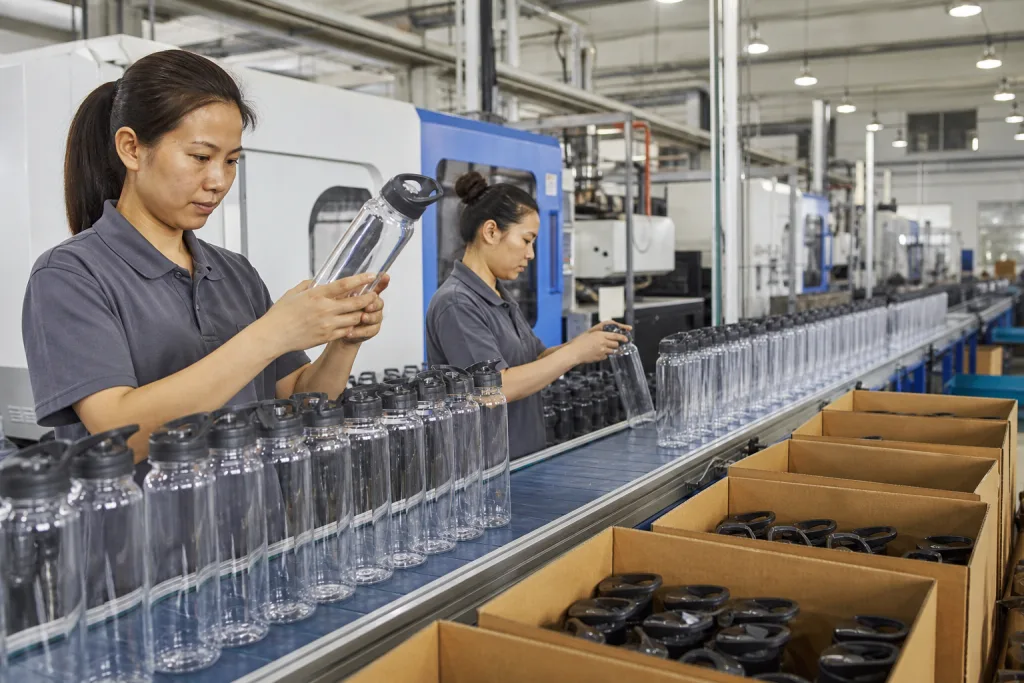
If you are buying pc tritan bottle wholesale for a retail brand, promo program, or distributor line, the hard part is not finding a factory. China has thousands. The hard part is locking the right resin grade, lid torque, leak test result, and compliance file without burning 45 days on samples that never turn into a stable SKU. We run into this on the line all the time: cap fit looks fine by eye, then QC pulled the sample and found a 0.3 mm thread mismatch after the first drop test.
You also need to decide where Tritan bottles sit in your wider drinkware plan. Buyers ask this every week, just with different wording: can the same supplier handle wholesale canteen, bulk growler, beer tumbler wholesale bulk, or alcohol flask wholesale bulk on the next PO? That matters. Once you approve one Zhejiang factory, you want the next 3 or 4 projects to move in 12 days vs 18 days, not start from zero each time. This is the wrong question to ask if you only compare catalog photos; the buyer flagged it before on a PO where “Tritan” was typed as “Titan,” and the whole material discussion went sideways.
What are you really buying
If you ask for pc tritan bottle wholesale, the first fix is technical. Most RFQs actually mean Tritan copolyester bottles, not old polycarbonate. Tritan is BPA-free copolyester from Eastman, and that changes compliance, odor, clarity, and retailer acceptance in Europe and North America. We see this on the line all the time. If a supplier replies to your Tritan RFQ with “food grade plastic bottle” but gives no resin grade or sample weight, stop there. QC pulled the sample on one job last month and the gate mark plus smell told the story before the paperwork did.
Your purchase spec should lock five basics before price. This is the right order.
- Capacity: 500 ml, 650 ml, 750 ml, or 1,000 ml are the common wholesale drinkware sizes.
- Body weight: usually 110-180 g depending on capacity and wall thickness.
- Wall thickness: 2.0-3.0 mm is typical; under 1.8 mm often feels cheap and dents buyer confidence even though it is plastic.
- Lid construction: PP lid, Tritan lid, stainless accent ring, silicone gasket, carry loop, straw, or flip spout.
- Decoration: 1-color silkscreen, UV print, heat transfer, or wrap insert.
If you sell into outdoor, fitness, school, or corporate channels, clarity and impact resistance usually matter more than the lowest FOB. The math doesn't work if you save USD 0.08 on unit cost and then get odor complaints or scuffed bodies after a 1.2 m drop test. We ship plenty of promo orders at 3,000 pcs MOQ, and the buyer flagged haze on a cheaper resin blend faster than they flagged price.
At BottleForge Industrial in Hangzhou, Zhejiang, we usually tell buyers to define the bottle by use case first. Daily hydration, gym, student canteen wholesale, or travel retail each need different cap geometry, hinge life, and mouth diameter; a 63 mm wide-mouth build works for canteen refill, while a slim 44 mm neck sells better for commute retail. This is the wrong question to ask if the first message is only “best price.” We have seen POs marked “Triton” instead of “Tritan,” and that small typo turns into the wrong material discussion fast. The same use-case approach also helps if you later expand into canteen bulk, wholesale growler, or best wholesale drink bottle programs under one sourcing plan from China.
How to compare quotations properly
Most quotation sheets look comparable until you read the footnotes. Then the gap shows up fast. One bottle is 700 ml brimful capacity, another is 650 ml net capacity, one quote includes an individual polybag, another packs with an egg-crate divider, and one factory swapped cheaper AS plastic into the lid. We see this every week on the line. That is why drinkware wholesale quotes can swing 20% on what looks like the same item.
Use this checklist when you compare suppliers in Zhejiang or elsewhere in China. QC pulled the sample once and found a 1.2 mm wall difference from the approved bottle, and the buyer flagged the quote after production started:
- Resin declaration: ask for Tritan grade and supplier source. Get the exact grade code, not just “Tritan,” because that shortcut causes arguments later.
- Weight tolerance: request target weight plus or minus 3 g. If one supplier quotes 138 g and another runs 126 g, the math doesn’t work as a like-for-like comparison.
- Leak test standard: upside-down 30 minutes minimum, no seepage. Ask whether we test by lot or by shift, because that detail changes claim risk.
- Temperature limit: many Tritan bottles are suited for cold and warm fill, but not direct boiling fill. Put the fill range in writing; we have seen buyers assume 100C and then push back after first use.
- Logo method: silkscreen is cheaper; UV print handles gradients but adds cost. On a 5,000 pcs run, that print choice moves unit cost more than most buyers expect.
- Packaging basis: white box, color box, PDQ tray, or mailer-ready pack. Ask carton spec too, such as 24 pcs per carton at 8.5 kg, or the freight comparison is off.
- Price term: EXW, FOB Ningbo, or FOB Shanghai. This is the wrong question to ask by itself; ask which port we ship from and whether trucking is already inside the price.
For a mainstream 700 ml single-wall Tritan bottle with PP screw lid and one-color print, a fair FOB China range is usually USD 1.45-1.95 at 5,000 pcs. That usually means a standard mold, basic silkscreen, and export carton, not a retail box with insert. Add a molded carry loop, color masterbatch, and retail color box, and the number can move to USD 2.10-2.60. Custom lid tooling can add USD 1,500-4,500 depending on complexity, and we normally quote 25 to 35 days for first-tool sampling after the 3D drawing is signed off.
You do not need the cheapest bottle. You need the quote with the fewest hidden assumptions.
This also applies if you are building a wider bulk drinkware line. Beer tumbler in bulk, alcohol flask in bulk, and bulk growler programs often look margin-rich at quote stage, but the landed-cost gap usually comes from accessories and packaging, not the vessel body. We have seen this go sideways over one PO typo on carton marks, then the buyer pays relabeling at the warehouse.
MOQ and lead time reality
Procurement teams often ask MOQ at the end, and by then the quote is already off track. We see this on the line every week. They start from a target price, then the buyer flags custom lid inserts, a second print station, or a Pantone body color, and the MOQ shifts fast because those costs sit in setup time and material batching, not just unit cost. For pc tritan bottle wholesale, the first question is simpler: are we running an existing mold or opening a new one? This is the wrong question to ask too late.
Typical order structure
- Stock mold with standard color lid: 3,000 pcs per item.
- Stock mold with custom body and lid colors: 5,000 pcs per colorway.
- Custom packaging only: often 3,000 pcs if carton quantity works.
- New mold development: usually 10,000 pcs projected annual volume to make the math sensible.
Lead time gets quoted loosely, and this is where buyers get burned. A supplier says 20 days. What that usually means is 20 production days after artwork approval, deposit receipt, and sample sign-off, not from your first email or from the PO with the typo in the shipping mark. A cleaner schedule looks like this.
- 2-3 days for quotation revision and artwork comments
- 7-12 days for pre-production samples
- 3-5 days for sample courier and review
- 25-35 days for mass production
- 2-4 days for final inspection and booking handoff
That puts a normal project at roughly 40-55 calendar days from approved deposit to FOB shipment. In peak season before back-to-school or holiday retail, add another 7-10 days. We run around 1.2 million units per month in Zhejiang across plastic and metal drinkware, but the bottleneck is often silk-screen capacity or the packaging line, not bottle blowing. QC pulled the sample last month on a 0.8 mm logo offset, so no, capacity on paper is not the full story.
If you expect one supplier to cover canteen bulk now and wholesale growler or beer growler wholesale bulk next quarter, ask for a real capacity view across categories. Ask how many lines they run, what their MOQ split looks like by product family, and whether the same team handles plastic and metal projects. We have seen this go sideways when a factory builds one hero SKU well but cannot ship mixed-category programs on the same booking.
Compliance papers worth asking for
Buyers new to China sourcing often ask for every paper on the list. That gives you a thick file, not a clear risk check. Ask for the documents that match your sales market and the actual bottle build. We see this go sideways when a PO asks for 9 certificates, but the lid has 1 unknown silicone ring and nobody checked that part first.
For Tritan bottle programs shipping to Europe or North America, the usual file set is:
- Food contact test report: based on EU 10/2011 or equivalent migration testing for relevant components. Ask which lab tested the body, lid, and straw set, because QC pulled the sample once and found the report covered only the bottle body.
- REACH statement: especially SVHC status for materials and colorants. We normally ask for the masterbatch declaration too, since the buyer flagged blue color chips on a 5,000 pcs order last spring.
- California Proposition 65 screening: if you sell in the US and retailers request it. This comes up fast with chain-store buyers, and the line usually needs the print ink spec tied back to the same file.
- LFGB request: not always mandatory, but some EU buyers still ask. This is common on German projects, and the math doesn't work if you test late after mass color is already mixed.
- BSCI or Sedex audit: for social compliance if you supply chain to retail groups. Buyers ask for this before sampling is approved more often now, usually from accounts with MOQ 3,000 to 10,000 pcs.
- ISO 9001: useful as a process signal, though not a product guarantee. Ask for it, but this is the wrong question to ask if the supplier cannot show a basic in-process check sheet from the line.
For kids' use, add stricter checks on small parts, bite resistance, strap safety, and applicable ASTM or CPSIA-related points if the product is marketed to children. Small parts matter. We run pull checks on strap joints and lid accessories, and a 6 mm loose part can turn into a claim issue fast. For Amazon or club-store channels, barcode placement, drop testing, and carton labeling can matter as much as food-contact compliance; one wrong FNSKU position by 12 mm is enough for the buyer to reject the outer carton setup.
Be practical here. If the bottle body is Tritan but the gasket is poor silicone or the straw resin is undocumented, your paperwork set is incomplete. Ask suppliers for a component list: body, lid, gasket, straw, paint, print ink, and packaging materials. We ship against that list, and it should match the BOM line by line. Last month we caught a PO typo where "silicon" was written instead of "silicone," and that small mistake slowed material approval by 2 days.
The same discipline carries over to adjacent wholesale drinkware categories from China. A stainless wholesale canteen needs different testing than a Tritan body. A beer growler bulk item may require coating and pressure-use disclaimers. An alcohol flask wholesale program raises different food-contact and odor concerns because of high-proof liquid exposure. These are not the same jobs. We run odor checks after sealing samples for 24 hours, and stainless vacuum items usually need a separate weld and inner-coating review before you talk about shipment timing.
QC points that prevent claims
Most after-sales claims on Tritan bottles are dull, and they are preventable. Leakage. Scratched bodies. Logos rubbing off after 20 rubs. Lids cross-threading on the first turn. Slight color shift between body and cap that the buyer flagged under store lighting. This is where margin disappears. On our line, QC pulled the sample table back more than once just for hairline scratches near the gate.
Your inspection plan should be written into the PO or approved specification, not buried in WeChat messages. We have seen a PO typo change a lid finish callout and turn into a claim 45 days later. A sensible standard is AQL 2.5 for major defects and 4.0 for minor defects, with extra focus on functional checks. This is the wrong place to stay vague.
Pre-shipment checklist
- Leakage: 100% inline air or water check if possible, plus random inversion test for 30 minutes.
- Thread fit: cap engages smoothly without skipping, and the first 2 turns should seat cleanly without bite marks.
- Odor: no strong resin or printing smell after 24 hours packed.
- Print adhesion: cross-hatch or tape check after curing; we usually check with 3M tape after full dry time.
- Drop test: 1.2 m on filled sample, typically 3 orientations.
- Dishwasher tolerance: if claimed, run top-rack confirmation and print durability test.
- Carton integrity: export carton compression and barcode readability, especially after 1 pass on the strapping machine.
If your customer cares about shelf presentation, define the visual limit in writing. Say no black specks over 0.3 mm, no flow lines across the front logo zone, and no gate scars visible from the main display face. We have seen this go sideways because the buyer approved a hand sample by feel, then rejected mass production under a 6000K light box because nobody wrote the visual standard.
For distributors buying bulk drinkware assortments, keep the same inspection language across categories. Your beer tumbler bulk line, wholesale growler line, and Tritan bottle line should use the same carton marking rules and defect grading. We run this way for mixed-container orders, and the math works better. Factory management in Zhejiang gets cleaner, and you cut down the pre-shipment arguments.
Can one supplier cover your line
This is the commercial question behind a lot of sourcing projects. You may start with pc tritan bottle wholesale, then your retail buyer asks for a matching canteen, a promotional tumbler, and a beer growler wholesale bulk item for Q4. We hear this on calls every week. Last month one PO even had the tumbler capacity typed wrong by 50ml, which tells you how fast these line extensions get messy. Should you consolidate with one factory in China?
Usually yes, if the supplier is clear about what they actually make and what they buy outside. Tritan bottles, stainless flasks, and insulated tumblers often sit in the same Zhejiang supply base, but the line is different. Injection and blow molding for plastic bottles use one set of tools; deep draw, seam welding, vacuuming, and powder coating for metal drinkware use another. We run both material groups through separate QA sheets because a 0.3 mm neck finish issue on Tritan is not the same problem as a vacuum loss on a flask.
A strong partner can still manage both if they own engineering, QC, and vendor qualification. This is the right question to ask. Ask these questions directly:
- Which categories are made in-house?
- What percentage is subcontracted?
- Who owns tooling maintenance?
- Can one QC standard apply across wholesale drinkware programs?
- Can the supplier handle mixed-container planning and packaging harmonization?
If the answers are vague, keep your core SKU separate. If the answers are precise, consolidation can save real money. Shared artwork setup, a common outer-carton spec, and mixed loading can cut admin work and trim landed cost by 3-8% across drinkware bulk orders. QC pulled one mixed-load sample for us last season where carton marks matched, but inner polybags did not; that kind of small miss is what slows a container at final inspection.
That matters if you plan to expand from best wholesale drink bottle sourcing into wholesale canteen, growler bulk, alcohol flask bulk, or beer tumbler wholesale projects. The right Zhejiang supplier is not the one saying yes to every category. It is the one that tells you the wall thickness limit, the MOQ break, where subcontracting starts, and still ships on time. We have seen this go sideways when a buyer pushed one factory to cover six categories with no vendor map and no packaging matrix.
Your RFQ should look like this
If you want usable quotes within 48 hours, an RFQ needs more than one reference photo. We see this every week. A solid RFQ cuts out 3 rounds of back-and-forth email and lets 4 or 5 factories quote the same bottle instead of 5 different versions. On the line, even a 2 mm change on body diameter can shift mold choice and carton fit.
Include these fields:
- Item type: Tritan sports bottle, shaker, straw bottle, or canteen style. If the lid matters, say flip top, screw lid, or one-hand push button.
- Capacity and dimensions: for example 700 ml, max diameter 72 mm, height under 250 mm. Buyers often miss height, then the sample does not fit the bike cage.
- Target weight: such as 145 g plus or minus 5 g. The math doesn't work if you want a low FOB and a heavy wall at the same time.
- Color standard: Pantone for lid, body tint, and strap. QC pulled the sample before because the PO said “dark blue” and the strap came out 1 shade off.
- Logo method and size: 1-color silkscreen, 60 x 80 mm front panel. If you need a wrap print, say the print area and whether you accept a mold parting line showing.
- Packaging: polybag plus white box, or full retail gift box with barcode label. Add carton drop requirement if you have one, such as 5-layer export carton.
- Market destination: EU, US, Canada, or mixed. This changes material statement prep and label wording.
- Testing required: REACH, food contact, drop test, dishwasher statement. If your spec says dishwasher safe, we need that locked early, not after sample approval.
- Volume plan: opening order and 12-month forecast. MOQ changes fast if you want custom color, custom mold, and retail box together.
Also say whether this is a one-off project or the first SKU in a broader bulk drinkware plan. We price those differently because we run the tooling and packaging plan differently. If you tell us you are launching 5,000 pcs now and expect 60,000 pcs annual demand across Tritan bottles, wholesale growler extensions, and alcohol flask wholesale bulk later, we can recommend cavity count, spare parts, and packaging with a longer view. We've seen this go sideways when the first PO looked small, then month 3 needed a second mold fast.
One direct opinion: do not hide your target market position. This is the wrong question to dodge. If you need a USD 1.60 FOB bottle for promotional canteen bulk, say so. If you are building a premium retail bottle at USD 2.40-2.80 FOB, say that too. The factory cannot engineer the right balance of weight, clarity, and accessories from a mood board alone. We ship both, but the spec is different—145 g body, clear Tritan grade, strap style, leak test standard, all of it.
Send your Tritan bottle RFQ with target specs
Share capacity, lid style, logo method, packaging, and volume plan. We will quote realistic MOQ, FOB pricing, and lead time from Zhejiang, China.
Frequently asked questions
What MOQ should I expect for pc tritan bottle wholesale?
For a standard stock mold, most factories in China will quote 3,000 pcs per item as a workable MOQ. If you want custom body color, custom lid color, and printed retail packaging, 5,000 pcs is more realistic because setup loss and packaging minimums start to matter. For a new mold, you should assume the project only makes commercial sense if annual volume is at least 10,000-20,000 pcs. Some Zhejiang suppliers will accept 2,000 pcs on repeat orders if the mold is proven and colors are standard. Ask whether MOQ is based on total units, per colorway, or per logo version. Those are not the same thing, and buyers lose time when they discover that after approving artwork.
How much does a wholesale Tritan bottle usually cost FOB China?
A plain 650-750 ml Tritan bottle with PP screw lid and 1-color silkscreen typically falls around USD 1.45-1.95 FOB China at 5,000 pcs. Add a carry handle, flip spout, dual-color lid, or color box, and the FOB range often moves to USD 2.10-2.60. Very large 1-liter bodies, complex lid assemblies, or premium packaging can push it past USD 3.00. Tooling for a new cap or body mold can run from about USD 1,500 for a simple insert change to USD 4,500 or more for a full new lid system. Always confirm whether the quote includes normal export carton, inner divider, barcode labeling, and spare overrun allowance.
What compliance documents do retailers usually ask for?
For EU and North American retail, the common requests are food-contact test reports, REACH or SVHC declarations, and a California Proposition 65 statement for US distribution. Many buyers also want BSCI or Sedex audit records and ISO 9001 certification as supplier-qualification documents. If the bottle is aimed at children, the review usually gets stricter around small parts, strap safety, and applicable ASTM or CPSIA-related requirements. Ask for reports by component, not just one page for the finished bottle. The bottle body, lid, gasket, straw, ink, and coating can each create risk. A factory in Zhejiang that can provide a clean component list with matching test paperwork is usually easier to scale with.
Can one supplier also support growlers, canteens, and flasks?
Sometimes, yes, but you need to separate in-house production from sourced categories. A supplier strong in Tritan bottles may also manage wholesale canteen, beer tumbler bulk, wholesale growler, or alcohol flask bulk programs through the same QC team, but those products often use different manufacturing processes and workshops. Ask what percentage of each category is made in-house and who controls tooling, inspection, and final packing. If they can coordinate mixed loading, common carton markings, and one AQL standard across categories, consolidation can cut admin time and reduce landed cost by roughly 3-8%. If they cannot explain their supply chain clearly, keep your core SKU with the proven specialist.
What are the biggest quality risks on Tritan bottle orders?
The top issues are leakage, scratched bottle surfaces, inconsistent body and lid color, poor logo adhesion, and cross-threading on the cap. These are basic problems, but they generate the highest claim rate. Put an inspection plan into the PO: AQL 2.5 major, 4.0 minor, 30-minute inversion leak test, logo adhesion check, and a 1.2 m filled drop test in multiple orientations. If dishwasher-safe is claimed, confirm that with a real test, not just a sales statement. Also define visual standards around black specks, gate marks, and flow lines. On a clear Tritan bottle, cosmetic defects show immediately, and shelf-ready retail buyers are less forgiving than promotion buyers.