Key Takeaways
- For pc glass bottle bulk, a realistic custom MOQ is usually 2,000 to 3,000 units per size, with 7 to 12 days for samples and 25 to 40 days for mass production.
- A USD 0.08 to 0.22 difference per unit often comes from lid construction, wall thickness, decoration method, and export carton spec rather than supplier margin alone.
- Use AQL 2.5 for major defects and 4.0 for minor defects, plus 100% leak testing before packing, to control the most common bulk drinkware claims.
- If you also buy canteen wholesale, wholesale growler, or alcohol flask wholesale bulk programs, keep separate material and compliance files because REACH, LFGB, and ASTM scope can differ by market.
You send one RFQ for pc glass bottle bulk and get back ten quotes that look close until you read line by line. One supplier prices a 500 ml bottle at USD 1.18 FOB Ningbo, another at USD 1.46, and neither quote says if the lid passed leak testing, if the sleeve is food-contact safe, or if the carton clears a drop test. We see this every week. The buyer looks at unit price first, then QC pulled the sample and found a 2 mm lid gap, or the outer carton crushed after one corner drop. If you buy bulk drinkware for retail, gifting, or promotion, that missing detail is where margin disappears.
The better approach is simple: walk the order from specification to shipment before you approve anything. This is the wrong question to ask if you only want the cheapest bottle. In Zhejiang, China, factories move fast, but speed helps only when your drawing, decoration file, test plan, and inspection standard are locked early. BottleForge in Hangzhou, Zhejiang runs drinkware programs up to 400,000 units per month, and the buyers who avoid rework usually make the hard calls before sampling, not after the line starts mass production. We ship smoother when the PO already shows print position, carton spec, and AQL target, even down to a typo in the logo file that the buyer flagged before the first sample.
Start With The Actual Use Case
A procurement manager in Europe needs 5,000 units of a 550 ml bottle for a wellness retail chain. The brief says pc glass bottle bulk, matte black lid, one-color logo, individual box, delivery in 45 days. On paper, that looks clean. On the line, it is not. Before we quote, we ask where it will be sold, who will use it, and what defect will trigger returns. Office hydration is one risk. A kids line, gym giveaway, or travel set with a tea infuser is another. We have seen one buyer approve a neat-looking sample, then reject mass goods because the infuser rattled 2 mm in transit.
Most buyers trip on the same point: they treat the bottle name like the spec. That is the wrong question to ask. "PC" might refer to a polycarbonate outer shell, lid insert, or infuser part, while the bottle body is borosilicate glass. If you want a true glass-contact surface with an engineering-plastic assembly that holds up in daily use, say it that way. If BPA-free resin parts are required, write that into the RFQ. In Zhejiang, factories quote from the detail in front of them. If your RFQ says "PC glass bottle" and nothing else, two suppliers can price two different builds, and both will say they are correct. We have even seen a PO typo switch PP to PC on a lid insert, and the buyer flagged it only after pre-production samples.
You should define five things before asking for a firm unit price:
- Capacity tolerance: 550 ml nominal, plus or minus 3%
- Glass type: high borosilicate, typically 3.0 mm wall thickness
- Plastic parts: PC, Tritan, or PP by component, with food-contact declaration
- Use temperature: for example 0 to 90 degrees C for normal consumer use
- Packaging route: retail box, brown box, or Amazon-ready packout
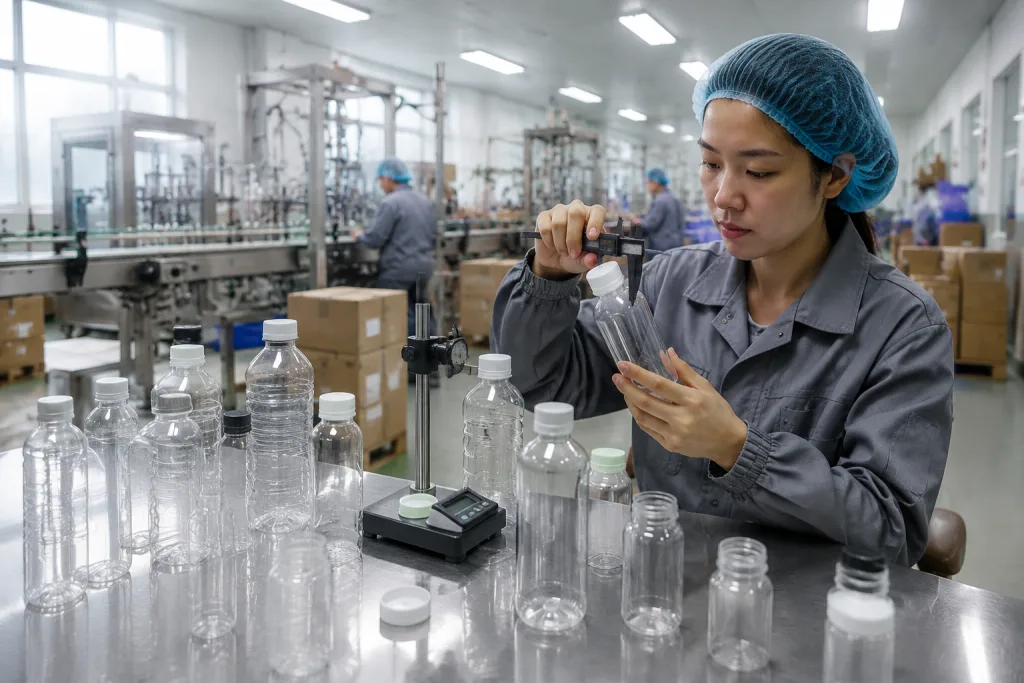
Once those points are fixed, related categories such as canteen bulk, wholesale canteen, or even a best wholesale drink bottle search stop being a guessing game. You are not comparing names anymore. You are comparing BOM details, test scope, and packout cost. QC pulled the sample, checked wall thickness with a caliper, and the gap was obvious: one offer used 3.0 mm glass with a tighter lid fit, another used lighter glass and a cheaper insert. The math does not work if you compare those two quotes like they are the same bottle.
Build The RFQ Before You Ask Price
Take that 5,000-unit order and build a real RFQ before you ask for price. For drinkware wholesale, the RFQ is usually 1 page, plus artwork files and 1 reference photo with key dimensions marked. We need the basics: size, target weight, material callouts, logo position, packing method, destination market, and compliance standard. If the goods sell in Germany, France, or the US, put REACH, LFGB, California Proposition 65, or ASTM on the RFQ from day one. Do not wait until after deposit. We have seen this go sideways after sampling, because the material stack changed and the lab fee changed with it. On our line, even a 2 mm seal change can push a new test item.
Here is what a supplier in Zhejiang actually needs to quote with any accuracy:
- Bottle body: 550 ml high borosilicate glass, 68 mm diameter, 235 mm height, 320 g plus or minus 15 g
- Lid: 304 stainless shell, PP inner, silicone seal, carry loop in polyester or silicone
- Optional PC part: transparent infuser basket or outer structure, food-contact grade
- Logo: 1-color silk screen, 35 mm x 55 mm, Pantone referenced
- Packing: 1 pc per kraft gift box, 24 pcs per master carton, carton gross weight under 12 kg
- Tests: 100% leak test, carton drop test, dishwasher note if applicable
At this detail level, the quote starts to mean something. A plain bottle may land at USD 1.10 to 1.45 FOB China at 5,000 units. Add a stainless lid shell, a color sleeve, and a gift box, and the price may move to USD 1.58 to 2.10. That spread is normal. The wrong question to ask is, “Why is Factory A higher by 18 cents?” We have had cases where QC pulled the sample and found one supplier used a thinner gasket and a lighter master carton to hit the target.
This also matters if you source bulk canteen, growler bulk, or wholesale growler items from the same vendor. Cross-category buying only works if the RFQ format stays consistent from one PO to the next. We ship cleaner comparisons that way. Otherwise your drinkware bulk program turns into 4 or 5 quotes that do not match, and then the math does not work.
Sampling Is Where Most Cost Gets Locked
Sampling is not just about looks. This is where cost gets locked. In this buyer case, we send the pre-production sample in 9 days because the bottle runs on an existing mold. No tooling charge. The custom cost sits in the logo screen, the color lid ring, and the box dieline. Sample charges usually land at USD 50 to 150 per style for decoration and pack-out, and most factories credit that back against the bulk PO. On the line, we usually check the first print with a Pantone card before QC packs the sample.
You should check the sample in three layers, but each layer needs hard points, not general comments. First is dimensional and visual approval: capacity, height, base stability on a flat plate, seam cleanliness, print position, and lid fit. We normally record height and diameter in mm and flag anything outside the approved tolerance. Second is function: leak test at inverted rest for 2 hours, carry loop pull test, and thermal shock limit that matches the construction. Third is packaging: barcode placement, insert fit, carton stacking, and transit tolerance. This is the wrong stage for “looks okay.” QC pulled the sample once for a 2 mm print shift, and the buyer flagged it right away.
Common sample failures in pc glass bottle bulk orders:
- Logo scratches because the ink cure window was rushed and the print was packed before full drying
- Lid wobble from thread mismatch between neck finish and cap insert
- Silicone odor from low-grade gasket material
- Gift box crush because board grade was reduced from 350 gsm to 300 gsm
- Glass weight drift that changes the feel of the finished product by 20 g or more
If you are adding adjacent items like beer tumbler bulk, beer tumbler wholesale, or alcohol flask bulk into one shipment, sampling has to confirm the full pack plan, not each SKU by itself. We have seen this go sideways. A bottle can pass on its own and still fail after drop testing when it sits beside a metal flask or steel tumbler with shared dividers. One buyer pushed back after hearing “all items passed,” but the master carton still failed because the divider slot was cut 3 mm too wide.
At this stage, approve against a signed sample or a digital golden sample file with photos, measurements, and defect notes. Chinese factories move from sample approval to procurement fast, sometimes the same day the PO typo gets corrected. If your comment says “looks mostly fine,” that wording comes back during claims and rework arguments. Write the approval note like a production document: what is accepted, what must change, and what standard mass production will follow. The math does not work if the sample standard stays vague.
Mass Production Needs Control Points, Not Hope
Once the deposit is paid, disciplined buyers set checkpoints and track the run. They do not wait for final inspection and hope for a clean report. For a 5,000-unit run, normal production lead time in Zhejiang is about 30 to 35 days after sample approval and deposit, assuming standard components and no peak-season congestion. If you are buying in August to October for holiday delivery, add at least 7 to 10 days buffer. We usually build that buffer around carton printing, lid sourcing, and booking space out of Ningbo because those are the first places the line gets squeezed.
The practical control plan for this order looks like this:
1. Incoming material check
Confirm glass body dimensions, gasket hardness, lid thread match, and decoration consumables before line start. QC should have a caliper, thread gauge, and Shore A durometer on the table, not just the golden sample. If the gasket durometer is wrong, leak failures show up later when rework is expensive. We have seen a 2 mm thread mismatch hold up packing for half a day, and the buyer only found out after caps started cross-threading.
2. First article approval
Approve the first 20 to 50 assembled units from production, not from the sample room. This matters. Sample rooms are usually tighter controlled than the assembly line, and the line tells you what mass production will actually ship. QC pulled the sample from line position 3 on one order last month and found the logo sitting 1.5 mm low. That is the right time to stop and correct it. After 800 units, the math does not work.
3. In-line inspection
Check print adhesion, neck chips, contamination inside glass, cap torque, and packing accuracy every 1 to 2 hours. For decorated wholesale drinkware, print registration drift is a routine issue. We run tape tests on the print, spot-check torque with a meter, and shine a light through the bottle mouth for glass dust. The buyer flagged inner-box count errors on a PO once because one packer mixed 23 pcs into a 24 pcs carton. Small miss, expensive claim.
4. Pre-shipment inspection
Use AQL 2.5 major and 4.0 minor unless your retail customer requires stricter levels. For functional claims, add 100% leak testing before inner-box packing. This is the wrong question to ask: "Can final inspection catch everything?" No. If the seal issue starts at capping, final inspection only tells you how much trouble is already in the warehouse. On glass bottle orders, we usually set up a simple inverted leak test after assembly and before the product hits the inner box.
For glass and mixed-material drinkware, the most expensive defect is usually not visual. It is leakage after transit, because it creates returns, negative reviews, and chargebacks at the same time.
The same logic applies if your order mix includes beer growler bulk, beer growler wholesale, alcohol flask in bulk, or canteen wholesale. Shared inspection forms save time, but the checkpoints must reflect material risk. A stainless growler needs weld and vacuum checks. A glass bottle needs chip, crack, and seal checks. We have seen this go sideways when one form covered both and missed a weld pinhole on a 304 stainless body. One template does not cover all of it.
Compliance, Cartons, And Shipment Math
Once production hits 80%, we start checking documents and shipment math, not after packing. Too many buyers chase unit price and skip carton details, then get hit on freight and breakage. For a 550 ml glass bottle packed 24 pcs per carton, a common master carton is around 46 x 31 x 27 cm, with gross weight about 11.5 to 12.0 kg depending on the lid and inner box. We run drop checks on the line, and a small insert change can cut breakage claims by 1% to 3%. That usually beats saving USD 0.03 on box material. The math doesn't lie.
For the compliance file, ask for the papers that clear your shipment into your market, not a fat folder full of random PDFs. QC pulled the sample, but if the report code does not match the PO SKU, you still have a problem. Ask for:
- Material declaration for food-contact components
- Test reports for applicable REACH or LFGB items
- Factory social audit status such as BSCI if your customer requires it
- Inspection report with defect photos and AQL result
- Packing list with net and gross weights by carton
If the goods are for Amazon FBA, lock FNSKU placement, suffocation warning if required by packaging type, and carton label format before final packing starts. We have seen buyers flag a 12 mm label position shift after cartons were sealed, and that rework is pure cost. Re-labeling in a forwarder warehouse is money burned. For broader drinkware wholesale programs that include beer tumbler in bulk, alcohol flask wholesale, or wholesale canteen, keep compliance folders by SKU family. This is the right way to run it. One generic file for all items is how missing reports show up when the goods are already at port.
From China, the quote usually lands as FOB Ningbo or FOB Shanghai. Zhejiang factories truck to either port based on vessel routing, booking space, and warehouse cut-off time. Ask for both ex-works and FOB prices on the same spec sheet. We ship both ways every month, and the spread shows you fast if a low unit price is being padded with local charges. One buyer once sent a PO with "FOB Shagnhai" typed on it; the typo was harmless, but the hidden fees were not.
What Buyers Miss On The Final Inspection
The final inspection is the last useful point to catch a preventable problem. Too many buyers ask for one line only: pass or fail. That is the wrong question for pc glass bottle bulk. You need the defect split and the shipment-specific risk. On a 5,000-unit lot, an inspector may sample 200 units depending on the plan. That sample should tell you where the problem sits, not just whether the lot passes AQL. On our line, QC pulled the sample carton by carton because one bad stack pattern can hide a repeat issue.
Ask the inspector to break findings into categories:
- Critical: broken rim, loose small parts, contamination, failed leak test
- Major: wrong print, unstable base, dented lid, wrong barcode
- Minor: light scuff, tiny print speck, carton over-tape variation
In this buyer case, two issues showed up: 3 units with light logo rub-off and 2 cartons with weak inner partitions. The lot still passes AQL, but the carton issue needs action because it can turn into transit damage after a 12-day domestic transfer and export loading. We have seen this go sideways. The right fix is targeted carton reinforcement or a re-pack of the affected batch, not a full hold on all 5,000 units. Last month the buyer flagged a similar partition crush on a 24-bottle master carton, and the root cause was a 2 mm gap on the die-cut insert.
Mixed orders get tricky fast. If your container includes growler wholesale, beer growler in bulk, alcohol flask wholesale bulk, and beer tumbler wholesale bulk, the inspection report should be split by SKU, carton count, and defect type. A pass on stainless items does not offset a problem on glass items. Too many buyers accept one combined report, then find out later the issue sat in one SKU family only. We ship mixed containers every month, and this is where a packing list typo or PO barcode mismatch starts causing real claims.
After inspection, release the goods only when corrective actions are documented. In practical sourcing from Zhejiang, China, the cleanest orders are the ones where the buyer keeps a written chain from RFQ to sample to in-line check to final release. Simple works. We run this through the same file set every time, including marked photos, carton count, and sign-off after rework. That discipline is not glamorous, but it is how repeat orders stay clean.
Send your bottle spec and get a workable quote
Share capacity, material, logo file, packaging, and target market. We will review the RFQ, flag risk points, and quote with realistic MOQ and lead time.
Frequently asked questions
What MOQ should I expect for pc glass bottle bulk with custom logo?
For a standard existing mold, most factories in China will quote 2,000 to 3,000 units per size and colorway for a custom logo order. If you need a custom lid color, gift box, and barcode labeling, 3,000 units is more realistic because packaging suppliers also have minimums. For a fully new mold, the MOQ usually starts at 5,000 units and tooling can add USD 800 to 3,000 depending on bottle complexity. In Zhejiang, some factories will accept 1,000 units for a trial run, but the unit cost normally rises by 10% to 18% because setup cost is spread over fewer pieces.
How do I compare quotes when one supplier is much cheaper?
Start by aligning the bill of materials. Ask each supplier to state glass type, wall thickness, bottle weight, lid structure, gasket material, decoration method, and carton spec. On a 550 ml bottle, a quote that is USD 0.15 cheaper may be using thinner glass, a lower-grade silicone seal, or a weaker 3-layer carton. Also compare what is included: sampling, 100% leak test, FOB charges, and spare units. For wholesale drinkware from China, the cheapest quote is often incomplete rather than efficient. A clean comparison sheet usually explains 80% of the price gap within 20 minutes.
What QC standard should I set for a glass bottle order?
Use a written inspection standard before production starts. A practical baseline is AQL 2.5 for major defects and 4.0 for minor defects, plus 100% leak testing before packing. Major defects should include cracked glass, chipped rims, wrong logo, unstable base, and failed cap fit. For carton performance, require a drop test based on your pack style and destination handling. If your customer is a retail chain or e-commerce channel, add barcode scan checks and carton count verification. For mixed materials, also confirm odor, print adhesion, and gasket fit because those are common claim drivers.
Can I combine pc glass bottle bulk with growlers, tumblers, or flasks in one order?
Yes, and many buyers do it to fill a container, but you need separate specifications and compliance files by SKU family. A glass bottle, a stainless wholesale growler, and an alcohol flask bulk item do not share the same risk points. Lead time can also be uneven: a stock tumbler may be ready in 20 days while a glass bottle with custom box needs 35 days. To avoid a shipment delay, ask the factory to provide a production schedule by SKU and reserve space in the container plan early. Mixed orders work best when one supplier coordinates final packing and inspection across all items.
What lead time is realistic for a first bulk order from Zhejiang, China?
For an existing bottle mold with simple decoration, expect 7 to 12 days for samples and 25 to 40 days for mass production after deposit and sample approval. If the project needs custom packaging, multiple print positions, or third-party lab testing before shipment, add another 5 to 10 days. Peak season from August through October can extend lead time further, especially for gift-box supply and booking space out of China. The practical rule is to build in a one-week buffer even when the factory promises a shorter date, because packing and inspection usually take longer than first estimates.