Key Takeaways
- 304 stainless steel at 0.4-0.5 mm wall thickness is the normal baseline for export wine tumblers
- A practical MOQ is 1,000-3,000 pcs per color for powder coating, with 30-45 day production after sample approval
- AQL 2.5/4.0 inspection catches most visible and functional defects before shipment
- FOB China pricing changes quickly when you add gift boxes, laser logos, leak-resistant lids, or FNSKU labels
A wine tumbler looks simple until it hits the PO. Then every line matters: 304 stainless or 316, 12 oz or 14 oz fill line, +/- 5 mm logo position, lid gasket fit, powder coat thickness, 1.2 m carton drop test, and whether the factory can handle FOB Ningbo paperwork without pushing your launch from 12 days to 18 days.
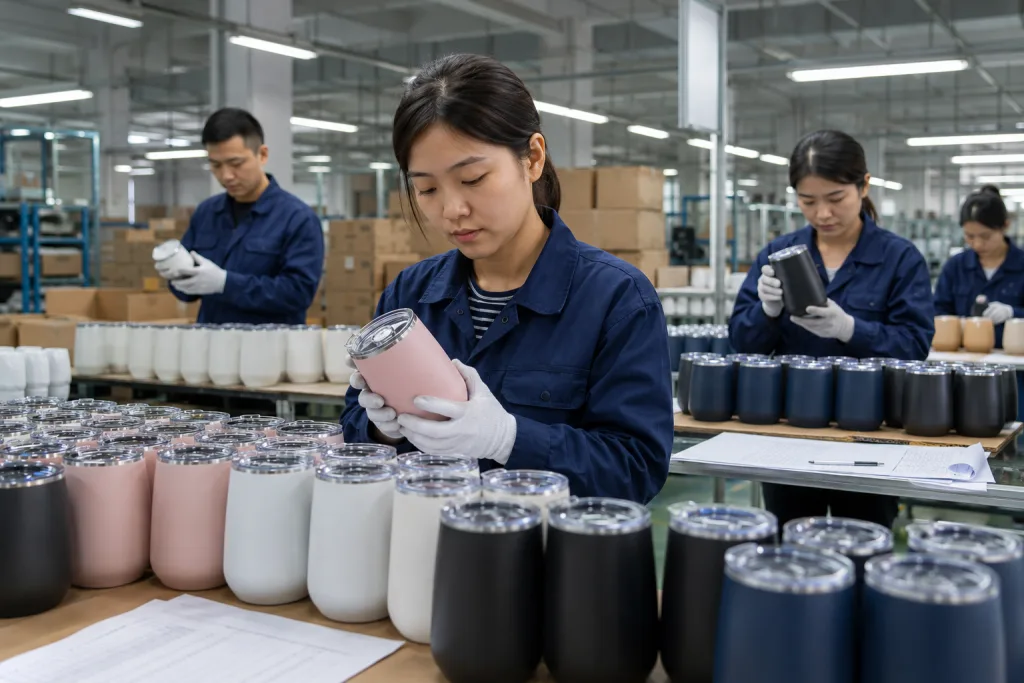
If you are sourcing an oem manufacturer wine tumbler from China, read the quote like a build sheet, not a price list. BottleForge Industrial runs projects from Hangzhou, Zhejiang, where the stainless drinkware chain is close by, but the math still breaks if the buyer leaves capacity tolerance, carton spec, or pre-production sample approval vague; QC pulled one sample last season because the logo sat 7 mm off center, and that is the kind of detail that decides whether mass production moves or stalls.
Start With Capacity And Form
The first spec line is usually capacity: 10 oz, 12 oz, or 14 oz. For a wine tumbler, 12 oz is the export workhorse. It gives enough internal volume for wine, cocktails, iced coffee, and event gifting without making the cup look fat on a retail shelf. We shipped 38,000 pcs last quarter where the buyer file only said “wine cup,” and the buyer flagged the sample because our 12 oz body looked wider than their old 350 ml promo cup.
Capacity should be measured to brim and to practical fill level. A 12 oz tumbler may hold about 355 ml to the brim, but the comfortable fill line is closer to 300-320 ml. That matters for photography, retail claims, and food-contact labeling. On the line, QC uses a 500 ml graduated cylinder, not a guess from the CAD file. For distributor drinkware programs, mismatched volume claims create complaints even when the cup itself passes inspection.
Shape affects more than appearance. A lower, wider body feels stable at outdoor events but uses more carton volume; we usually see 24 pcs take one carton size up when the bottom diameter grows by 8-10 mm. A taller tapered body fits better in some cup holders, although many stemless wine tumblers are not designed for automotive use. If you are also buying custom canteen, custom growler, or sports bottle lines from the same supplier, the lid tolerance question is different. Wine tumblers often use press-fit lids, not threaded caps.
Ask for a dimension drawing showing top diameter, bottom diameter, height, wall thickness, and lid groove position. For a canteen distributor or distributor growler buyer, this is normal practice. The same discipline should apply to customizable drinkware. A 1.5 mm change at the lid seat can make samples feel fine but cause loose lids after coating thickness is added. We have seen this go sideways after powder coating added about 0.08 mm per side and QC pulled 32 loose-lid samples from a 200 pcs pre-shipment check.
Steel Grade Is Not Decoration
For export OEM tumblers, our standard build is 304 stainless steel inside and outside. Some factories quote 201 stainless on the outer wall to cut cost, and the math looks tempting on a spreadsheet, but we have seen it go sideways after humid warehouse storage, dishwasher use, salt-air delivery routes, and 90-day retail return windows. On one Germany order, QC pulled the sample after a 24-hour salt spray check and the rim already showed staining. If you want a dependable oem manufacturer wine tumbler, write 304/304 in the specification unless your buyer has approved another construction in writing.
Wall thickness normally sits around 0.4-0.5 mm per shell before forming. Go thinner and the sample still looks fine on a meeting table, but cartons take hits in a container and dents show up fast. We run a digital micrometer check at incoming material, then spot-check formed shells again before polishing. Thicker steel feels better in hand, but it adds weight and stainless cost. For a 12 oz double-wall vacuum wine tumbler, a finished unit weight around 180-230 g is common depending on shape and lid type. Ask for the gram weight on the pre-production sample. It matters.
Food-contact compliance should be named, not implied. For the EU, ask for LFGB or REACH-related documentation where applicable. For the US, about 7 out of 10 buyers we ship request FDA food-contact statements, and children’s items bring extra CPSIA or ASTM questions. A wine tumbler is usually adult drinkware, but do not mix the paperwork with kids bottle, canteen promotional sets, or customized canteen products. We once saw a PO typo list “kids tumbler” on a wine cup order, and the buyer flagged it before lab booking. Separate the testing scope before the invoice goes out.
Material traceability is where a real canteen factory or canteen manufacturer separates itself from a trading-only canteen vendor. You do not need a full audit for every order, but ask which mill supplied the steel coils, whether incoming sheets are checked with an XRF analyzer, and where rejected sheets are stored. In Zhejiang, China, 20 or 30 factories can make similar-looking samples in the first week. The difference shows up after 20,000 pcs, not after 2 pcs, when the line is moving and the polishing room starts sorting dents, rust spots, and color variation.
Vacuum Performance Needs Test Numbers
“Keeps drinks cold” is not a specification. Put a number on it. For a wine tumbler, buyers often ask for 6-12 hours cold retention, but the result changes with starting liquid temperature, room temperature, lid seal, and how often the cup is opened. We usually run a basic bench test with 4 C water, lid closed, 20-25 C ambient, then log readings at 2, 4, and 6 hours with a probe thermometer. If the buyer opens the slider lid every 30 minutes, the claim will drop.
Hot retention matters less for wine positioning, but about 7 out of 10 retail buyers still want one tumbler to cover coffee, tea, and cocktails on the same shelf. If you sell it as customizable drinkware for coffee or tea as well as wine, specify both hot and cold performance. A reasonable 12 oz vacuum tumbler can often keep hot water above 45-55 C after 6 hours under lab conditions, but do not print that on a color box unless the test report supports it. We have seen this go sideways when marketing wrote 12 hours and QC pulled a 6-hour sample at 48 C.
The process that decides the claim is vacuum integrity. The factory should test vacuum after welding and before final packing. Common checks include temperature decay, hot water screening, or vacuum detection equipment, depending on the line setup and order size. On our Zhejiang drinkware lines, BottleForge can handle roughly 300,000 stainless units per month across tumblers, bottles, and canteen customized programs. Capacity means little if vacuum rejects get mixed back into good stock during tray transfer.
Ask how the supplier marks or removes failed units. This matters when one shipment includes multiple SKUs, such as an oem manufacturer wine tumbler, customized growler, and canteen customizable bottle. Rework bins must be physically separated, with a red tag or locked cage near the inspection table. A 1% vacuum failure rate sounds small until 200 defective units reach a distributor canteen customer and start refund claims. The math does not work.
Coating, Color, And Logo Control
Most OEM wine tumblers run in four common finishes: powder coat, spray paint, electro-polish, and brushed stainless. Powder coat sells well because the hand feel is better and the color holds up on the line, but it adds film build at the lid seat and rim, often around 0.08-0.15 mm. We have seen buyers approve lid fit on bare cups, then QC pulled the coated sample and the lid turned tight or sat high on one side. Check final fit on coated parts, not raw shells. This is the right checkpoint.
For color control, use Pantone as a reference only, then sign off a physical chip or a sprayed steel panel. Same color code, different result. Substrate tone, primer thickness, oven setting at 180-200°C, and gloss target all shift the final look. Matte black from one canteen supplier often misses matte black from another by a visible step, and the buyer flagged it under store lighting more than once. If you are building a family range across custom canteen, custom growler, and wine tumbler SKUs, ask for one master color board for all factories, or keep the line with one canteen manufacturer. Mixing vendors for a "simple black set" is where this goes sideways.
Logo method should match the sell price first. Laser engraving is durable and clean on powder coating, usually adding about USD 0.08-0.25 per unit depending on logo size and quantity. Silk screen is cheaper for a simple one-color mark, but on a curved body with texture we need a proper jig and angle check; on one 20 oz cup, a 2 mm shift already looked off. Heat transfer and full-wrap printing hit harder on shelf, but sample lead time gets longer and defect risk goes up. We run extra first-article checks on those jobs because dust points and image stretch show fast.
For canteen promotional and distributor drinkware orders, lock logo placement with a 1:1 artwork proof. Put the print size in millimeters, the distance from rim or base, and the orientation against the seam or lid opening. PDF mockup alone is not enough. We have received POs that said "center logo" with no datum, and that wording causes arguments later. A mark that looks centered on a flat file can read slightly rotated once it sits on a tapered tumbler body, so we ship approval photos on the actual sample before mass production.
Lids Decide Daily Use Quality
The lid is where cheap tumblers get exposed fast. On the line, we see most wine tumbler lids made in clear AS, PS, or Tritan-type plastic with a silicone gasket, usually with a sliding sip closure or a simple open-mouth press lid. EU and North American buyers should ask for BPA-free declarations and food-contact test reports for the exact resin used in production, not a sample report from a different lid the sales team showed 6 months ago.
Leak-resistant is not leakproof. We tell buyers this early because we've seen this go sideways. A press-fit wine tumbler lid helps control splashing at events, in tasting rooms, or on a patio table, but do not sell it as fully sealed unless it has passed inversion and shake tests. If your catalog already includes canteen customized bottles or customizable canteen products with screw caps, keep the wording separate. A tumbler lid and a canteen cap are different engineering problems, and the buyer flagged this exact mix-up on one PO last season.
Gasket hardness, usually measured by Shore A, changes daily use more than most buyers expect. Too soft, and after 500 wash cycles the lid starts to loosen. Too hard, and customers need two hands to pull it off. For mass production, ask the factory to keep a signed golden sample, then have QC pulled the sample and check lid insertion force during inspection. This is not a lab exercise. It needs a clear pass standard.
Replacement lids are a sales question as much as a quality one. Canteen distributors and distributor drinkware buyers often ask to buy lids separately at 3-5% of the main order quantity, and the math works. If a lid cracks during retail handling, replacing a USD 0.35-0.80 lid is better than losing the whole tumbler sale. We usually ship spare lids in one inner carton by color, 50 pcs per bag, and this is the right line item to add before you compare suppliers.
Packaging Changes The Real Cost
A bare FOB unit price is just the first line on the quote sheet. A 12 oz stainless wine tumbler might quote around USD 2.20-3.80 FOB China depending on steel, coating, lid, logo, and order size. Then the buyer asks for a printed gift box, color sleeve, hang tag, care card, barcode label, or FNSKU, and the math moves. We see it on the packing table fast: a 0.35 mm white box and a 0.48 mm color box do not pack the same, and the carton count changes with them. Packaging changes carton size, pallet count, and damage rate.
For e-commerce, individual white boxes are common, but the board has to survive courier handling. QC pulled one 12 oz tumbler sample last month after the corner crushed during a 1.2 m drop test. For retail, color boxes sell better on shelf, but artwork proofing takes time and the MOQ is often 1,000-3,000 pcs per design. For club stores or distributor canteen programs, the buyer usually cares more about master carton strength and pallet configuration than the single box. That is the right place to push back.
Ask for carton specs: export carton size, gross weight, units per carton, board grade, and whether the carton passes a drop test such as ISTA-style internal testing. A carton holding 50 tumblers may look efficient, but if gross weight climbs above 15-18 kg, warehouse handling damage often increases. We run 5-layer K=K cartons for heavier wine tumbler sets when the route includes mixed warehouse handling. For Amazon-style routing, FNSKU and carton labels must be applied consistently, not handed to the packing line after sealing tape is already on.
Packaging is also where canteen suppliers sometimes bury lead time. A stock tumbler with laser logo may ship in 25-30 days after sample approval, while a custom color box can push production to 35-45 days. We have seen this go sideways over one missing UPC digit on a PO. If the same project includes customizable growler, customized drinkware sets, or canteen promotional bundles, confirm which component has the longest path. One late insert card can hold a whole container.
Inspection Terms Belong On The PO
Put QC terms on the PO before the deposit goes out. For most OEM drinkware orders, AQL 2.5 for major defects and 4.0 for minor defects is a workable baseline; our QC table prints this on the inspection sheet before the line starts packing. Critical defects, such as sharp edges, contamination, severe rust, unsafe plastic odor, or missing food-contact components, should be zero tolerance.
Write major defects the way your warehouse team will call them out: loose lid, visible dent, coating peel, wrong logo color, vacuum failure, unstable base, incorrect capacity, barcode mismatch, or dirty inner wall. Minor defects can be small cosmetic specks inside an approved limit, for example 1 dot under 0.5 mm on the powder-coated body. No defect list, no clean argument. We have seen this go sideways when QC pulled the sample and the buyer flagged a 3 mm logo shift that the PO never mentioned.
Pre-shipment inspection should cover function, appearance, packing, quantity, barcode scanning, and carton markings, with the scanner reading every retail barcode on the pulled cartons. If you are buying from China for the first time, book a third-party inspection at 100% production and at least 80% packed. The USD 250 to 350 inspection fee is usually cheaper than air-freighting 12 replacement cartons after a missed lid-fit issue. A Zhejiang supplier with stable export experience should be ready for inspection, BSCI documentation requests, and basic ISO-style process records.
Payment terms need plain wording too. Common terms are 30% deposit and 70% before shipment, or before release of documents for established buyers. For a new oem manufacturer wine tumbler project, do not pay the balance until sample approval, production photos, and inspection status are clear; a blurry packing photo on WeChat is not enough. Good canteen manufacturers and canteen vendors will not object to precise standards. It protects both sides from expensive arguments, especially when the PO has one typo in the logo color code and 5,000 pcs are already on the line.
Send your wine tumbler spec for factory review
Share capacity, logo, color, packaging, MOQ, and target market. We will check feasibility and return a practical FOB China quote.
Frequently asked questions
What MOQ should I expect for an OEM wine tumbler order?
For a standard 12 oz stainless wine tumbler with an existing mold, expect 1,000-3,000 pcs per color for powder coating. Laser logo orders can sometimes start lower, but color coating, custom boxes, and retail artwork usually push MOQ upward. If you combine the tumbler with custom canteen or customized growler products, the MOQ is normally calculated by SKU, color, and decoration method, not by total order value. A practical first order for a distributor drinkware program is often 3,000-5,000 pcs across 2 colors, which gives better FOB pricing without overloading inventory.
How long does production take after sample approval?
For an existing mold, normal production is about 30-45 days after sample approval and deposit. A simple laser logo on stock color can be faster, sometimes 20-25 days if capacity is open. Custom powder color, new lid tooling, printed gift boxes, or FNSKU labeling can add 7-15 days. China public holidays, especially Chinese New Year, can stretch schedules by several weeks. For a launch date in Europe or North America, build in inspection time, vessel booking, and customs clearance. Do not plan around the factory production date alone.
Is 304 stainless steel necessary for wine tumblers?
For serious export programs, yes. 304 stainless steel is the normal baseline for food-contact stainless drinkware because it resists corrosion better than cheaper grades in regular use. Some suppliers may offer 201 outside and 304 inside to reduce cost by a few cents, but that can be a poor trade for humid warehouses, salt exposure, and customer returns. If you are building a premium customized drinkware range or selling through canteen distributors, specify 304 inner and 304 outer walls, 0.4-0.5 mm shell thickness, and request food-contact documentation for the actual production batch.
Which logo method is best for a wine tumbler?
Laser engraving is the safest choice for many B2B wine tumbler projects because it is durable, clean, and works well on powder-coated stainless steel. It often adds around USD 0.08-0.25 per unit depending on logo size and quantity. Silk screen is useful for simple one-color logos, while heat transfer or full-wrap printing gives stronger retail graphics but increases setup time and defect risk. For canteen promotional orders, approve a physical decorated sample before mass production. Artwork should specify size in millimeters, exact placement, color code, and orientation on the cup body.
Can one supplier handle tumblers, canteens, and growlers together?
Yes, but confirm the supplier is more than a catalog broker. A real canteen factory or stainless drinkware manufacturer should be able to explain tooling, vacuum testing, coating, lid materials, and inspection standards across wine tumblers, customizable canteen bottles, and custom growler products. The advantage is color consistency, shared packaging control, and simpler freight planning. The risk is assuming every product uses the same process. Ask for separate spec sheets, separate samples, and separate AQL defect lists for each SKU. A tumbler press lid and a growler screw cap need different tests.