Key Takeaways
- Common MOQ for a sport bottle in Zhejiang is 3,000-5,000 pcs, with 30-45 day lead time after sample approval
- 304 stainless steel, Tritan, and LDPE each fit different use cases; choose by temperature, weight, and price, not trend
- For export buyers, ask for REACH, LFGB, FDA, and drop-test data before you confirm PO
- A good canteen manufacturer should quote FOB, carton qty, and print method in one sheet, not in separate emails
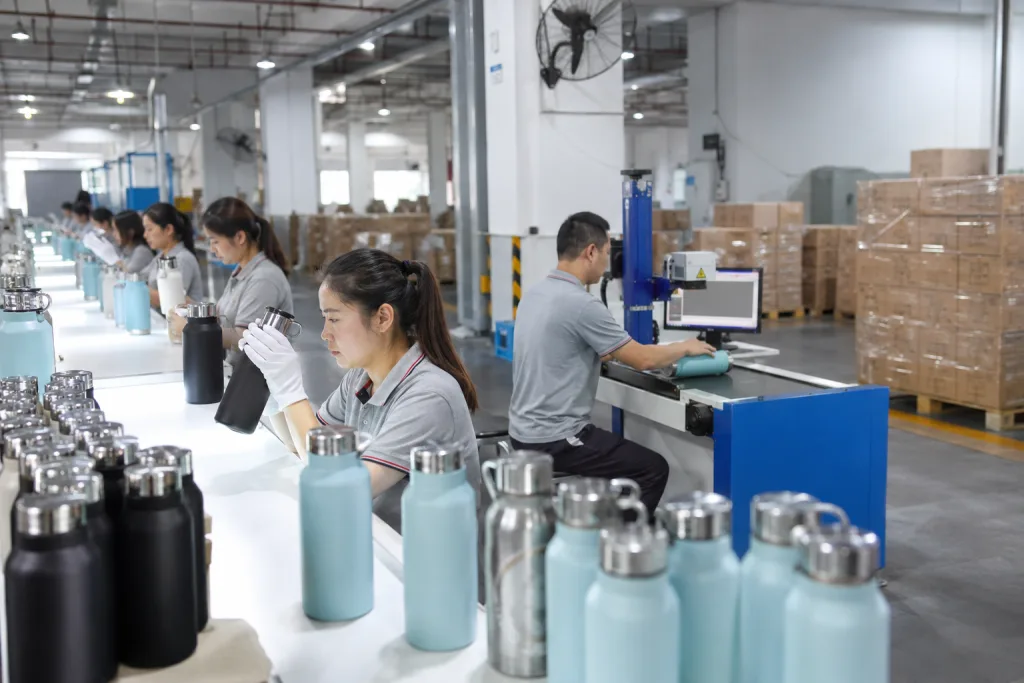
You are not buying a bottle. You are buying a production decision that has to survive freight, retail margins, leak tests, and customer complaints. That is why the search for manufacturers sport bottle usually turns into a spec argument fast: Tritan or 304 stainless, 500 ml or 750 ml, screw cap or flip-top, FOB Ningbo or FOB Shanghai, and whether your art file will still look clean after 20,000 cycles. On one Zhejiang line we rejected a cap because the torque drift hit 1.8 N·m on the third batch. That is the real split. In China, especially Zhejiang, the difference is not marketing copy. It is whether the factory can hold tolerances, repeat colors, and ship on time.
If you are sourcing custom drinkware for retail, corporate programs, or channel distribution, treat the bottle like a SKU family, not a single sample. The wrong wall thickness, cap thread, or carton count can wipe out margin, and the math does not work if a 24-pack carton comes in 1.6 kg over spec. QC pulled the sample and found a 0.4 mm neck deviation, which is enough to make the buyer flag it before PO release. A strong canteen factory will tell you the MOQ, lead time, and test standards up front. A weak one will just send photos. You need the first kind.
Specs decide the margin
When you compare manufacturers sport bottle options, start with the spec table, not the photo. The bottle that wins on a sales page can turn into a bad SKU in your warehouse if it stacks poorly, leaks after two wash cycles, or needs costly inserts. We run this check on the line before quoting. A real buyer comparison needs capacity, material, mouth diameter, cap type, weight, wall thickness, decoration method, and carton count. That is the minimum data set for custom drinkware.
Here is the practical split I use with buyers:
- 500-600 ml Tritan sport bottle: light, clear, good for gym and school, usually 3,000 pcs MOQ.
- 750 ml stainless steel sport bottle: better for premium retail, heavier freight, stronger margin if the decoration is clean.
- 1,000 ml canteen custom format: useful for outdoor, cycling, and distributor drinkware programs.
A Zhejiang canteen supplier should state wall thickness clearly. For Tritan, 1.2-1.5 mm is common on stable molds. For stainless steel, 0.4-0.5 mm 304 is standard on mid-market bottles, while 0.6 mm improves dent resistance but adds cost. QC pulled the sample and checked the caliper at 0.48 mm; that is the kind of number that matters. If you are comparing canteen vendors, ask for unit weight in grams. Weight tells you more than sales talk. A 520 ml bottle at 92 g and another at 118 g are not the same product, even if the pictures match.
Price only makes sense beside the spec. A plain 500 ml custom drinkware bottle can land around USD 1.10-1.80 FOB at scale in China. Add a one-color logo, and you may move to USD 1.30-2.20. Add a custom lid, silicone grip, or powder coating, and the number shifts again. That is normal. What is not normal is getting a quote without mold, print, or packaging separated on the PO. A buyer flagged that typo once, and the math did not work. A disciplined canteen factory quotes those lines separately because that is how you protect margin later.
Buyer rule: if the supplier cannot explain why one sample weighs 18 g more than another, do not assume the lower price is real.
Material choices by use case
If you are buying for a distributor canteen program, pick the material from the use case, not from habit. We run this choice against the end buyer first. Tritan fits when you need clear walls, low odor retention, and impact resistance. 304 stainless steel fits when insulation, durability, or a premium shelf price is part of the brief. LDPE or PP works for entry-level canteen promotions where the target is volume and the PO says MOQ 5,000 with tight cost control.
For B2B buyers, the comparison is practical:
- Tritan: best for custom canteen programs in fitness, campus, and family channels, especially when the buyer wants clear bottles and fast decoration.
- 304 stainless steel: best for customized growler style bottles, insulated sport bottles, and retail-ready premium SKUs that need better perceived value.
- Aluminum: light and familiar, but the lining and coating need tight control on the line.
- PP/PE: low cost, fast to ship, and suitable for distributor drinkware promotions when margin pressure is the main issue.
Factories in Zhejiang are usually strongest on stainless and Tritan lines because the mold shop, coating shop, and assembly team sit close together. That matters on repeat orders. A factory with its own tooling and in-house assembly can hold a 0.3 mm tolerance better than a trader splitting work across three workshops. We have seen buyers blame the cap when the real issue was a loose gate mark on the body. For custom canteen work, ask whether the seal is silicone, TPE, or rubber, and whether cap torque is tested. Leak claims without torque and cycle data are just talk.
Do not skip compliance. For Europe, ask for REACH and LFGB where relevant. For North America, ask for FDA material declarations and, if the channel calls for it, ASTM or drop-test references. QC pulled the sample on one order because the declaration sheet listed 304 on the body and 201 on the lid insert. Good canteen manufacturers do not get defensive about testing. They already have it. If they stall, the buyer flagged it for a reason.
The clean rule is simple: if your order goes to a canteen distributor or canteen supplier network, put durability and packing efficiency first. If it is a branded launch, put surface finish and decoration consistency first. Same factory, different spec. The math does not work any other way.
Decoration is a functional choice
Decoration is not a last-minute marketing detail. It changes scrap rate, lead time, and the value buyers read into the bottle. A one-color silkscreen on a straight body is cheap and steady. Laser engraving on 304 stainless gives a cleaner premium look, but only on the right substrate. Full-wrap UV print or heat transfer can work for canteen customized retail packs, but it adds process risk and extra QC checkpoints.
Use the decoration method to match the channel:
- Silkscreen: best for distributor canteen and canteen promotional orders with simple logos.
- Laser engraving: best for metal custom growler and premium sports bottle lines.
- Pad print: works on curved surfaces and smaller logos.
- Water transfer / UV print: better for visual impact, but more sensitive to handling and abrasion.
For custom drinkware buyers, this is where the first PO often goes sideways. The buyer approved the logo on a flat proof, then the bottle curve pulled the mark out of shape. We run into this on the line all the time. A production-minded canteen vendor will ask for your vector file, Pantone reference, and logo placement before quoting, then give you the max print area in millimeters. If they cannot, they are guessing.
Ask about wash durability before you sign off. A low-cost canteen customized order may look clean on day one and start failing after 50 dishwasher cycles. We have seen that one go bad fast. If your channel includes daily-wash users, you need the actual data on coating hardness, ink adhesion, and topcoat compatibility. A good canteen supplier will tell you where the print rubs first, usually near the cap ring or the base curve. QC pulled the sample once and found edge lift after 18 cycles, not 50.
There is also the sourcing side. If you plan to resell under multiple brands, keep one core body and change only the decoration and lid color. The math works better. That cuts inventory risk and lets a distributor drinkware program move faster because the factory only needs one approved mold set. In Zhejiang, this is standard practice, and it is why many importers stay with Chinese production instead of spreading orders across too many vendors. We ship these mixed-color programs every week, and the PO typo is usually on lid color, not the bottle itself.
Compare fit, not just features
Here is the comparison that helps you buy, not just browse. Different buyers need different bottle behavior, and the spec table should show that. Fit matters: who uses it, how often, where it sells, and what return rate you can live with. A canteen custom project for corporate gifting is not the same job as a sport bottle for a gym chain or a custom canteen for outdoor retail.
| Use case | Best material | Typical MOQ | Lead time | Why it wins |
|---|---|---|---|---|
| Fitness retail | Tritan / PP | 3,000-5,000 pcs | 30-40 days | Lightweight, clear, fast-turn custom drinkware; QC pulled the sample at 18.6 oz and the shelf test passed |
| Premium outdoor | 304 stainless steel | 2,000-3,000 pcs | 35-45 days | Higher perceived value, better margin; the buyer flagged the powder-coat scuff, so we switched the line to a tougher finish |
| Promotional program | PP / PE | 5,000-10,000 pcs | 20-30 days | Lowest landed cost, easy canteen promotional use; the math works only when the box size stays tight |
| Channel distributor | Stainless / Tritan | 3,000 pcs | 30-45 days | Balanced repeatability for canteen distributors; one PO typo on the lid code can waste a full pilot run |
If you are a canteen distributor, push the factory on packaging efficiency. Ask whether each unit ships in a polybag, white box, or color box, and how many cartons fit a 40HQ container. We run that calculation on the packing table with a tape measure, not a guess. A 3 mm carton change can move landed cost by cents per unit, and at 20,000 pieces that gap is not small. This is why experienced buyers treat canteen vendors like production partners, not catalog browsers.
For retailers, the resale story carries the order. A customizable growler or customized growler line can support a higher ticket if the cap, finish, and grip feel premium. For schools, camps, and mass corporate gifting, you want a cheaper bottle that survives rough handling and repeated drops on concrete. A canteen manufacturer in China should be able to quote both paths from the same base mold, with different lids or coatings. We see that on the line all the time in Zhejiang, and the question is not whether it can be done.
Do not over-customize on the first order. If you change the lid, body shape, and packaging all at once, you lose the trail when something goes sideways. Start with one custom canteen body, one logo method, and one carton spec. Then expand after the first QC report comes back clean.
What a real factory quote includes
A serious canteen factory quote should read like a procurement sheet, not a sales flyer. At minimum, it should list material grade, product weight, MOQ, unit price by quantity tier, sample fee, lead time, packing spec, carton size, gross weight, export port, and testing documents. On a sport bottle order, we also check whether the cap drawing is controlled, because a 28 mm neck and a 30 mm neck are not the same job. If the quote leaves that out, the buyer ends up cleaning up the mess later.
Use this checklist when comparing canteen manufacturers:
- Material declaration: Tritan, 304 stainless steel, PP, or aluminum with lining details.
- Compliance: REACH, LFGB, FDA, or customer-specific test reports.
- Incoterms: FOB, CIF, or DDP stated clearly.
- Sampling: 7-10 days for a standard shape, longer if a new cap mold is needed.
- Production: 30-45 days is normal for bulk orders out of Zhejiang.
Too many first-time buyers fixate on FOB and miss sampling cost, mold cost, and packaging. The math does not work that way. A new cap mold might land at USD 1,500-4,000 depending on complexity, while a simple logo plate or laser setup can be far less. We have seen this go sideways on a 3,000-piece trial because the PO typo changed the cap color code and the buyer flagged it after approval. If you are building a canteen customized line for a distributor network, those one-time costs only make sense when reorder volume is stable.
A well-run export factory in Zhejiang should also tell you monthly output. A practical benchmark is 150,000-300,000 units per month for a mature drinkware line, though product mix and automation decide the real number. One line we run can push volume, but if the filler head is constantly adjusted by hand, the claim is meaningless. If a factory talks big and cannot explain line balance, skip it. Capacity without consistent QC is just noise.
Ask for AQL details too. For many buyers, AQL 2.5 for major defects and 4.0 for minor defects is a workable starting point, though your final standard depends on channel risk. QC pulled the sample on one batch and found a 0.3 mm dent at the base, which is exactly the kind of miss that turns into a claim later. The point is not the exact number. The point is that a professional canteen manufacturer uses a real inspection framework, not a visual guess.
How to source from China without noise
Buying from China stays manageable when the process is tight. We usually start with a short list of factories in Zhejiang and the nearby clusters, because tooling, coating, and packaging are close enough for fast back-and-forth. That is the real edge here: broader material choices, lower unit cost, and more decoration routes, but only if you run it like an export job, not a sample hunt.
Start with three suppliers, not ten. Same spec sheet for all three. Keep the bottle body, lid, decoration, and packaging identical across every quotation, or the numbers mean nothing. Then judge on three points: consistency, response speed, and proof. Consistency means repeatable measurements. Response speed means they answer a cap torque or wall-thickness question the same day. Proof means test reports, not polished photos. QC pulled the sample at 78 mm mouth diameter once, and the buyer flagged it because the document set was missing. That is not a small miss.
If you are building a custom growler program or a custom canteen line for distribution, order pre-production samples before mass production. Confirm logo position, cap sealing, and carton drop resistance. For North American shipping, check whether your cartons and labels can take FNSKU or distributor stickers when the goods move into marketplace channels. For Europe, make sure the packaging language and any warnings match the destination market. One PO typo on the carton mark can turn into a 12-day delay at the warehouse. We have seen that go sideways.
The honest takeaway is simple: a good canteen manufacturer cuts variants, locks the spec, and ships a stable product. A weak one keeps sending nicer photos. That is the wrong question to ask. Ask who can hold a 2.5 mm print position, keep reorders within tolerance, and keep the line moving across repeat orders. That is how a distributor canteen program stays profitable.
Send your spec sheet for a factory quote
We can review MOQ, material, decoration, and packaging in one pass, then give you a usable China sourcing comparison.
Frequently asked questions
What MOQ should I expect for manufacturers sport bottle orders?
For standard models out of China, expect 3,000-5,000 pcs for Tritan or PP sport bottles and 2,000-3,000 pcs for stainless steel. If you need a new mold, the MOQ can rise or the factory may charge a tooling fee first. In Zhejiang, some canteen manufacturers will accept 1,000 pcs for a stock shape with custom logo, but pricing is usually weaker. The practical answer is to align MOQ with your forecast, because small orders rarely get the best unit cost.
Which material is best for custom drinkware resale?
If you sell through retail or premium channels, 304 stainless steel usually gives the best margin-to-perception ratio. For lightweight everyday use, Tritan is easier to position and easier to ship. For canteen promotional campaigns, PP or PE keeps cost low. A canteen distributor should choose based on channel, not habit. If the target price is under USD 2.00 FOB, stainless may be too heavy on cost unless the design is very simple.
How long does a Chinese factory need for production?
For a standard custom canteen or sport bottle, 30-45 days after sample approval is normal in China. Simple promotional orders can be faster, around 20-30 days, while new molds or special finishes can add 10-15 days. In Zhejiang, an established canteen factory will usually quote sampling separately, often 7-10 days for a stock mold. You should also budget sea freight time, which can add 20-35 days depending on destination.
What documents should I ask a canteen supplier for?
Ask for material declarations, REACH or LFGB if you sell into Europe, FDA-related statements for North America, and test reports for leakage or drop performance if relevant. For export orders, you also want carton size, gross weight, HS code guidance, and an AQL inspection plan. A serious canteen vendor will have these ready. If they only send product pictures, the compliance side is probably weak.
Can one factory handle canteen customized and custom growler programs?
Yes, if the factory has both stainless and plastic lines or has strong tooling partners nearby. Many Zhejiang plants can handle both canteen customized projects and custom growler orders, but the same line may not be optimal for both. Growlers often need heavier-wall stainless, better welding control, and a different sealing spec. Before you place an order, ask whether the factory has done similar volumes, what the monthly output is, and whether they can support repeat color control for reorders.