Key Takeaways
- A useful RFQ for manufacturers reusable water bottle should include 8 core fields and a target MOQ of 3,000-5,000 units.
- Most sample approvals fail on 3 points: lid sealing, print placement, and carton count, not on the bottle shape.
- A normal Zhejiang export lead time is 20-35 days after sample approval, depending on decoration and packing.
- Your PO should name material grade, wall thickness, AQL level, carton spec, and compliance docs such as REACH or FDA where relevant.
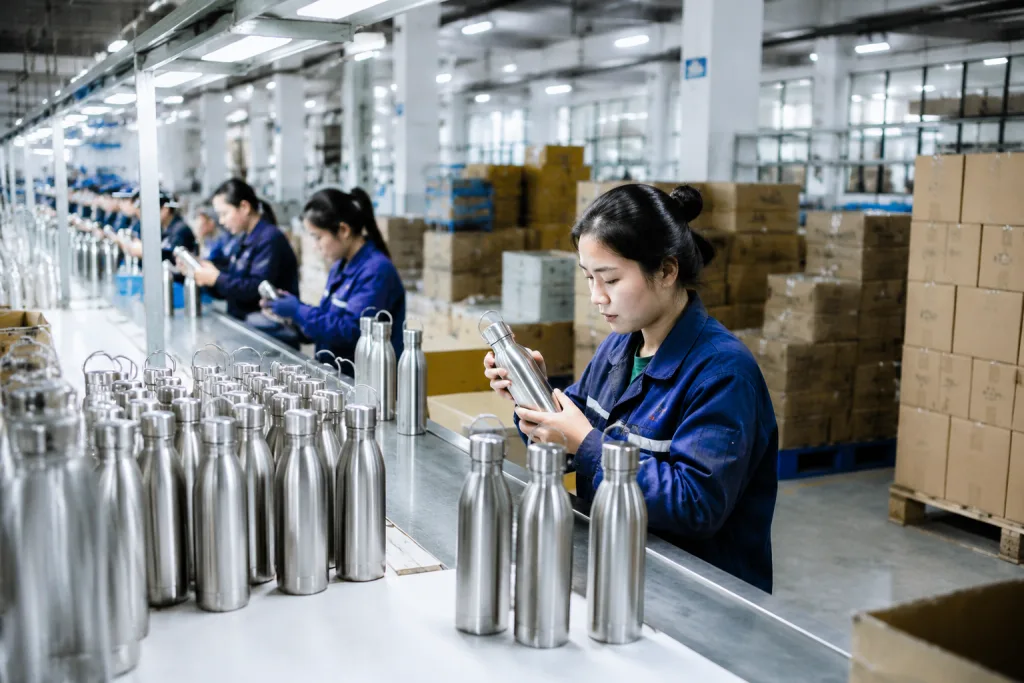
If you are buying from manufacturers reusable water bottle suppliers, the real work starts before you ask for a price. A clean RFQ keeps you out of vague quotes, wrong materials, and sample rounds that drag on for 21 days instead of 7. We see this on the line in Zhejiang all the time: the buyer sends a loose brief, QC pulls the sample, and the first reply is already off target. The math does not work if the brief is soft.
For B2B buyers, reusable bottles are not a design exercise. They are a sourcing job. You need a target capacity, material, lid style, decoration method, carton spec, compliance documents, and a sample-to-bulk path with no guessing. A PO typo on the lid code can hold up a 5,000-piece run, so we check the drawing, the carton mark, and the approval sample before production starts. Whether you are buying from a canteen factory, a canteen manufacturer, or a canteen supplier, the process is the same: define the job, get a sample that matches the PO, then lock the production terms before the mold, print, or packing starts.
Start With the Buying Brief
Do not ask for a price until you know what you are buying. A photo and a capacity request are how you get garbage quotes. For manufacturers reusable water bottle supply, the buying brief should start with the use case: gym retail, employee gift, promotional campaign, travel retail, or distributor catalog. A municipality canteen custom order is not the same job as a customized drinkware program for a sports brand, even if the bottles look similar on the table.
At minimum, the brief needs capacity, material, lid style, logo method, packaging, destination market, and annual volume. If you want a canteen customizable by color or print, state whether the body color is Pantone-matched or factory stock. If you need a custom growler or customized growler for beer or cold brew, the closure, lining, and pressure spec change. We have seen this add 7-14 days in Zhejiang because the tooling and leak test are different, and the math does not work if the buyer assumes one bottle fits all. A good canteen manufacturer will ask these questions on the first call. If they do not, be careful.
- Capacity: 350 ml, 500 ml, 750 ml, or 1,000 ml
- Material: 304 stainless steel, 18/8 stainless, Tritan, or aluminum
- Finish: powder coat, spray paint, brushed steel, or clear
- Decoration: silkscreen, laser engraving, heat transfer, or UV print
- Packing: bulk pack, color box, gift box, or set pack
For distributors, the best canteen distributor programs are built around shelf reality from day one. Distributor drinkware buyers need consistent SKUs, not just pretty samples, and QC pulled the sample twice before we ship a repeat order. That is the question to ask.
RFQ Details That Change Price
Factories price risk as much as material. Send a vague RFQ, and the canteen suppliers in China will pad the number to cover unknowns. Send a tight RFQ, and you get a cleaner quote and a sample that matches it. We see the biggest price swings in wall structure, lid complexity, finish type, decoration area, and packing method. A plain custom drinkware bottle with a single-color print is one job; a customized canteen with a leakproof flip lid, matte powder coat, and individually boxed packing is another. QC pulled the sample on the line more than once because the lid spec was written in one line and the buyer later wanted a different seal ring.
Ask for the quote in line-item form. That makes the canteen vendors show where the money goes. You want unit price, tooling if any, print setup, sample fee, carton fee, and freight terms. FOB Ningbo or FOB Shanghai is normal for Zhejiang exporters; if the supplier only gives vague ex-works pricing, your landed cost gets muddy fast. We had a PO last month with a typo on the carton count, and the math did not work once the packing split changed from 24 pcs to 20 pcs. A 5% carton crush rate on a 10,000-unit order is not a small issue.
Quote items to request
- Unit price at 3,000 / 5,000 / 10,000 pcs
- Sample charge and sample lead time
- Tooling or mold cost, if applicable
- Print setup cost per color
- Outer carton spec and carton quantity
- FOB port and payment terms
For a canteen vendor in China, the gap between a clear RFQ and a loose one can still run 8-15% on the first quote. That is normal. The wrong question is, “What is your best price?” The better question is, “What is included, and what changes the number?” On a 5,000-piece order, one extra color or a thicker box can move the quote enough to wipe out the margin you thought you had.
Check Samples Like a Buyer
Once the sample lands, do not sign off on looks alone. A custom bottle can pass the shelf test and still fail on the line. Run a real check: fill it, flip it, shake it hard, leave it overnight, then check the lid again after a hot-cold cycle if the bottle is insulated. For a distributor order, pull at least 5 samples from the same batch. One clean hero piece proves nothing.
Check the details that turn into buyer complaints later. Is the laser engraving centered within 2 mm? Does the silkscreen stay opaque on a dark body? Is the powder coat even at the weld line? For a custom growler, we test the cap under pressure and inspect the neck finish for burrs. For a campaign bottle, we rub the print with a dry cloth for 50 strokes. That tells you more than staring at the color under the factory lights.
Approve the sample only when the bottle, decoration, packaging, and documents all match the order you plan to place.
Factories in Zhejiang usually quote 5-10 days for stock shapes and 12-20 days for new decoration. If a supplier says they can deliver a full custom mold sample overnight, the math does not work. We’ve seen that go sideways. Most of the time, they are sending a rough prototype, not a production sample.
Put the PO on a Tight Spec
Your purchase order is where the deal turns binding. If the PO is loose, the factory fills the gaps. For manufacturers reusable water bottle programs, the PO needs the exact bottle model, material grade, surface finish, lid color, logo method, packaging detail, inspection standard, and shipping term. We have seen buyers send a sample, then issue a PO that says something else. The PO wins, and the line will run to the PO, not the memory of the sample.
Use measurable language. 500 ml, 304 stainless steel inner wall, 0.5 mm outer wall, powder coat matte black, laser logo 40 x 20 mm, individual white box, 24 pcs per master carton, carton test to 5 layers B-flute, AQL 2.5 major and 4.0 minor. That is the clean way to write it. For customizable drinkware going to retail, promo, and distributor channels, split the SKUs. A canteen manufacturer can run a clean line, but only if one PO does not mix three spec sets. The math does not work.
- Product code and approved sample reference
- Material and wall thickness
- Logo position, size, and decoration tolerance
- Packing method and carton count
- Inspection standard and defect limits
- Shipment term, port, and payment schedule
For a canteen distributor order, the PO should also say whether the master carton is retail-ready or club-store bulk. QC pulled the sample on a 12-case check last month and found the carton count was right but the pack-out was wrong. That one line can move carton cost, pallet pattern, and freight efficiency by 10-20%.
Understand MOQ and Lead Time
MOQ is a production number, not a guess. It comes from material buy-in, screen setup, packing labor, and the slot we reserve on the line. In Zhejiang, a plain custom drinkware bottle usually starts at 3,000 pieces per color or per logo setup. If the buyer wants a canteen with multiple prints or a special lid, the floor moves to 5,000 or 10,000 pieces. We have seen buyers push for 500 pieces on a full custom build; the math does not work, and the carton cost alone can bite them.
Lead time has the same hard edges. A stock body with a custom logo usually ships in 20-25 days after sample approval. Full customization with a special finish or a new lid usually takes 30-45 days. Add export cartons, barcode labels, or FNSKU for Amazon-style channels, and plan on another 3-5 days for packing and check-off. QC pulled the sample on one run and found a 2 mm print shift; that sort of miss is why a distributor buyer should not plan on the fastest date in the sales sheet. Miss a seasonal window, and the order sits.
Ask for monthly output, then ask how the factory reaches it. A serious canteen factory should give a real capacity number, not a brochure line. For example, 300,000 units per month for standard stainless steel bottles only makes sense if the line is on multiple shifts and decoration can keep up. We run into this all the time: forming is not the choke point, printing is. One PO typo on a carton spec can hold the shipment for a day, and that tells you more than a polished sales pitch.
Move Into Production Control
After the PO lands, control variation or pay for it later. We ask for a pre-production sample, then a golden sample signed by both sides. The line runs better when everybody has the same reference on the bench. On one 12,000-unit canteen order, QC pulled the sample at 10:30 a.m. and caught a 15% color shift before bulk print started, because the ink batch and cure time had already drifted.
Use QC language that a factory can check without guessing. AQL 2.5 for major defects and 4.0 for minor defects is standard for consumer drinkware, but only if the defect list is written down. Leak test, coating adhesion, screw fit, print registration, and carton compression need to be named one by one. A buyer once sent us a PO with “good quality” in the remarks field; that is the wrong question to ask. If you are buying from canteen manufacturers in China, ask for photo or video updates at the first 500 units and the first packed carton. Cheap insurance.
For distributor canteen programs, reserve replacement stock before the order ships. We usually see a 2% overrun or a spare stock lot cover transit damage and small print issues without dragging the whole job back through production. A typo on a carton mark or one rubbed logo does not need a full rerun. In export work, that buffer saves days.
Close the Bulk Order Cleanly
Bulk completion should be boring. If the sample is approved and the PO is tight, the last step is document matching, not guesswork. Check the commercial invoice, packing list, carton marks, HS code, and every compliance file the destination market asks for. For Europe, REACH paperwork matters for coatings and accessories. For North America, buyers usually ask for FDA material declarations, BPA-free statements, or LFGB where the channel requires it. We had one buyer flag a PO typo on the carton mark, and that extra hour saved a customs headache. If your canteen vendor cannot produce the basic set, the low price does not mean much.
Before release, compare the pre-shipment sample against the golden sample and open at least one carton from each production lot. Check quantity, color, print, lid function, and accessories. QC pulled the sample once and found a 2 mm print shift that was invisible on photos but obvious on the line. If the order is a custom growler or customized growler, confirm the closure type and any gasket parts are packed right; missing seals are a common avoidable miss. For a canteen custom program, the final invoice should match the shipped count, not the ordered count, especially if you allowed a 3% overrun.
The last item is after-sales responsibility. Lock the claim window, spare part policy, and replacement method before the containers leave Zhejiang or another China export port. Put the number in writing: 30 days, 90 days, or whatever the deal says. We have seen this go sideways when the buyer assumed email was enough and the factory assumed the opposite. Good canteen suppliers write it down. Weak ones leave it in inboxes.
Send the RFQ, not a guess
Get a quoted, sample-driven path from Zhejiang manufacturers with the exact specs, MOQ, and PO lines your drinkware program needs.
Frequently asked questions
What information should I send to manufacturers reusable water bottle suppliers for an accurate quote?
Send capacity, material, lid type, decoration method, color, packing, destination country, and target quantity. A workable RFQ usually includes 8 items: product style, 500 ml or 750 ml size, 304 stainless steel or Tritan, logo area, carton spec, compliance needs, Incoterm, and annual forecast. If you leave out packing or logo method, the quote can shift by 8-15%. For Zhejiang factories, a clean RFQ often gets a quote back in 24-48 hours.
What is a normal MOQ for a canteen custom order?
For a standard canteen custom program, 3,000-5,000 pieces is common in China. If you want multiple logo colors, special packaging, or a new lid, MOQ can rise to 10,000 pieces. A canteen factory may accept smaller trial runs, but unit price usually increases 12-25%. If you are testing a new distributor drinkware line, ask for tiered pricing at 3,000, 5,000, and 10,000 units before you commit.
How long does sample approval usually take?
For stock shapes with logo only, sample lead time is often 5-10 days. For a customized canteen with special finish or new decoration, expect 12-20 days. If a mold change is involved, allow 20-30 days. The real delay often comes from corrections after the first sample. If the cap leaks, the logo is off-center, or the packaging is wrong, add another 5-7 days for a revised sample.
What should go into the PO for customized drinkware?
Name the exact approved sample, material grade, wall thickness, decoration method, logo size, packaging spec, carton count, AQL level, shipment term, and payment terms. For example: 500 ml, 304 stainless steel, 0.5 mm wall, matte powder coat, laser logo 40 x 20 mm, 24 pcs/carton, AQL 2.5 major, FOB Ningbo. That level of detail keeps the canteen supplier from making assumptions that cost you money.
What documents should I ask from a canteen manufacturer before shipment?
Ask for commercial invoice, packing list, carton marks, photos of packed goods, and any material or compliance declarations needed for your market. For Europe, REACH-related paperwork and coating declarations are often requested. For North America, buyers commonly ask for FDA-related material statements and BPA-free confirmation where relevant. If you use Amazon or retail channels, barcode labels and FNSKU labeling should be confirmed before dispatch. A good canteen vendor in Zhejiang will provide these without delay.