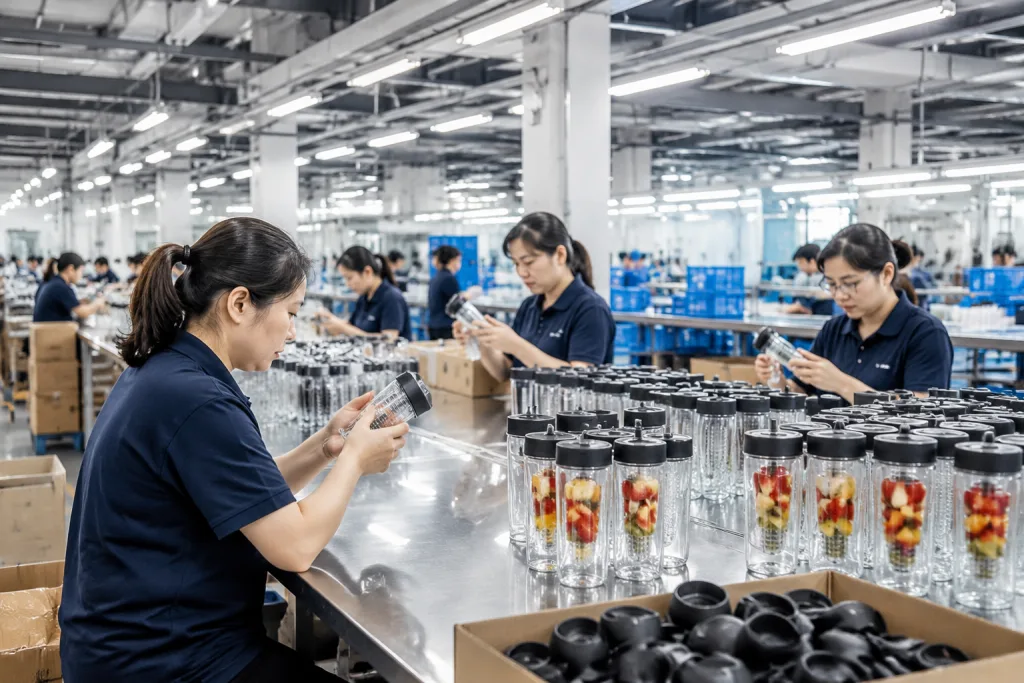
Key Takeaways
- Most factory fruit infuser bottle quotes land around USD 1.10-3.20 per unit at 3,000-10,000 pieces, depending on material, lid, and print.
- Typical MOQ is 3,000-5,000 units for a custom infuser bottle, but 1,000 units is sometimes possible on stock molds with simple logo work.
- Lead time is usually 20-35 days after sample approval and deposit, with another 5-10 days for ocean freight from China.
- REACH, LFGB, FDA, and AQL 2.5 inspection are the usual checkpoints you should ask for before you place a bulk infuser bottle order.
If you are sourcing from manufacturers fruit infuser bottle for a wellness brand or hydration startup, the real question is not whether the bottle looks good in a sample. It is whether the quote still works once you add tooling, packaging, carton loading, and a 30-day production slot in Zhejiang or elsewhere in China. We ran a 1.20 sample on the bench, then the landed number moved fast to 2.40 once custom color, logo print, and a proper leak test went on the PO. The math does not bend.
The buyers who do well treat this as a cost-and-time exercise, not a lifestyle product purchase. In China, especially Zhejiang, the useful numbers are usually the ones the factory can actually hold: 3,000 to 5,000 units MOQ, 20 to 35 days lead time, and monthly output around 200,000 units when the mold and decoration line are already in place. QC pulled the sample at the 2.5 mm cap seam once, and that is the sort of detail that saves a late shipment. This is the right question to ask when bulk fruit infuser bottle sourcing starts to make commercial sense.
What drives the unit price
When manufacturers fruit infuser bottle quote you, they are pricing four things: resin or stainless cost, bottle structure, decoration, and packing. The bottle body is only part of it. A clear Tritan or PETG bottle with a removable infuser chamber usually costs more than a simple PP body because the material is cleaner, tougher, and the mold needs a smoother finish. On one line last month, QC pulled a sample for 0.3 mm gate marks on the infuser cage, and that kind of blemish adds rework time fast. Stainless-steel base bottles with a fruit chamber cost more still because you are paying for double-wall forming, a different cap system, and tighter leak control.
For a typical custom fruit infuser bottle in the 650-750 ml range, factory price at 3,000 pieces often sits around USD 1.35-2.20 for basic plastic builds, USD 1.90-3.20 for premium Tritan builds, and higher if you want silicone details or a custom lid shape. A custom logo infuser bottle is usually cheap if the print area is small. Pad print or one-color silk screen may add only USD 0.05-0.15. Laser engraving on stainless can add more in setup, but it is durable and cleaner for a distributor infuser bottle program. One buyer once sent a PO with the logo size in mm, then changed it after we ran the first 500 pcs; that sort of typo eats margin. We ship these jobs every week, and the math only works when the artwork file is locked.
Cost drivers you should ask about:
- Material grade: Tritan, PETG, PP, AS, or 18/8 stainless
- Infuser tube size and perforation pattern
- Cap type: flip top, screw cap, or carry loop
- Decoration: silk screen, UV print, heat transfer, laser
- Packaging: polybag only, kraft box, gift box, or mailer
In practice, a factory infuser bottle quote that looks 12% cheaper can become more expensive once you add packaging and carton optimization. Ask for a full ex-works sheet, not a headline number. We saw this go sideways on a 10,000-piece order where the carton size looked fine on paper, then the outer case failed the drop test at 1.2 m because the inner dividers were too loose.
MOQ tiers that make sense
MOQ is where a lot of buyers burn days. A custom made infuser bottle with a new color, a new mold insert, or a special lid is not a casual 500-piece run. We run the line in batches, not around one brand’s mood board. If you want a custom tea infuser bottle or customizable fruit infuser bottle with steady color, a Zhejiang factory will usually push for 3,000 to 5,000 units before the quote gets sharp.
The tiers are clear. At 500 to 1,000 units, you are usually stuck with stock tooling, stock colors, and one logo position. At 3,000 units, most custom infuser bottle jobs open up: Pantone body color, two-color print, custom carton, and sometimes a different strainer insert. At 10,000 units, the factory can buy raw material in a cleaner lot and slot the line faster, which is why fruit infuser bottle bulk buyers often see a 10% to 18% unit price drop from the first tier to the second. QC pulled one sample last month because the lid print drifted 1.2 mm; that is the kind of thing that decides whether a “cheap” order stays cheap.
Practical rule: if the supplier cannot explain the MOQ with material loss, setup time, and packaging changeover, the quote is built around sales talk, not the machine schedule.
For distributors fruit infuser bottle programs, ask whether the MOQ is per SKU or per color. One distributor tea infuser bottle order looks small until you split it into four colors and three box versions. Then you have 12 production combinations, and the math changes fast. We have seen a PO typo turn “blue” into “blues” and cost a week while the buyer flagged it.
Lead time from sample to ship
Lead time is a chain, not one number. For a custom tea infuser bottle, we usually see 3 to 7 days for artwork and structure sign-off, 5 to 10 days for a pre-production sample if the mold is already on the shelf, and 20 to 35 days for mass production after deposit and sample approval. If the job needs new tooling or a new cap, add 20 to 45 days before the line even starts. We once had a buyer flag a PO typo on the bottle size, and that alone pushed the drawing round back two days.
For a stock-tool bulk infuser bottle with a printed logo, 15 to 25 days from order confirmation to factory finish is a fair target. A custom logo infuser bottle with color matching, carton print, and one special accessory usually lands at 30 to 45 days. Ocean freight from China to North America or Europe adds 20 to 35 days port to port, depending on season; air freight cuts transit to 5 to 8 days, and the math changes fast. QC pulled the sample on a 58 mm cap last week because the print sat 2 mm off center, so build in time for rework.
Ask the factory for a broken-down schedule:
- Artwork proof: 1-2 days
- Sample approval: 5-10 days
- Mass production: 20-35 days
- QC and packing: 2-4 days
- Export booking and dispatch: 3-7 days
That schedule matters more than a vague promise. A factory direct infuser bottle supplier in Zhejiang that runs 200,000 units per month can still miss your date if artwork approval drifts for a week. We've seen this go sideways when the buyer treated sample sign-off like a formality instead of a gate.
What a fair quote includes
Many buyers stare at the bottle unit price and miss the rest of the bill. That is the wrong question. A proper factory fruit infuser bottle quote should split product cost, decoration, packaging, and export terms. If you get one lump number, ask for a line-by-line sheet. You need to know whether the price is FOB Ningbo, FOB Shanghai, or EXW Zhejiang, because freight and inland trucking can move the landed cost by USD 0.20 to USD 0.60 per piece.
We run quotes with a plain checklist: material spec, unit weight, print area, box type, carton size, and test standard. On the line, a 32 mm lid opening or a 510 g finished weight changes packing and carton yield fast. If the supplier says the bottle is REACH compliant or FDA compliant, ask for the test report number and issue date. If the bottle is for tea use, especially a bulk tea infuser bottle or customized tea infuser bottle, ask about hot-fill tolerance and whether the lid gasket is food-grade silicone rated for repeated contact with hot water.
A clean commercial quote usually lets you compare three options side by side:
- Basic stock model: lowest unit cost, 7 to 10 days lead time
- Customizable infuser bottle: mid-range price, room for logo and color work
- Fully customized fruit infuser bottle: highest setup cost, strongest shelf identity
For a wellness brand, that structure makes the tradeoff clear. We have seen the buyer flag a USD 0.18 packaging upgrade, then win it back in reorder rate because the bottle landed better in retail and subscription channels. The math works when the pack looks finished.
Testing and compliance that buyers should ask for
Compliance is not decorative paperwork. If you are importing into the EU or North America, the bottle has to clear customs, pass retailer QA, and survive the first complaint email. For a fruit infuser bottle bulk order, ask the factory for material declarations, migration test results, and a plain food-contact statement. REACH matters for the EU side, and FDA food-contact expectations matter in the US. On stainless parts, ask for the grade on paper and on the sample, whether it is 18/8 or 304, and whether any coating has passed adhesion and abrasion checks. We had a buyer flag a PO typo once because the spec said "304" in one line and "18/8" in another. That kind of mismatch costs time at the dock.
For factory direct infuser bottle sourcing, AQL inspection is the language shipment acceptance uses. A standard AQL 2.5 for major defects and 4.0 for minor defects is common on consumer drinkware, though some brands ask for tighter numbers. Leak testing belongs in final inspection, not in an email promise. A bottle with a fruit chamber can look clean and still fail when shaken or packed hot. QC pulled a sample on our line at 1.5 kg pressure and the first one we kept passed, the second one dripped at the cap thread. That is the sort of failure buyers never want to discover after loading.
Request these documents before deposit if possible:
- Material safety declaration
- REACH or FDA-related test report, where applicable
- Production QC checklist
- Carton drop test or transit test if shipping retail units
- Photos of the exact mold or tooling, not just a similar sample
Factories in China vary in discipline. The better ones in Zhejiang will send test reports without drama, and you can see the lot number, the 72-hour soak note, and the inspector stamp. The weaker ones say everything is fine and ship a fresh sample instead of evidence. That is the wrong question to ask. We ship drinkware, not excuses.
How to buy smarter at scale
Once an order moves from samples to purchase, the buying plan has to match the channel. A startup selling a customizable fruit infuser bottle on Shopify may run 3,000 units split across two colors and one carton print. A distributor program may ship 10,000 to 30,000 units with one barcode standard and steady replenishment. A retail buyer may need a custom made infuser bottle that survives shelf handling, pallet loading, and a 6-month reorder cycle. QC pulled the sample twice on a 0.8 mm lid tolerance before we signed off.
The wrong question to ask is, "How much can we customize?" The real question is, "What can the line repeat without drift?" If you want a custom logo infuser bottle, a new lid, a fresh infuser basket, and premium box art on the first PO, MOQ and lead time both go up. We have seen that go sideways. Start with a factory infuser bottle platform, lock the body and lid, then move into deeper custom work after sell-through data comes back. On one order, the buyer flagged a carton typo before loading, and that saved a reprint.
A practical sourcing sequence:
- Confirm volume target for 90 days and 12 months
- Choose stock mold or light customization
- Approve sample and color standard
- Set inspection rules and carton spec
- Place repeat order only after first sell-through readout
In Zhejiang and other parts of China, the suppliers who hold their schedule are the ones who can repeat a spec. A custom infuser bottle is not hard to make. Making the same bottle three times with no drift is the real test. We run that check with calipers, not wishful thinking.
Get a clear quote before you scale
Send your target volume, artwork, and pack spec. We will price the bottle, packaging, and lead time the way a real factory in Zhejiang would.
Frequently asked questions
What is a normal MOQ for manufacturers fruit infuser bottle?
For most custom fruit infuser bottle programs, 3,000 to 5,000 units is the realistic MOQ. If you use a stock mold and a single-color logo, some factories will take 1,000 units, but the unit price will usually rise by 10% to 20%. A fully custom lid or color match can push MOQ to 8,000 or more. If you are buying as a distributor or planning a bulk fruit infuser bottle launch, ask whether the MOQ is per color, per print, or per carton version. That detail changes the real entry cost.
How much does a bulk infuser bottle usually cost?
A bulk infuser bottle often lands between USD 1.10 and 3.20 per unit at 3,000 to 10,000 pieces, before ocean freight and duty. Simple PP or PETG builds sit near the low end. Tritan, better caps, and more involved decoration move the price up. Stainless hybrid builds can go higher. If you want a custom logo infuser bottle with premium packaging, add USD 0.10 to 0.45 for print and box work. Ask for FOB pricing from China or Zhejiang so you can compare apples to apples.
How long does a custom tea infuser bottle order take?
If the mold already exists, a custom tea infuser bottle order usually takes 20 to 35 days after sample approval and deposit. Add 5 to 10 days if you need artwork revision, carton printing, or a second sample round. New tooling adds another 20 to 45 days before production. Ocean freight from China to Europe or North America typically adds 20 to 35 days. If your launch date is fixed, build backward from the ship date, not the factory finish date.
What compliance documents should I ask for?
For EU and North American sales, ask for REACH-related material declarations, FDA food-contact support where applicable, and clear confirmation of the resin or steel grade. For stainless parts, 18/8 or 304 should be stated in writing. Ask for a production QC sheet and AQL target, usually AQL 2.5 for major defects. If the supplier cannot provide a test report number, do not treat their compliance claim as usable. A custom infuser bottle without paperwork can become a customs or retailer problem later.
Can a factory direct infuser bottle supplier handle custom packaging?
Yes, most factory direct infuser bottle suppliers in China can handle custom boxes, inserts, barcode labels, and carton marks. The usual question is not whether they can do it, but how much extra lead time it adds. Simple kraft boxes may add 3 to 5 days. Fully printed retail boxes can add 7 to 12 days if artwork is late. For a fruit infuser bottle bulk order, packaging also affects carton size, loading efficiency, and freight cost, so ask for packed dimensions before you confirm the PO.