Key Takeaways
- For a 750ml double-wall flask, practical MOQ is usually 1,000-3,000 pcs per color, with FOB China pricing around USD 3.80-6.50 depending on steel, coating, and lid complexity.
- A pre-production sample adds 5-7 days but can prevent coating, logo, and lid-leak issues that are expensive to rework after mass production.
- Use AQL 2.5 for major defects and AQL 4.0 for minor defects, with a leak test, vacuum retention test, and carton drop test written into the PO.
- A factory in Zhejiang with 600,000-1,000,000 units/month capacity can still miss your date if artwork, barcode files, and packaging approvals are late by 3 days.
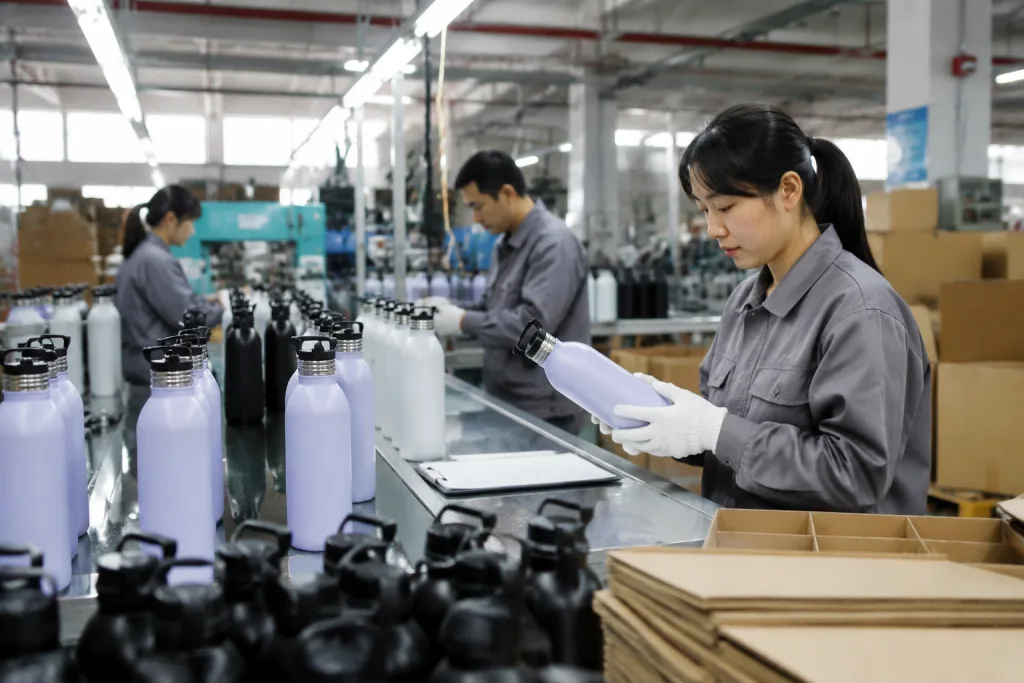
You are not buying a bottle. You are buying 20 small decisions that hit margin fast: steel grade, lid torque, paint adhesion, carton drop test, logo method, and whether the Zhejiang factory runs these steps in-house or sources half the parts from traders. On our line, QC pulled a sample with a 0.6 mm lid gap that looked minor and still caused leakage after transit. That is why a manufacturer hydration flask project needs more than a price sheet. Frankly, price-first is the wrong question to ask.
Take a real buying case: 8,000 branded 750ml vacuum flasks for a European outdoor retailer, split into one colorway for retail and one for canteen promotional campaigns. You need REACH-ready materials, lead time under 40 days, and packaging that survives parcel handling from Hangzhou to the EU DC. We have seen buyers ask for a nice gift box, then flag crushed corners after a 76 cm carton drop test. A solid canteen manufacturer locks the spec before production starts, with lid fit, coating, and pack-out checked on the sample bench, not after defects show up in your warehouse.
Start with the real order brief
Most buyers open with “send catalog” and “give me best price.” Backwards. A proper manufacturer hydration flask brief starts with the commercial target: where you will sell, how many units you need, what margin must hold, and which claims will be printed on the box. If you run a brand, send a mini-spec, not a mood board. We’ve seen this go sideways when the PO says “food grade gift bottle” and nothing else.
Take our example order: 8,000 units of a 750ml vacuum flask, split into 5,000 matte black and 3,000 dark green, each with a one-color logo and retail color box. Sales channel is EU outdoor retail plus a smaller canteen custom program for corporate gifting. Target shelf price is EUR 24.99, so landed cost must stay below roughly 25% to 30% of retail if you want room for distributor margin and promotions. On this volume, the math doesn’t work if you ask for a heavy box, low MOQ spare lids, and full-drop e-commerce packaging in the same quote.
At this point, a good canteen supplier or custom drinkware factory in Zhejiang, China should ask specific questions. QC pulled the sample last month because the mouth ID was off by 0.6mm, and that changed the lid fit:
- Body construction: single-wall or double-wall vacuum
- Material: 18/8 stainless interior, 18/0 exterior, or full 18/8
- Capacity tolerance: 750ml nominal, usually plus or minus 3%
- Use case: hiking, gym, office, school, or canteen promotional distribution
- Compliance market: EU REACH, LFGB expectations, US FDA-contact materials, California Proposition 65 attention points
- Packaging route: retail shelf, e-commerce parcel, or pallet-only wholesale
If your canteen vendor does not ask these questions, you may be talking to a trader, not a canteen factory. That matters. Wall thickness, mouth diameter, and silicone hardness change performance and defect rate on the line. For a 750ml flask, many buyers settle on 0.4mm inner wall and 0.5mm outer wall. Cheaper options exist, but dent resistance drops, and thread stability can weaken after 3,000 to 5,000 open-close cycles. The buyer flagged this on a budget sample once, and the cap started cross-threading during fit test.
You do not control cost by squeezing only unit price. You control cost by locking the right specification before tooling, sampling, and printing begin.
Lock the flask specification early
After the brief is approved, lock the build. This is where custom canteen and customized drinkware orders slip. Buyers sign off on a photo sample, then expect the line to match it. It won’t. Not unless the spec sheet is tight enough for production, QC, and packing to read the same thing. We’ve seen this go sideways over a 2mm logo shift and a lid loop color that was never written down.
For our scenario, the best working spec would include:
- Body: 750ml double-wall vacuum flask, straight profile
- Steel: SUS304 interior, SUS201 or SUS304 exterior depending corrosion target
- Finish: powder coating, 60-80 micron thickness, matte texture
- Lid: screw cap with PP inner, food-grade silicone gasket, carry loop
- Mouth: 45-50mm for easy cleaning and ice fill
- Performance: 12 hours hot above 55°C, 24 hours cold under 10°C from standard test conditions
- Logo: one-color silkscreen or laser engraving, position tolerance within 2mm
- Packaging: individual color box, 20 pcs per export carton, 5-layer corrugated carton
Now the cost talk gets real. At 8,000 pcs, a normal FOB China price for this build is usually USD 4.20 to USD 5.40. Change the outer wall to full 18/8, add copper-coated vacuum insulation, or switch to a two-part lid, and you’re looking at USD 5.80-6.50. A basic custom canteen without vacuum insulation can fall below USD 2.50, but this is the wrong comparison to make; it’s not the same product class. On our side, QC pulled the sample once because the powder coat came in at 52 microns, below the 60-80 micron target, and that kind of miss changes both feel and price.
This is also the point to decide if you want canteen customizable options across multiple SKUs. If you run distribution, using one lid across 500ml, 750ml, and 1L bodies cuts spare-part trouble and makes carton planning easier. We ship mixed-size programs like this all the time, and the buyer usually flags the same issue first: cap interchangeability after launch. The same rule applies to customized growler and custom growler lines, where cap fit matters more because of carbonation pressure or larger fill volume.
Ask the canteen manufacturer for a drawing with dimensions, unit weight, carton size, and loading quantity by 20GP and 40HQ. Get the net weight and gross weight too, down to 0.1 kg per carton. Freight changes the math fast. A cheap quote disappears if the carton is 8 mm taller and you lose a layer in the container.
Sampling is where buyers save money
Most defects that show up in mass production were already sitting in the sample room. Nobody logged them. On a manufacturer hydration flask project, we usually run 3 sample checkpoints, and this is where buyers save money. QC pulled the sample, measured the mouth diameter with a digital caliper, and the miss was already there.
1. Reference sample
This is usually an existing factory model with the closest body shape and lid set. You confirm hand feel, grip, and size before anyone spends money on new parts. Time: 2-4 days. On our line, we often compare height and base diameter in mm against the PO because buyers sometimes approve from one side photo only, and that goes sideways fast.
2. Pre-production sample with artwork
This is the key checkpoint. You check the exact paint, logo, packaging text, barcode area, and final assembly. Time: 5-7 days if no new tooling is required. We’ve had buyers flag a 1.5mm logo shift, a typo on the color box, and a barcode block that was too close to the carton seam. This is the wrong stage to rush.
3. Golden sample
Approved and signed physically or digitally with photos and key dimensions. This becomes the benchmark for inspection. If the golden sample shows a 0.3mm lid gap and a satin finish, the line and QC inspect against that standard, not against memory.
Take a common case. The buyer wants a matte black flask with white logo and a green flask with laser mark. The black sample looks fine in photos, but the powder coat feels too smooth and picks up fingerprints after 3 touches. If you catch it now, the canteen factory can switch texture or adjust curing parameters on the oven. Miss it, and you find the same issue on 8,000 finished units. The math doesn’t work.
You should also test what sales teams rarely test:
- Open and close the lid 100 cycles
- Fill with 95°C water and check for pressure release or gasket shift
- Perform a simple overnight leak test upside down
- Rub logo area with alcohol 20 times if claiming durability
- Put one color box into an outer carton and run a 60cm drop on edge and corner
If you sell through Amazon FBA or parcel channels, ask for FNSKU placement and carton label position before packing starts. We ship plenty of orders where the buyer flagged label position after cartons were already taped. That costs labor for no reason. If you are a canteen distributor, canteen distributors often need mixed barcode systems for different clients. That belongs in the packing SOP with carton photos and scan checks, not as a manual fix at the end of packing.
Good factories in Zhejiang, China usually need 3-5 days to revise a sample if only artwork or coating changes are involved. New mold parts, such as a custom cap or handle, usually add 12-20 days and tooling charges from about USD 800 to USD 3,000 depending on complexity. We’ve seen a custom handle insert add 14 days because the first CNC cut left a sharp edge and QC rejected it before assembly.
Production timing is more fragile than buyers expect
After sample approval, a lot of buyers think the hard part is done. It isn’t. This is where lead times slip on the line. For 8,000 vacuum flasks, the schedule looks clean on paper, but our whiteboard plan and the actual run date are often 2 different things:
- Artwork confirmation: 2 days
- Sample approval: 5-7 days
- Material prep: 5-7 days
- Body forming and welding: 5-6 days
- Vacuum process and insulation test: 3-4 days
- Powder coating and curing: 3-5 days
- Logo printing or engraving: 2-3 days
- Packing: 3-4 days
- Final inspection and booking: 2-3 days
That points to about 30-38 days ex-factory. Real delays usually start on the buyer side. We see 3 repeat problems: late artwork release, packaging text changes after the box die-line is closed, and barcode mix-ups between color SKUs. Miss the printer booking by 1 day, and the job often moves back 3 days because the carton supplier already loaded another run.
This matters for seasonal programs and for canteen vendors with 6 or 8 accounts shipping under one window. A canteen manufacturers group may quote 25 days, but this is the wrong question to ask. Ask if that timing includes custom box printing, and ask whether coating and screen printing are run in-house or sent out. In Hangzhou, Zhejiang, a BottleForge-scale plant can push 800,000 units per month across drinkware lines, but one SKU still waits for powder-coat hooks, print jigs, and assembly slots. We’ve seen this go sideways when the buyer flagged a Pantone change after coating samples were already cured at 180°C.
For first orders, write milestones into the PO: deposit date, artwork approval deadline, pre-production sample signoff, target final inspection date, and shipment window. Be specific. We’ve had a PO with the outer carton size typed as 45 x 45 x 26 cm instead of 45 x 45 x 36 cm, and QC pulled the sample before packing started. If your order includes custom growler, customizable growler, or customized growler items in the same container, align closure testing and carton specs early. Bigger vessels change carton weight, stacking height, and drop-test risk.
Practical point: if your MOQ is 1,000 pcs per color but your launch quantity is 8,000 pcs across two colors, keep one lid color common if possible. Simple move. It cuts component risk because one delayed cap color won’t hold the full shipment. On mixed-color orders, the math doesn't work if 4,000 bodies are ready and one injection-molded cap batch is still 2 days behind.
QC should be written, not assumed
Every buyer says quality matters. Few write it down. On a manufacturer hydration flask order, the PO and inspection checklist need inspectable points: exact tests, tolerance limits, and defect classes. We’ve seen this go sideways when a buyer wrote “good finish” and nothing else, then flagged a 1.5mm logo shift after the goods were packed. If you leave quality undefined, you are debating opinion after production instead of checking facts.
For our example order, a workable final inspection protocol would include:
- Sampling standard: ANSI/ASQ Z1.4, General Inspection Level II
- AQL: critical 0, major 2.5, minor 4.0
- Leak test: 100% on line, plus random audit after packing
- Vacuum retention: sample test per lot, with baseline temperature record
- Logo adhesion: cross-hatch or rub test depending decoration method
- Coating appearance: no bare metal, no heavy orange peel, no visible scratches at 50cm
- Dimension checks: height, diameter, mouth finish, thread engagement
- Carton drop test: one set per packing configuration
Critical defects are straightforward: leakage, sharp edge, wrong material claim, mold contamination, or a missing food-contact gasket. Major defects include failed vacuum, wrong color outside the approved standard, severe denting, unreadable barcode, or lid cross-threading. Minor defects are small specks, a slight logo offset, or a light carton scuff that does not affect retail sale. QC pulled the sample once on a flask with a rolled edge burr at the mouth; that was only 0.3mm, but it still counts as critical because the user touches it.
If you sell in Europe or North America, ask your canteen supplier for documents tied to the actual materials in the build: stainless specification, silicone declaration, paint or coating reports where relevant, and social compliance such as BSCI if your customer requires it. This is the wrong question to ask if you only say, “Do you have FDA or REACH?” A factory might answer yes out of habit. The paperwork has to match the bill of materials, right down to the 304 stainless body, the lid gasket, and the coating code listed on the PO.
For first orders, 7 out of 10 buyers book a third-party inspection. Sensible move. The bigger win is in-process control inside the canteen factory: weld checks before vacuuming, first-piece print approval, and barcode scans on the packing line. We run a go/no-go gauge on thread engagement before assembly because the math doesn't work if you wait until final inspection to find 800 lids cross-threading. The cheapest defect is the one caught before the next process starts.
Freight, claims, and the second order
The shipment leaves China, and buyers relax too early. We’ve seen this go sideways after the vessel sails, not before. The last leg tells you if the supplier is only a canteen manufacturer or a partner who answers the phone when 160 units leak out of 8,000, 24 cartons arrive crushed, or customs asks for one more declaration line because the PO listed the wrong consignee suffix.
For our 8,000-piece scenario, the buyer books FOB Ningbo because the truck run from Hangzhou, Zhejiang is simple, about 220 km, and we ship that lane every week. Before loading, the supplier sends packing list, commercial invoice, carton dimensions, net and gross weight, and pallet data. Ask for the pallet height too; 1,850 mm vs 1,950 mm changes container loading. If you use a distributor canteen model and resell to multiple customers, ask for lot coding on cartons and master records by production date. QC pulled the sample from pallet 6 last month because one outer case showed a smudged lot code. That record made claim tracing faster.
When the goods arrive, inspect these points on day 1:
- Outer carton condition and count, including any corner crush deeper than 15 mm
- Random leak and lid-fit check from multiple pallets; we usually suggest 12 bottles from 3 pallets, not one top carton only
- Barcode readability and retail box print quality, especially if the buyer flagged light black density on the last run
If there is a problem, send a structured claim within 7 days with quantities, defect photos, carton marks, and lot references. Put the carton ID in the photo. Vague complaints get vague replies. A responsible canteen vendor or canteen suppliers team should offer replacement units, credit, or a shared settlement based on verified defect rate and inspection evidence. This is the wrong question to ask: “Can you do anything?” Ask instead, “Out of 8,000 units, 146 leaked in lot 240518B; what is your corrective action and claim proposal?”
The second order is where the project starts to pay. By then, tooling is settled, carton artwork exists, and defect risks are known. That lets you push cost-down moves that do not damage quality: one common lid across 4 colors, 24 pcs per carton instead of 20 if the drop test still passes, standard box inserts, or shifting from individual polybag to tissue wrap if your retailer accepts it. We run this math on the line all the time. A smart custom drinkware buyer locks process stability first and talks price after that, because a $0.08 saving means nothing if the rework rate jumps from 0.6% to 2.1%.
If you manage several channels, expand the platform with control, not guesswork. A customizable canteen in 500ml for schools, customized canteen in 1L for outdoor stores, or a customizable drinkware family that includes tumblers and a custom growler format all work better when the thread spec, lid gasket, and print standard stay aligned. We’ve had buyers chase the lowest quote across 3 canteen vendors in one season, then call back after cap fit varied by 0.7 mm. Working with the same canteen factory on a controlled platform usually beats that.
Send your flask spec and get a realistic factory plan
Share capacity, target price, market, and artwork status. We will review MOQ, build options, lead time, and QC points before you place the order.
Frequently asked questions
What MOQ should I expect for a custom hydration flask order?
For a standard 500ml to 750ml vacuum flask, most factories in China will quote 1,000 pcs per color for an existing mold, but the more realistic MOQ for efficient pricing is 2,000-3,000 pcs per color. If you need a custom lid, new handle, or unique body shape, MOQ often rises to 3,000-5,000 pcs because tooling amortization and component setup costs have to be spread. For a simple canteen customized project with one silk-screen logo and stock packaging, some Zhejiang factories can support 500 pcs as a trial order, but unit price will be noticeably higher, often 10% to 20% above the normal production rate.
How much does a manufacturer hydration flask usually cost?
Cost depends mainly on construction, steel grade, coating, and lid complexity. A basic single-wall custom canteen can be under USD 2.50 FOB China. A 750ml double-wall vacuum flask with powder coating and standard logo usually lands around USD 3.80-5.40 FOB at 3,000-10,000 pcs. If you specify full 18/8 stainless, copper-coated vacuum insulation, retail gift box, and a more engineered lid, expect USD 5.80-6.80 FOB. Add about USD 0.08-0.25 for logo decoration depending on silkscreen, heat transfer, or laser. Always compare prices against the same spec sheet, not just photos.
What tests should I require before shipment?
At minimum, require a 100% leak test on the line, a vacuum retention test by lot, logo adhesion verification, dimension checks, and a carton drop test for the final packing configuration. For inspection standards, many buyers use ANSI/ASQ Z1.4 at General Level II with AQL 2.5 for major defects and 4.0 for minor defects. If you sell to the EU or North America, add documentation review for material compliance such as REACH-related declarations, food-contact statements, and any retailer-specific requirements. For e-commerce projects, include barcode scan checks and transit packaging verification because a good flask can still fail if the carton and insert are weak.
How long does a first custom flask order take from sample to shipment?
If you are using an existing mold and only customizing color, logo, and packaging, a first order usually takes 30-40 days after sample approval and deposit. Reference samples may take 2-4 days, pre-production samples 5-7 days, and mass production 25-30 days. If you add a new lid mold or special accessory, plan on 45-60 days total because tooling, fit checks, and revised samples all add time. Buyers often underestimate artwork approvals. A delayed box file or barcode confirmation can push shipment by 2-5 days, especially when printer and coating schedules are tight in peak season.
How do I choose between a trader and a real canteen factory?
Ask operational questions that a trader struggles to answer clearly. Request monthly capacity, for example 600,000 or 800,000 units, lead time by process, and whether welding, vacuuming, coating, and printing are done in-house or outsourced. Ask for a product drawing, carton loading data, and a QC checklist with AQL levels. A real canteen manufacturer should explain wall thickness, gasket materials, coating thickness, and known risk points without vague language. You can also ask for audit references such as BSCI or ISO-related systems, plus production photos from Zhejiang, China. Traders can still be useful, but you should know which model you are buying from before you trust schedule and quality commitments.