Key Takeaways
- Set measurable specs early: leak test at 20 kPa for 30 minutes, print adhesion after 100 rubs, and odor check after 24 hours sealed.
- For most custom kids bottle projects, practical MOQ is 3,000-5,000 units per colorway, with 35-45 day lead time after sample approval.
- Use AQL 2.5 for major defects and AQL 4.0 for minor defects on children water bottle bulk orders to control surprises before shipment.
- Carton failure is common: specify 5-layer export cartons, 1.2 m drop test, and dividers for straws and lids to cut transit claims by double digits.
You can save real money buying kids bottle factory direct, but the lowest China quote is often where school programs and import schedules start slipping. We’ve seen a bulk kids water bottle pass a PDF drawing, then fail on the line for odor, leak rate at 0.03 MPa, print rub after 50 cycles, straw fit, carton drop damage, or migration paperwork that showed up 6 days late and held customs.
If you buy for a school district or import children water bottle wholesale into Europe or North America, you are not buying a bottle. You are buying a repeatable process. This is the right place to get strict. In Zhejiang, where a large share of China’s drinkware capacity runs, the gap between a smooth shipment and a claim usually comes down to how tightly you lock material specs, tolerances like +/-0.2 mm, test methods, and packaging before tooling starts. QC pulled the sample, the buyer flagged a loose straw fit, and we’ve seen this go sideways fast if the PO only says “same as sample.”
Where direct orders usually fail
If you source a bulk children water bottle direct from a children water bottle factory, direct orders usually fail on small misses, not one big disaster. We’ve seen six assumptions stack up fast. You read “BPA-free” on the quote and assume the lid resin is food-grade for the target market. The factory reads your logo file and assumes it will survive 65°C dishwasher cycles. Your forwarder assumes the master carton survives pallet overhang after a 12 kg top-load test. Customs checks the file and assumes your REACH or CPSIA paperwork matches the exact SKU, lid color, and straw set. Then the 20,000-unit shipment arrives with a 3% leak rate, and the buyer flagged print rub-off from every second school.
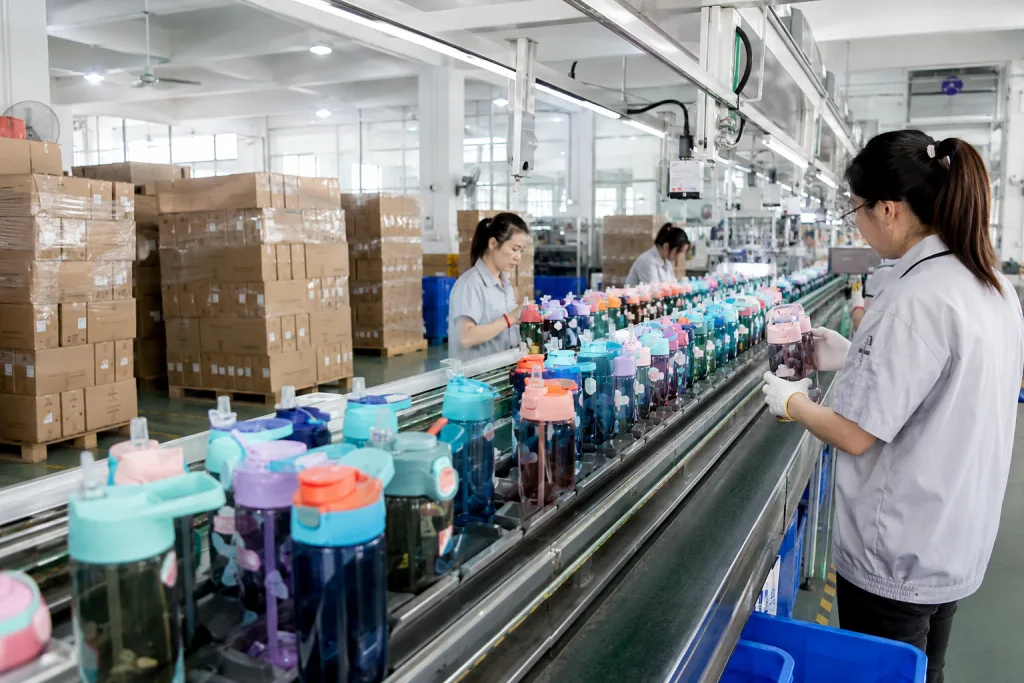
At BottleForge Industrial in Hangzhou, Zhejiang, we run kids bottle projects differently from generic sports bottle programs because the tolerance for failure is tighter. Parents catch odor on first open. Schools ask about spill resistance, brush access, and spare straws before they ask price. Importers want PO-to-PO consistency, down to Pantone shade and gasket hardness. Last month QC pulled the sample because the silicone seal measured 1.8 mm instead of 2.0 mm, and yes, that difference matters. A children water bottle manufacturer that only talks about decoration options is skipping the hard part. This is the wrong question to start with.
For a typical custom school water bottle order, you should lock down six things before deposit:
- Material stack: body, lid, spout, straw, gasket, ink, and coating.
- Performance targets: leak resistance, drop resistance, odor, thermal retention if insulated.
- Compliance scope: CPSIA, LFGB, REACH, California Proposition 65, ASTM where applicable.
- Decoration durability: silk screen, heat transfer, UV print, or laser marking.
- Packaging standard: individual bag or box, insert, master carton spec, barcode placement.
- QC plan: inline checks, pre-shipment inspection, AQL level, and retain samples.
If a children water bottle supplier in China cannot turn those points into a signed specification sheet with drawing revision, seal material, and carton spec, you are not buying factory direct. You are buying a guess. We’ve seen this go sideways over one PO typo on cap color.
Material claims that break trust
The first trust break is material mismatch. A school buyer asks for Tritan, 18/8 stainless steel, or food-grade PP, then gets a bottle with the right body and a downgraded lid, straw, or gasket. We see this on the line more than buyers expect. The bottle looks fine at first glance. Trouble shows up later as odor, haze, stress cracking, or test files that do not match the shipped parts.
For a custom children water bottle, do not sign off on a sample by appearance alone. Ask the children water bottle manufacturer to list every resin and part by material code and supplier name. QC pulled one sample last month where the PO said silicone straw, but the incoming part was PE and the buyer flagged the smell after a 24-hour seal test. A proper bill of materials should separate:
- Body: Tritan TX1001, recycled stainless 304, or soda-lime glass if relevant
- Lid shell: PP or ABS, with note if ABS is only cosmetic
- Spout and straw: food-grade silicone or PE
- Seal ring: silicone Shore hardness, usually 50-60A
- Color masterbatch and ink system
If you buy children water bottle customized for younger users, odor matters more than with adult drinkware. This check is cheap. Wash the sample, dry it, close it, and leave it sealed for 24 hours at room temperature. We run this test in-house before approval, and it catches more bad gasket and resin swaps than people think. For stainless options, check weld discoloration and passivation quality, especially around the shoulder and bottom seam; on one 500 ml sample, QC found a yellow heat mark 6 mm wide near the bottom weld. Ignore that and complaints come later.
What to put in the PO
Write it plainly: no material substitution without written approval and updated compliance documents. Require test reports tied to the production SKU, not a similar model with a close-looking lid. This is the wrong question to ask late, after tooling and color approval are done. If your program is for Europe, ask for REACH and LFGB-relevant declarations. If it is for the US and aimed at children, ask for CPSIA-related documentation and heavy metals screening for coatings and inks. Good children water bottle suppliers in Zhejiang can provide this, but only if you ask before mass production starts; we have seen a PO typo swap one lid code and delay approval by 12 days.
The cheapest quote often hides cost in unseen parts: gasket grade, straw resin, ink system, and carton quality.
Leak paths start in the lid
Most bulk school water bottle complaints start at the lid, not the body. We see this on the line all the time. A sample passes a hand-squeeze check, then mass production starts and leaks show up because the gasket groove is 0.3 mm too shallow, the straw is cut 1.5 mm short, or the hinge pin shifts during molding. Normal factory issues. Buying without tolerance limits is the part that causes the damage.
For a custom kids bottle, write the closure structure into the spec with numbers. If the bottle uses a flip spout, call out hinge cycle testing, latch force, gasket compression, and straw insertion depth in mm. QC pulled one sample last month with only 4.2 mm straw engagement, and the buyer flagged drips after drop testing. If it uses a screw cap, define thread turns to seal and torque range with a torque meter, not by feel. For school use, we usually tell buyers to skip overbuilt spring lids unless the price point covers tighter process control. This is the wrong place to chase a cheap target.
Useful production checks include:
- Vacuum or positive pressure leak test: 20 kPa for 30 minutes with no visible leakage
- Upside-down soak: filled bottle inverted for 8 hours on absorbent paper
- Straw pull test: minimum retention force agreed in the spec
- Open-close cycle: 500 to 1,000 cycles depending on design
For a bulk kids bottle order, ask for first-article measurements from at least 10 assembled lids per cavity if the tool is multicavity. One bad cavity is enough. We had an 8-cavity cap tool where cavity 6 ran wide by 0.2 mm on the sealing land, and the packed goods looked random in the market even though the source was clear in production. A children water bottle supplier with solid process discipline marks cavity numbers, keeps the check sheets, and blocks suspect output before packing.
Lead time affects leaks more than buyers expect. If you place an urgent PO and force a 25-day ship date on a model that normally needs 40 days, assembly validation is usually the first step that gets cut. We've seen this go sideways. Our normal factory direct lead time from Zhejiang is 35-45 days after sample approval for 5,000-20,000 units, and faster schedules should mean tighter inline QC on the lid assembly table, not less.
Decoration fails before the bottle does
Print failure turns a children water bottle promotional order into a return case fast. The bottle still holds water. The logo scratches off, red shifts toward orange, or registration walks enough that the school mascot sits 2 mm off center. In custom logo kids bottle programs, decoration is not an afterthought. It decides whether the order survives parent use and school complaints.
Each print method has a limit, and this is where buyers often ask the wrong question. They ask which process looks best on a sample. The real question is what still looks clean after 100 rubs and a week in backpacks. Silk screen works well for simple 1-2 color graphics on stainless or smooth plastic, usually adding around USD 0.08-0.18 per unit at quantity, and we run it most often on straight-wall bodies with a 120 mesh screen. Heat transfer handles gradients better, but surface prep has to be tighter or the edge starts lifting. UV printing looks sharp on approval samples, yet the line sees more abrasion complaints on high-contact areas. Laser marking lasts on stainless. Some school buyers flag it as too industrial.
Protect yourself with pass-fail standards, not just Pantone callouts. QC pulled the sample once on a kids order because the blue matched, but the ink failed after a wet rub. For children water bottle custom orders, include:
- Pantone reference with acceptable Delta tolerance if critical
- Logo position tolerance, for example ±1.5 mm
- Cross-hatch adhesion expectation if relevant to coating system
- Dry and wet rub test, such as 100 cycles with no obvious ink loss
- Dishwasher statement: approved or not approved, and what claim can appear on packaging
A lot of children water bottle distributors assume the sample print equals the production print. It does not. Samples are usually made slower, often by the senior printer, with extra wipe-down between passes. On a 30,000-unit run, line speed changes the result. We have seen a sample hold clean registration at 12 bottles per minute, then drift on the line at 28. If artwork wraps near a seam or emboss, ask for a production-line golden sample signed by both sides. For children water bottle customizable projects with multiple school names, barcode and artwork mapping must be checked before printing starts. We have seen one PO typo swap two districts, and by the time the buyer flagged it, 4 cartons already had the wrong FNSKU labels.
Compliance paperwork arrives too late
A common failure is not the bottle. It is the paperwork behind it. We see this on kids bottle orders for the US and EU: the lab report covers a similar cup, not the shipped SKU with the exact ink, straw, and silicone gasket. QC pulled the sample, then the buyer flagged that the lid print was changed after testing. Result: 12 days lost, a second lab fee, or in the worst case, cargo held at destination.
Kids products need tighter document control than general drinkware. If you buy children water bottle wholesale for school channels, lock the paperwork list before balance payment and tie it to the PO. This is the wrong question to ask at the end of production. Ask it when the artwork file is still open. Depending on the market and product structure, you may need declarations or test reports for food contact, chemical restrictions, and label claims. A serious children water bottle factory in China should know how to book third-party testing and match reports to the shipped unit, but we still need your destination-market brief, SKU list, and approval standard.
At minimum, ask for:
- Final BOM tied to the PO and SKU code
- Lab reports referencing the actual material set and decoration
- Factory audit status such as BSCI if your customer requires it
- QC records and photos from mass production
- Carton marks, barcode file, and if applicable FNSKU placement files
Do not test only the naked bottle
If the custom made kids bottle includes print, soft-touch paint, glitter, or a silicone boot, include those parts in the tested sample set. We have seen this go sideways. An importer approved compliance on the base bottle, then added decoration later to save 1 round of testing. The math doesn't work once a lab has to rerun the sample set. The same issue applies to bundled accessories. A spare straw in the box looks small, but if it affects age grading, labeling, or small-part assessment, deal with it before shipment leaves Zhejiang, China. On the line, even a 2 mm logo shift or a PO typo in the SKU suffix can break the report-to-goods match.
Cartons collapse after the factory gate
You can buy direct from a solid children water bottle manufacturer and still lose margin after the truck leaves the gate. We’ve seen this go sideways. Most freight claims are not bottle defects; they start with weak packaging: thin master cartons, soft dividers, pallets stacked too high, or barcodes slapped across a carton seam where the receiver’s scanner misses them.
For bulk kids water bottle shipments, ask for packaging specs at quotation stage, not after mass production starts and the line already has cartons on the floor. The USD 0.12 saving on packaging often turns into a USD 1.20 landed problem. We usually recommend 5-layer export cartons for standard ocean shipments, with carton gross weight below 15 kg if school staff will move cases by hand. For bottles with protruding straws or flip handles, add inserts or partitions so the lid does not take the top-load pressure. We check this with a top-load sample stack before shipment.
Important controls include:
- Carton board spec: confirm flute type and bursting or edge crush performance; QC should match the supplier’s board stamp on the carton batch
- Drop test: 1.2 m on corners, edges, and faces for packed carton
- Pallet pattern: no carton overhang, stretch-wrap plus top sheet; 10 mm overhang is enough to crush one pallet row on arrival
- Barcode location: scan-clear and consistent on all cases, not blocked by tape or wrapped over an edge
- Assortment map: color and school-name packout verified before sealing; the buyer flagged one PO last season because “Blue-Fox” was packed into the “Green-Bear” carton
If you sell through a children water bottle vendor network or to multiple school districts, mixed-SKU packing errors often cost more than product defects. This is the wrong question to ask: buyers focus on unit price and ignore carton control. A children water bottle factory that runs 600,000 units per month should still split packout verification from final carton sealing. We run a separate checklist at sealing station, and QC pulled the sample cartons again during final inspection for random opening records. That simple step stops the usual problem: the right bottles shipped in the wrong cartons.
How to write a safer purchase order
If you want kids bottle factory direct pricing without factory direct surprises, treat the PO like a control document. Not a legal lecture. A working file the factory, inspector, and your team can check line by line. On our line, one missing note on straw length tolerance can turn into 3,000 units to rework.
For a custom kids water bottle or bulk school water bottle program, your purchase order pack should include a specification sheet, approved artwork, approved sample photos, packaging drawing, inspection plan, and document list. That is the base set. Schools often look at logo color first. Experienced importers look at tolerances and inspection points first, because a 1.5 mm print shift or a lid fit issue is what breaks reorder consistency. We have seen buyers approve a nice render, then flag the first shipment because the logo sat 3 mm higher than the sealed sample.
A practical PO checklist looks like this:
- SKU code, color code, capacity, dimensions, and net weight tolerance
- Material details for body, lid, straw, seal, coating, and ink
- Leak standard and test method
- Decoration method, Pantone, size, and location tolerance
- Packaging method, carton count, carton dimensions, and gross weight
- Compliance documents required before shipment
- Inspection standard: AQL 2.5 major, 4.0 minor unless otherwise agreed
- Defect examples with photos: leak, odor, scratch, print shift, dent, mixed packing
For first orders from a children water bottle supplier, ask for pre-production samples, then an inline inspection when 20%-30% of goods are completed, and a final random inspection at 100% packed status. This is the right spend. The math does not work if you save a few hundred dollars on inspection and then sort 3,000 bottles after arrival. Our MOQ for most custom children water bottle projects is 3,000 units per model, with common FOB pricing from Zhejiang, China around USD 1.85-4.90 depending on material, lid complexity, and print process. QC pulled the sample, signed against the approved color chip, then checked carton marks against the PO because even a PO typo on item code can cause mixed packing.
If your supplier can discuss these failure points clearly, show cavity control, share BOM-level compliance files, and accept written QC gates, buying factory direct starts to work the way it should. Ask how they track cavity numbers on lids and bodies. Ask what happens when inspection finds odor or leak defects over AQL. If they answer in general terms, that is the wrong question to skip.
Get a kids bottle spec review before you place PO
Send your target price, quantity, and market. We will flag likely failure points, suggest workable specs, and quote factory-direct options from Zhejiang.
Frequently asked questions
What is a realistic MOQ when buying kids bottle factory direct?
For a true factory-direct custom program, 3,000 units per model is a practical floor, and 5,000 units is more common if you need multiple lid colors or custom packaging. If you want custom logo kids bottle printing on a stock mold, some China factories can start at 1,000-2,000 units, but unit cost rises and color choices narrow. For a fully custom children water bottle customized with new tooling, MOQ can jump to 10,000 units or more. Also check MOQ by colorway, not just total order. A quote that says 3,000 units total may still require 1,000 units per color. Always ask whether MOQ covers replacement straws, extra seals, and printed cartons.
How long does production usually take for a bulk school water bottle order?
For a stock mold with custom decoration, expect about 7-10 days for pre-production samples and 30-40 days for mass production after approval. For a more complex custom kids bottle with new lid parts or packaging development, 35-45 days is normal, and tooling adds extra time. Ocean transit from China to North America or Europe is separate, so do not confuse factory lead time with landed timeline. If a supplier promises 20-25 day production for a closure-heavy bottle, ask what QC steps are being compressed. On children water bottle bulk orders, rushed schedules often show up later as leaks, print defects, or mixed cartons.
Which tests matter most for children water bottle wholesale orders?
Start with the basics that catch field complaints early: leak testing, odor check, print adhesion, drop testing of packed cartons, and dimensional checks on lids and straws. For closures, a 20 kPa leak test for 30 minutes and an overnight inverted soak are both useful. For decoration, ask for at least a 100-cycle dry and wet rub test. If the product is marketed for children, request compliance documentation appropriate for your market, such as food-contact and chemical restriction reports tied to the final BOM. If you sell into school systems, carton drop performance and barcode verification matter almost as much as the bottle itself because receiving errors create immediate claims.
Is stainless or Tritan better for a custom children water bottle program?
It depends on channel, target price, and age group. Tritan gives good clarity, lower weight, and easier color matching, often at a lower FOB cost than insulated stainless. It works well for many custom school water bottle projects where visual branding matters. Stainless steel is stronger in long-term use, hides scratches better, and supports insulated options, but it adds weight and cost. Typical FOB pricing from China can range roughly USD 1.85-2.80 for basic plastic models and USD 3.20-4.90 or more for stainless versions with more complex lids. Whichever route you choose, lid design and gasket quality usually matter more than body material for leak complaints.
How do I qualify a children water bottle manufacturer before placing a first order?
Ask for more than a catalog. Request a BOM-level spec sheet, recent test reports on similar constructions, factory audit status if needed, and a clear QC flow covering incoming material, inline assembly checks, and final inspection. Good children water bottle manufacturers should discuss AQL levels, leak testing, print durability, and packaging specs without hesitation. Ask about monthly capacity, too. A factory saying 500,000-600,000 units per month should still show how they control cavity variation and mixed-SKU packout. Start with a smaller pilot order if possible, then compare approved sample, production sample, and final inspection results. The goal is not the lowest first quote. It is repeatable output.