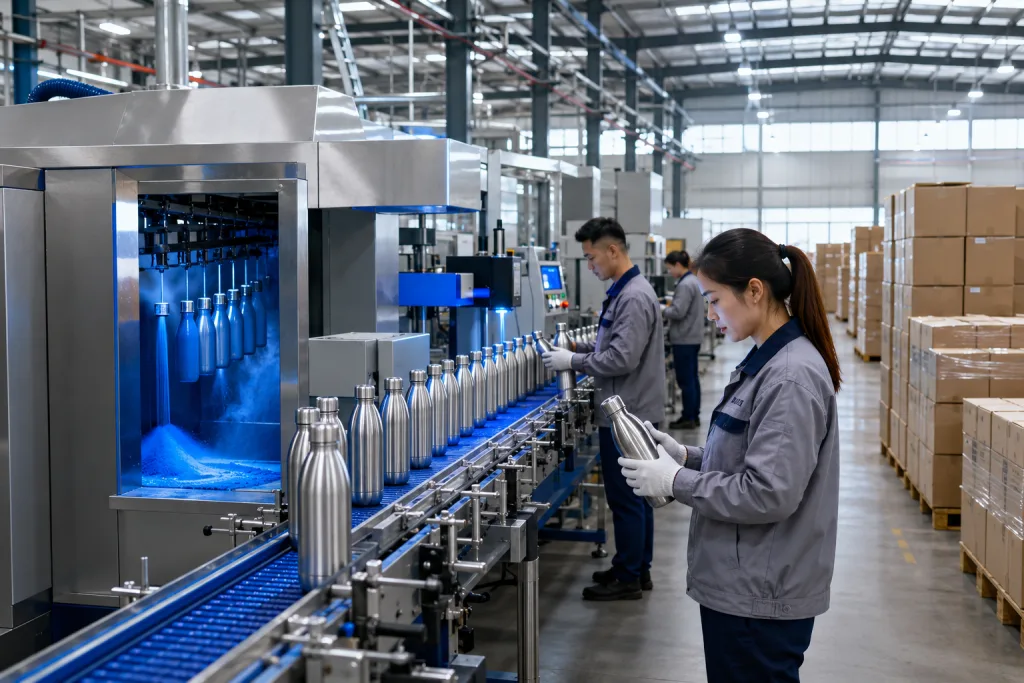
Key Takeaways
- A usable RFQ for bulk thermos should define at least 12 line items, including 18/8 steel, capacity tolerance, logo method, carton count, and AQL level.
- For a customized thermos, sample lead time is typically 7-12 days, while bulk production is usually 25-40 days after deposit and sample approval.
- Common MOQs in Zhejiang, China are 500-1,000 pcs per color for standard molds and 3,000+ pcs for new tooling or complex lid assemblies.
- A landed cost gap of USD 0.40-1.20 per unit often comes from coating, lid structure, packaging, and test requirements rather than bottle body cost alone.
You usually catch sourcing mistakes late: the sample looked fine, then QC pulled the sample again and the lid leaked at a 45° tilt test; the carton came in 8 mm wider than the PO and your pallet math broke; or the thermos quote jumped 18% because the logo method was blank. When you buy from insulated water bottle manufacturers, the bottle is only half the job. The PO does the rest.
For outdoor retailers and promo brands, stainless thermos sourcing in China is a process issue, not some product mystery. This is the wrong question to ask if the team starts with “what’s your best price?” first. A customizable thermos gets simpler once you fix the spec order: steel grade, vacuum structure, coating, print method, packaging, testing, then delivery terms. In Zhejiang, we see 6 fast quotes where only 2 are clean, and the buyer flagged the same gap again and again: no clear coating spec, no drop-test standard, no master carton limit in kg.
Start with an RFQ that works
If you send insulated water bottle manufacturers a reference photo and one target price, the quotes come back all over the place. We have seen a 500 ml bottle quoted at USD 2.18 and USD 3.06 with the same photo because one factory priced 0.4 mm outer wall, standard PP lid, and plain white box, while another priced thicker steel and a powder coat line finish. That is the wrong question to ask. A working RFQ lets you compare one supplier thermos offer against another on the same basis, whether you are sourcing a promotional thermos for 3,000 pcs, a distributor thermos line, or a higher-spec custom thermos for outdoor retail.
Your RFQ should read like PO line items, even before the formal PO is issued. We prefer a table or a numbered list because the line can quote faster from that format, and fewer details get missed. At minimum, call out body style, capacity, material, finish, logo method, packaging, testing, and trade terms. In Zhejiang alone, you can find 20 factories that make a similar-looking bottle, but they are not all quoting the same 0.5 mm wall thickness, silicone gasket hardness, or 60-70 μm powder coat. QC pulled samples before where the buyer flagged color drift, and the root cause was simple: no Pantone code on the RFQ.
- Product: 500 ml or 750 ml vacuum stainless thermos, double wall
- Material: inner and outer 18/8 stainless steel, commonly called SUS304
- Structure: copper-coated vacuum if required for 12 days vs 18 days style retention targets on shelf tests, or for longer heat retention in lab conditions
- Performance: hot 12 hours, cold 24 hours at stated test conditions
- Finish: powder coat, Pantone reference if needed
- Branding: silkscreen, heat transfer, laser engraving, or wrap print
- Packaging: egg-crate, white box, color box, barcode label, insert card
- Compliance: REACH, LFGB, FDA-contact declaration, CA Prop 65 if requested
- QC: AQL 2.5/4.0 or your own standard
- Incoterm: FOB Ningbo, EXW Hangzhou, or DDP if needed
Ask for two prices if you can. We usually run Quote 1 as the standard manufacturers thermos version, then Quote 2 as the upgraded build. For example: No. 1 with standard PP lid and one-color print; No. 2 with stainless steel underside lid, powder coat, and laser logo. That shows the cost jump line by line. The math does not work if a factory sends one blended number and you still need to guess what is inside it. We have seen this go sideways over one typo on a PO—“laser” entered as “silk”—and the landed cost changed after sample approval.
You are not buying a bottle shape. You are buying a specification, a process, and a tolerance stack.
Sort suppliers before you sample
Once quotes arrive, do not buy on unit price alone. Shortlist 3 to 5 insulated water bottle manufacturers and line up their answers side by side. The good ones usually come back with real questions: what leak test standard you need, whether the mailer must pass a drop test, and where the logo sits in mm from the seam. We see this fast. A reliable thermos manufacturer will mark assumptions on the quote or ask before quoting; a weak vendor sends one line, misses the gasket spec, and hopes the sample room fixes it later.
For outdoor retail and promotional projects, check if the factory has done both durable consumer packs and deadline-driven branded orders. These are two different jobs on the line. One buyer flagged this last season: the supplier turned logos fast for an event order, then missed retail carton marks and the powder coat failed a rub test after 200 cycles. A factory that runs retailer programs is often slower at the front end, but cleaner on documents, barcode setup, and finish control.
What to verify before samples
- Factory profile: monthly capacity, for example 300,000 units/month
- MOQ: typical MOQ 500 pcs per color for existing body and lid sets
- Lead time: 7-12 days sample, 30-35 days mass production
- Audit status: BSCI, ISO 9001, Sedex if your channel requires it
- Export experience: EU and North America familiarity
- QC controls: incoming steel check, vacuum inspection, lid leak test, final AQL
Ask who owns the tooling if a customized thermos needs a new lid or base mold. Put it in writing on the PI or PO. This is not a small detail; we have seen a PO typo on mold ownership create a 3-week argument after sampling. For a true thermos custom project, tooling can run from USD 2,000 for a simple cap adjustment to USD 8,000 or more for a more complex assembly. If you sell through thermos distributors or distributors thermos channels, confirm from day one whether the packout is shelf-ready or built for wholesale inners, because the math does not work if you redo cartons after the sample is approved.
Factories in Zhejiang often move fast on standard stainless items because the local supply chain for lids, silicone rings, coatings, and cartons is tight. We run into this every week. That helps only if you know what is made in-house and what is outsourced; QC pulled the sample once on a lid lot because the silicone hardness was off by 5 Shore A from the approved spec. A manufacturer thermos program with more outsourced parts needs stricter incoming inspection, not just a final check.
Build the sample PO properly
The sample stage is where hidden assumptions show up fast. Do not send a loose note like, “Please make one sample with logo.” Write a real sample PO with line items, revision numbers, and approval checkpoints. We’ve seen this go sideways over a 0.3 mm lid thread change, a softer silicone seal, or a glossier powder coat on the line. In a thermos customizable program, those are not small details.
A sample PO should spell out quantity, sample purpose, cost, and what must match bulk production. Be blunt. If the sample is only for size and shape approval, write that on the PO. If it is a pre-production sample that must represent mass production, write that too. This is the wrong place to stay vague. Without that distinction, a suppliers thermos sample can look better than the later run because one technician hand-polished it and QC pulled the cleanest piece.
- Line 1: 750 ml bottle body, matte black powder coat, sample qty 3 pcs
- Line 2: screw lid, PP exterior, food-contact PP interior, carry loop, sample qty 3 pcs
- Line 3: logo method, laser engraving 35 x 35 mm, 1 location
- Line 4: packaging, white box with barcode sticker, sample qty 3 pcs
- Line 5: test request, leak test, coating adhesion, insulation spot check
- Line 6: reference standard, approved artwork Rev B, color Pantone Black 6 C
Expect sample charges of USD 35-80 for a standard bottle, plus logo setup and courier. A more complex customized thermos with a new mold part can cost USD 150-400 for development samples. That is normal. The bigger question is whether the factory credits part or all of that back on the bulk order. Buyers push back on sample cost all the time, but the math doesn’t work if the shop is opening a new fixture or cutting a trial insert.
Ask for measured data, not just photos. A sample report should include net weight, gross weight with box, bottle height, base diameter, mouth diameter, and carton estimate. We usually check these with a digital scale and caliper before we ship. For Amazon FBA or retailer routing, those numbers matter as much as the bottle itself. If you buy thermos bulk for a campaign, sample approval should also confirm print legibility and scratch resistance after handling, because the buyer flagged scuffed logos on one 500 pcs promo order even before launch.
Test what usually fails first
Most defects in a bulk thermos project are not dramatic. They repeat across 2,000 or 20,000 pcs, eat margin, and should have been stopped at sample stage. The first failures we usually see on the line are micro-leakage at the lid seal, uneven powder coat around the bottom radius, logo drift by 1.5-2 mm, weak handle weld points, and cartons crushed after a 76 cm drop. QC pulled the sample, passed it once, and then the buyer flagged the same issue in mass production. Test the points that fail first, not the points that look nice in a photo.
For a stainless thermos, your checklist needs to cover product function and sell-through. A bottle with solid heat retention is still the wrong SKU if it does not fit a bike cage, a car cup holder, or the shelf carton size on the PO. We have seen this go sideways. Outdoor retailers usually push for dent resistance and retention after 12 hours; promo buyers usually push color match, tighter target cost, and shipment date because a campaign launch does not wait. Set the acceptance standard to the sales channel, not to a generic sample room standard.
Core checks for sample approval
- Leak test: filled bottle inverted for 30 minutes, then shaken
- Insulation check: verify hot and cold retention under agreed method, not marketing claims alone
- Coating adhesion: cross-hatch or tape test where applicable
- Odor check: no strong silicone or coating smell after wash
- Thread fit: smooth open-close cycle over 50 repetitions
- Drop risk: assess packaging with simple corner and face drops
If you need formal testing, state whether it is in-house or done by an outside lab. REACH screening, LFGB migration, or ASTM-related packaging tests usually add 5-10 working days and extra fees per SKU. This is where buyers often ask the wrong question: not “Can we test later?” but “What must be locked before tooling and bulk materials?” For a custom thermos for children, gifting, or regulated channels, the test plan should be signed off before production starts, not after 5,000 finished bottles are sitting in cartons.
Good insulated water bottle manufacturers will accept a written sample approval sheet with pass/fail notes and photos. We run this on nearly every export order above 1,000 pcs. That sheet becomes the production reference at IQC, on the coating line, and again at final inspection under AQL 2.5. If the buyer skips it, the math doesn't work later; a dispute turns into opinion, and even a typo on a PO color code can waste 12 days. If you source from China remotely, the paperwork has to do the factory walk-through for you.
Place bulk orders with control points
Once the sample is approved, the bulk PO needs more detail than the RFQ. This is where buyers lose margin. They push on unit price and skip packaging, spare lids, overrun tolerance, or inspection timing, then QC pulls the sample and finds the carton spec was never locked. A clean PO protects you better than a 28-email thread.
For standard bulk thermos programs, write the order in line-item format and attach the approved sample record, artwork file, and packaging drawing. If you are buying from a thermos factory in Zhejiang, ask the supplier to confirm each attachment on the proforma invoice, page by page. We have seen the line run from Rev B artwork while packing used Rev C, and once the buyer flagged a PO typo that changed 750 ml to 730 ml on the side mark.
- PO line: 10,000 pcs 750 ml vacuum bottle, unit price USD 3.85 FOB Ningbo
- Color split: 4,000 black, 3,000 navy, 3,000 olive
- Logo: 1-color silkscreen, artwork Rev C, left chest orientation equivalent
- Packaging: 1 pc/polybag plus white box, 24 pcs/export carton
- Marks: item code, PO number, country of origin, carton dimension
- Barcode: EAN or FNSKU placement and size
- Tolerance: quantity +/-5% unless otherwise agreed
- Inspection: pre-shipment inspection at AQL 2.5/4.0
- Payment: 30% deposit, 70% against inspection or copy B/L
Lead time for a standard manufacturer thermos order is often 25-40 days after deposit and final approval. Peak season pushes it fast. If your project is seasonal, reserve capacity early; a factory rated at 300,000 units/month can still be full on paper if 3 retailer POs hit in the same 10-day window and the auto spray line is already blocked for 7 days.
For thermos suppliers handling promotional deadlines, ask when blank bodies, coated bodies, and packaging materials are each booked. This is the right question, because the quoted lead time means little if the gift box supplier has not reserved your 157 gsm board or the coated bodies are still waiting for Pantone approval. We have seen this go sideways.
Manage production, inspection, and shipping
After the PO is placed, the job shifts to control. The safer orders have checkpoints on the line, not just one final check at the end. Ask for progress by milestone: raw material in, body forming done, vacuum done, coating done, printing done, packing done. We usually send photos from each stage, and for a 5,000 pcs run with 3 logo versions, QC pulled the sample at printing because one silver logo sat 2 mm low. That kind of catch matters on custom thermos programs.
A production control schedule should be dated, not vague. A common one looks like this: day 1 deposit received, day 7 raw materials confirmed, day 15 pilot run finished, day 25 80% assembly complete, day 30 inspection ready, day 33 loading. For stainless vacuum bottles with color boxes, allow 2 to 4 extra days because packaging proofing slows down more than bottle assembly. We have seen this go sideways when the buyer chases bottle output but ignores the carton supplier, then the line is ready and the gift box is not.
For inspection, skip the “factory checked everything” line. Use an AQL plan and define critical, major, and minor defects against the approved sample, PO, and artwork sheet. A leaking bottle is critical. A dent over 3 mm or the wrong Pantone on the logo is major. A tiny finish speck outside the visual area can sit under minor. This is the right question to ask early, because we have had inspectors reject goods over a PO typo on lid color that nobody cleaned up before mass production.
- Critical: leakage, wrong material declaration, sharp edge, mold contamination
- Major: obvious dent, wrong print position, lid mismatch, failed vacuum
- Minor: slight carton scuff, tiny paint point outside visual standard
Before release, lock the shipping details. Check carton weight, pallet pattern, container load quantity, and port booking plan against the final pack spec. On our floor, one outer carton over 18 kg usually gets flagged by the buyer or forwarder, so this is not paperwork only. FOB Ningbo is common for Zhejiang shipments, while EXW Hangzhou works if your forwarder is consolidating from 2 or 3 suppliers. If you are building a broader supplier thermos assortment, keep one master specification file with the latest drawings and packing data; the math does not work if each new PO starts from old email fragments.
Send your thermos RFQ and get a clean quote
Share capacity, lid style, logo method, packaging, and target quantity. We will review the spec, flag cost risks, and quote realistic MOQ and lead time.
Frequently asked questions
What MOQ should I expect from insulated water bottle manufacturers for a custom stainless thermos?
For an existing bottle shape with a standard lid, MOQ is commonly 500 to 1,000 pcs per color, with 1,000 to 3,000 pcs total order quantity. If you need a new lid, unique base, or exclusive mold, MOQ often rises to 3,000 to 5,000 pcs and tooling may cost USD 2,000-8,000. In Zhejiang, China, some factories will accept 300 pcs for a plain stock item, but once you add powder coat, custom packaging, or a printed logo, the practical MOQ moves up. Ask whether MOQ applies by SKU, by color, or by logo version. That detail affects your real inventory risk more than the headline MOQ.
How do I compare quotes from thermos suppliers when prices vary a lot?
Start by normalizing the specification. A USD 3.10 quote and a USD 4.00 quote may not be for the same product. Check steel grade, bottle weight, vacuum structure, powder coat versus spray paint, lid material, logo method, packaging, and test requirements. Ask each thermos supplier to break out unit price, logo setup, packaging cost, sample fee, and tooling separately. Also confirm the Incoterm, usually FOB Ningbo or EXW. Price gaps of USD 0.40-1.20 per unit are common once you compare coating, lid complexity, and retail packaging properly. If one supplier is much lower, ask them to confirm carton count, net bottle weight, and leak-test method in writing.
How long does a custom thermos project usually take from RFQ to bulk shipment?
For a standard customizable thermos using an existing mold, expect 2 to 4 days for first quotation, 7 to 12 days for samples, 2 to 5 days for sample revisions, and 25 to 40 days for bulk production after approval and deposit. A project with new tooling usually adds 15 to 30 days, depending on lid complexity and test requirements. If you also need color boxes, barcode labels, and lab compliance reports, add another 5 to 10 days. In China, lead time often slips during peak gifting and holiday periods, so a realistic door-to-port schedule for a customized thermos is usually 45 to 70 days, not the optimistic 30-day promise buyers sometimes hear.
What tests matter most for stainless thermos orders for outdoor retail or promotions?
The essential tests are leak testing, vacuum or insulation performance, coating adhesion, odor check, and basic dimensional verification. For outdoor retail, add durability-focused checks such as repeated lid cycling, abrasion review, and drop assessment of both product and packaging. For promotional thermos orders, print adhesion and color consistency are often just as important as thermal retention. If your market requires regulatory support, request REACH or LFGB-related documentation and food-contact declarations before production. A practical approach is to approve one golden sample, then use AQL 2.5/4.0 at pre-shipment inspection. That keeps quality decisions tied to measurable standards instead of subjective factory statements.
What should be written on the PO for a thermos bulk order to avoid disputes?
Your PO should include item code, product description, capacity, material grade, finish, lid construction, logo method, artwork revision, packaging format, carton quantity, barcode details, shipping mark, quantity tolerance, inspection standard, lead time, payment terms, and Incoterm. Attach the approved sample photos, packaging drawing, and label file names. If the order is 10,000 pcs, also list color split, for example 4,000 black, 3,000 navy, 3,000 olive, so production does not make assumptions. Add defect standard language such as AQL 2.5/4.0 and specify who approves overrun beyond +/-5%. Clear PO line items are the simplest way to manage a thermos manufacturer order from China without late-stage arguments.