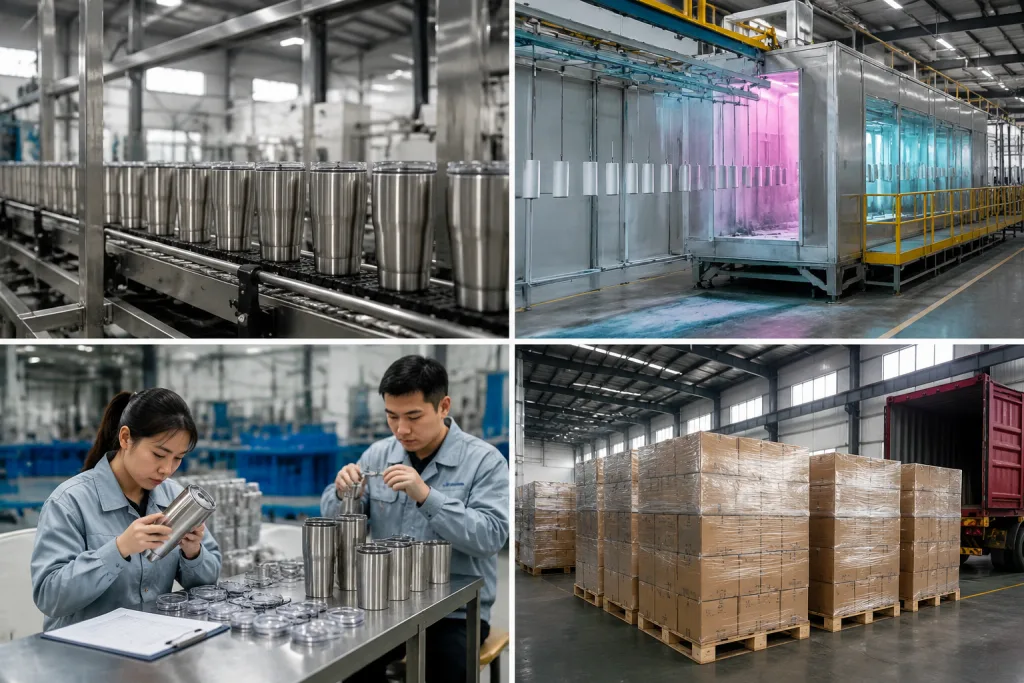
Key Takeaways
- A complete RFQ should define capacity, steel grade, wall structure, coating, logo method, packaging, and target price; missing any one item can shift cost by USD 0.20-0.80 per unit
- For insulated tumbler wholesale, practical MOQs are usually 1,000-3,000 pcs per color, with sample lead time around 7-12 days and bulk lead time 25-45 days
- Add PO line items for AQL level, leakage standard, carton drop requirement, and compliance documents to avoid disputes after production
- For China sourcing, FOB Ningbo or Shanghai is common, but packaging size and carton weight often matter more to your margin than a USD 0.10 unit price change
If you buy insulated tumbler wholesale for a brand, chain store, or distributor, most mistakes happen before the first sample hits the line. We see it every week: a vague RFQ, one missing PO line, or the wrong logo method. That adds 12 to 25 days, pushes unit cost up by USD 0.30 to 1.20, and leaves you with stock that fails your market's compliance checks. Last month, QC pulled the sample and found the logo file called for screen print while the PO meant laser marking on a 0.5 mm powder coat. That kind of miss is expensive. You do not need more factory promises. You need cleaner inputs.
At BottleForge Industrial in Hangzhou, Zhejiang, China, we see the same pattern across wholesale drinkware projects, from canteen wholesale orders to beer tumbler bulk and growler wholesale programs. The buyers who hold a stable landed cost are not lucky. They freeze specification, testing, packaging, and inspection before mass production starts, usually before we book tooling slots or order cartons against MOQ 3000. This is the wrong question to ask: “Can you match the sample fast?” The better question is whether the spec pack is tight enough that the math works after freight, testing, and AQL pull count.
Start with an RFQ that can be priced
Most RFQs for insulated tumbler wholesale are too loose to price right. Ask for a “20 oz stainless tumbler with logo” and you will get 4 prices built on 4 different assumptions. One factory quotes 201 outer wall, another runs 304/201, another includes powder coat, another prices a plain spray finish. We see this every week. On the line, a 0.05 mm wall difference already shifts steel cost and unit weight, so the buyer thinks he is comparing four offers. He is not.
Your RFQ should read like a purchase spec. This is the right question to ask. At minimum, list capacity in ml and oz, structure, material grade, finish, lid type, logo process, packaging, and destination market. For example: 600 ml double-wall vacuum tumbler, inner 304 stainless steel, outer 304 or 201 depending market, 0.4 mm inner and 0.45 mm outer wall, powder coat matte black, clear AS slider lid, 1-color silk screen, individual polybag plus white box, EU REACH compliant, target FOB China. If the logo position matters, say “front center, 35 mm up from base” so the silk-screen fixture matches from sampling.
- Body structure: single wall, double wall, or vacuum insulated
- Steel grade: SS304 for food contact is common; SS316 for premium lines
- Lid material: AS, Tritan, PP, or stainless cap assemblies
- Decoration: silk screen, laser engraving, heat transfer, UV print
- Pack-out: egg-crate carton, mailbox gift box, PDQ display, or Amazon-ready
If you also source wholesale canteen, bulk canteen, or drinkware bulk across the same line, ask for a quote matrix. One spreadsheet should show 500 ml canteen bulk, 600 ml tumbler, and 1.9 L bulk growler options with tooling, MOQ, sample charge, and bulk price. We ship faster when this sits in one file, not six email threads. In Zhejiang, China, factories can usually quote this within 2 to 3 working days if the RFQ is complete. BottleForge capacity is 300,000 units per month across tumblers, sports bottles, and related drinkware wholesale programs, but no factory can price cleanly from half-filled inputs; last month QC pulled the sample because the PO said “black lid” while the artwork file called for a smoke-clear slider.
Build the first PO around critical line items
Before sampling, issue a preliminary PO or sourcing sheet with the commercial line items spelled out. New buyers miss this step all the time. They reply “same as quoted” on email, then 18 days later the buyer flagged that the lid gasket, barcode label, or master carton print was never on paper. Put it into a numbered document. We run from that sheet on the line, and both sides have the same reference when QC pulled the sample.
What your pre-sample PO should include
- Item code: your SKU and factory model number
- Description: exact capacity, dimensions, and net weight tolerance
- Material callout: 304 inner, 201 outer or 304/304 if required
- Finish: powder coat, painting, electro-polish, or brushed steel
- Accessory set: lid, straw, cleaning brush, tea filter, base pad
- Packaging: inner box size, carton quantity, carton gross weight limit, barcode placement
- Quality terms: AQL 2.5 major / 4.0 minor, no leakage, no sharp edge, vacuum retention target
- Compliance terms: REACH, LFGB, FDA, Proposition 65 if needed
For Europe and North America, state who pays for third-party testing and at which stage: pre-production sample, pilot run, or mass production. This is not paperwork for later. For EU orders, REACH and food-contact documents need to be locked before bulk purchase of raw material; we have seen shipments held because one silicone part had no matching declaration. For US orders, the material declaration and the relevant ASTM or FDA contact safety requirements should be confirmed before mass production starts. The same rule applies if your program includes alcohol flask wholesale, alcohol flask in bulk, or beer growler wholesale bulk items. Different use cases bring different test points, sealing pressure standards, and warning label content, and the math does not work if you wait until after tooling samples.
You do not need a long PO. You need a PO that leaves fewer things open to interpretation.
Ask the supplier to sign back on the document. Simple step. In Zhejiang, sourcing teams move fast, and one unchecked line can turn into the usual “standard option” argument. We have even seen a PO typo swap a 30oz tumbler to 20oz on the packing sheet, so written alignment is the right question to ask before sampling, not after the cartons are booked.
Approve engineering samples, not pretty samples
The first sample should answer engineering questions, not win a beauty contest. We see buyers sign off a photo-ready piece with clean paint and nice lighting, then find out later there is no insulation record, no carton spec, and no lid seal test. Bulk moves for a reason. The details were never locked. On our line, QC pulled one sample last month with a clean finish but a loose silicone ring at 0.6 mm undersize, and the buyer flagged leaks only after pilot packing.
For insulated tumbler wholesale, sample review should cover five checks. First, measure dimensions against your target pack-out with a caliper, not by eye. A tumbler that is 3 mm wider can change carton quantity and freight cost. Second, weigh the sample on a digital scale. A difference of 20 to 35 grams often means wall thickness changed, and we have seen this go sideways on drop performance. Third, test lid fit and thread consistency across at least 3 pieces, not one hero sample. Fourth, verify heat retention. For a 20 oz vacuum tumbler, we usually ask for a hot-fill check and a 6-hour retention record that matches the market claim. Fifth, inspect decoration adhesion after tape test and light abrasion. This is the wrong question to skip.
- Sample types: blank sample, pre-production sample, color sample, packaging sample
- Normal timing: 7-12 days for decorated sample, 3-5 extra days for custom box mockup
- Typical fees: USD 50-150 sample charge, often refundable against bulk PO
If you are buying beer tumbler bulk, beer tumbler in bulk, or beer tumbler wholesale bulk for outdoor retail, ask for coating cross-hatch adhesion data and dishwasher advice in writing. We ship plenty of matte powder coat, and outdoor buyers often push back on edge wear around the rim after the first retail returns. Put the test result on paper. If you are developing a best wholesale drink bottle line that includes canteen wholesale and tumblers together, insist on color matching across different shapes. The same Pantone on a tumbler body and a curved canteen can shift after coating; on one PO, even with the same paint batch, the Delta E reading still opened up because the curvature changed spray coverage.
Do not approve from studio photos alone. Ask for a short factory video showing lid threading, leak inversion test, carton stacking, and vacuum bottom inspection. Three minutes is enough. We usually show 6-high carton stacking and the vacuum dot check at the base, because ten polished images will not tell you if the lid binds on the second turn or if the bottom dimple is off-center.
Lock pricing after material and packaging decisions
Buyers chase unit price too early. That is the wrong question to ask at RFQ stage. On our line, cost usually moves after you lock steel grade, coating process, lid tooling, and how packed goods fit into a master carton. After sample approval, ask for a final quote tied to the approved sample number and the exact PO revision—last month QC pulled a sample where the PO typo changed a matte body to gloss, and the cost shifted before production even started. If you skip this step, the quoted item and the shipped item drift apart.
For a mainstream 20 oz vacuum tumbler in China, FOB pricing can vary roughly from USD 2.60 to 4.80 depending on steel combination, finish, lid style, and order volume. A powder-coated body with a standard slider lid at 3,000 pcs runs on a different cost base than a 304/304 body with electro-polished interior, a custom mold lid, a printed color box, and a straw set. The gap is not small. We have seen lid tooling alone add 12 days vs 18 days to approval timing if the seal fit misses by 0.3 mm on first trial. The same logic applies to wholesale growler, growler bulk, beer growler in bulk, and beer growler wholesale programs. Heavy gauge body stock, handle welding, and pressure-safe sealing push cost fast, and the math doesn't work if you compare them to a basic tumbler shell.
Your final price sheet should separate these items:
- EXW or FOB unit price
- Tooling cost: lid mold, logo screen, laser jig, box die-line
- Packaging adders: gift box, divider, insert card, FNSKU label, carton mark
- Compliance cost: lab testing, audit documents, special declarations
- Freight assumptions: carton size, CBM, gross weight
Procurement managers should run a freight sensitivity check. Simple math. A unit cost cut of USD 0.12 means little if the new package increases carton CBM by 8%. We ship this every season with gift-boxed wholesale drinkware and premium wholesale canteen orders from Zhejiang factories going to Hamburg, Rotterdam, Los Angeles, or Toronto. The buyer flagged it on one 40HQ booking after a thicker insert dropped loading by more than 1,000 pcs per container. Ask for units per carton, carton dimensions, gross weight in kg, and container loading estimate before you sign the bulk PO. This is where margin is kept or lost.
Set bulk production controls before deposit
After price is fixed, the next risk is simple: assuming the factory will copy the approved sample by default. That is how claims start. Before you release deposit, the factory should issue a pre-production sample or golden sample, a production schedule, and an inspection plan tied to your PO. We usually seal the golden sample with date and buyer code, then keep one at the line and one in the sales file. Standard payment terms in China are often 30% deposit and 70% before shipment, though larger buyers may negotiate against inspection or copy B/L terms.
Your bulk PO should spell out production milestones: raw material arrival, body forming, welding, vacuuming, powder coating, assembly, packing, and final inspection. Put target dates next to each step. A normal lead time for insulated tumblers is 25 to 45 days after deposit and artwork approval, depending on season and quantity. From August to November, Zhejiang factories usually run tight because holiday drinkware programs stack up, and we have seen a 28-day plan slide to 36 days if lid parts arrive 4 days late.
Control points worth putting in writing
- Incoming material check: stainless grade confirmation and thickness spot check with caliper readings recorded in mm
- In-line leak test: 100% for assembled lid fit if your market is sensitive; QC pulled the sample every 2 hours on one EU order after the buyer flagged seepage
- Vacuum retention sampling: define sample size and pass standard; if you do not write this down, the math does not work during claim review
- Decoration approval: first-off signoff before full print run, including Pantone check and logo position in mm from the seam
- Carton control: drop test standard and max carton weight, often under 15 kg for easier warehouse handling; we ship enough to know heavier cartons split at the bottom seam
If your assortment extends beyond tumblers into alcohol flask bulk, alcohol flask wholesale bulk, or drinkware wholesale gift sets, ask for a product-specific QC checklist instead of a generic one. Generic checklists look tidy and miss the real failure points. Flask caps need hinge strength and seal checks that do not apply to tumblers, and growlers need closer review on handle weld appearance and pressure-related leak resistance. On one flask PO, the buyer flagged cap wobble at 1.5 mm play, which a tumbler checklist would never catch. The wider your bulk drinkware range, the less useful generic QC becomes.
The point is plain: pay deposit only after specs, artwork, packaging, and inspection method are attached to the PO. We ask buyers to attach carton marks, barcode file version, and even the lid color code, because one typo on a PO can hold packing for a day. Otherwise, you are financing ambiguity.
Inspect the shipment like a retailer would
Pre-shipment inspection is the point where the order either stands up or the vague parts get exposed. Do not check appearance only. On our line, QC pulled the sample by carton number and checked workmanship, function, count, assortment, packing, barcode, and shipping mark against the PO. For most wholesale drinkware orders, an AQL protocol such as major 2.5 and minor 4.0 is practical, but some retail buyers ask for tighter limits on logo position or coating defects. This is the wrong question to ask at the end.
Functional testing has to be plain and physical. For tumblers, inspectors should check lid engagement, gasket placement, odor, basic leak resistance, coating defects, logo placement, and carton labeling. We usually run a simple upside-down leak test for 30 minutes and gauge logo offset with a 1 mm scale card. On canteen bulk and wholesale growler items, inspectors should also review carry handle strength, cap thread consistency, and body dent risk due to thinner gauge. We have seen buyers flag thread drag on only 12 pcs out of 2,000, and that small issue can slow the whole release. If you ship to Amazon or a 3PL, verify FNSKU placement, suffocation warning language where required, carton dimensions, and pallet pattern before the container leaves China.
A practical pre-shipment checklist includes:
- Quantity verification: packed quantity against PO by SKU and color
- Workmanship: dents, scratches, coating fish-eyes, weld marks, burrs
- Performance: seal test, straw fit, base stability, temperature retention sample test
- Packaging: barcode scan, insert card, carton mark, drop test sample
- Documents: commercial invoice, packing list, test reports, origin docs if needed
Do not wait for the inspection report to define what “acceptable” means. Put it in the PO. We have seen a PO typo on matte black vs satin black turn into a full-day argument at final inspection. A tiny logo shift may be acceptable on a low-cost promotional order but not on a premium drinkware bulk retail launch. A carton over 18 kg may pass in factory but create warehouse refusal in Europe. The math does not work if your team approves by eye and the warehouse rejects by rule.
Once the shipment passes, book against realistic ETD and ask for final photos of loaded cartons. Ask for loading photos that show carton count, pallet wrap, and container seal number; we ship these before the truck clears the gate. It is not glamorous. It is how repeatable sourcing works.
Send your tumbler RFQ and get a usable quote
Share specs, artwork, target market, and packaging needs. We will review MOQ, cost drivers, lead time, and compliance points before you place the bulk PO.
Frequently asked questions
What MOQ should I expect for insulated tumbler wholesale in China?
For a standard vacuum tumbler with stock lid and one-color logo, a realistic MOQ is usually 1,000 to 3,000 pcs per color. If you want a custom lid, special coating, or gift box, MOQ often moves to 3,000 to 5,000 pcs because of setup loss and packaging minimums. Mixed-color orders can sometimes be split within one master PO if the body and lid are the same. In Zhejiang, China, some factories will accept 500 pcs for plain stock items, but unit cost rises sharply, often by USD 0.40 to 1.00 per piece. If your range also includes canteen wholesale or growler bulk items, ask for a combined MOQ plan so one container can carry multiple SKUs without inflating cost too much.
How long does sampling and bulk production usually take?
A blank sample from stock can ship in 2 to 4 days. A decorated sample with logo usually takes 7 to 12 days. If you need custom packaging, add 3 to 7 more days for printed box mockups. Bulk production after deposit and sample approval is commonly 25 to 45 days, depending on quantity, finish, and season. Powder coating, laser marking, and standard lids are faster than new tooling or multi-part gift sets. During peak gifting season, lead time can stretch by 10 to 15 days. If your PO includes beer tumbler wholesale bulk, alcohol flask wholesale, and insulated tumblers together, ask for a production calendar by SKU instead of one overall date.
Which quality checks matter most before I place the bulk PO?
Three checks matter most: material confirmation, functional sealing, and packaging fit. First, confirm the stainless specification in writing, such as 304 inner with agreed wall thickness, because that affects corrosion resistance and weight. Second, test the lid and gasket on multiple sample pieces, not just one, including an inversion leak check and thread consistency. Third, approve the exact retail box and master carton dimensions, because freight cost and warehouse acceptance depend on them. For vacuum tumblers, also ask for a defined insulation retention check and an appearance standard for coating defects. Put AQL, logo position tolerance, and carton weight limit directly into the PO. That prevents quality disputes when the shipment is ready.
Should I buy FOB or EXW for wholesale drinkware orders?
For most overseas buyers, FOB Ningbo or FOB Shanghai is easier to control than EXW. With FOB, the supplier handles local China export steps up to vessel loading, and you can compare freight through your own forwarder. EXW sometimes looks cheaper on paper, but local handling, customs coordination, and trucking charges can erase the difference quickly. If you are new to drinkware wholesale, FOB usually gives cleaner cost visibility. That said, the shipping term matters less than carton efficiency. A tumbler packed 24 pcs per carton at 0.062 CBM can beat a cheaper EXW unit packed in oversized gift boxes. Ask for full carton specs, gross weight, and loading quantity before deciding.
Can one supplier handle tumblers, canteens, growlers, and flasks together?
Yes, but only if you manage the project at SKU level. Many factories can supply insulated tumblers, wholesale canteen products, beer growler bulk, and alcohol flask bulk under one account, but each category has different production controls. Tumblers need close lid-fit and insulation checks. Growlers need more attention on handle welding, body gauge, and cap seal performance. Flasks require hinge and cap alignment review. If one supplier offers the full line, ask for category-specific QC checklists, separate lead times, and MOQ by item. A practical mixed order might be 2,000 tumblers, 1,000 canteens, 500 growlers, and 1,000 flasks, but packaging and tooling must be costed separately to avoid hidden charges.