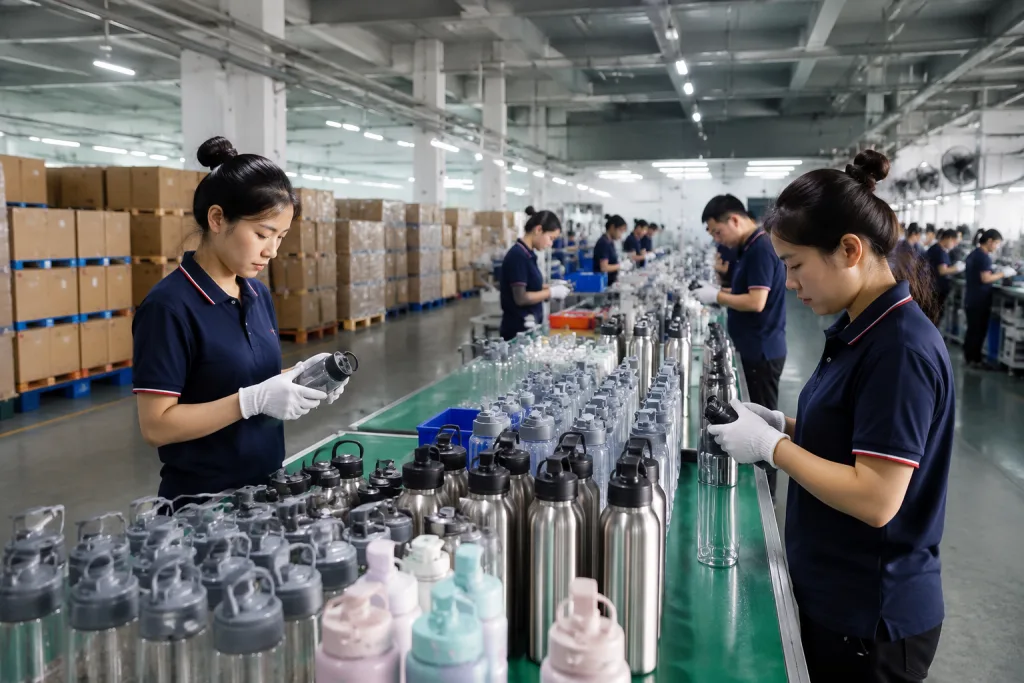
Key Takeaways
- Single-wall RPET or Tritan bottles usually land at USD 1.80-3.20 FOB China, while double-wall stainless runs USD 4.20-8.90 at 1,000-3,000 pcs.
- A practical MOQ is often 1,000 pcs per color for stock molds, but custom canteen tooling can add USD 1,500-4,000 and 25-40 days.
- For EU and North America, ask for REACH, LFGB or FDA contact compliance, plus AQL 2.5 inspection and leak testing at 100% before carton sealing.
- Lead time from Zhejiang, China is commonly 25-35 days for repeat orders and 35-50 days for new decorated programs.
You rarely lose a promotional drinkware order because the bottle looks bad. You lose it on spec. We’ve seen orders stall because the channel fit was wrong, the landed cost missed target by USD 0.60, or QC pulled the sample after a logo failed at 200 dishwasher cycles. That is why hydration bottle promotional products need to be compared like industrial parts, not gift items.
If you buy for retail, events, corporate gifting, or a distributor drinkware program in Europe or North America, stainless versus plastic is the wrong first question. Match the bottle to the job: use case, compliance, decoration method, carton count, and reorder lead time—12 days versus 18 days changes the math fast. From Zhejiang, China, factories like ours ship millions of units a year, and on the line the differences show up fast once you put bottles side by side with a caliper and a drop-test sample.
Start with the end use
Buyers usually start by comparing silhouette. That is the wrong question. We ask for the sales channel first, then daily use, then target FOB, and only then shape, because a hydration bottle for a summer giveaway does not need the same build as a premium custom drinkware SKU on a retail shelf or a customized canteen for a corporate wellness program. On our line, a 0.5 mm wall single-wall bottle and a 0.4 mm vacuum body are built for different jobs from day one.
Here is the practical split we use with buyers in China and overseas:
- Event and campaign use: lightweight, low FOB, quick turnaround, usually 500 ml to 750 ml single-wall plastic or aluminum. We ship these in bigger runs, and buyers often push for a 25-day lead time with simple 1-color screen print.
- Corporate gifting: stronger perceived value, better packaging, most often 500 ml to 1,000 ml insulated stainless. Gift-box size matters here; we have had buyers flag a box that was 8 mm too tall for their outer carton.
- Sports and school: easy-carry lid, impact resistance, straightforward cleaning, often Tritan or 18/8 stainless. QC pulled the sample more than once because a straw lid had too many small parts for school use.
- Outdoor and specialty: larger capacity custom canteen or customizable growler formats, usually 32 oz to 64 oz with handle options. The math does not work if the empty bottle is already too heavy before you add a thick handle set.
- Retail programs: decoration consistency, shelf impact, barcode labeling, and reorder stability matter more than the lowest unit price. We have seen this go sideways over a small PO typo where the barcode version changed but the artwork file did not.
If you are a canteen distributor or one of several canteen distributors managing mixed channels, use-case discipline cuts costly mistakes early. A bottle that works for a canteen promotional order at 5,000 units may fail in retail because the print scratches after a basic tape test. A bottle that looks right for gifting may be too heavy for an event mailer once the packed weight goes past 0.8 kg. In our Hangzhou, Zhejiang production work, this first filter removes about 30% of unsuitable options before sampling starts, so the buyer is not paying sample freight on the wrong 6 or 8 styles.
You are not buying a bottle. You are buying fit between product, channel, compliance, and margin.
Head-to-head bottle spec table
Below is the comparison most B2B buyers actually need. Straight table. No marketing fluff.
| Type | Typical FOB China | MOQ | Best use | Main risk |
|---|---|---|---|---|
| Single-wall RPET 600-750 ml | USD 1.80-2.60 | 3,000 pcs | Mass promotions, sustainability messaging | Heat resistance and scratch visibility |
| Tritan 650-1,000 ml | USD 2.20-3.80 | 1,000-3,000 pcs | Gym, school, daily hydration | Not premium enough for high-end gifting |
| Single-wall stainless 500-750 ml | USD 2.60-4.20 | 1,000 pcs | Durable canteen custom programs | No insulation, exterior condensation |
| Double-wall vacuum stainless 500-1,000 ml | USD 4.20-8.90 | 1,000 pcs | Corporate gifts, retail, premium distributor canteen | Higher freight cost and tighter QC needs |
| Powder-coated growler 32-64 oz | USD 6.80-12.50 | 500-1,000 pcs | Outdoor, brewery, customizable growler lines | Bulky carton ratio |
| Aluminum canteen 500-800 ml | USD 2.00-3.10 | 3,000 pcs | Lightweight canteen promotional orders | Dent visibility, lining spec control |
If you need a custom canteen, canteen customizable sports bottle, or customized growler, the main split is perceived value versus freight cost. This is the right question to ask first. Stainless gives the strongest premium signal, but 1,000 pcs often adds 280-450 kg versus RPET or Tritan, depending on size and packing. We ship this every week. That weight change hits fast on DDP quotes into Europe and on LCL bookings into North America, where one carton size change can push the chargeable volume.
For factories in Zhejiang, a standard stainless body typically uses 0.4 mm inner wall and 0.5 mm outer wall in common vacuum models. Go thinner and the math often does not work, because dent claims rise after transit. QC pulled samples last month with shoulder deformation after drop testing on a lower-weight body. For plastic, lid fit and leak design matter more than wall thickness alone; on the line, we check thread engagement and do a 45-degree inversion test before packing. If you are speaking with a canteen supplier, canteen vendor, or canteen manufacturer, ask for the actual material grade, wall construction, and unit weight in grams. If they answer with generic wording and no gram weight, we have seen this go sideways.
Material choices without marketing noise
Material claims get noisy fast. Buyers hear “eco,” “durable,” “premium,” and “safe,” then the PO still comes back to the same questions: unit cost, lead time, decoration yield, and complaint risk. That is the part that matters. We’ve seen buyers flag “premium” on a brief, then cut the target by USD 0.60 per piece after first quotation. The wrong question is what sounds best. Ask what ships cleanly, passes testing, and still works at your MOQ.
Stainless steel
For premium customized drinkware, 18/8 stainless is still the default. It takes powder coating, laser engraving, silk screen, heat transfer, and dishwasher-resistant finishes better than most options, and the line is more stable once tooling is locked. On our side, QC usually checks weld polish and mouth diameter tolerance within about 0.3 mm before coating. It is the safer route if you are a canteen manufacturer partner building a long-running corporate program. Vacuum models also support higher retail pricing. The tradeoff is plain: higher unit price, 18 days instead of 12 days on a repeat order, and more shipping weight.
Tritan and similar copolyesters
Tritan works well for mainstream hydration bottle promotional products because it is clear, impact-resistant, and familiar in sports channels. It gives a cleaner look than lower-cost plastics and usually lands in the right spot for customizable drinkware in the USD 2 to 4 FOB band. Buyers often push back on scratch marks near the gate after bulk packing, so we run sample drop checks and carton rub tests early. It does not feel as premium as metal. For daily-use hydration, the math often works better.
RPET
RPET fits briefs where sustainability messaging is part of the sale. Do not oversell it. Recycled content needs clear documentation, and color consistency can move more than virgin resin from lot to lot. We’ve had a buyer flag a lid and strap set because the Pantone was off by eye even though the body was accepted. If your client expects exact Pantone matching across lid, body, and strap, RPET needs a wider tolerance discussion before approval, not after the first 5,000 pcs run.
Aluminum
Aluminum still has a place in lightweight custom canteen and canteen customized promotion projects. Freight is lower by weight, and a 500 ml body is easier to carry all day, but dents show faster and inner coating quality is not something to gloss over. We’ve seen this go sideways when a buyer approved appearance and skipped lining details. Ask the canteen factory for lining specs, coating type, and migration test records before mass production.
If you are also sourcing custom growler or customized growler items, stainless wins more often because pressure resistance and coating durability matter more over repeated outdoor use and refill handling. A factory that knows the line will tell you where each material fails: aluminum dents, RPET drifts in color, Tritan can scuff, stainless costs more. Good canteen suppliers in China should say that clearly, even if it costs them the order.
Decoration decides reorder success
Repeat-order failures usually start at decoration, not the bottle. We’ve shipped bottles with clean welds and straight bodies, then lost a reorder because the logo chipped after a tape pull, the registration walked 1.5 mm on the line, or the blue block drifted across 10,000 units.
For hydration bottle promotional products, the most common decoration choices are:
- Silk screen: lowest setup cost and usually the right fit for 1-2 spot colors on straight walls. We run it most often on simple logos with a 300 mm screen plate. Typical add-on: USD 0.08-0.25 per color.
- Laser engraving: durable and premium on stainless. Good option for 304 stainless when the buyer wants branding that will not rub off. Typical add-on: USD 0.12-0.35.
- Heat transfer: better for multi-color graphics, but adhesion lives or dies on coating and cure process. QC pulled the sample more than once after a poor bake cycle. Typical add-on: USD 0.20-0.60.
- Digital print or UV print: flexible for short runs, but durability testing is the real question. We’ve seen buyers approve the look, then flag scratching after a basic rub test.
- Embossed or molded branding: useful for custom canteen tooling or proprietary retail SKUs, but tooling costs apply. MOQ and tooling math need checking early, or the math doesn’t work.
If you are a canteen distributor, canteen vendor, or distributor growler buyer serving multiple brands, set a decoration durability standard before PO approval. That means tape test, rub test, dishwasher simulation where applicable, and color sign-off against Pantone or an approved sample. In our Zhejiang operation, we break decoration approval into a separate checkpoint because about 15% of first-round art layouts need logo resize or placement changes after production review. Last month the buyer flagged a logo that sat too close to the seam by 3 mm, and they were right.
Curved shoulders and narrow panels kill usable logo space faster than catalog photos show. This is the wrong question to ask: “Can you print my artwork?” Ask for an artwork area drawing with millimeter dimensions, not just a mockup, for customizable canteen and customizable growler projects. A serious canteen supplier or canteen manufacturer should send that fast; we usually turn it in 24 hours, and the drawing tells you more than a glossy render.
Factory questions worth asking early
You save 2–3 weeks by asking blunt questions in the first email. We’ve seen this go sideways after sample approval or after the 30% deposit, when QC pulled the sample file and found the carton spec was never confirmed.
Ask your canteen factory, canteen supplier, or canteen manufacturers shortlist these questions early:
- What is your real MOQ by color, by decoration, and by packaging type? Ask for the split in pcs, not a vague “flexible MOQ.”
- Do you run AQL 2.5 final inspection, and what defects are classified as critical, major, and minor? Ask to see one real inspection report with defect photos.
- Can you provide REACH, LFGB, FDA, CPSIA, or ASTM records relevant to the bottle and market? The buyer flagged this on us once because the PO said “EU gift market” but no LFGB file was requested.
- What is your monthly capacity for this model family? Ask for line output, like 12,000 pcs per day on one 600ml bottle body, not broad claims.
- Do you have BSCI, ISO 9001, or social audit records for brand onboarding? Get the latest issue date, not an old PDF sitting in sales email.
- Can you support FNSKU, barcode labeling, insert cards, and drop-test packaging for marketplace or retail shipments? Ask if they scan barcode placement on the line and what carton drop standard they run.
At BottleForge Industrial in Hangzhou, Zhejiang, a typical stock-mold stainless program starts around 1,000 pcs per color, with repeat orders in 25-35 days and overall capacity above 300,000 units per month across core bottle lines. That is the level of detail you should expect. If a supplier cannot state MOQ, lead time, and monthly output in plain numbers, this is the wrong question to skip.
Also check whether you are speaking with a canteen manufacturer or a trading layer. Nothing wrong with a capable exporter. But the answer affects who handles drawing changes, who signs off lid torque, and who owns claims if a 1.2 mm silicone seal fails leakage test. For a custom canteen, custom growler, or customized canteen project with tooling or proprietary lids, direct technical communication matters.
Compliance and QC by market
If your shipment goes into the EU or North America, compliance is set at the start, not at the packing stage. It changes material choice, ink spec, lab budget, and lead time. We see this on the line all the time: a lid print that passed an internal rub test at 50 cycles still got held because the buyer asked for a different ink declaration after sampling.
For Europe, buyers usually ask for REACH alignment and, on food-contact programs, LFGB-related testing. For the US and Canada, FDA-contact compliance is standard for drink-contact parts. Kids SKUs are a different job. If the bottle is sold for children, expect extra review around CPSIA or ASTM requirements, and do not treat it like a generic promo bottle. This is the wrong question to ask: “Can you use the same paperwork as our adult bottle?” We have seen that go sideways after a PO typo changed “youth” to “kids” and the buyer flagged it at pre-production.
On quality control, a sensible baseline for hydration bottle promotional products is:
- 100% leak test before packing
- Vacuum retention spot checks on insulated models
- Incoming raw material verification for steel grade, resin, and coatings
- AQL 2.5 final inspection before shipment
- Drop test and carton review for e-commerce or parcel delivery programs
If you are a distributor canteen or distributor drinkware buyer, ask to see the QC report format before production. That report tells you fast if the factory works with numbers or just sends nice photos. QC pulled the sample, measured lid torque in N·m, logged dent rate by piece count, checked print defects against the approved artwork, and recorded master carton weight in kg. Weak suppliers still write one line: QC passed.
For canteen promotional and customized drinkware orders, smell gets missed too often. New plastic lids, silicone seals, and some coatings can trigger odor complaints on arrival, especially in sealed retail packs. We run odor checks after aging, not straight off the line, because the result changes. A common hold point is 24 to 48 hours before packing, and if the seal ring smell is still sharp at carton drop, the math doesn’t work—repacking later costs more than waiting one extra day.
Match bottle type to channel economics
Use-case fit matters only if the numbers hold. We look at unit cost, pack-out, freight per carton, and complaint risk together; on our line, a 2 mm carton size change can alter container loading enough to show up on the landed-cost sheet.
For event giveaways: keep the spec tight. Single-wall RPET, Tritan, or aluminum is usually the cleanest value play. If your target landed cost is under USD 3.50 in Europe, insulated stainless is usually the wrong chase unless the run is big enough to spread mold, decoration, and freight—think 10,000 pcs, not 1,500. We have seen buyers push for double-wall at giveaway pricing, and the math does not work.
For corporate gifting: insulated stainless still wins on perceived value. A USD 5.20 FOB bottle with gift box often lands better than a USD 3.20 plastic bottle, and complaint rates stay lower when decoration is controlled on the line. QC pulled a sample last month with a 0.4 mm logo shift on a powder-coated body; that is small on paper, but the buyer flagged it fast on gift programs.
For retail: standardize your platform. Fewer lid systems and common body diameters make reorders easier, and matched carton sizes save warehouse headaches. If you need canteen customizable or canteen customized programs across seasons, do not split into too many molds. We have seen this go sideways when a PO carried one lid code typo and the whole replenishment batch had to be re-sorted.
For outdoor and beverage programs: custom growler, customizable growler, and distributor growler lines should be judged hard on handle ergonomics, mouth diameter, and coating toughness. A 64 oz body looks good in a render, but if the handle bite is wrong after fill weight, returns start. We check mouth diameter with a caliper and coating adhesion with a cross-hatch test because bulky units only make sense when the retail ticket covers the freight.
For distributor business: build a narrow, repeatable range. The best canteen distributors and canteen vendors do not sell everything; they run a stable set of 6 to 12 proven bodies, then change finishes, lids, and packaging around them. MOQ discipline matters here. A messy range with 27 slow SKUs ties up cartons, caps, and warehouse space for no good reason.
The practical lesson from Zhejiang manufacturing is simple: the best sourcing decision is usually the bottle you can reorder with the fewest surprises. This is the right question to ask. If a canteen supplier promises every possible customization but cannot hold lead time, compliance paperwork, and decoration consistency, the low quote is not low once claims, delays, and rework hit.
Get a practical bottle spec recommendation
Send your target price, market, quantity, and logo method. We will suggest the right hydration bottle promotional products option and quote from Hangzhou, China.
Frequently asked questions
What MOQ should I expect for hydration bottle promotional products?
For stock molds, a workable MOQ is usually 1,000 pcs per color for stainless models and 3,000 pcs for many plastic or aluminum bottles. Some canteen manufacturers in China can combine colors to reach 1,000 pcs total, but decoration and packaging may still require per-color minimums. If you need a fully custom canteen body, custom lid, or molded logo part, expect tooling plus MOQs closer to 3,000-5,000 pcs. Gift boxes, straws, boot sleeves, and custom inserts also change MOQ. Always ask for MOQ by body color, lid color, logo process, and retail pack, not just a single headline number.
How do I choose between Tritan, stainless, and RPET for a promotion?
Choose by channel first. Tritan is usually best for everyday hydration, school, gym, and value-conscious branded programs because it balances clarity, durability, and FOB cost at roughly USD 2.20-3.80. Stainless is better for premium customized drinkware, gifting, and retail because it supports stronger decoration and better perceived value, though FOB commonly rises to USD 4.20-8.90 for vacuum styles. RPET works when recycled content matters to the campaign, often around USD 1.80-2.60 FOB, but color consistency and heat limits need closer review. If you are quoting multiple markets, ask your China supplier for compliance records before you lock material.
What compliance documents should a canteen supplier provide for EU and US buyers?
At minimum, ask for material contact compliance relevant to the destination market, plus the exact test report tied to the bottle structure and decoration. For EU programs, buyers often request REACH alignment and sometimes LFGB-related food-contact documentation. For the US, FDA-contact compliance is common, and kids-focused items may require extra CPSIA or ASTM review. You should also ask for declarations covering inks, coatings, and silicone seals if those contact the user or liquid path. Good canteen suppliers in Zhejiang, China can usually provide reports, declarations, and a factory audit package such as BSCI or ISO 9001 within a few days if the model is mature.
How long does production usually take from a China canteen factory?
For a repeat order on an approved stock mold, 25-35 days is normal after deposit and artwork confirmation. New projects with fresh samples, custom color matching, or more complex decoration usually take 35-50 days. If you need a customized canteen, custom growler, or new lid tooling, add roughly 25-40 days for tooling and validation depending on complexity. During peak season, especially from August to November, practical lead time may stretch by 7-15 days. Ask the factory for a milestone schedule covering pre-production sample, mass production start, inspection date, and ex-factory date so you can manage your booking window.
How can I compare quotes from canteen vendors fairly?
Normalize the quote before judging the price. Ask every canteen vendor to quote the same bottle weight, steel grade or resin, decoration method, packaging, test standard, and Incoterm such as FOB Ningbo or FOB Shanghai. Confirm whether the price includes leak testing, spare seals, barcode labels, and carton marks. For insulated stainless, check wall construction, copper coating if used, and vacuum retention target. For custom drinkware, differences of USD 0.20-0.50 often come from hidden spec cuts rather than genuine factory efficiency. Also compare sampling cost, lead time, AQL level, and claim handling terms. The cheaper quote is only better if the spec and service level are truly equal.