Key Takeaways
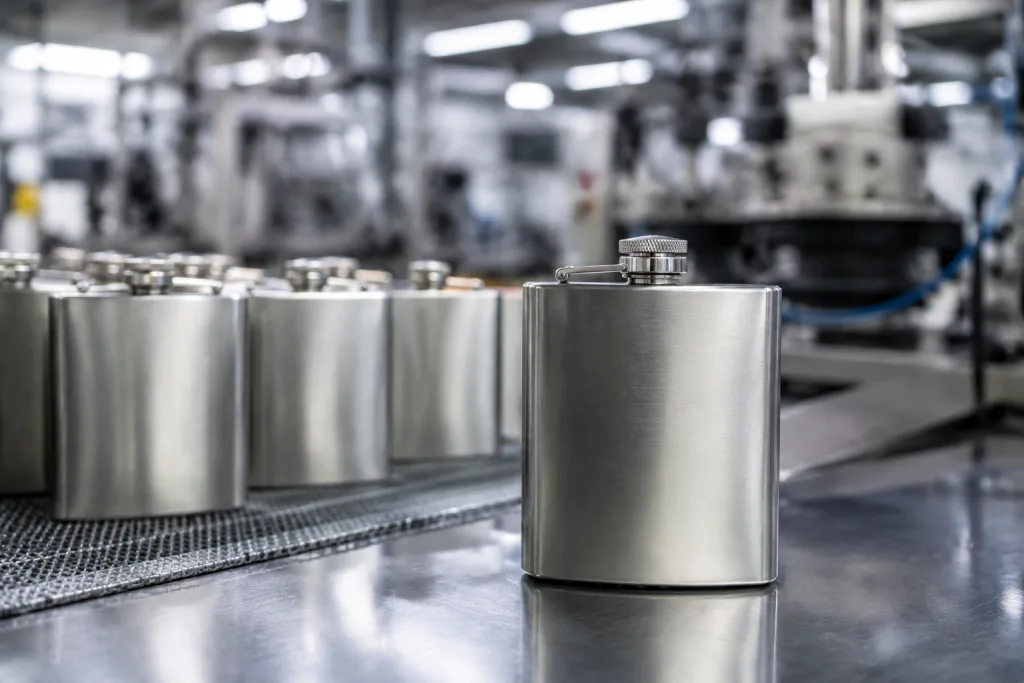
- For a standard 6 oz factory hip flask, 18/8 stainless at 0.5 mm body thickness is the practical baseline for durability and price control
- Typical MOQ is 1,000 pcs per SKU, with FOB China pricing often around USD 1.65-2.90 depending on finish, cap style, and gift box
- Production lead time is usually 25-35 days after sample approval, with daily output in Zhejiang factories often above 20,000 units
- Set AQL 2.5 for major defects and define leak, odor, logo adhesion, and carton drop standards before mass production
You can sign off a hip flask sample in 10 minutes and still get a rough production run. We’ve seen this go sideways. The problem usually sits in the spec sheet, not in the first render or the polished PP sample on the table. A factory hip flask looks simple, but 304 stainless vs lower grade steel, seam welding on the line, cap torque at 0.8–1.2 N·m, coating chemistry, and even inner tray packing all move your cost, compliance exposure, and return rate. QC pulled one sample last month with a 0.3 mm neck mismatch, and that small miss turned into a leak risk.
If you buy for a retailer, private label program, or distributor drinkware channel in Europe or North America, read the line items like a product engineer. Not a merchandiser. We run custom drinkware in Zhejiang, China, and the buyers who avoid rework are usually the ones who push before deposit and ask for the exact numbers: capacity tolerance, wall thickness, logo method, AQL level, and carton drop performance. One buyer flagged a PO typo on flask capacity after sampling, and that saved a full carton mark reprint. Frankly, “Can I get the lowest price?” is the wrong question to ask at this stage.
Start with the metal grade
The first line on a hip flask spec sheet should state the steel grade, full stop. For export orders, we ask for SUS304 / 18-8 stainless steel on all liquid-contact parts, especially the body and neck. Some entry-level flasks switch outer shells to 201 stainless to save USD 0.08-0.15 per unit. On paper that looks fine. In EU and North America programs, the math often does not work. We have seen 201 pass dry-use handling, then spot-rust after 60 to 90 days in a humid warehouse, especially around the shoulder seam and bottom edge.
Ask for the build by component, not by slogan: body material, cap shell material, funnel grade, hinge pin, and tether hardware. QC pulled one sample last month where the PO said “304 flask,” but the hinge pin tested as plated mild steel on the XRF gun. That is where claims start. If the factory hip flask uses a welded hinge or screw cap with a tether, this is the wrong question to skip.
For custom drinkware programs that also include a custom canteen, custom growler, or customizable drinkware gift set, keep one material platform across the line. If your canteen manufacturer runs 304 on bottles but swaps to mixed grades on the flask, paperwork gets messy fast. One SKU shows LFGB support, another needs a separate explanation, and then the buyer flagged the mismatch on the packing list. We have seen this go sideways over one 0.6 mm outer shell.
- Preferred: SUS304 inside and outside
- Acceptable cost-down: 304 interior with controlled 201 exterior for low-risk projects
- Avoid unclear wording: “food grade steel” without mill certificate
From Zhejiang, China, the better factories will issue REACH and LFGB supporting declarations and trace raw material by coil batch. We run incoming checks against the mill cert and component list before the line starts. If your canteen supplier or canteen vendors cannot tell you the grade for the body, cap, and hinge parts, you are buying blind.
Wall thickness changes more than strength
Most buyers ask one thing: does the flask feel solid in hand? That is the wrong question to ask. A typical 6 oz factory hip flask uses 0.4 mm to 0.6 mm body thickness, and that small range changes cost, dent resistance, forming yield, and even how the polish looks after the line runs. At 0.4 mm, you save material and maybe USD 0.05-0.09 per unit, but dents show up faster around the curved side walls and bottom corners; QC pulled samples like this after a basic carton drop. At 0.5 mm, the math works for most private label programs. At 0.6 mm, the flask feels more premium, but unit weight goes up, press forming gets tougher, and the buffing wheel time is longer.
Thickness also changes decoration yield. On a thin polished shell, laser engraving can show heat distortion around curved zones, and we have seen a 1.2 mm shadow spread near the logo edge on bad setups. Deep embossing or debossing needs enough material and controlled tooling pressure, or the panel warps and the cap alignment drifts; on the line, this usually shows up first at the hinge side. If your order includes canteen custom or canteen customized gift assortments, buyers notice it fast when one item feels substantial and the next one feels cheap. We have seen this go sideways in mixed gift sets packed in the same EVA tray.
Useful thickness targets
- 4 oz mini flask: 0.4-0.5 mm
- 6 oz standard flask: 0.5 mm recommended
- 8 oz large flask: 0.5-0.6 mm depending on panel size
Do not stop at the body gauge. Ask for neck wall thickness and cap shell thickness too. A flask body can pass drop tests and still fail in daily use because the neck thread deforms after repeated opening; the buyer flagged this on one PO after the cap started rocking at around cycle 300. We usually recommend a neck construction that keeps thread consistency within ±0.15 mm and cap torque stable after 500 cycles, and we check it with a go/no-go thread gauge before packing.
You are not buying “thicker is better.” You are buying enough thickness to survive retail handling, consumer use, and your chosen logo process without paying for steel nobody notices.
Capacity, dimensions, and tolerance control
Hip flasks sell by nominal capacity: 4 oz, 5 oz, 6 oz, 7 oz, or 8 oz. Buyers skip the tolerance line, then the complaint comes back fast: the “6 oz” flask only takes about 170 ml at the shoulder, and it seeps if the end user tops it off. Put the fill method on the PO. Brim fill, shoulder fill, or safe fill line are not the same spec. On our line, QC checks volume with a 250 ml graduated cylinder, and for a nominal 6 oz flask, a workable spec is 180 ml nominal, ±5 ml tolerance based on forming variation. This is the wrong question to ask if you only ask for “6 oz.” Ask how the factory measures it.
Dimensions carry the same weight because a lot of orders ship with a PU sleeve, a gift box insert, a funnel cavity, or a retail window carton. A 2 mm width drift is enough to wreck a die-line. We have seen this go sideways after tooling adjustment: the sample still fits, mass production does not, because the body curvature moved by about 1.5 mm after the first tool polish. If you are a canteen distributor, canteen distributors, or distributor growler buyer adding flask accessories, this is where the buyer flagged it late—after inserts were already cut.
Ask the canteen factory or canteen manufacturer for these line items:
- Overall height, width, side depth
- Mouth inner diameter
- Neck outer thread spec
- Empty weight per unit, ±3-5 g
- Carton gross weight limit, usually under 18 kg for manual handling
For mixed programs with a customizable canteen, customizable growler, or customized canteen, standardizing tolerances saves rework in the warehouse. We ship projects where one China supplier allows ±10 g and another holds ±3 g; the math doesn’t work once barcode packing audits start and Amazon prep checks unit weight by batch. On one FBA order, QC pulled the sample because the master carton size on the PI was typed as 42 × 34 × 28 cm, but the actual packed carton ran 44 cm after corner protection was added. Request master carton dimensions early, and leave space for FNSKU labels, carton labels, and suffocation warning placement where required.
Cap, seal, and leak performance
The cap system is where 7 out of 10 flask complaints start. The body can polish up well and still get returned because the liner swelled after alcohol contact, the hinge pin loosened on the line, or the thread came off rough on a worn tap. Write the spec tighter: cap style, liner material, tether design, and leak standard. Common liners are food-grade PP, PE, or silicone combinations. For spirits, odor control and seal stability matter more than shiny plating. We’ve seen cheap liners hold smell after 30 days and then go hard.
A basic test protocol for a factory hip flask should include 24-hour inverted leak test, torque test, and 500 open-close cycle test. We run the inverted test on 20 pcs per lot with absorbent paper under the mouth, and QC pulled the sample twice last month because one cap showed sweat at 0.8 N·m. If the flask is sold as a gift item, add a transit vibration check. This is not optional. Cap tethers do scratch the body finish in shipment, especially on mirror polish units packed too tight in EVA trays. A cap can pass static leak testing and still fail after vibration when the thread profile is off by 0.2 mm.
Typical buyer decisions:
- Screw cap with attached hinge: safer for mainstream retail and lower cap-loss risk; MOQ usually stays standard because we run this cap on the regular line
- Detached cap: cleaner look, but more end-user complaints about missing caps; one EU buyer flagged this after a promo run with 3 lost caps in a 500-set sample review
- Silicone gasket upgrade: adds cost, usually USD 0.03-0.06, and gives better leak confidence; the math works if the item ships in a gift box with paper insert
If your program comes from multiple canteen suppliers or canteen vendors, align leak standards across all customized drinkware SKUs. Buyers often ask harder leak questions on a custom growler or customized growler and go soft on flasks. That is the wrong question to ask. One leaking gift flask can stain the insert, soak the mailer, and drag down the full review score. We usually set AQL based on critical = 0, major = 2.5, minor = 4.0, with leakage classified as major or critical depending on market channel. On marketplace orders, we push leakage to critical because one wet carton can trigger a full claim.
Surface finish and logo economics
Hip flask cost usually moves with decoration, not the steel. On a 304 stainless flask, the finish and logo process can shift unit cost faster than the shell. Common surfaces are mirror polish, satin/brushed, powder coat, sprayed color, leather wrap, and PU wrap. Mirror looks sharp on a sample table. On the line, it shows hairline scratches, weld-polish mismatch, and fingerprints in seconds. Brushed satin hides more, and QC pulled fewer appearance rejects on runs where the grain stayed consistent at the shoulder radius.
Next is logo method. For a standard order of 1,000 to 3,000 pieces, these are the options we run most often:
- Laser engraving: clean, permanent, low setup cost, good for 1-color branding; works well if the logo lines are not too thin for the curved panel
- Silkscreen: lower unit cost on flat panels, but adhesion testing matters; we usually check ink cure with a cross-hatch tape test before mass production
- Pad printing: better for curved areas, less durable than laser; the buyer flagged edge breakup before on a deep-radius flask sidewall
- Emboss/deboss on wrap: premium effect, needs tooling and stable material thickness; if the PU varies by even 0.2 mm, the depth starts looking uneven
For logo durability, ask for cross-hatch adhesion, alcohol rub, and dishwasher disclaimer language if relevant. This is not a small detail. Most flasks are hand-wash only, and that should be printed clearly on insert cards if you sell in Europe or North America. We have seen cartons held up because the PO said “dishwasher safe” by mistake, while the approved artwork said hand wash only.
If you source both custom drinkware and canteen promotional items from a canteen factory in Zhejiang, China, match decoration to the sales channel. Giveaway orders usually chase aggressive FOB pricing, so the math does not work for fine logos on mirror polish. Retail boxed flasks need tighter finish consistency, cleaner wraps, and better logo placement. An event canteen customizable project may accept slight panel variation. A high-end customized canteen or flask gift set will not. Good factories will tell you straight if your logo is too fine for a curved mirror surface. Listen to that. It saves you from approving artwork that falls apart at 20,000 units per day line speed.
Packaging specs decide landed cost
Buyers will grind on unit price for 2 hours, then give back the margin on the pack-out. We see it every month on the line. A factory hip flask is small, so packaging can eat a big share of landed cost fast. A plain polybag and white box may add only USD 0.12-0.18. A rigid gift box with EVA insert, funnel slot, and printed sleeve can add USD 0.45-1.10 depending on size and print finish. The wrong question is “what is the cheapest box.” The better question is how much cube you are buying per flask.
Your sales channel should decide the spec. For distributor canteen and distributor drinkware programs, plain retail-ready cartons usually work because the distributor repacks later or builds bundles in its own warehouse. For branded gift sets, presentation carries more weight, but the carton still has to survive the trip. Ask for carton drop test results, not just a mockup photo, and ask the factory to optimize the master carton count. Common pack-outs are 48 pcs or 60 pcs per export carton, but if the unit box is 12 mm taller after adding an insert, you may need 24 pcs to stay below handling limits. We have seen this go sideways when a buyer flagged crushed corners after a 1A drop test was skipped.
Put these details into the packaging spec:
- Inner pack quantity
- Unit box material and E-flute/B-flute requirement
- Master carton burst strength or edge crush target
- Barcode position and size
- Country of origin marking: China
- Spare parts ratio if funnel or wrap accessory included
If your canteen suppliers also make custom canteen, customized canteen, or customizable canteen formats, ask them to quote packaging separately. Do not bury 6 SKUs in one sheet; the math does not work, and the cost drivers disappear. We ship enough mixed orders to know this. At BottleForge Industrial, our usual MOQ is 1,000 pcs per flask design, and lead time is 25-35 days after sample approval, but packaging development can add 5-7 days if inserts or gift boxes need new die-lines. Last month QC pulled the sample because the PO had the barcode size typed as 38 mm instead of 83 mm, and that one typo would have delayed carton printing by 3 days.
Compliance, audit, and production reality
The last lines in the spec sheet decide whether the order runs clean or turns into claims work later: testing, audit status, inspection standard, and actual line capacity. For Europe, ask for REACH-related material declarations and, if the flask is for food contact, LFGB testing support. For North America, the paperwork changes with the construction. We have seen buyers miss this on a wrap adhesive or decorative ink that sits where the hand or mouth touches. If a gift set includes one kids item, ASTM and CPSIA questions start coming fast even when the flask itself is adult-oriented. On our floor, QC will stop a lot if the PO says “304 stainless” but the coating supplier file is still missing.
Also ask the canteen manufacturer or canteen manufacturers how they run incoming QC, in-process leak tests, and final inspection. Ask for the actual method. We run incoming checks with a digital caliper and color panel, then 100% air-pressure leak test on the line before packing. A serious China supplier should know AQL inspection levels, send pre-production samples, and accept third-party inspection before balance payment. BSCI or Sedex audit status is a common retail gate. ISO-style process control is a good sign, but this is the wrong question to ask if the factory cannot explain its reject data from the last 3 lots.
Capacity matters because delays usually come from line loading, not because one hip flask shape is hard to make. A medium-size stainless drinkware plant in Zhejiang may run 300,000 to 500,000 units per month across mixed items, including custom growler and canteen custom programs. Sounds big. Then Q4 gifting hits, two laser stations are tied up on gift sets, and a 25,000-piece flask order moves from 12 days to 18 days. We have seen this go sideways when a buyer books against total plant output instead of the flask line only.
Ask blunt questions:
- What is your real monthly output for hip flasks only?
- How many laser stations and leak-test stations do you have?
- What percentage of orders ship on time in the last 90 days?
- Can you share defect photos from recent production, not just perfect samples?
A reliable canteen distributor or canteen supplier looks past the ex-works price and gets the control points locked down early. You need clear tooling ownership, approved golden samples, and a signed specification sheet with details down to logo position tolerance, for example ±0.5 mm. QC pulled the sample is not enough; the approved sample must match the signed spec. That document is what protects you when China production moves from a sales promise to factory reality.
Send your hip flask spec for a factory review
We will check material, wall thickness, decoration, packaging, MOQ, and lead time against real production conditions in Zhejiang before you place the order.
Frequently asked questions
What is a normal MOQ for a custom factory hip flask order?
For a standard 6 oz stainless flask with one logo, 1,000 pcs per SKU is the most common MOQ in China. If you want a stock shape, stock cap, and laser logo, some factories can start at 500 pcs, but unit pricing usually rises by USD 0.12-0.25. If you add a custom mold, leather wrap, or rigid gift box, practical MOQ often moves to 2,000-3,000 pcs. Buyers who also source custom canteen or customized drinkware lines should keep MOQs separate by decoration and packaging, not just by flask shape. Mixing finishes in one order sounds flexible, but it often causes slower production and more color variation.
How much should I budget per unit for a factory hip flask?
A plain 6 oz SUS304 hip flask with satin finish and white box is often around USD 1.65-2.10 FOB China at 1,000-3,000 pcs. Mirror polish, leather wrap, silicone seal upgrade, or gift-box packaging can push the price to USD 2.40-3.60. A funnel set may add USD 0.18-0.35 depending on material and packing. If your supplier quotes far below market, check steel grade, wall thickness, cap liner quality, and carton spec first. In Zhejiang, China, the cheapest quote is frequently based on thinner metal or weaker packaging. Good buyers compare total landed cost, not only the FOB unit number.
Which logo method is best for hip flasks: laser or printing?
For most B2B flask orders, laser engraving is the safest choice because it is permanent, clean on curved steel, and has low setup cost. On a 1,000-piece order, laser usually costs slightly more per unit than basic silkscreen, but it reduces adhesion complaints and transit scuff issues. Silkscreen works well on flat satin panels when the artwork is bold and the ink system is matched to the surface. If you need metallic colors or a large graphic, printing can still make sense. Ask your factory for alcohol-rub and cross-hatch adhesion results. For premium gift sets, laser on brushed 304 steel is usually the lowest-risk combination.
What compliance documents should I request before mass production?
Start with material declarations for stainless steel grade, plus any available REACH or LFGB support for Europe. If coatings, wraps, or inks are used, request test reports or declarations for those components as well. For retailer programs, ask whether the factory has BSCI or Sedex social audit records and whether they accept third-party inspections to AQL 2.5. You should also request a signed specification sheet, approved artwork, packaging approval, and a golden sample before deposit release to production. If your order includes other customized drinkware like a custom growler or custom canteen, keep documentation grouped by SKU and material so nothing gets mixed during customs or compliance review.
How long does production usually take for custom hip flasks?
If the flask uses an existing shape and standard cap, sample time is usually 5-7 days for a logo sample and about 7-12 days if custom packaging is involved. After approval and deposit, mass production normally takes 25-35 days. During peak season, especially August to November, allow 35-45 days if your supplier in China is also running tumbler, canteen promotional, or customized growler orders on the same polishing and decoration lines. Shipping time is separate, of course. If you need on-time retail delivery, book inspection 3-5 days before ex-factory date and ask the supplier to confirm daily output capacity for your exact finish.