Key Takeaways
- A typical MOQ for custom infuser bottle orders is 3,000–5,000 pcs, with 25–35 days lead time after approval.
- For leak control, ask for silicone ring fit checks and 100% lid torque testing on the first 300 pcs.
- FOB Zhejiang pricing for bulk infuser bottle programs usually shifts by $0.20–$0.80 based on print, lid, and packout.
- A serious distributor fruit infuser bottle order should use AQL 2.5 for major defects and 4.0 for minor defects.
You are not buying a “nice bottle.” You are buying a repeatable SKU that has to survive shipping, handle fruit acids, stay leak-free, and still photograph clean for retail and Amazon listings. In distributor fruit infuser bottle programs, the first sample is rarely the problem. The risk shows up in lot 3, after a label change, a Pantone tweak, or a rushed reorder where the buyer flagged a 0.5 mm lid gap and the line still pushed ahead.
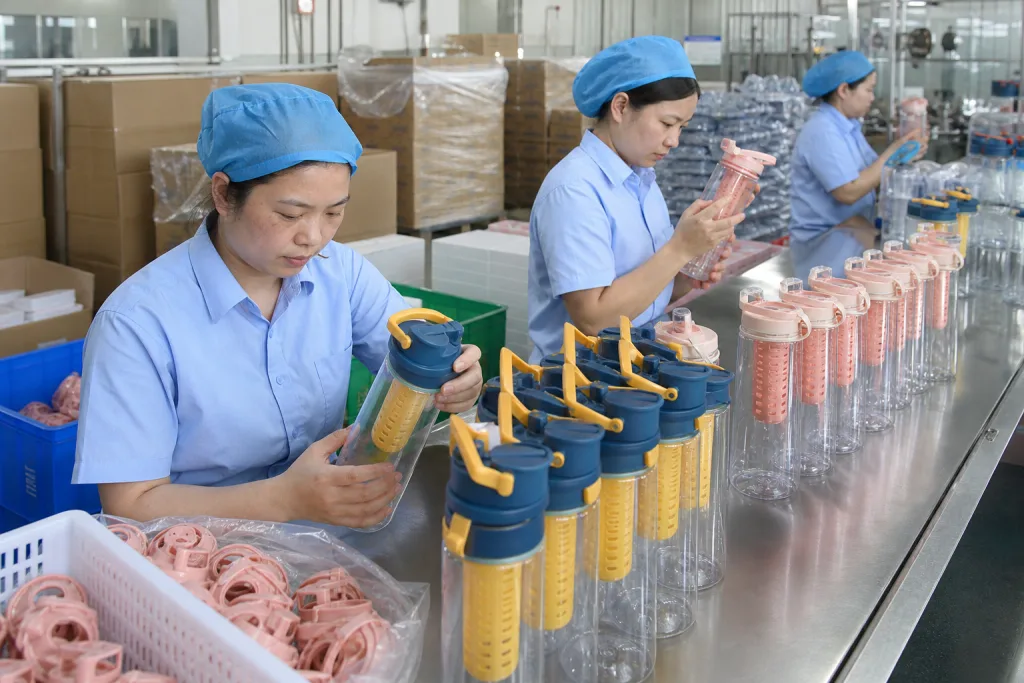
If you source from Zhejiang or anywhere else in China, think like a factory buyer: material grade, tooling tolerance, assembly sequence, packing method. At BottleForge Industrial in Hangzhou, we run 180,000 units per month across drinkware lines, and this is the wrong question to ask: “Can you match the sample?” Better ask whether the spec sheet locks down wall thickness, thread fit, and carton drop standard. We have seen a PO typo on cap color turn into 12 days of delay and 3,000 mixed units on the floor. For a bulk fruit infuser bottle order, clear specs save money and cut retailer complaints.
Start with the buyer’s use case
Start with the channel, not the bottle. A DTC wellness brand and a gym chain do not buy the same packout, and a distributor shipping to retail needs carton control that a promo job can ignore. For most custom fruit infuser bottle projects, I ask three things first: cold water only, ice or fruit every day, or parcel shipping and pallet shipping?
If retail or ecommerce is in the plan, spec a 100% leak-resistant lid, a one-piece silicone gasket, and an insert basket that stays rigid at 0°C. We ran one job where the buyer flagged a basket that was 4 mm short; it floated when the bottle tipped. For a bulk tea infuser bottle, mesh opening size beats decoration every time. This is the wrong question to ask if you start with print.
Set the target price before sampling. A factory direct infuser bottle with Tritan body, PP lid, and removable infuser basket usually lands around $1.85–$3.40 FOB Zhejiang at 3,000 pcs, depending on capacity, mold status, and decoration. If you need a custom logo infuser bottle with gift box, add $0.35–$0.90 a unit. QC pulled one carton last month and found a PO typo on the pack count, so the math needs to be fixed before the line starts.
Choose materials that survive real use
For a customizable fruit infuser bottle, the body material is where buyers burn margin fast. We have seen distributors chase the lowest PET quote, then get scratch complaints after 3 weeks on shelf samples. PET is cheaper up front, but it marks faster and does not like heat. Tritan is the better call for premium wellness programs because it holds clarity after repeated washing on the line and in home use. If you are buying a custom tea infuser bottle, get the temperature limit in writing on the PI, not in a sales chat. Most Tritan bodies are fine up to around 95°C, while the lid system is often lower because of the silicone seal, thread geometry, and cap fit we check with a go/no-go gauge.
Do not treat the infuser insert like a throw-in part. The basket wall thickness, usually 0.8–1.2 mm for PP parts, changes breakage rate and fit straight away. QC pulled the sample on one 0.7 mm basket last season, and the tabs whitened after 6 press cycles. A custom made infuser bottle also needs an odor check, especially for citrus use. Lemon oil finds weak resin fast. In Zhejiang factories, we normally ask for raw material declarations, FDA or LFGB support where needed, and REACH-friendly colorants for Europe. If your buyers are in North America, keep ASTM and food-contact documentation ready. Some buyers ask only about bottle color first; this is the wrong question to ask.
For a custom infuser bottle used as a distributor SKU, I recommend these practical specs:
- Body: Tritan, 2.0–2.5 mm wall thickness
- Lid: PP with silicone ring, no loose two-piece seal
- Infuser basket: PP or Tritan, 50–120 mesh equivalent perforation pattern
- Capacity: 500 ml, 600 ml, or 800 ml depending on retail shelf price
This is usually the split: 500 ml for promo, 600 ml for core retail, 800 ml for gym and hydration programs. We ship more 600 ml than the other two combined because the shelf math works. Get these basics right, and the reorder rate looks different.
Treat sampling like production
Most buyers ask for one sample, then sign off too fast. That is how a customized fruit infuser bottle turns into a customs delay or a return. We run three sample stages: blank sample, decorated sample, and pre-production sample. The blank piece checks the bottle body and basket fit. The decorated sample checks ink pull and color match. The pre-production sample proves the mold cavity, lid torque, and carton size all line up.
If you are sourcing a bulk infuser bottle order, send vector artwork and lock the Pantone code before the line starts. Screen print tolerance sits around ±0.5 mm; on metal parts, laser engraving is tighter, but this bottle is usually plastic, so print registration is the real risk. For a custom logo infuser bottle, ask for one-color silkscreen, heat transfer, or in-mold label. The math doesn't work the same way for each method, and we have seen the wrong pick add scrap on the line.
Do not approve samples until you have checked the basket removal force, lid thread engagement, and whether the bottle stands steady with water and fruit inside. QC pulled one sample at 480 ml and it rocked on a flat table. That is a problem later.
At our Hangzhou factory, sampling usually takes 7-10 days for standard structures and 12-15 days if new tooling or a new basket shape is needed. We ship faster than a bad mass-production lot, and a 2 mm mismatch at the lid seat is the sort of issue that blows up an order.
Plan MOQ, price, and packout
For distributors fruit infuser bottle sourcing, price has to be checked with MOQ and carton packout on the same sheet. We see buyers compare a plain bottle quote against a retail-packed SKU with custom color, 1-color logo, insert card, and shrink bag, then push back on the gap. The math doesn't work. On our line, a plain 24 pcs master carton and a retail-ready 12 pcs carton do not land the same once CBM is recalculated.
Typical MOQ for a distributor infuser bottle or distributor tea infuser bottle program is 3,000 pcs per color or 5,000 pcs split across two colors, if the mold is already available. If you need new tooling, most factories start at 5,000–10,000 pcs because they need to recover mold cost, and we've seen this go sideways when the PO says “same bottle” but the infuser basket is 2 mm taller. FOB Zhejiang pricing for a bulk tea infuser bottle may sit at $1.95–$3.60, while a more complex customized tea infuser bottle with premium packing can reach $4.20+.
Ask for a line-item quotation:
- Body
- Lid
- Infuser basket
- Decoration
- Packaging
- Outer carton
This gives you room to cut cost without reopening the whole quote. If your distributor customer needs a $9.99 retail price, drop the gift box and save $0.48 right away; we ship plenty of programs this way. If they want a customizable infuser bottle for a seasonal launch, keep the bottle and lid unchanged and swap only the sleeve or insert card. QC pulled one sample last month where the buyer flagged the wrong autumn graphic, and the fix was just the paper insert, not the bottle set.
QC the order like a factory buyer
QC is where a serious factory fruit infuser bottle order gets decided. Do not accept “we check quality.” Ask for the actual inspection points and the check record from the line. For a production run of 10,000 pcs, check the first 300 pcs for fit, thread smoothness, and gasket placement, then move to AQL sampling on the balance. We usually have QC pull these from 3 time slots, not one carton, because we’ve seen thread issues show up after the capper warms up. Use AQL 2.5 for major defects such as leakage, cracked lids, missing parts, and off-center print. Use AQL 4.0 for minor defects like slight scuffing on the body. One buyer once asked only for a final random check; this is the wrong question to ask.
For a customized infuser bottle, your QC sheet should include:
- Leak test at 30 seconds inverted
- Drop test from 80 cm on carton-packed sample
- Basket fit check with 5 g fruit slice mock load
- Lid opening torque and closing torque
- Color delta check against approved sample
In China, plenty of factories pass a visual check and still fail shipping performance. We ship enough distributor orders to know this goes sideways fast at the carton stage. Ask for carton compression testing and an outer carton drop test if the order will go through Amazon or distributor warehouses. A 6-face drop on a packed master carton tells you more than 20 pretty photos. If you sell a custom tea infuser bottle into North America, the cheapest mistake is usually a lid seal that twists out of place during transit; QC pulled one sample last season where the silicone ring was 1.5 mm proud after vibration. The expensive mistake is a whole pallet of wet cartons. The math doesn’t work in your favor once relabeling, chargebacks, and reshipment start.
Build the shipment for your channel
The last step is not production. It is shipment design. A distributors infuser bottle program should be packed for the sales channel from day one, not patched later after the PO is signed. For retail distributors, we run clean master cartons that stack flat on a 1.2 m pallet and print carton size, gross weight, and product code on two sides so warehouse teams can spot them fast. For ecommerce, the requirement shifts: individual polybags, suffocation warning text, and FNSKU labels applied before goods leave Zhejiang. We have seen this go sideways when the buyer flagged a missing barcode on 600 units and the whole lot had to be reopened on the line.
For a fruit infuser bottle bulk order, carton count matters more than people think. This is the wrong question to ask if the buyer only asks for the lowest packing cost. A 24-piece master carton looks efficient on paper until a tall bottle takes side pressure and the lid handle starts to deform after a drop test. We often ship 12 pcs or 16 pcs per carton for slim bottles, with a 5 mm top pad added after QC pulled the sample from transit test. For a custom fruit infuser bottle sold as wellness merch, molded pulp trays usually beat thin paper dividers. The pack cost goes up. Returns drop.
If your buyer is a distributor, add service parts in the shipment: spare seals, 1% extra baskets, and a few full assembly spares in each carton lot. The math works. These parts weigh little, and they save a replacement claim later. A good factory infuser bottle partner in Zhejiang should set the carton spec based on the real route—truck to port, ocean freight, then warehouse handling in the US or Europe. We ship this way because warehouse damage does not happen at the factory; it shows up after three touches and one bad clamp truck. That is how margins stay intact.
Get a quoting sheet for your next order
Send your target price, capacity, logo, and packaging needs. We will map the right custom infuser bottle spec before you commit to mass production.
Frequently asked questions
What MOQ should I expect for a custom infuser bottle order?
For a standard factory infuser bottle program, expect 3,000 pcs MOQ if the mold already exists. If you need a new lid, new basket, or new body shape, 5,000–10,000 pcs is more realistic. For a distributor fruit infuser bottle in two colors, many Zhejiang factories will ask for 5,000 pcs split by color. Always confirm whether MOQ applies per SKU, per color, or per print variant. That detail changes your landed cost fast.
How much does a bulk fruit infuser bottle cost FOB China?
A basic bulk fruit infuser bottle in Tritan or similar clear material usually sits around $1.85–$3.40 FOB Zhejiang at 3,000 pcs. Add $0.20–$0.60 for custom printing, $0.35–$0.90 for retail packaging, and more if you need a gift box or color-matched lid. A bulk tea infuser bottle with a tighter basket spec can cost slightly more because the insert quality matters. Shipping and duties are separate.
What QC checks matter most for distributor orders?
Leak testing matters most. After that, check thread engagement, gasket placement, and infuser basket fit. For a custom logo infuser bottle, also inspect print alignment and abrasion after rubbing with a dry cloth 20 times. Use AQL 2.5 for major defects and 4.0 for minor defects. For ecommerce orders, add carton drop testing and verify every unit has the correct label. One loose seal can ruin a pallet.
Can I get a custom tea infuser bottle with my logo and colors?
Yes. A custom tea infuser bottle can usually be customized with one-color or multi-color print, PMS body colors, lid colors, and branded packaging. If you want a custom made infuser bottle with exact color matching, share Pantone codes and approve a physical sample before mass production. In China, color tolerance and print registration should be written into the spec sheet. For stable reorders, keep the same mold and same material batch if possible.
How long does production take in Zhejiang?
For a standard customized infuser bottle order, lead time is usually 25–35 days after sample approval and deposit. New tooling can add 15–25 days depending on mold complexity. If you need a distributor tea infuser bottle with printed cartons and insert cards, build in another 5–7 days for packaging. A factory with around 180,000 units per month can move faster, but only if your spec is final and approvals do not drag.