Key Takeaways
- Most distributor sport bottle orders start at 500-1,000 pcs MOQ, with repeat lead times around 25-35 days
- Tritan and 18/8 stainless are safer for premium customized drinkware than low-grade plastics
- AQL 2.5 for major defects and 4.0 for minor defects is a normal inspection target
- FOB China pricing can vary by 15-30% based on cap type, print method, and carton pack-out
If you buy a distributor sport bottle for retail, promotions, or field programs, the real call is not which bottle looks nice. It is whether the bottle survives a 1.2 m drop test, prints cleanly on the line, clears compliance, and still leaves margin after freight. In Zhejiang, we’ve seen orders go sideways over one early spec: a 0.4 mm wall, a loose lid fit, or a logo area that looked bigger on the mockup than it was on the sample.
You need to lock four points early: material, closure, decoration, and shipment structure. Get those right and a custom drinkware program can move from sample to FOB in 25-35 days on repeat items. Get them wrong and you can lose 12 days vs 18 days just reworking leaks, logo misalignment, or crushed master cartons. A serious canteen factory talks in MOQ, wall thickness, test standards, and pack-out; this is the right question to ask, and QC pulled plenty of samples where the buyer flagged a clean logo but missed a bad carton stack.
Start with the sales channel
Before you compare samples, pin down where the distributor sport bottle will sell. An Amazon FBA item needs different packaging, barcode setup, and carton limits than a canteen promo run for gyms, schools, or outdoor retailers. We see this on the line all the time: the buyer sends the same bottle spec, then adds an FNSKU label size on the PO and the whole packout changes. If you buy canteens for distribution, the sales channel usually drives the spec harder than the catalog photo.
Retail needs clean SKU logic, repeatable colorways, and a cap you can reorder without opening a new mold discussion. Corporate gift programs care more about print position, decoration yield, and whether we can ship in 12 days vs 18 days. A North America canteen distributor often asks us for retail-ready cartons, FNSKU labeling, and drop-test packing. A European brand owner will push first on REACH paperwork and recycled-content wording, and QC pulled one sample last month because the logo claim on the insert did not match the PO. A good canteen supplier should ask these questions before quoting. If they do not, this is the wrong question to ask first: “What’s your best price?”
Practical filter: if the bottle must survive warehouse handling and retail returns, ask for:
- drop test: 1.0 m, 6 faces
- carton compression target: 5-layer outer carton
- individual polybag or kraft box, depending on channel
- barcode placement and master carton marks
This is basic discipline. It prevents expensive mistakes. We have seen this go sideways when a buyer approved the bottle but skipped the master carton marks, then 600 units were held at the 3PL for relabeling. A canteen vendor that understands channel math will usually save you more than chasing a lower unit price from an inexperienced canteen manufacturer.
Choose the right body material
Body material is the first call on a custom drinkware order, and buyers often ask the wrong question first. They ask for the lowest price before they lock the use case. On our line, a 700ml Tritan bottle and a 700ml single-wall 304 stainless bottle can look close in a photo, but the weight, print holdout, and drop result are not close. If you want a light, clear bottle that sits well in retail, Tritan or a similar copolyester is the clean fit. If you want a harder premium feel, 18/8 stainless steel is the safer pick. For a budget canteen custom program, PP and AS still run, but they do not sell a high-value brand image well.
For a distributor sport bottle, I usually narrow it fast: Tritan for visible hydration bottles, stainless for insulated or outdoor lines. Aluminum works for lightweight promotional use. Glass is for channels that already accept breakage risk. We have seen this go sideways when a buyer pushed glass into school sports retail and then flagged carton damage on arrival. A customized growler is a different spec discussion because wall thickness, lid sealing torque, and carbonation resistance drive the result. If you are buying a custom growler for beer or cold brew, 0.5-0.7 mm stainless is common; for a sport bottle, 0.35-0.45 mm can be enough depending on the shape.
Ask the canteen factory for exact material specs, not just “food grade.” QC pulled samples before where the PO said “304 inside” and the lid contact plate was not called out at all. You should see:
- 304 or 316 stainless steel on internal contact parts
- BPA-free resin declaration for plastic bodies
- wall thickness in mm
- lid gasket material, usually silicone
In China, 12 factories can quote from the same photo by the end of one afternoon, and the shipped product will still perform differently. The math does not work if you compare by photo only. Material choice affects unit weight, screen print adhesion, first-use smell, and complaint rate. We ship enough replacement lids to know this part early.
Pick the closure that won’t leak
Leak claims are where 7 out of 10 custom canteen programs get painful. A bottle can look clean in the sample room and still fail after 200 open-close cycles, or after sitting in a 38°C truck for half a day. We’ve seen QC pull a sample that passed on the bench and then seep at the lid after vibration test. The cap is not a small add-on. It is the main quality risk on the order. If you are sourcing canteen customizable products for outdoor or fitness use, match the lid to the actual use case, not the marketing photo.
Straw lids sell well in sport retail, though they bring more parts onto the line and more chances for bad fit-up. Flip tops are fast for one-hand drinking, but the hinge pin and seal lip need checking; last quarter a buyer flagged 0.3 mm flash on the seal that caused drips. Screw caps are still the safer choice in most cases. For an insulated distributor drinkware program, I usually push a two-piece cap with an internal silicone seal and a tested torque spec of 12-15 kgf·cm. It costs a bit more. The math still works, because returns cost more.
What to request from the supplier:
- leak test at 45° and upside down
- assembly torque range for threaded closures
- silicone hardness, usually 50-70 Shore A
- spare gasket availability for repeat orders
If you are buying canteen promotional inventory, do not over-engineer the closure. This is the wrong place to chase features. If it is a premium customized drinkware line, spend the extra $0.18-$0.45 per set on a better cap. We ship plenty of programs where that small cap upgrade cuts claims fast. It is cheaper than absorbing chargebacks later.
Decoration should match order volume
Decoration is where buyers burn margin fast. We see both mistakes on the line: over-spec for a 1,000 pc promo run, or cheap decoration on a bottle that needs shelf appeal. The right method comes down to order quantity, artwork detail, and where the product will sell. For a simple 1-color logo on a distributor sport bottle, silk screen is usually the cleanest choice. On our screen line, the jig tolerance is normally held within 1.5 mm. If the bottle is stainless and the brand wants a sharper, more premium finish, laser engraving does the job. Full-wrap graphics, gradients, or photo-style art need heat transfer or 360-degree printing. That route costs more, and QC pulled more rejects on those jobs last quarter because alignment drift shows up fast.
For canteen customized programs, think about production risk first. This is the right question to ask. Silk screen runs well at 500-5,000 pcs and usually lands at the best logo cost. We run 1-color screen jobs faster because plate setup is simple and curing is stable. Laser engraving is durable and clean on metal, but it does not give you color, so buyers asking for a bright PMS match are asking for the wrong method. If the buyer wants a canteen promotional item and the opening budget is tight, pad print or 1-color screen print is enough in most cases. We have seen 800 pc event orders ship fine this way. If the line is sold as customized growler or premium outdoor gear, laser or powder coat plus engraving looks better. The math does not work if you put that finish on a short-run giveaway bottle.
Typical decoration impact on pricing can be:
- single-color screen print: base price plus $0.08-$0.20
- laser engraving: base price plus $0.12-$0.35
- full-wrap print: base price plus $0.25-$0.60
Ask for a print tolerance photo and a placement drawing before approval. We also ask buyers to confirm logo size in mm, because we have seen POs with “center print” and no actual dimension. A strong canteen supplier in Zhejiang will send this before mass production, not after the sample gets challenged. In China, decoration is controlled work. Artwork file quality matters. Fixture accuracy matters. Curing time matters. If one of those is off, the buyer flagged it, and the rework bill starts.
Know the real MOQ and lead time
MOQ is not a bargaining trick. It is the point where the line runs without wasting setup time, labels, and packing labor. For a standard distributor sport bottle, MOQ usually starts at 500 or 1,000 pcs per color, and we see that break point on the floor when the screen-print jig and carton mark stay the same for a full run. If you want 3 lid colors, a custom Pantone body, or mixed SKUs in one PO, the practical MOQ climbs fast. Buyers ask the wrong question when they only ask for “your MOQ.” Ask if it is per design, per color, or per carton configuration.
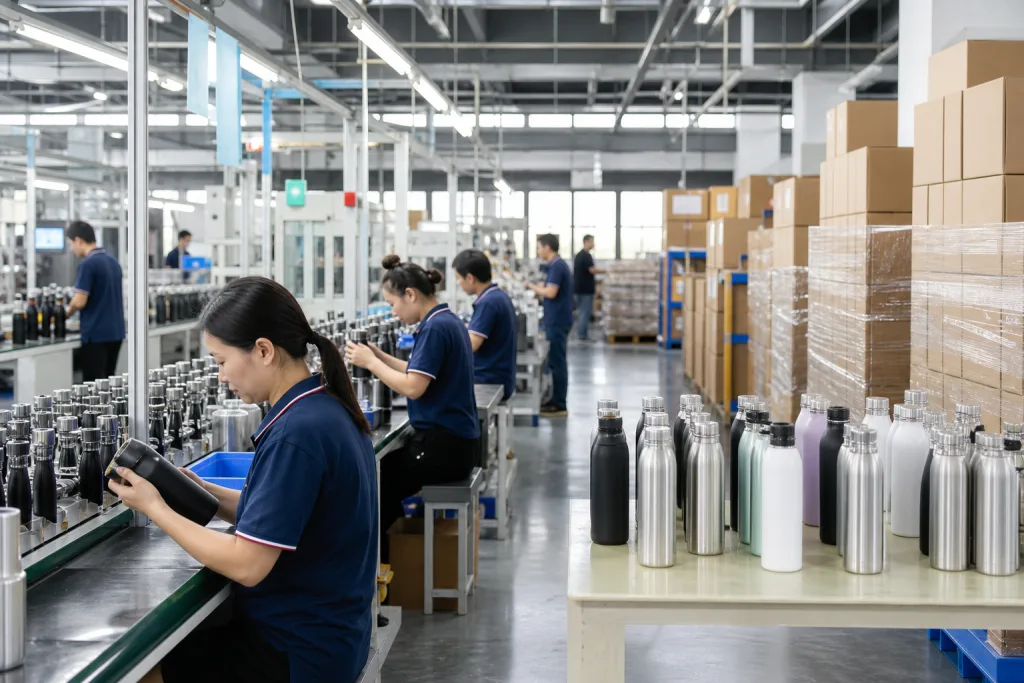
At BottleForge in Hangzhou, Zhejiang, our normal monthly capacity is 300,000 units, and repeat orders on mainstream models usually run 25-35 days after sample approval. That is a production number, not sales talk. On our line, one model with standard decoration moves faster because assembly, leak test, and packing stay fixed. If you need a brand-new mold, add 20-30 days for tooling and T1 sample correction. We have seen this go sideways when a buyer approves the drawing but then changes the lid thread by 0.5 mm after T1. A canteen factory with in-house decoration and assembly usually ships faster than a plant that sends printing and packing outside.
Use this simple decision rule:
- 500-1,000 pcs: test one market, keep SKU risk low, and avoid sitting on 40 cartons of slow stock
- 3,000-5,000 pcs: best balance for distributor drinkware margin, with better print cost spread and steadier carton packing
- 10,000+ pcs: push on packaging and freight efficiency; at this volume, the math should include master carton size and container loading
If your supplier cannot explain how MOQ changes with material or print method, treat that as a red flag. QC pulled samples like this before: the bottle was fine, but the print method changed from silk screen to heat transfer and the quoted MOQ no longer worked. A real canteen manufacturer will show the cost build-up and where the break point sits. One flat number with no explanation usually means the factory has not run the job yet.
Compliance is not optional
For Europe and North America, compliance is built into the bottle cost. It is not admin work. We have seen distributor sport bottles held at customs for 12 days because a declaration pack was incomplete, and one retailer reject a launch sample over a missing LFGB reference on the file list. For food-contact drinkware, ask for REACH declarations, LFGB where relevant, FDA food-contact supporting documents, and if stainless is used, material traceability. If the body is 304 stainless, QC should be able to pull the mill cert and heat number fast. If they cannot, this is the wrong question to delay.
If the order includes plastic or coated parts, request test reports for odor, migration, and heavy metals where applicable. On our line, the buyer usually flags lid smell first, not the bottle body, so we check the PP and silicone parts before mass run. For coated stainless, ask for ASTM-related test references for coating performance and dishwasher resistance. A solid canteen supplier knows which claims are safe, which wording belongs on a PO, and where the risk sits. If they do not, your team ends up chasing lab reports, carton marks, and one typo in the item code after production starts. We have seen this go sideways.
Ask for the test before you ask for the discount. A $0.20 cheaper bottle that fails a retailer audit is not cheaper.
For private label buyers, keep a technical file from day one. Include artwork approval, carton specs, BOM, and inspection photos. We usually add master carton dimensions and drop-test notes too, because one 5 mm logo shift or a wrong 24 pcs/ctn mark on the outer box creates rework later. That file matters when you extend the same customized canteen line into a custom growler, insulated tumbler, or other customized drinkware range. The math works better when the documents stay tight and the same canteen manufacturers in China or Zhejiang can run the next SKU without rebuilding the file pack.
Check factory control, not just samples
Samples lie less than salespeople, but they still hide production risk. One clean sample might come from the strongest operator on the line, checked by hand before it leaves. Real orders live or die on process control. Ask how the canteen factory runs incoming QC, in-process checks, and final audit, and ask what tool they use on the floor—go/no-go gauge, torque tester, or vacuum leak rig. This is the right question to ask.
At minimum, look for:
- AQL inspection standard: 2.5 major, 4.0 minor
- 100% leak test on assembled lids
- batch coding for traceability
- pre-shipment photo report and carton count check
If you are buying from canteen manufacturers in China, ask if they own molding, printing, and assembly or send part of it outside. We have seen repeat orders ship 12 days vs 18 days based on that one point alone. Zhejiang factories usually have a tight supply base for stainless, plastic, and packaging, but the best result still comes from owning the critical steps. We have seen this go sideways when a buyer thought the factory printed in-house, then the PO had one logo color off and nobody owned the mistake.
A canteen distributors program gets profitable when rejects stay under control. One percent defect on 10,000 pcs is 100 units lost, and the math does not work if you saved a few cents on FOB and then burned it on claims. QC pulled the sample is not enough; you want to know what happens in bulk production, carton by carton. Ask the vendor where the risk sits before production starts, whether that is lid fit, color match, or a 0.3 mm logo registration shift.
Send your specs and get a factory quote
Share your target price, MOQ, artwork, and market. We will give you a practical custom drinkware plan, not a vague brochure reply.
Frequently asked questions
What MOQ should I expect for a distributor sport bottle?
For standard models, 500-1,000 pcs is common in China, especially for one-color printing. If you want multiple body colors, custom molds, or special packaging, the MOQ can move to 3,000 pcs or more. For a premium canteen custom order with stainless and engraved logo, 1,000 pcs is a realistic starting point. Always ask whether MOQ is per SKU, per color, or per artwork. A Zhejiang canteen manufacturer with strong assembly capacity can sometimes split orders across colors if the cap and body remain the same.
Which material is best for custom drinkware resale?
For retail resale, Tritan and 18/8 stainless are the safest options. Tritan gives you clarity, low weight, and a clean look for a customizable canteen line. Stainless gives you better perceived value and lower complaint risk on premium customized drinkware. If price is the main driver, PP can work, but it usually feels less premium. For a custom growler, stainless is the standard choice because sealing and durability matter more than transparency.
How much does logo decoration add to unit cost?
A one-color silk screen logo usually adds about $0.08-$0.20 per piece. Laser engraving often adds $0.12-$0.35. Full-wrap graphics can add $0.25-$0.60 depending on artwork and setup. For a canteen promotional order, the cheapest decoration is not always the best because edge wear and color fade create complaints. Ask the canteen supplier for a decorated sample and confirm placement before mass production.
What compliance documents should I request from the factory?
For Europe and North America, ask for REACH-related declarations, FDA food-contact support, and material traceability for metal contact parts. If the product includes coatings or plastic parts, request migration or heavy metal test reports where relevant. A serious canteen vendor should also give you carton specs, photo approval, and batch traceability. If you plan to sell on marketplaces, keep those files ready for audit or customs review.
How long does production usually take in China?
For repeat orders, 25-35 days after sample approval is normal in China for mainstream drinkware. New tooling adds 20-30 days before mass production starts. If you need printing, packaging, and carton labeling all at once, give the factory enough time to prepare fixtures and drying cycles. A canteen distributor should also plan 20-35 days for sea freight depending on destination. Zhejiang factories with in-house decoration often move faster than outsourced setups.