Key Takeaways
- 304 stainless and 0.4 mm inner wall are the minimum sane baseline for most customized thermos orders
- A 500 ml vacuum thermos usually needs 48-72 hours lead time for samples and 25-35 days for mass production
- MOQ for a practical thermos bulk order often starts at 3,000 units per color or print method
- A good leak test should hold 100% inversion for 30 minutes and insulation targets should be stated in hours, not slogans
If you buy a customized thermos for outdoor retail or promotions, the sample can look good and still fail in use. The split shows up on the spec line: steel grade, wall build, lid seal, coating thickness, and how the factory controls leakage and temperature retention. A thermos is not a logo carrier. It has to survive shipping, filling, and daily use.
At BottleForge in Zhejiang, we see the same pattern on bulk thermos programs: buyers start with artwork, then the lid thread, powder coat, or MOQ moves the unit cost by 8% to 20%. QC pulled a 500ml sample last week and the leak test held for 24 hours, but the buyer flagged a 0.3 mm cap gap. That is the wrong question to ask if you only look at print placement. Read the spec sheet like a factory, not a merchandiser. China has plenty of thermos suppliers; the useful ones give you numbers, not guesses.
Start With the Steel Grade
The first line on any customized thermos spec sheet should be the steel grade. For most outdoor and promotional programs, 304 stainless steel is the standard choice. It gives solid corrosion resistance, food-contact safety, and a cost that still works for bulk orders. If a buyer pushes for 201 steel to shave a few cents, the math does not work: lower nickel content, weaker corrosion resistance, and a shorter service life in humid or salty use. We had one PO typo where 201 was entered instead of 304, and QC pulled the sample before the line moved on it. For a thermos customized for camping, hiking, or commuter use, 304 is the safer call.
Wall thickness matters just as much. A common inner wall thickness is 0.35 mm to 0.45 mm; outer wall can sit around 0.4 mm to 0.5 mm depending on size and price target. Thinner steel cuts weight, but if you go too thin, dent resistance drops and the vacuum draw becomes less forgiving. On our Zhejiang line, we usually see 500 ml models at 0.4 mm inner wall and 0.42 mm outer wall, and that spec holds up for distributor programs without sending the unit cost out of range. One buyer once asked for 0.28 mm to hit a low target price; we rejected it after a drop test left two dents on the sample shell.
Ask for material declarations and compliance support. For Europe and North America, REACH, LFGB, and FDA contact safety documents are standard requests. If your thermos manufacturer cannot provide traceable material information, you are buying blind. We ship a lot of export orders, and the first thing procurement asks for is the mill cert, not a sales promise. A supplier thermos with vague steel claims usually creates more problems than it saves in procurement price.
Read the Vacuum Like a Buyer
The vacuum layer is where a stainless thermos earns its margin. A double-wall vacuum structure is the baseline for a real insulated bottle. On our line, the gap usually lands at 0.3 mm to 0.5 mm after forming and evacuation, and that seal decides whether the cup still reads 70°C at 6 hours or falls flat by lunch. “Keeps drinks hot” is a buyer trap unless the factory gives you the test setup: 95°C fill, 20°C ambient, then checks at 6, 12, and 24 hours.
For a standard 500 ml customized thermos, we look for 6 hours above 70°C and 12 hours above 55°C in controlled testing. A 750 ml or 1,000 ml body can hold heat a bit better because the surface-area-to-volume ratio works in its favor. We ship plenty of those, and the first PO typo is often the easiest clue: the buyer writes 5000 ml when they meant 500 ml, then asks why the freight math does not work. Bigger bottles add weight and carton cost, so the wrong question is “which keeps heat best?” The real one is “what lands at shelf price after freight?” If a supplier throws out retention numbers without test conditions, that is sales talk.
Buyer rule: insist on test data with fill temperature, ambient temperature, and measurement timing. Without that, the insulation claim is not useful in procurement.
A good thermos factory will also tell you whether the bottle is fully vacuumed or uses a partial vacuum in the neck area. That is not jargon for show. QC pulled the sample on one lot and the neck wall measured 0.4 mm off spec, which explained the weak hold time. You do not need to redesign the bottle, but you do need a supplier who can state what is being built and why. If they dodge that answer, we have seen it go sideways.
Lids Decide Leak Risk
Buyers often check the body first and miss the lid. That is where the leak calls start. For a custom thermos, the lid design decides whether it survives a backpack, a delivery van, or a retail peg. We run screw caps, push-button lids, cup-cap lids, and flip lids on the line, and each one changes cost, sealing parts, and how the buyer reads the product on shelf.
For outdoor retail, a screw cap with a tight silicone gasket is the safest pick. For a promo thermos, a cup-cap lid gives more print area and a cleaner premium look, but it adds parts and slows assembly by about 12 minutes per 100 sets. Ask for a leak-test standard, not a sales promise. We usually quote 100% inversion at room temperature for 30 minutes with no seepage. One buyer pushed back on a “no leak” claim, and QC pulled the sample into a 1 meter drop test on the concrete pad; the math did not work without the extra test.
The lid material should be food-grade PP, with Tritan or stainless accents only where the design needs it. Check that the gasket comes out for cleaning if the thermos goes to Europe or North America. If the supplier cannot show the gasket material and the replacement method, you are buying after-sales headaches. On our thermos line, 0.2 mm is enough to create trouble, and we have seen a PO typo on gasket thickness turn into a leak rate spike on the first 500 pieces.
Finish, Coating, and Branding
Once the bottle passes leak test, you decide the finish. Powder coating is the default on customized thermos orders because it holds up better than basic spray paint. We usually run 60 to 90 microns, checked with a coating thickness gauge. That gives grip and color depth without a chalky look. For outdoor retailers, matte black, forest green, navy, and sand move faster than bright novelty colors. The buyer may ask for neon, but on shelf it often looks like a promo item, not a serious thermos.
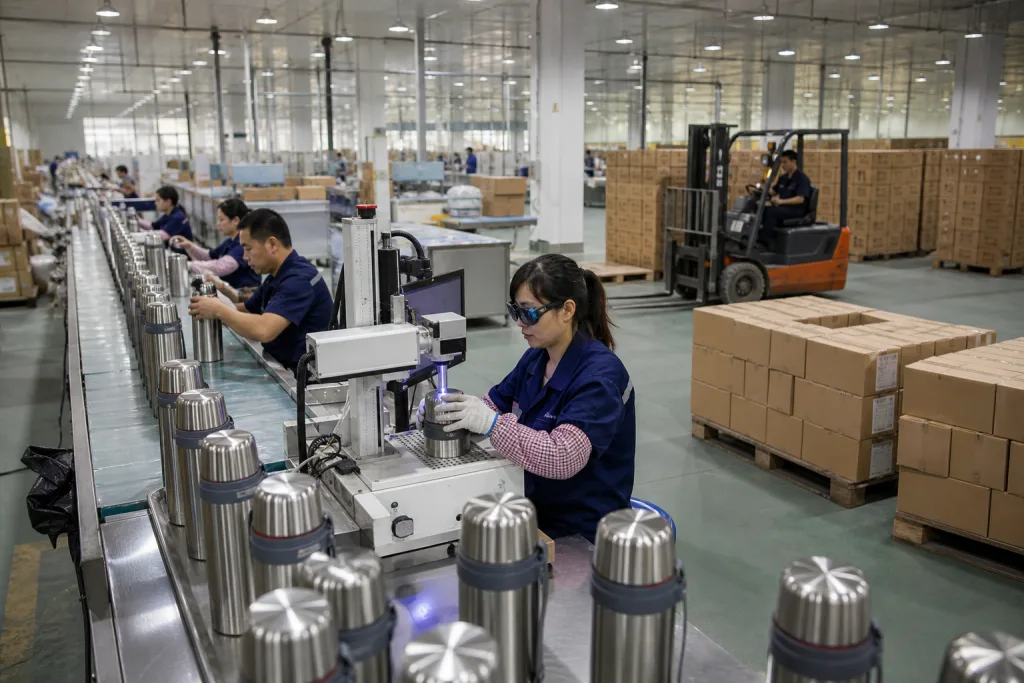
Pick the branding method after you lock the finish and the order size. Silkscreen works well for flat logos on large thermos bulk runs. Laser engraving gives a permanent mark on bare steel or coated surfaces, but the contrast changes with coating color. Heat transfer or a 360-degree wrap makes sense for promotional thermos programs that need more print area. We have seen this go sideways when the client chose a decoration method before approving the powder coat, then QC pulled the sample and the logo disappeared into a dark finish. That is not a cosmetic detail.
For a branded order, ask the manufacturer thermos team to show logo placement, print size in millimeters, and color match tolerance. We usually agree on Pantone matching with a delta-E target before the line starts. A pre-production sample should use the real coating and the real print, not a blank bottle mockup. One buyer once sent a PO with the logo size typed as 30cm instead of 30mm, and we caught it before tooling. If you are ordering from China, that check saves time.
Branding cost is small next to freight, but it still changes unit math. On a 5,000-unit order, laser engraving may add USD 0.20 to 0.45 per piece, while multi-color silk decoration can run higher once setup is counted. So the thermos vendor should quote body, lid, and decoration as separate lines. Otherwise the buyer sees one low price, then the margin disappears after artwork changes and rework. The math does not work any other way.
Capacity Changes the Sales Math
I’ll rewrite the section in-place, keeping the HTML tags and the heading structure intact, while tightening the sales tone and adding a few factory-floor specifics.Picking capacity is not a catalog exercise. It comes down to how the bottle gets used and what it does to freight. The sizes we ship most are 350 ml, 500 ml, 750 ml, and 1,000 ml. For outdoor retailers and promo brands, 500 ml is the safe bet: easy to carry, enough space for a logo, and it usually fits cleanly in a 24-bottle master carton. A 750 ml bottle looks stronger on shelf, but it adds carton size and pushes up chargeable weight.
For one morning fill of coffee or tea, 500 ml covers most buyers. For a distributor program aimed at hikers, site crews, or road teams, 750 ml and 1,000 ml sell better because the customer sees them as work-ready, not light-duty. But the math does not work if you pick size by margin alone. We have seen a 1,000 ml thermos raise postage by 12% to 25% versus a 500 ml unit, and that wipes out the lower ex-factory price fast. The buyer flagged it after one PO typo changed the target ship method from parcel to mailer.
Factories in Zhejiang often run several capacities on the same tooling family, so MOQs stay manageable. If you want a custom handle, a different neck finish, or a non-standard cap, expect setup cost or new tooling. QC pulled the sample last week on a 0.8 mm wall check, and that is the kind of detail that protects your landed cost. Ask for carton count, gross weight, and CBM before you sign off. That is how a thermos manufacturer helps you price the real shipment, not just the factory invoice.
MOQ, Lead Time, and Factory Reality
The best customized thermos design is useless if the factory cannot ship it on time. MOQ comes down to decoration, color, and lid complexity. For a standard stainless body with single-color logo printing, we usually start at 3,000 units per design. If the buyer wants a Pantone coat, a new lid color, or custom packaging, the number moves to 5,000 or 10,000 pieces fast. That is normal in China. The line needs setup time, and a real thermos factory will tell you the number straight, not hide behind a trading office.
Lead time follows the process. A simple custom thermos sample usually takes 7 to 12 days. If the buyer wants print, coating, and packaging proof in one round, plan on 15 days. Mass production runs 25 to 35 days after sample approval and deposit. Peak season adds 7 to 10 days, no debate. We had a buyer flag a PO typo on the lid color code once, and that one line cost 4 days. A solid supplier thermos team gives you this upfront; the weak ones say yes to everything and then miss the ship date.
At BottleForge in Zhejiang, standard stainless drinkware lines can hit 200,000 units a month, which is why a 50,000-piece order gets better slotting than a 3,000-piece rush job. If you are a thermos distributor or promotional brand, use that scale, but do not skip inspection. Ask for pre-shipment photos, carton marks, and AQL terms. We run AQL 2.5 for major defects and 4.0 for minor defects on most export programs. QC pulled the sample, checked the cap torque, and caught a loose insert before packing; that is the kind of detail that saves a claim later. The math does not work if you chase the lowest unit price and ignore factory reality.
Packaging for Retail and Promotions
I’ll rewrite the section in place, keep the HTML exactly as-is, and tune the prose to sound like a factory-side sales engineer.Packaging changes shelf appeal and landed cost. A plain white box is cheap, but it does little for retail sell-through. A color box with a window cutout, insert tray, and barcode label makes a custom thermos easier to display in stores and easier to move through the line. We’ve seen a buyer flag lid scuffs on a 300g powder-coated bottle because the insert was loose. If you sell through outdoor retailers, the box needs to hold the bottle tight and stop coating scratches and lid deformation. For promotions, you can strip the box down to save money, but it still has to pass carton compression and survive cross-border freight.
For Amazon or e-commerce, the pack should carry the item barcode, carton barcode, and FNSKU label if your team needs it. For Europe, make sure the outer carton and retail box carry clear origin marking when your compliance file asks for it. QC pulled the sample on a 24-bottle master carton once because the outer print was 2 mm off the PO spec. A solid thermos supplier should also give you the inner pack count, master carton size, and loading quantity per 20-foot and 40-foot container. That math beats the catalog photo when you are lining up a distributor thermos rollout.
Do not skip gift packaging for thermos promotional programs. A well-built insert can lift perceived value by several dollars without touching the bottle. That is the better move than fighting for another 5% off the unit price. We run this trade-off every week, and the buyer usually wants the wrong question answered. Ask each thermos supplier to quote product, packaging, and carton separately so you can see where the money goes.
Send your spec sheet for a factory quote
We will check steel grade, lid, coating, MOQ, and lead time before you place a customized thermos order from China.
Frequently asked questions
What is a realistic MOQ for customized thermos orders?
For a standard stainless customized thermos with one logo color, MOQ often starts at 3,000 pieces. If you want custom powder coating, special lid colors, or retail packaging, 5,000 pieces is more common. For very simple promotional thermos runs, some thermos vendors can do 1,000 to 2,000 units, but unit cost rises fast. The real question is whether the factory can hold the same spec consistently at your volume. For China sourcing, ask for MOQ by process, not a vague all-in number.
How long does a custom thermos take from sample to shipment?
A normal schedule is 7 to 12 days for samples and 25 to 35 days for mass production after approval and deposit. If the thermos custom order needs new lid tooling, special coating, or complex packaging, add 10 to 15 days. Peak season in Zhejiang and other China manufacturing hubs can push timing further. Always confirm whether lead time starts from artwork approval, sample sign-off, or deposit receipt, because that detail affects your launch date.
Which steel grade should I choose for outdoor use?
304 stainless is the practical baseline for most outdoor and promotional thermos programs. It offers better corrosion resistance than 201, which matters if the bottle sees sweat, humidity, or frequent washing. A typical wall spec is 0.4 mm inner wall and 0.42 mm outer wall. If your market is high-end retail or heavy-use field work, 304 is the safer manufacturer thermos choice. For price-sensitive bulk thermos sourcing, do not downgrade steel just to save a few cents unless you accept shorter service life.
How can I check if the thermos is truly leakproof?
Ask the factory for a formal leak test. A practical standard is 100% inversion for 30 minutes at room temperature with no visible seepage. For more demanding distributor thermos programs, add a 1-meter drop test and repeated open-close cycle testing on the lid. Also ask whether the gasket is removable and what material is used, usually silicone. If the thermos manufacturer cannot specify the seal and test method, you should expect higher return risk.
What decoration method is best for branded thermos bulk orders?
For large thermos bulk runs, silkscreen is usually the lowest-cost option for simple logos. Laser engraving is more durable and works well on coated or bare steel surfaces, but the effect depends on the finish. If you need retail impact, full-color wrap printing or a premium box can make the custom thermos feel worth more without changing the bottle structure. Ask the supplier thermos team to quote each method separately so you can compare landed cost, not just decoration cost.