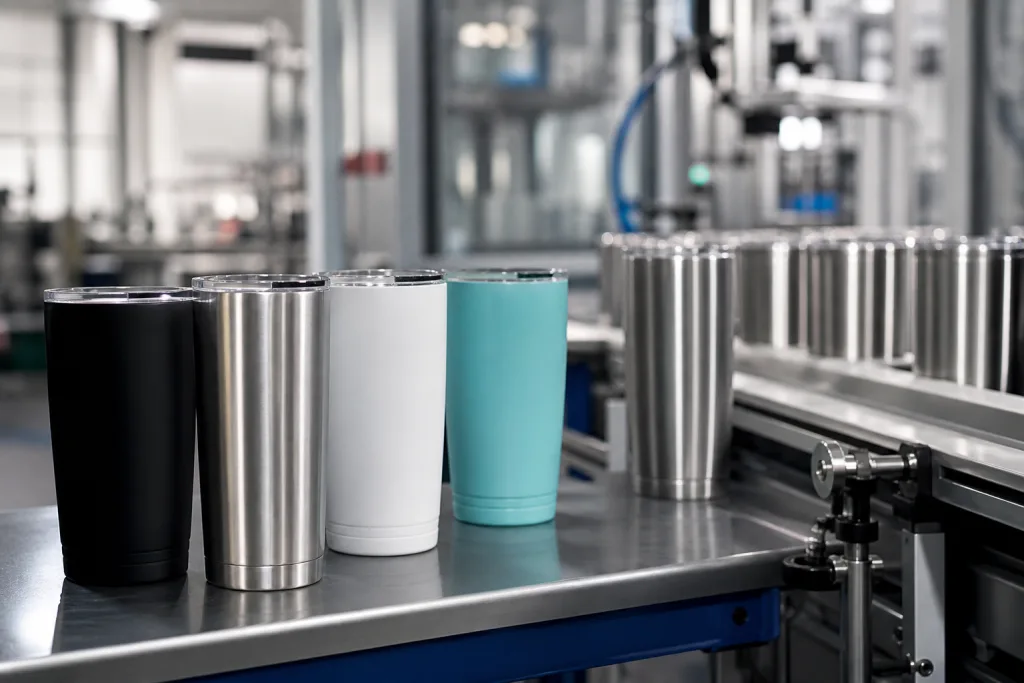
Key Takeaways
- A realistic MOQ for a custom 18oz stainless travel tumbler is 1,000 pcs per color, with 12-25 day production after sample approval
- Factory-direct FOB pricing in China often lands around USD 3.20-5.80 per unit for 304 stainless steel, depending on lid, coating, and print process
- Set leak, temperature, coating, and drop-test standards before deposit; otherwise 2%-5% complaint rates are common on promotional drinkware
- Use AQL 2.5 for major defects and 4.0 for minor defects, and keep approved pre-production samples signed against Pantone and logo position
You are not buying a tumbler. You are buying fewer complaints, fewer leaks, cleaner logo print, and a landed cost that still holds after freight, duty, and rejects. We’ve seen a sample pass on the bench, then fail after 3,000 units hit end users. A lid feels tight in the office, then drips after repeated open-close cycles on the line test jig. A matte finish looks good in photos, then picks up scratches in a 24-piece retail carton. A low China quote looks cheap at first, then the buyer gets hit later with mold fee changes, lid upgrades, and each print position added line by line. That is where orders go sideways.
At BottleForge Industrial in Zhejiang, China, we run into the same issue on most new projects: the buyer starts with artwork and Pantone color, but the real job is spec control. This is the wrong question to ask first. If you are buying a bulk coffee travel mug or bulk travel tumbler for resale, promotions, or private label, lock the details before tooling, sampling, production, and AQL inspection start. That means lid structure, wall thickness, gasket hardness, print size, and carton drop risk—not just the mockup. Last month QC pulled the sample on one PO because the logo width was off by 1.5 mm, and the buyer had only approved a render, not a signed dimension sheet.
Start with the order brief
Here is a common case. You run a coffee brand in Europe and need a coffee mug custom made for wholesale plus e-commerce. Or you are a corporate-gift buyer in North America and need 3,000 units for a winter campaign. You send a coffee mug manufacturer a request for a 16oz or 20oz tumbler, double-wall vacuum stainless steel, spill-resistant lid, powder coat body, and a one-color logo. Looks simple. It is not the hard part; the brief is. On our side, the first thing sales checks is the drawing against the caliper reading, because 2 mm on base diameter can change the whole carton fit.
Your brief should state capacity, body diameter, height, base diameter, carton drop requirement, lid style, steel grade, finish, print method, packaging, compliance market, and target price. Put the numbers in. If you only write coffee mug customizable or send a reference photo, each factory will read it differently. One shop quotes 201 stainless on the outer wall. Another quotes 304 inside and out. Another cuts wall thickness and the body dents after one warehouse hit. We have seen buyers ask only for “good quality,” then flag the sample later because the cup holder fit was off by 3 mm. That is the wrong question to ask.
For a serious bulk coffee tumbler program, write the specification like this:
- 18oz / 540ml usable capacity
- Inner wall SUS304, outer wall SUS304 or SUS201 if budget-driven
- Inner wall 0.4mm, outer wall 0.45mm, food-contact PP lid
- Powder coating, Pantone Black C body
- Silkscreen white logo, 35mm wide, centered opposite seam
- Leak-resistant screw lid with silicone gasket
- Heat retention target: above 55°C after 6 hours from 95°C fill
- Each in white box, 25 pcs per export carton
- Required tests: leak, vacuum, dishwasher warning label, carton drop
This level of detail lets a coffee mug factory direct supplier quote straight. In Zhejiang, China, we run this way: sales checks the spec, engineering checks the lid fit, and QC pulled the last similar sample to confirm finish and print position before we reply. Our team usually sends price range, MOQ, tooling if needed, and sample timing within 24 hours. For a standard model, MOQ is often 1,000 pcs per color. For a custom lid or unique body mold, expect 3,000-5,000 pcs and tooling from USD 1,500 to 4,000. If the order is 800 pcs with a new mold, the math does not work.
Choose the tumbler that survives use
The biggest mistake in a bulk coffee mug order is buying from a photo. Buy by use case. A commuter mug for coffee shops, a desk tumbler for office gifts, and a rugged retail tumbler for outdoor channels should not share the same lid or finish. We’ve seen this go sideways on the line: same body, wrong lid spec, then the buyer flagged leaks after a 1.2m drop test into a tote.
For a customized coffee travel mug, start with lid architecture. This is the right question. Press-in lids are cheaper, often USD 0.18-0.35 less than screw lids, but they are usually splash-resistant, not leakproof. If your customer tosses the mug into a tote bag, complaints will come fast. Screw lids with a proper silicone gasket cost more but cut claims; QC pulled the sample last month and found a 0.6mm gasket mismatch was enough to cause seepage. A flip-top feels premium, but it adds hinge and spring risk. A simple slider lid works for desk use and coffee mug promotional products, not for bag carry.
Thermal construction matters too. Double-wall vacuum 304 stainless is the standard for a quality bulk travel tumbler. Copper lining can improve heat retention a bit, but the math doesn’t work for every program. If your retail target is under USD 15, a plain vacuum structure often works. If your brand story is premium, buyers notice heavier steel and a tighter lid fit faster than an extra claim on heat-retention hours. On one 18oz model, 0.5mm outer wall steel got better repeat feedback than a copper-lined version with a lighter hand feel.
Typical spec choices and effects
- Body: 16oz to 20oz sells best in coffee channels
- Bottom diameter: under 72mm fits most car cup holders
- Coating: powder coat hides scratches better than smooth spray paint
- Logo: laser engraving is durable; silkscreen is cheaper and better for bright solids
- Lid material: food-grade PP or Tritan, depending on design and clarity needs
If you are a coffee mug distributor or sourcing for multiple accounts, simplify the range. Pick one reliable 18oz body and offer 3 lid variants instead of 12 body shapes. That cuts sampling time and carton variation. It also lowers replenishment risk. We run about 600,000 units per month across drinkware lines in Zhejiang, and the lowest-defect orders are usually the simple ones. Last quarter, one PO even had a lid code typo, and because the range was trimmed, we caught it before mass packing.
Price the project honestly
Buyers checking a coffee mug supplier list or a coffee mug supplier directory often line up FOB quotes and pick the lowest number. That is the wrong question to ask. A tumbler at USD 3.25 can cost more than one at USD 3.70 after claims and rework if the coating is thin, the logo fails the 3M tape test, or QC pulled the sample and found the lid leaking at 45° tilt.
For a standard 18oz vacuum tumbler from China, reasonable factory-direct FOB pricing often falls into these bands:
- USD 3.20-3.90: standard body, basic slider lid, one-color silkscreen, MOQ 3,000
- USD 3.80-4.60: better screw lid, powder coat, gift-box option, MOQ 1,000-3,000
- USD 4.80-5.80: premium lid, laser mark plus printed art, special finish, tighter packaging spec
Then add the real costs. Individual brown box may add USD 0.12-0.18. White printed box can add USD 0.18-0.35. A custom color lid component might need a higher MOQ or add USD 0.08-0.15. Third-party inspection in Zhejiang or elsewhere in China can cost roughly USD 250-350 per man-day. If you need BSCI-audited production, REACH support for EU, or ASTM/CPSIA work for relevant North American programs, put that testing budget on the table before you confirm the PO. We have seen POs held up over one carton mark typo and one missing barcode panel, so this part is not paperwork fluff.
Ask every coffee mug oem manufacturer the same cost questions:
- What steel grade is included?
- Is the lid leak-resistant or leakproof?
- Does the quote include logo setup and carton marks?
- How many units per carton and what is carton gross weight?
- What is the sample charge and refund policy?
- What is the over/under shipment tolerance?
If you buy coffee mug in bulk for corporate gifting, landed cost often matters more than ex-factory price because the event date does not move. We ship projects where a 2-day delay misses the whole campaign. If you buy for retail, margin matters, but repeatability matters just as much; the line has to hold color, print position, and packing method from batch to batch. A quote without packaging detail and QC assumptions is not a complete quote.
Approve samples like a strict buyer
A proper sample process saves more money than pushing for another USD 0.05. On a coffee mug custom project, we usually run 3 stages: stock sample, pre-production sample, and a production confirmation sample if anything changed after approval. The stock sample checks shape and hand feel. The pre-production sample checks your actual color, logo size and position, lid fit, and packaging spec. This is the right place to get picky. We’ve seen this go sideways over a 1.5mm logo shift that looked minor on screen and wrong in hand.
Sample lead time in our Zhejiang facility is usually 5-7 days for existing molds and 10-15 days if a new decoration fixture or packaging mockup is needed. On the line, a new silk-screen jig or foam insert sample often adds 2 days vs a plain stock-body approval. Sample charges can range from USD 50 for a simple branded stock body to USD 300 or more for a full packaging set. Good factories credit part or all of that against the order, and buyers should ask that upfront instead of arguing later.
What should you check?
- Thread smoothness and lid engagement after 20 open-close cycles
- Logo position tolerance, usually within plus or minus 2mm
- Color match against Pantone under daylight and office light
- Base stability on a flat table
- Actual capacity, not nominal only
- Odor after hot water fill for 30 minutes
- Leak test upside down for 30 minutes
For coffee mug private label and coffee mug private labeling programs, packaging matters as much as the mug. Check barcode placement, FNSKU label area if you sell on Amazon, country-of-origin marking, instruction insert, and master carton dimensions. QC pulled one sample last month because the PO said “12oz” and the white box dieline was printed “21oz.” Small typo, big problem. A retail-ready white box that looks clean in photos but crushes at 6 drops from 76cm is not retail-ready. The buyer flagged it, and they were right.
Do not approve a sample by photo only. Ask for a couriered physical sample, sign it, date it, and make it the production reference.
This sounds basic, but 7 out of 10 disputes with coffee mug manufacturers start because nobody locked the golden sample. Once mass production starts, memory gets fuzzy, and email screenshots are a weak reference next to a signed sample sealed in a PE bag with the approval date written on the carton.
Control production and inspection points
After the deposit lands, stay on the order. For a normal bulk travel mug run, lead time is usually 12-25 days after sample approval. The swing comes from order quantity, powder-coating line capacity, and whether the lid is a standard stock part or a custom mold. From September to November, add 5-10 days because the line gets packed before holiday shipments. A factory that says yes to every deadline is usually hiding a queue problem; we’ve seen this go sideways once the coating schedule slips by 2 days.
Ask for three control points and put them on the PO: raw material confirmation, first article approval, and final random inspection. Simple. On the floor, raw material confirmation should cover 304 stainless, lid resin, and color code before cutting starts. First article means one approved unit with logo position, color, and lid fit signed off before mass production. Final random inspection means cartons are pulled after packing, not before. If you buy through a coffee mug distributor, ask who actually does these checks. Some distributors run their own QC. Some just forward the factory photos.
QC points that actually matter
- Vacuum performance: spot-check heat retention from 95°C fill, with a 6-hour target based on your spec; QC pulled the sample from the aging rack, not from the first 20 pieces off the line
- Leak test: 100% line check for screw-lid units is ideal; we usually run an inverted test after filling, and the buyer flagged drips before on a bad silicone ring batch
- Coating adhesion: cross-hatch or tape test on printed areas; if the logo sits near the curve radius, test that point, not only the flat wall
- Appearance: no dents, no exposed steel, no color contamination at seam or lip; a 0.5 mm chip at the rim will get rejected in retail
- Logo: no blur, ghosting, or obvious position drift; check against the approved artwork and measure print offset if the logo location is tight
- Carton: correct quantity, drop resistance, shipping marks; we still see outer cartons with one PO digit typed wrong, and that creates a warehouse mess fast
Use an AQL plan that matches the sales channel. This is the wrong question to ask: “What AQL do factories normally use?” Start from where the tumbler will be sold and who pays for returns. For promotional orders with lower unit value, many buyers accept AQL 2.5 major and 4.0 minor. For retail or subscription programs, buyers often tighten appearance standards because shelf presentation matters and customer complaints cost more than the unit. Define critical defects clearly: leakage, missing parts, sharp edge, wrong barcode, or vacuum failure. Put those in writing before production, not after QC finds 7 leaking lids in a 200-piece sample.
If you source from China every season, ask whether the coffee mug factory keeps ISO-style documented procedures, lot traceability by date code, and social compliance such as BSCI if your customers require it. On our side, we keep production records by order, coating batch, and packing date. That cuts root-cause work from 3 days to 1 when a buyer reports a field issue. A common inspection finding is mixed lids from two resin lots that look the same but seal differently. The paperwork is boring. Good. Boring factories usually ship more reliable drinkware.
Ship with fewer surprises
The last stage is where orders bleed margin. You approved the coffee mug customized sample, QC passed the run, and then freight timing, carton density, and customs documents decide whether the delivery date holds. We’ve seen this go sideways over a 3 mm lid change that looked harmless on the sample table but added dead space in the carton.
For a 20oz tumbler packed 25 pcs per carton, a typical master carton might be around 46 x 46 x 24 cm, depending on handle and lid shape. A small change in handle sweep or lid dome can change pallet count and container loading. That hits freight cost fast if you buy coffee mug bulk on repeat. Ask for carton CBM before you confirm the mug, not after. This is the right time to ask for the dieline too; the line usually tapes one trial carton first to check crush and fit.
For Europe and North America, most buyers work on FOB Ningbo or FOB Shanghai because Zhejiang, China factories are close to both shipping options. If a supplier sits inland and gives you an FOB price that looks too low, check local trucking, port handling, and docs fees line by line. The buyer flagged this on one PO last month because “Ningbo” was typed as “Mingbo” on the booking sheet, and that small typo delayed the file. For urgent corporate-gift programs, split shipments can work: move 500-1,000 units by air for launch and the balance by sea. Air costs more. Missing the event usually costs more.
If you sell online, master carton labeling and barcode control are non-negotiable. We ship Amazon orders where a 12 mm label offset is enough for the warehouse to reject the pallet. If you sell through distributors, pallet consistency and carton print accuracy matter more. If you act as a coffee mug distributor yourself, ask your factory to send loading photos and carton count by pallet before vessel cutoff. QC pulled the sample on one load because the side mark showed 24 pcs while the actual packout was 25.
The best question for any coffee mug supplier is simple: what usually goes wrong on this exact model? Ask that, not “what is your best price.” An experienced factory in China should answer straight. Maybe the black powder coat marks on the rim during drop test packing. Maybe the transparent slider gets cosmetic scratches unless each lid is bagged. Maybe the narrow base raises tip-over complaints in cafés. If a supplier has no practical warning, the math doesn’t work; they likely know less than their quotation suggests.
That is how you buy a coffee mug promotional order or a long-term private-label tumbler line with fewer headaches: define the use case, lock the spec, approve a real sample, inspect with numbers, and build packaging and ship timing into the deal from day one. Simple, but not automatic.
Get your travel tumbler spec reviewed by engineers
Send your target price, quantity, artwork, and market. We will check feasibility, MOQ, lead time, and likely QC risks before you place the order.
Frequently asked questions
What MOQ should I expect for a customized coffee travel mug?
For an existing tumbler mold, MOQ is commonly 1,000 pcs per color with one logo position. Some factories in China will quote 500 pcs, but that often means fewer color options, limited lid choices, or less competitive pricing. If you need a custom lid, custom body shape, or retail gift box with complex inserts, expect 3,000-5,000 pcs. For mixed-color orders on one model, many suppliers allow color splits if each color still reaches 300-500 pcs. Ask whether MOQ is based on body color, lid color, or full SKU, because that changes planning fast. If you are testing a new brand, start with one body color and one print method to keep MOQ and sample risk under control.
How much does a bulk coffee travel mug usually cost?
A realistic FOB China price for a vacuum stainless customized coffee travel mug is usually USD 3.20-5.80 per unit. At the low end, you are looking at a standard body, basic lid, and simple one-color print at 3,000 pcs or more. At USD 4.00-4.80, you can typically get powder coating, a better screw lid, and stronger packaging. Premium finishes, dual decoration, or custom-molded parts push cost above USD 5.00. Do not compare unit prices without confirming steel grade, wall thickness, lid type, and packaging. A quote that is USD 0.40 cheaper can disappear quickly if the box, barcode labels, inspection, or replacement rate is worse than expected.
What tests should I require before mass production ships?
At minimum, require leak testing, vacuum or temperature-retention testing, logo adhesion checks, finish inspection, and carton drop testing. For a typical travel tumbler, set a benchmark such as no visible leakage after 30 minutes upside down and liquid above 55°C after 6 hours from a 95°C fill, if that suits your market. Add a smell check after hot-water exposure and verify food-contact compliance documentation for the destination market, such as REACH-related support for the EU. Use a pre-shipment inspection with AQL 2.5 for major defects and 4.0 for minor defects unless your retail channel needs tighter standards. If your order is over 5,000 pcs, an in-line inspection during production is worth the cost.
Which logo method is best for coffee mug promotional products?
It depends on the use case and finish. Silkscreen is usually the best value for coffee mug promotional products when you need a clear 1-color or 2-color logo and tight cost control. Laser engraving is more durable and looks premium on powder-coated stainless, but it gives a metal-tone result rather than bright color. Heat transfer works for multi-color graphics, though unit cost is higher and artwork setup is more demanding. For bulk orders around 1,000-3,000 pcs, silkscreen often wins on price and lead time. For retail or private-label programs where durability matters, laser plus powder coat is a safer long-term choice. Always test adhesion on the exact coating, not only on a stock sample.
How long does a coffee mug private label order take from sample to shipment?
For a standard model with custom branding, expect about 5-7 days for a pre-production sample and 12-25 days for bulk production after approval. Add another 3-7 days if packaging artwork changes are still open. During peak season, especially from September through November, production can stretch by 5-10 extra days in China. Sea transit then depends on destination, while air is much faster but far more expensive. If you have a fixed event date, work backward from the in-warehouse date, not the factory ship date. A safe planning window for a first private-label order is often 45-60 days from approved artwork to arrival, especially when retail packaging and third-party inspection are included.