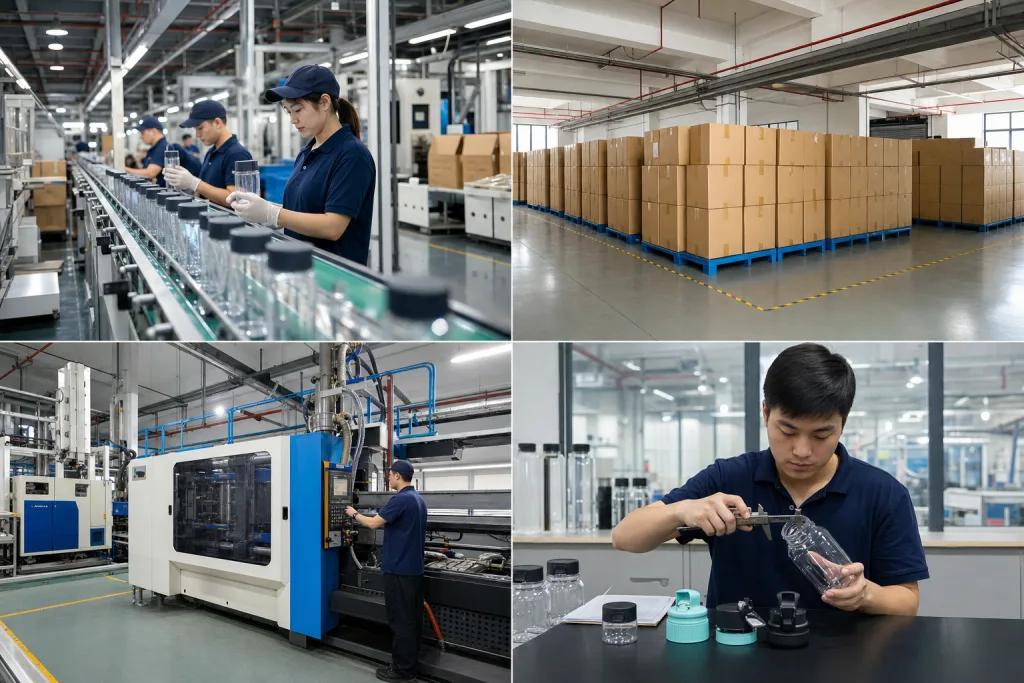
Key Takeaways
- A usable RFQ for Tritan should define resin grade, capacity tolerance, decoration, packaging, and test requirements; otherwise quotes can vary by 20% to 35%
- For most custom tritan bottle USA programs, MOQ is 3,000 to 5,000 units per color, sample time is 7 to 12 days, and bulk lead time is 25 to 40 days
- Leak testing, dishwasher claims, and compliance documents such as REACH, CPSIA, and ASTM matter more than a low FOB price difference of USD 0.08
- Your PO should list carton marks, AQL level, spare ratio, barcode format, and approved sample reference to reduce bulk disputes
You are not buying a stock water bottle. You are buying a chain of shop-floor decisions: resin grade, mold fit, leak risk, decoration method, carton drop performance, and whether the Zhejiang factory can hold the PO spec to ±0.5 mm on the neck finish. This is where custom tritan bottle USA projects go sideways, often before the first sample hits the line.
Most problems are ordinary. They are avoidable. A buyer asks for “a 24 oz bottle with logo,” we quote 3 lid structures, the sample looks fine, then QC pulled the sample from bulk and the cap failed a 1-meter inverted leak test, or the buyer flagged a barcode issue for FBA because one digit on the PO was typed wrong. Treat custom drinkware sourcing as a process with clear line items and the math works: fewer delays, lower rework cost, and fewer bad calls with your customer.
Start with a usable RFQ
Send a one-line inquiry for a custom tritan bottle USA order, and you usually get a one-line quote back. The price is fast, but the math does not hold up once sampling starts. A usable RFQ should read like a build sheet with specs the line can run. Tritan is a copolyester, not a loose “plastic” label, and your canteen supplier in China needs the exact bottle structure, decoration method, and sales channel before quoting.
At minimum, include these PO-style line items in the RFQ stage:
- Body material: Tritan copolyester, food-contact grade
- Capacity: 500 ml, 650 ml, or 750 ml, with tolerance such as plus or minus 3%
- Wall thickness: for example 0.8 mm to 1.2 mm depending on model and drop target
- Lid type: screw cap, flip straw, chug lid, carry loop, or infuser lid
- Color: Pantone reference for bottle, lid, and silicone parts
- Logo process: 1-color silkscreen, UV print, heat transfer, or wrap print
- Unit packaging: polybag, kraft box, color box, PDQ, or master carton only
- Market: USA retail, promo, gym chain, school, or Amazon FBA
- Compliance: REACH, CPSIA, California Proposition 65 where relevant, ASTM for kids items if applicable
- Target quantity: trial 3,000 units or annual 50,000 units
If you are also buying a custom canteen, custom growler, or other customizable drinkware range, split Tritan and stainless into separate RFQ tabs. This is the right move. The tooling logic is different, the leak-test points are different, and the quoting path is different. On our side, QC pulled a sample last month where the PO mixed a 304 stainless growler with a Tritan straw bottle in one tab, and the buyer flagged the lead time after the wrong lid tool was assumed. A serious canteen factory or distributor drinkware partner should quote each SKU separately with mold status, MOQ, and decoration limits.
At BottleForge Industrial in Zhejiang, our practical baseline is 3,000 units for many existing Tritan molds and 5,000 units if you want multiple lid colors or more complex retail packaging. We run that as a real factory limit, not a sales trick. Once you add 2 lid colors, a printed box, and insert card collation on the packing line, output drops and inspection points go up. If a canteen vendor gives you a suspiciously low MOQ with full customization, ask one direct question: is this true custom production, or are they mixing stock parts from old runs in China?
Read the quote like an engineer
Once the quotations land, do not compare FOB price alone. Read the build spec inside the number. A custom tritan bottle USA quote at USD 1.62 FOB Ningbo and another at USD 1.74 FOB Shanghai might be two different bottles, two different pack-outs, or two different QC standards. We see this every week on the line. One buyer flagged a “same item” quote last month, and the only difference on paper looked small until we checked the drawing: bottle wall 2.8 mm vs 3.2 mm.
Check the following commercial and technical points line by line:
- Incoterm: FOB Ningbo, FOB Shanghai, EXW, or DDP. For Zhejiang factories, FOB Ningbo is common.
- Mold status: existing mold, modified mold, or new tooling. New lid tooling can easily add USD 2,500 to USD 8,000.
- Decoration area: 180 x 90 mm wrap print is not the same as a 50 x 50 mm 1-color logo.
- Packaging assumption: egg-crate divider, single box, and export carton strength affect price.
- Leak test standard: some suppliers quote no formal leak inspection unless you specify it.
- Sample charges: pre-production sample at USD 50 to USD 150 for simple logo work, more if new tooling or custom color chips are needed.
Buyers mix up a canteen manufacturer and a trading office all the time. A canteen distributor or canteen suppliers network still has value, but this is the wrong question to ask if you only focus on who sent the email. Ask who owns the mold, where assembly happens, and whether lead time starts from sample approval or deposit receipt. We had one PO with “30 days after order” typed on it; the factory meant deposit receipt, the buyer meant approved sample, and that 12-day gap turned into a fight nobody needed.
Good quotes cut arguments later. Bad quotes turn into “not included” emails after you have already sold the program.
If you source customizable canteen and customized growler items together, ask for a quote matrix with columns for MOQ, sample days, bulk days, logo method, and test claims. Then you are comparing apples to apples. We ship these tables with notes like “silk print only” or “no dishwasher claim” because the math doesn't work if one supplier includes a 5-layer export carton and another quotes a thinner carton at 6.5 kg burst strength. In China, the cleanest quote usually comes from a factory that says what it cannot do just as clearly as what it can.
Approve samples with measurable checkpoints
The sample stage is where buyers protect margin. Desk appeal is not approval. We approve against a checkpoint sheet. For a custom tritan bottle USA order, the sample needs to clear four checks: fit, function, finish, and freight readiness. On our line, QC pulled one sample last month that looked clean but missed the logo position by 2 mm from the bottom seam, and that is enough to trigger a rework call.
Your sample PO line items should include:
- Reference drawing or photo: SKU code and approved revision number
- Color standard: Pantone code or signed color chip
- Logo size and position: width, height, distance from bottom seam or handle line
- Lid torque expectation: for example hand-tight seal without cross-threading
- Leak test: upside down 30 minutes and shake test with no visible leakage
- Drop expectation: packed drop test from 76 cm or 1 m depending on retail requirement
- Dishwasher statement: top-rack only, hand wash only, or no claim
Typical sample time from Zhejiang or other China production hubs is 7 to 12 days for logo samples on an existing mold, plus courier time. New color matching can add 2 to 4 days. If you are developing a customized canteen or customizable growler line at the same time, group the samples into one review round so your brand team signs off on color once. We ship this way often. The timing is cleaner, and the math does not work if three teams approve three different blues from three separate sample batches.
What buyers miss most often
They do not open and close the lid 20 to 30 times. Thread feel matters. We have seen this go sideways with lids that pass a first twist, then start biting on cycle 12. They do not smell the bottle after a hot water rinse. Odor matters. They also skip a tape test or simple fingernail pressure check on the printed logo. Print durability matters, especially for canteen promotional and gym retail channels. One buyer flagged a logo scratch after 3M tape pull, and QC found the ink cure was short by 15 seconds.
A serious canteen factory or canteen manufacturer should also be able to send a pre-production sample photo set before bulk starts. Ask for body weight in grams, bottle height, base diameter, and carton pack-out. This is the right question to ask. A 3 g body-weight drift or a 1.5 mm height change will catch problems faster than comments like “looks fine,” and we have even seen a PO typo swap a 24-piece carton for 36-piece pack-out.
Lock the bulk PO properly
After sample approval, the costliest mistake is a loose purchase order. If your PO says only “customized drinkware, as sample approved,” you are inviting claims, delays, and rework. Write the bulk PO so a new production supervisor on the line can run it without calling you 10 times. We’ve seen this go sideways over a 2 mm logo shift that was never written into the order.
Your bulk PO should contain these line items:
- Item code: internal SKU and factory SKU
- Description: 650 ml custom tritan bottle USA program, BPA-free Tritan body, PP screw lid, silicone seal
- Approved sample reference: date and sample ID
- Quantity: units by colorway and by package type
- Unit price: FOB Ningbo in USD
- MOQ split: for example 3,000 black, 3,000 clear smoke, not mixed loose
- Packaging: 1 pc/polybag/white box, 24 pcs/master carton
- Barcode: UPC, EAN, or FNSKU placement with print file version
- Carton marks: customer code, PO number, made in China, carton number, gross/net weight
- Inspection standard: AQL 2.5 major, 4.0 minor unless otherwise agreed
- Spare ratio: often 0.3% to 1% extra for replacement needs
- Lead time: 30 days after deposit and artwork approval, for example
For new buyers, payment terms are commonly 30% deposit and 70% balance against inspection or before B/L release. That is standard. The wrong question to ask on a first custom order is whether the factory will do OA terms before we have one clean shipment on record. On larger annual programs, some canteen manufacturers will discuss OA later, usually after 2 or 3 repeat POs and stable claim history.
If you are buying as a canteen distributor, distributor canteen, or distributor growler account serving multiple customers, do not combine different end-user specs under one SKU. Split them cleanly by label, insert card, barcode, and carton mark. The extra paperwork is cheaper than sorting mixed labels in a US warehouse. QC pulled the sample once on a repeat order because the PO number had one digit wrong on the insert card file, and the buyer flagged it only after pallet packing. A Zhejiang factory producing 500,000 units per month can still ship the wrong insert card if your PO is vague.
Test compliance before cartons close
Custom drinkware for the USA market is not just about looks. Retailers, school programs, sports chains, and Amazon sellers will ask for paperwork and basic validation before they release payment. You do not need every lab test on day one; you need the right tests for the product and sales channel. On our line, QC pulled a cap sample last month because the silicone ring was 0.3 mm thinner than the approved sample, and that kind of miss turns into claims fast.
For a custom tritan bottle USA project, ask your canteen supplier or canteen manufacturers shortlist about:
- Material declarations: food-contact compliance for Tritan, PP, silicone
- Chemical compliance: REACH SVHC screening, CPSIA where relevant, Proposition 65 attention for decorated parts
- Physical tests: leak, torque, drop in package, capacity check, and odor review
- Factory audit status: BSCI, Sedex, or ISO 9001 if your customer requires it
- Inspection timing: during production and final random inspection before balance payment
If the item is positioned as kids drinkware, add age grading and ASTM-related review where applicable. If it is a custom growler or customized growler for beverages other than water, ask about odor retention and wider-mouth cleaning access; we usually check whether a standard sponge head can pass the neck opening without forcing it. Tritan is tough. The lid still drives complaints. We have seen bottles survive a drop test and still get returned because the straw lid trapped smell after 3 days of juice use.
Our view is simple: do not buy a bottle based only on a previous test report from another SKU. This is the wrong question to ask. Reports are reference only; they do not cover your PO. Decoration ink, gasket color, and even a different straw can change the risk profile. One buyer flagged this after their PO used a smoke-gray gasket instead of clear, and the lab had to rerun migration. Good factories in Zhejiang will say straight if a fresh test makes sense, instead of pushing old paper across the table.
AQL should also be agreed before bulk finishes. For 8 out of 10 B2B programs we ship, AQL 2.5 major and 4.0 minor is workable. If you are selling premium customizable drinkware into specialty retail, tighten cosmetic standards and define what counts as a print defect, color mismatch, or gate mark issue before the inspection team arrives. We usually write this into the QC sheet with photo examples at 30 cm viewing distance, because the math does not work if the buyer and factory judge scratches by different standards.
Plan shipping and replenishment early
The bottle makes money only after it hits the correct warehouse on the booked date. We see delays on custom tritan bottle USA orders more often from artwork sign-off, carton approval, or late vessel booking than from molding itself. Last month a buyer flagged a 2 mm logo shift on the proof, and that single approval loop cost 4 days. Build shipping into sourcing while samples are still on the bench.
For ocean freight from China, practical planning looks like this:
- Sample approval to bulk start: 1 to 3 days after final artwork sign-off
- Bulk production: usually 25 to 40 days depending on quantity and packaging complexity
- Final inspection and booking: 3 to 7 days
- Transit to US West Coast: often around 18 to 25 days port to port, variable
- Transit to US East Coast: often 30 to 40 days or more, variable
If you supply Amazon, put FNSKU rules, carton size limits, and pallet labels on the PO from day one. We have seen a simple PO typo—“24 pcs” entered as “26 pcs” per carton—force a full carton mark recheck before loading. If you supply a canteen distributor network or canteen vendors serving promo customers, ask one direct question: ship bulk-packed to a decorator, or arrive retail-ready? Those are two different cost models, and this is where the math often breaks.
For repeat business, ask your canteen manufacturer or canteen factory about safety stock for common parts such as clear Tritan bodies or black lids. On the line, that usually means holding caps, seals, or bodies above MOQ, often 3,000 to 5,000 pcs by color. It can cut a reorder from 35 days to 20 to 25 days on selected models. We run this setup for programs with fixed lid colors and changing logos, and it works well for a custom canteen or customized canteen range.
Review what should be standardized across your range. If your customizable canteen, customized drinkware, and distributor growler lines share carton specs, insert formats, or cap colors, replenishment gets easier and QC gets cleaner. We have seen this go sideways when one line uses a 5-layer master carton and another drops to 3-layer to save cents; damage claims show up fast. Buyers who standardize early usually get lower damage rates, cleaner forecasting, and fewer midnight emails from USA warehouses.
Send your Tritan bottle RFQ with full specs
We will review your drawing, packaging, target price, and compliance needs, then reply with a practical MOQ, sample plan, and FOB quote from Zhejiang.
Frequently asked questions
What is a realistic MOQ for a custom tritan bottle USA order?
For an existing mold from a China or Zhejiang factory, 3,000 units per color is a realistic starting point for many Tritan bottles. If you need a custom lid color, printed retail box, or multiple artwork versions, MOQ often moves to 5,000 units. New tooling changes the math. A new cap or handle mold can justify 5,000 to 10,000 units, sometimes more. If a canteen supplier offers 500 units with full customization, check whether you are getting stock parts with simple logo print rather than a true custom build. For annual programs above 30,000 units, you can usually negotiate better unit pricing, better carton optimization, and faster replenishment windows.
How long does sampling and bulk production usually take?
On an existing bottle mold, a logo sample normally takes 7 to 12 days after artwork approval, plus 3 to 5 days by courier to the USA. If Pantone color matching is strict or you need several lid options, add 2 to 4 days. Bulk production for a standard order of 3,000 to 10,000 units is commonly 25 to 40 days after deposit, sample approval, and final artwork sign-off. Retail gift boxes and special inserts usually add time. During peak season in China, especially before major holiday shutdowns, add a buffer of 7 to 14 days. Ask the canteen manufacturer whether lead time starts from deposit receipt or from complete packaging approval.
What compliance documents should I ask for for USA sales?
For adult water bottles, start with food-contact material declarations for Tritan, PP, and silicone, plus REACH attention if your customer requests it. If the product is for kids, or if the retail channel has a stricter compliance matrix, ask about CPSIA-related review and ASTM considerations where applicable. Decoration matters too. The bottle body may be fine, but inks, coatings, and colored seals should still be checked for the claim you plan to make. If a factory in Zhejiang sends only an old report for a different SKU, that is not enough for a careful buyer. Also ask about factory audit status such as BSCI or ISO 9001 if your customer requires social or quality system documentation.
Is Tritan a better choice than stainless for custom drinkware?
It depends on the use case, not on marketing language. Tritan bottles are lightweight, transparent, and usually cheaper than insulated stainless options. A 650 ml custom Tritan bottle may land around USD 1.50 to 2.40 FOB China depending on lid and print, while double-wall stainless is usually much higher. Tritan works well for gyms, school programs, and promo projects where weight and visibility matter. Stainless makes more sense when heat retention, cold retention, or premium gifting matters. If you also buy a custom canteen or custom growler line, keep the channels separate: promo buyers often favor lower landed cost, while specialty retail buyers may accept higher cost for insulation and perceived durability.
What should I include on the PO to avoid disputes with the factory?
Include the approved sample date and ID, exact material callout, capacity, color by Pantone, logo size and position, packaging details, barcode format, carton marks, quantity by color, unit price, lead time, payment terms, and inspection standard. AQL 2.5 major and 4.0 minor is common, but only if you agree what counts as a defect. You should also list spare ratio, master carton pack-out, and whether replacement parts such as extra lids or seals are included. For Amazon or distributor drinkware orders, add FNSKU placement, carton size limits, and pallet label rules. The clearer the PO, the less room there is for “we thought you meant” messages after production starts in China.