Key Takeaways
- For a custom tritan bottle Germany order, a realistic MOQ is 3,000-5,000 pcs per color, with sampling in 7-10 days and mass production in 25-35 days
- Typical FOB China pricing for a 650 ml Tritan bottle is about USD 1.85-3.20 depending on mold status, lid type, print method, and packaging
- Use AQL 2.5/4.0 final inspection, 24-hour leak testing, and logo adhesion checks before balance payment to reduce claim risk
- For Germany and the wider EU, ask for REACH and food-contact declarations early, not after artwork approval or carton printing
You are not buying a desk sample. You are placing a production run that has to pass German and EU checks, land on schedule, print cleanly, and stay out of claims 90 days after delivery because a lid split at the hinge or the logo failed a 3M tape test on the line. That is why a custom tritan bottle Germany project needs tighter specs than a standard custom drinkware order.
Most buyers start with a plain question: can a Zhejiang factory handle a German-market bottle without turning the order into a compliance back-and-forth? Yes, if you freeze the resin grade, lid structure, decoration method, packaging, and inspection standard before deposit. We run these jobs every month, and this is the wrong question to ask. The real risk is loose control between RFQ and final carton sealing—one PO typo on logo position, a 2 mm gap change in the cap fit, or QC pulling the sample and flagging rub marks after transit simulation can send the job sideways.
Start with the actual order brief
Start with the real brief. A Germany-based procurement manager is buying a 650 ml custom Tritan bottle for a retail promotion and a distributor launch, not “some BPA-free bottle.” The sales side usually wants a clean shape, screw lid, carry loop, one-color logo, and a shelf-ready box. The landed-cost target is fixed. The timing is tighter than most teams expect: sample in hand, artwork sign-off, mass production, sea transit, customs clearance, then warehouse intake. We’ve seen buyers lose 12 days here because the PO said “black lid” but the approved Pantone was missing, and the line stopped at color match.
This is where first orders go sideways. The wrong question to ask is “Can you quote a Tritan bottle?” A vague request like “Need BPA-free bottle, custom logo, maybe frosted, maybe black lid” gives you a placeholder price, not a working quote. On our side, the sales engineer usually has to chase 6 or 7 missing points before we can cost it properly, and QC pulled the sample once just because the bottle wall callout was blank. A useful RFQ should state:
- Capacity: 650 ml or 750 ml
- Body material: Eastman Tritan or equivalent specified grade
- Wall style: single wall, typical body wall thickness 2.2-2.8 mm
- Lid type: PP screw cap, Tritan cap, or TPE seal combination
- Decoration: 1-color silkscreen, 360-degree transfer, or laser on metal component
- Packaging: polybag, egg-crate, white box, or color box
- Market: Germany, EU retail, or corporate canteen promotional use
- Quantity: for example 5,000 pcs first order, 10,000 pcs repeat
At BottleForge Industrial in Hangzhou, Zhejiang, we usually see the biggest cost swings from the lid build and the packaging spec, not from the bottle body. A standard existing-body Tritan bottle may quote at USD 1.85-2.30 FOB China at 5,000 pcs. Add a custom lid color match, inserted strap, individual gift box, and barcode label, and the same program moves to USD 2.60-3.20. That jump is normal. We run cost sheets line by line, and the math doesn’t work if a buyer tries to hold the base bottle price while adding four packing items and a strap assembly.
If you also sell through a canteen distributor or distributor drinkware network, ask your internal team one blunt question first: is this a promotional bottle, a retail bottle, or a long-term stock SKU? Decide that before you send the RFQ. It changes carton strength, spare-cap planning, and even how we pack the first 500 pcs for inspection. The buyer flagged this on one Germany order because the outer carton burst test was set for promo handling, but the product ended up in repeat warehouse stock.
Choose the bottle before the logo
New buyers burn time on artwork and skip the bottle build. That is backwards. On a custom tritan bottle Germany project, the structure drives the complaint rate, not the logo position. We have seen 2 mm wall variation and a loose cap fit cause more trouble than any print issue on the line.
A dependable custom canteen or customizable drinkware SKU for Germany needs the right physical spec, not a nice rendering. Bottle height should stay moderate for better drop performance, the neck should be wide enough for brush cleaning, the cap thread should start clean without easy cross-threading, and the seal has to hold after 3,000 open-close cycles. For office and fitness use, a 55-65 mm mouth diameter is easier to clean with a standard sponge brush. For school bags or commuting, a narrower mouth usually cuts spill risk. Buyers ask for the tallest shape to make the bottle look bigger; this is the wrong question to ask if the base gets unstable in a side drop test.
Material and parts checklist
- Body: Tritan copolyester, clear or tinted, odor-neutral and impact resistant
- Cap: usually PP for cost stability and thread performance
- Seal: food-grade silicone or TPE, hardness matched to leak requirement
- Carry part: woven strap or TPU loop if needed
If you are speaking with a canteen factory or canteen manufacturer in China, ask for the exploded BOM, not just a beauty photo. QC pulled the sample and the risk points show up fast once the body, cap, seal, and strap are split out on one sheet. We run this document first in Zhejiang, China because it stops the usual argument later, like “we assumed the lid insert was Tritan too” or a PO typo that lists PP on the wrong part. A clean BOM with part weight in grams and seal hardness saves weeks.
For buyers comparing a custom growler or customizable growler project against a Tritan bottle, keep the use case clear. Growlers are usually heavier, often stainless or glass, and built more for beverage carry than daily hydration. Do not mix the benchmark. Tritan wins when you need lower freight weight, transparency, and a lower FOB price point. On 10,000 pcs, the freight math changes fast once unit weight moves by 180-250 g, and we have seen this go sideways when the buyer flagged only carton cost and missed total shipment weight.
A clean B2B order starts when you freeze the bottle structure first. Decoration is a downstream choice, not the foundation.
Costing the Germany program honestly
You do not need the lowest quote. You need one that still holds after sampling, mass production, and final inspection. We break cost by component on our side, line by line, then check what is fixed and what moves with volume, print area, or pack-out. This is the right question to ask. A neat total price on page 1 means nothing if QC pulled the sample and found the logo area was 3 mm off center.
For a typical 5,000-piece order from China for Germany, you should expect a quote structure like this:
- Bottle body and standard cap
- Masterbatch color surcharge if custom PMS matching is required
- Decoration charge per print color or transfer area
- Packaging cost per unit
- Mold fee only if you create a new cap, new body, or special accessory
- Testing or compliance documentation cost if third-party lab work is required
A standard canteen customizable program using existing tooling can skip mold cost altogether. That matters when you are testing a new customer, a new retail slot, or one distributor PO. We have seen buyers spend USD 2,800 on a new lid too early, then reorder never comes. If the project is for a canteen distributor, canteen distributors, or canteen vendors who want lower inventory risk, existing molds are usually the better first move. We run that route often, using current neck finish and cap threads already checked on the torque gauge.
Practical FOB benchmarks for Germany-bound orders:
- 500 ml standard Tritan bottle, bulk pack: USD 1.70-2.10
- 650 ml bottle with 1-color print and strap: USD 1.95-2.60
- 750 ml bottle with color box and barcode: USD 2.40-3.20
- New lid mold: roughly USD 1,500-4,000 depending on complexity
MOQ matters as much as unit price. A canteen vendor may offer 1,000 pcs, but the math often does not work: setup cost gets spread over too few units, and color control gets loose from lot to lot. In our Zhejiang plant, normal MOQ is 3,000 pcs per design and color, and monthly output can reach 400,000 units across bottle categories. On the line, that means we can hold one color standard and one print setup instead of mixing short runs all week. That capacity matters when you need a repeat order in peak season instead of hearing that your supplier is “busy after Canton Fair.”
If your channel includes customized canteen, customized drinkware, or customized growler programs for corporate gifting, check the full packed cost, not the bottle cost alone. Inner box, insert card, and individual UPC labeling can add USD 0.25-0.60 per unit fast. We ship jobs where the buyer flagged the bottle price for 3 cents, then missed a 12 g paper insert and barcode labeling fee on the PO. That is how budgets go sideways.
Sampling, testing, and compliance checkpoints
Assume the supplier is already shortlisted and the sample stage starts. This is where German buyers separate a real factory from a middleman sending phone photos.
We run three sample stages if the order value makes sense:
- Reference sample: stock piece to confirm shape and size
- Pre-production sample: final body color, lid color, logo, and pack-out
- Golden sample: signed unit held by both sides for QC checks
Lead time has to be concrete. Stock sample in 2-3 days is normal. Pre-production sample in 7-10 days is normal. If a factory promises a fully custom Tritan bottle with final packaging in 48 hours, the math does not work. We’ve seen that go sideways on the line.
For Germany and the EU, do not wait until after deposit. Ask for these before you pay:
- Food-contact declaration for the relevant materials
- REACH SVHC statement
- BPA-free declaration if it appears in artwork or sales copy
- Factory audit status such as BSCI or ISO 9001 if your policy requires it
If the order is for kids, retail, or later North American resale, you may also need ASTM-related checks depending on the product setup and claims. A serious bottle supplier will show what is on file and what still needs testing per order. QC pulled one sample in 2024 because the buyer flagged a missing declaration, and that delay cost 12 days.
Decoration testing gets ignored too often. For a custom logo Tritan bottle, lock the logo test method before sampling: 3M tape adhesion test after curing, dishwasher disclaimer if used, and a rub-resistance standard tied to your use case. Silkscreen works for simple logos; full-wrap transfer looks better but needs tighter process control. If you are unsure, ask for both on sample units and compare them after 20 manual wash cycles. We run that test with a 1.5 mm edge check and a basic abrasion pad.
How production control really works
After you release the PO, the order needs to run on a control sheet, not WeChat fragments and late-night voice notes. Whether you buy from canteen manufacturers, canteen suppliers, or a broader distributor canteen source, the checkpoints are the same. This is the wrong place to stay flexible.
A clean workflow looks like this:
- PO confirmation with item code, quantity, price, Incoterm, and shipment window
- Artwork approval with dimensions in mm and Pantone references
- Material booking and color matching
- Pre-production sample approval
- Mass production with in-line QC
- Final inspection and shipment booking
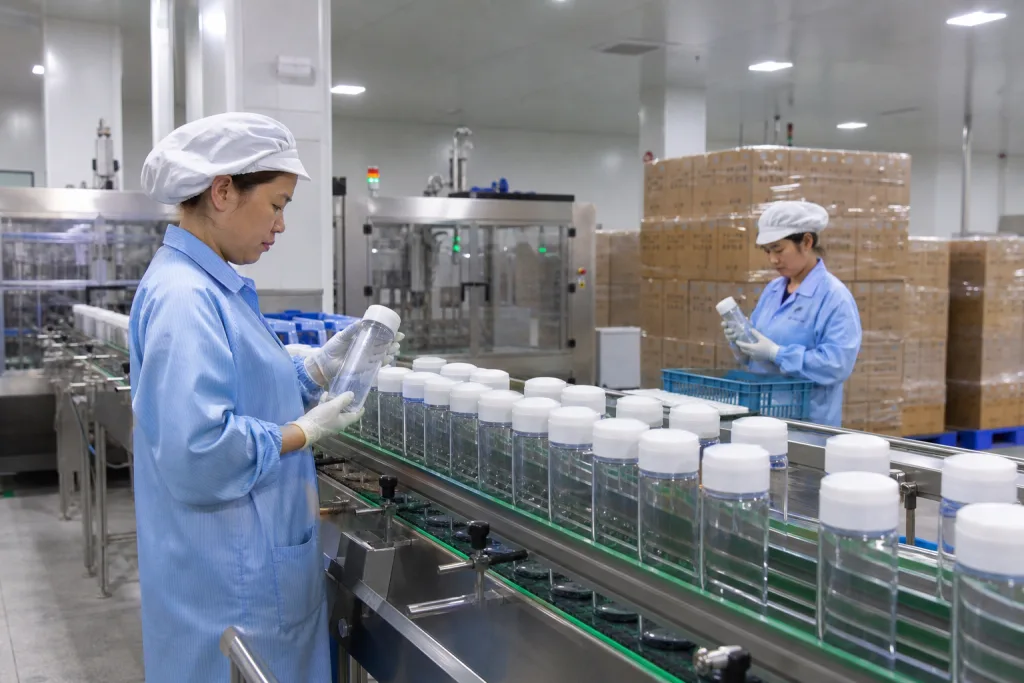
On Tritan bottles, the failures are usually boring. They still cost money. QC pulled the sample and found the same issues we see every month on the line: black specks in clear bodies, flow marks near the shoulder, off-center print registration by 1.5 mm, weak strap stitching below pull standard, and lids that pass a quick bench leak test but fail once torque shifts from 0.8 N·m to 1.2 N·m. That is why in-line checks matter. A good canteen factory in China should track net weight, dimension tolerance, transparency, and thread fit during molding with go/no-go gauges, not wait until packed cartons are stacked.
Ask your supplier specific questions, not generic ones:
- What is the lid torque control range?
- How long is the leak test, 2 hours or 24 hours?
- Do you inspect print position every hour or every batch?
- How do you segregate color-mixing lots?
At our Hangzhou, Zhejiang operation, standard lead time is 25-35 days after sample approval and deposit for most Tritan programs, and we only run rush orders if the carton artwork is fixed and the bottle color is standard, like clear or smoke gray. We have seen buyers push for 20 days, then change the hangtag typo on the PO after molding starts. The math doesn't work. A plain answer beats “20 days no problem” followed by a missed ETD.
If you buy through canteen distributors or a distributor growler network instead of directly from a factory, ask for the same checkpoints and the same records. We ship through trading companies on some EU orders, and the buyer still flagged leak-test data and print alignment photos before balance payment. The trading layer does not remove manufacturing risk. It just changes who sends the update.
Final inspection before you release balance
The order is almost finished, and this is where buyers start to ease off. Don’t. We’ve seen this go sideways. A final inspection in the factory costs far less than arguing over shortages or defects after the goods land in Germany.
Use a written inspection standard and send it before QC starts, not on inspection day. For drinkware, AQL 2.5 for major defects and 4.0 for minor defects is a solid baseline, though some buyers set tighter limits. QC should work from the same sheet on the line and at packing. For a custom tritan bottle Germany shipment, the checklist should cover:
- Leakage: 24-hour inverted test on sampled units
- Odor: no abnormal plastic smell after unpacking
- Logo: correct Pantone tone and adhesion
- Assembly: cap thread smoothness, seal seating, strap firmness
- Appearance: no scratches, bubbles, black dots, or severe sink marks
- Packaging: barcode readability, carton drop integrity, shipping marks
For Germany, outer carton quality gets ignored too often by first-time buyers. That is the wrong place to save money. Warehouse handling is rough, and e-commerce relabeling is worse. We ship cartons that pass a basic drop check, and if the goods are going into FBA or another fulfillment flow later, ask for carton weight control under 15 kg where needed, FNSKU labeling where applicable, and pallet pattern confirmation before loading.
This is also the point to settle claim logic with the supplier in writing. If 2% of units show print defects on arrival, what is the remedy? Credit note on the next order, replacement caps, or cash settlement are all workable, but don’t leave it verbal. We had one PO with the logo code typed wrong by one digit, and the buyer flagged it only at pre-shipment inspection. A supplier that runs export orders every week should not push back on this discussion.
By the time the container leaves China, most problems are either fixed or locked in. Simple as that. Your job is to make sure QC pulled the sample, the cartons passed, and the issues got closed before you release the balance.
After the first shipment, buy smarter
The first order teaches you more than ten RFQs. After the goods land in Germany and start moving, pull the numbers in the first 60 days, not month six. We’ve seen buyers wait too long, then argue from memory. Check the actual complaint count, which 2 colors turn fastest, and whether that retail box survived the 1.2 m drop test or just added EUR 0.18 with no lift in sell-through.
This is where a buyer stops running one-off custom drinkware buys and starts running a program. “Same as last time” is the wrong question to ask. Tighten the second PO with real numbers from the first shipment, the way the line and QC saw them:
- Reduce defect tolerance on the issue you actually saw, such as cap leakage at 15 kPa or logo misalignment over 1.5 mm
- Drop slow colors and put volume into the top 2 SKUs that actually moved
- Switch from individual box to safer bulk pack if the channel allows it; we ship a lot of 24 pcs master cartons for this reason
- Add spare lids at 1-2% if after-sales support matters; QC pulled the sample once, but the market will test every lid harder
For repeat business, a reliable canteen manufacturer or canteen suppliers in Zhejiang, China should be able to hold your approved color standard, maintain the BOM, and quote faster because the engineering work is already done. In our factory, that usually means the Pantone chip, sample board, and packing spec stay on file under the same PO code, even if the buyer flagged a typo on the first order. That is also the stage to expand into adjacent items such as a custom growler, customizable growler, or customized growler if your distributor drinkware or distributor growler customers want a broader line.
The best supplier relationship is not built on promises. It is built on a stable spec, predictable lead time, and fewer surprises on arrival. Simple math. If the first custom tritan bottle Germany order is controlled end to end, the second order is often 12 days vs 18 days on approval, lower in rework risk, and easier for both sides to run.
Send your Germany bottle spec for a workable quote
Share capacity, lid type, logo method, target MOQ, and packaging. We will review feasibility, FOB pricing, compliance needs, and lead time from Zhejiang, China.
Frequently asked questions
What MOQ should I expect for a custom tritan bottle Germany order?
For a standard existing-mold Tritan bottle, most serious factories in China will quote 3,000 to 5,000 pieces per color and design. If you need a custom lid, special strap, or individual retail box, some suppliers may push MOQ to 5,000 or even 10,000 pieces because packaging and color setup costs rise. You may find a canteen vendor offering 1,000 pieces, but the FOB price usually increases by 15% to 30%, and color consistency can be weaker. If you are testing a new channel in Germany, a practical approach is 3,000 pieces on an existing bottle body with standard cap tooling and custom logo only.
How much does a custom Tritan bottle typically cost FOB China?
A realistic FOB China range for B2B buyers is USD 1.70 to 3.20 per piece, depending on size, cap structure, decoration, and packaging. A 500 ml bottle in bulk pack may sit near USD 1.70 to 2.10 at 5,000 pieces. A 650 ml model with strap and one-color silkscreen often lands around USD 1.95 to 2.60. Add a color box, barcode label, insert card, or full-wrap print, and pricing can move to USD 2.40 to 3.20. If you need a new mold, budget an extra USD 1,500 to 4,000 for cap or accessory development before production pricing is finalized.
What compliance documents should I ask for when importing into Germany?
Start with food-contact declarations for the bottle body, cap, and seal materials, plus a REACH SVHC statement. If the sales copy or packaging says BPA-free, ask for that declaration in writing as well. Many buyers also request a factory quality profile such as ISO 9001 and social audit status like BSCI. If the product is for children or includes special claims, additional third-party testing may be needed. The key is timing: ask for these documents during supplier selection or sample approval, not after your artwork is printed. That avoids redesign costs if a claim or material statement cannot be supported.
How long does production usually take for customized drinkware orders?
For an existing Tritan bottle design, stock sample lead time is usually 2 to 3 days, pre-production sample lead time is around 7 to 10 days, and mass production takes about 25 to 35 days after sample approval and deposit. If you add custom mold work, allow another 20 to 35 days for tooling and trial confirmation before normal production starts. Sea transit from China to Germany then needs to be added on top. If a supplier promises very fast delivery, check whether that excludes packaging, final logo curing, or compliance paperwork. For B2B orders, a slightly longer but controlled schedule is usually safer than an aggressive date that slips.
What quality checks matter most on a Tritan bottle shipment?
The highest-value checks are leakage, appearance, decoration, and packaging. Ask for a 24-hour inverted leak test on sampled units, not only a quick line test. Confirm thread fit, seal seating, and cap torque consistency because many complaints start there. On the visual side, inspect for black specks, scratches, haze, flow marks, and print misalignment. For logo durability, ask for an adhesion check such as tape testing after curing. Finally, verify carton strength, barcode readability, and pallet pattern if the goods are going into retail or fulfillment channels. AQL 2.5 for major defects and 4.0 for minor defects is a common B2B inspection standard.