Key Takeaways
- Stock polypropylene bottle programs usually start at 3,000-5,000 units; custom mold projects often need 10,000-30,000 units
- Typical FOB China pricing runs from USD 0.85 to USD 2.40 per bottle depending on capacity, cap, print, and packaging
- Normal lead time is 25-35 days after artwork approval for stock tooling and 55-75 days when new molds are required
- For America, confirm FDA food-contact resin, Prop 65 review, ASTM checks when needed, and AQL inspection before shipment
Polypropylene bottles look simple until you price a real B2B order. One U.S. buyer asks for a custom canteen, Pantone-matched cap, 1-color logo, and retail box; another asks for the same shape in stock blue with bulk packing. The quote gap can hit 35%. That is usually not a sales trick. It comes from PP resin grade, who owns the mold, 1.2 mm vs 1.6 mm wall thickness, cap gasket design, silk screen or heat transfer printing, carton count, and whether QC runs AQL 2.5 or only a basic visual check. Small parts matter.
From our Zhejiang line, we see this mix-up in 6 or 7 RFQs a week: buyers compare a stock canteen promotional item with a full custom drinkware program. Wrong comparison. A factory in China can run both, but the MOQ, lead time, and scrap risk change once you leave stock colors and one-position printing. Last month QC pulled a sample because the cap torque felt loose at 0.6 N·m, and the buyer flagged the same issue after asking why the custom version needed 18 days instead of 12 days. The math doesn’t work if you price it like a giveaway bottle.
Start with the real product scope
Ask for a custom polypropylene bottle America quote, and do not open with price. First ask what is custom. A stock PP bottle with a one-color silkscreen logo is one job. A canteen with a new body mold, color-matched lid, silicone strap, barcode label, and shelf-ready carton is another. We ran both on the same line last month, and the mold change alone added 8 days.
PP works for sports events, school programs, outdoor kits, employee gifts, and distributor drinkware lines because it is light, impact resistant, and cheaper than stainless steel or Tritan. It is not the right call for every buyer. PP has a softer hand and lower clarity, so if the end customer wants glass-like transparency, this is the wrong material to force. QC pulled the sample against the haze gauge at 18% and the buyer flagged it right away.
A clean spec saves days. We ask for capacity in ml or oz, target weight, lid type, leak-proof requirement, decoration area, Pantone color, packaging, and destination market. For America, tell us if the goods go to retail, e-commerce, school use, outdoor channels, or food-service promotion. A PO that says 500 ml on line one and 16 oz on line three slows the line. Those mixed units show up more often than people expect.
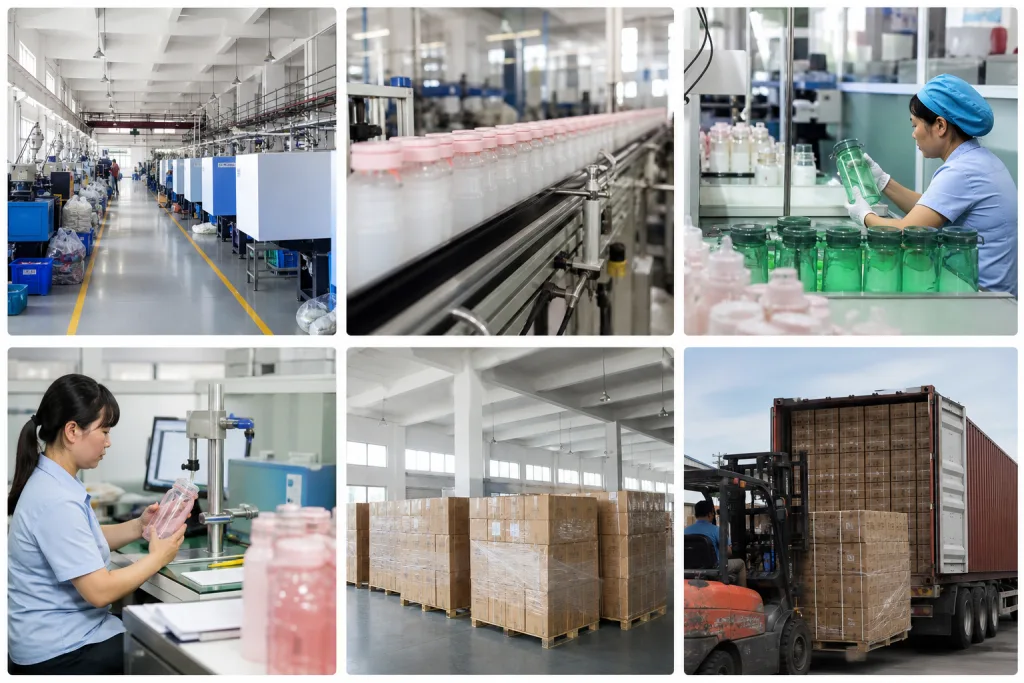
As a canteen manufacturer in Zhejiang, China, our regular PP bottle line can handle about 450,000 units per month across stock and semi-custom programs. The 24-cavity injection machine helps keep output steady. It does not replace a proper brief. Vague requests lead to padded quotations and extra back-and-forth. Sharp specs get sharper FOB pricing, and the math works.
FOB cost drivers buyers underestimate
FOB cost for customizable drinkware is not just plastic resin. For a standard 500-750 ml polypropylene bottle, a normal FOB China range is roughly USD 0.85-1.35 for stock shape, stock cap, one-color print, and bulk carton packing. A heavier canteen customizable program with custom color, leak-proof cap, carry strap, and individual box often lands around USD 1.45-2.40. If a new mold is needed, amortization or tooling is separate. We run quotes off part weight, cavity count, print area, and packing method; last month QC pulled a 620 ml sample at 68 g body weight, then the buyer asked why the “same size” bottle was USD 0.11 higher than a 54 g version.
Resin grade matters. Food-contact PP from a stable supplier costs more than mixed low-grade resin, but it cuts odor complaints and color drift after molding. Wall thickness moves cost too. A 0.8 mm wall can feel cheap and deform under squeeze. A 1.2-1.5 mm wall gives better hand feel but raises material weight by 15-30% depending on shape. The math is simple on the line: if a body gains 14 g and the order is 30,000 pcs, that is 420 kg more PP before scrap, color masterbatch, and dryer loss.
Cap design is the quiet one buyers miss. A simple screw cap is cheap. A flip lid with gasket, hinge pin, spout, and lock button means more parts, more assembly labor, and more leak-test risk. We pressure-test caps in batches, and one bad silicone gasket lot can stop packing for half a shift. If you sell through a canteen distributor network, cap failure creates chargebacks fast, so do not save USD 0.06 on the wrong gasket. We have seen this go sideways with American promo buyers who approved the artwork fast but never opened the cap sample with wet hands.
Decoration changes the quote as well. One-color silkscreen may add USD 0.05-0.12 per unit. Multi-color printing can add USD 0.15-0.35. Heat-transfer labels and full-wrap decoration cost more but look cleaner for retail shelves. Laser engraving is not common on PP bodies and should not be assumed. For a custom growler or distributor growler made from metal, decoration math is different; for PP canteens, ink adhesion and curing are the real issues. Our print room checks with 3M tape and a 60°C hot-water rub test; if the buyer’s PO says “Pantone 286C” but the artwork file says “286U,” the line waits until somebody confirms the blue.
MOQ tiers that change pricing
MOQ is not a punishment. It is the break point where setup time, PP color matching, pad-printing screens, line labor, and AQL inspection stop eating the order. For a stock polypropylene bottle in an existing color with one logo, 8 out of 10 canteen suppliers we see in China will start from 3,000 pieces. At that level, the unit price stays higher because the screen fee, Pantone check, and first-article approval are spread over fewer bottles. QC still pulls samples with calipers and a 3M tape test.
At 5,000-10,000 pieces, the math starts to work. This is the normal range for a canteen promotional program, a regional event, or a first order from canteen distributors testing a new SKU in America. We run one custom body color, one or two logo positions, and a basic barcode label at this tier without slowing the line too much. One buyer flagged a 2 mm logo shift on the pre-production sample, and that was still fixable before mass printing.
At 10,000-30,000 pieces, you have room to push on resin purchasing, a dedicated production window, and carton loading. This is where a customized canteen line makes sense for distributor drinkware catalogs or annual brand programs. If you want a new cap color, custom strap, retail box, instruction insert, and master carton marks, this tier is realistic because the packing team can set a stable SOP instead of changing labels every half hour. We ship better at this volume.
For new tooling, the practical MOQ is usually 20,000-50,000 pieces, even if the canteen factory says the mold can run less. Tooling a body mold may cost USD 3,000-8,000. A cap set with multiple parts can add USD 2,000-6,000. If your order is only 5,000 units, the mold cost per bottle looks bad fast; this is the wrong question to ask if the budget is built around stock-bottle pricing. A good canteen supplier should say it straight, not bury the cost in a confusing unit price with a “mould charge included” typo on the PI.
Lead time without wishful thinking
For stock tooling, the normal timeline is 25-35 days after deposit and artwork approval. That clock does not include ocean freight to America, which usually adds 18-32 days to West Coast ports and 30-45 days to East Coast delivery, depending on routing, season, and customs flow. Air freight is possible, but on low-value PP items it can cost more than the bottle itself. On the line, we check cap fit with a feeler gauge before we release the batch.
A realistic stock-project timeline looks like this: 2-4 days for quote and specification cleanup, 3-7 days for digital artwork and pre-production sample arrangement, 5-10 days for sample approval by courier, then 20-30 days for mass production. Final inspection, booking, and loading take another 3-7 days. If you need FNSKU labels for online fulfillment, add time for label file checks and carton-level control. The buyer flagged one PO because the FNSKU was typed one digit off, and that cost us a full day.
For a new mold, plan 55-75 days before shipment. Mold design and DFM review take 5-10 days. CNC mold work and polishing take 20-30 days. First trial samples take 3-5 days after mold completion. Then you need correction time. Almost every new bottle mold needs at least one adjustment for shrinkage, lid fit, parting line, or surface finish. Mass production should not start until the bottle passes leak testing and the buyer approves the golden sample. QC pulled one sample last month with a 0.15 mm flash on the parting line, and we stopped the run right there.
China holidays matter. Orders placed three weeks before Chinese New Year are not normal orders. Zhejiang factories may stop production for 10-18 days, but the real disruption is longer because resin suppliers, printing shops, carton vendors, and workers restart at different speeds. If your America launch date is fixed, build a 2-week buffer. We have seen this go sideways when a PO landed with 12 days left and the carton vendor had already shut the line.
Compliance costs for America
For America, compliance cannot sit in the last folder we open before shipment. PP resin for food-contact bottles needs FDA food-contact support from the resin supplier, and finished-product testing is smart once the order size or retail channel justifies the spend. If the goods sell in California, run a Prop 65 review before artwork approval. For children’s bottles, CPSIA and the right ASTM checks depend on the cap design, strap length, small parts, and age grading; we have seen QC pull a 7 mm silicone plug from a lid sample and stop the line until the mold was adjusted.
Testing cost is small next to one held container. A basic food-contact and heavy-metals package may run USD 250-700 per material/color set at SGS, Intertek, or a similar third-party lab. Children’s product testing can exceed USD 1,000. Four body colors plus a printed logo and silicone gasket can turn into 6 or 7 items for review, depending on the lab’s reading. One certificate for the whole canteen? Question it. We have had buyers push back after a vendor sent one old PP certificate dated 2019 for a bottle with new ink, new lid material, and a different gasket.
REACH is more Europe-focused, but 6 out of 10 North American brand owners we deal with still ask for it because their compliance team keeps one global file. BSCI or other social audit documents may come up with larger retailers. Those papers do not prove the bottle is safe; they speak to factory social compliance. ISO 9001 shows the quality system is organized, not that the finished PP bottle passed food-contact testing. The math does not work if a buyer treats an ISO scan as a lab report; our document clerk has caught that mistake on POs more than once.
Inspection belongs in the purchase order, not in a WeChat message after packing. For PP bottles, we usually recommend AQL Level II, with critical defects at 0, major at 2.5, and minor at 4.0 unless the buyer has a stricter manual. Inspectors should run leakage checks on filled samples, smell the bottle after 24 hours sealed, compare color under a D65 light box, tape-test print adhesion, check cap torque with a torque meter, review carton drop condition, scan barcodes, and count quantity against the packing list. Simple work. Easy to skip. A low-cost customizable canteen still needs disciplined QC, especially when it moves through 2 or 3 canteen distributors before the final user sees it.
Packaging and logistics math
Packaging changes landed cost faster than most buyers price in. Bulk packing usually means 100-200 PP bottles in one master carton, with dividers or polybags based on the surface finish; we run gloss bottles in polybags more often because scuff marks show up under the QC light box. It is cheap and works for event distribution. Individual white boxes add USD 0.08-0.18. Printed retail boxes can add USD 0.18-0.45, plus plate charges or MOQ from the carton supplier. Hang tags, instruction sheets, UPC stickers, and inner cartons all add handwork at the packing table, and that labor shows up when the line is sealing 8,000 cartons before cutoff.
Carton size drives freight. A 750 ml canteen with a bulky cap may ship 48 pieces per carton, while a slimmer 500 ml model may ship 100 pieces. If your distributor canteen program looks cheap FOB but wastes container space, the math doesn't work after ocean freight, drayage, and warehouse handling. Ask for carton dimensions, gross weight, and CBM before approving the order; our merchandiser should be giving you L × W × H in cm, not a loose “standard carton” note. For example, 10,000 units at 0.065 CBM per 100 pieces equals 6.5 CBM. A small design change that reduces carton volume by 12% can save real money, and QC pulled samples last month where trimming 6 mm from the cap height changed the carton count.
FOB Ningbo or FOB Shanghai are common for Zhejiang factories. Ningbo usually moves faster for drinkware shipments from Hangzhou and nearby cities; we ship there because the truck run is cleaner and the port cut-off is easier to hit. For America, clarify whether your forwarder needs palletization, Amazon-style carton labels, FNSKU labeling, or mixed-SKU packing. Put each requirement on the proforma invoice or packing instruction, not just in an email thread. We have seen this go sideways from one typo on a PO, where “carton label” became “carton logo” and the warehouse flagged 312 master cartons at receiving.
If you are a canteen distributor or distributor growler buyer consolidating several SKUs, plan loading sequence early. Custom polypropylene bottles, stainless items, and glass bottles have different carton strength and stacking limits. Mixing them carelessly creates crushed retail boxes and claims that nobody wants to own. The buyer flagged it only after photos came back from the 40HQ unloading dock: glass on top survived, but the PP retail boxes under 14 kg stainless cartons were bowed at the corners.
How to compare supplier quotes
A low quote from one PP bottle factory and a higher quote from another often cover different builds. Before you compare suppliers, put every line in the same table: 500 ml or 750 ml capacity, net weight in grams, PP resin grade, lid material, gasket material, print method, packaging spec, MOQ, lead time, tooling, sample fee, payment terms, FOB port, inspection standard, and who pays for lab tests. On the line, we check this with a digital caliper and a gram scale; if one quote leaves out 12 g of resin, the math does not work.
Ask for a physical sample built to the quoted spec. Photos hide a weak hinge, thin wall, odor, and cap threading that fails after 20 turns. QC pulled the sample from our leak tester at 0.3 bar once and the buyer flagged a cap that passed picture review but failed on the first twist. A proper pre-production sample should hit Pantone within tolerance, keep the logo size right, and use the same carton, inner bag, and insert planned for mass production. If the supplier uses hand-made parts or a different resin, treat the approval as a warning, not a green light.
For first orders from China, 30% deposit and 70% before shipment is still the standard setup. On repeat programs, some factories will accept 30/70 against a bill of lading copy or give credit terms after the account has a real shipment record. A PO typo can cause trouble fast; we once saw a buyer write 3% instead of 30%, and the line stopped until finance called back. A deposit that looks too light from a new supplier is usually not a favor. It is a risk transfer.
The wrong question is who gave the lowest quote. The better question is which factory tells you where the gap is: which cap leaks less after 50 cycles, which print survives 65°C dishwashing, which MOQ is real, and which delivery date is fantasy. We ship a lot of PP bottles, and a supplier who can explain a 0.04 USD difference on a 5,000-piece order usually saves you more than the headline price does. We have seen it go sideways when a buyer chased the cheapest number and lost 14 days in inspection because the samples never matched the PO.
Send your bottle brief for a firm quote
Share capacity, artwork, MOQ, destination, and packaging needs. We will return practical FOB pricing, tooling notes, and lead-time options.
Frequently asked questions
What is a realistic MOQ for custom polypropylene bottles shipped to America?
For an existing polypropylene bottle mold, a realistic MOQ is 3,000-5,000 pieces with stock colors and one-color logo printing. If you need a custom Pantone body color, plan 5,000-10,000 pieces because the factory must mix resin, purge machines, and control color variation. For a new bottle or cap mold, 20,000-50,000 pieces is more realistic. Some canteen vendors may accept less, but the tooling cost per unit becomes high. If your target is a canteen promotional campaign, start with existing tooling first.
How much does a custom PP canteen usually cost FOB China?
Most stock-shape PP canteens for B2B programs fall between USD 0.85 and USD 1.35 FOB China with one logo and bulk packing. A canteen customized with custom color, better cap, silicone gasket, strap, individual box, and barcode label often runs USD 1.45-2.40. New mold costs are separate and commonly range from USD 3,000 to USD 14,000 depending on body and cap complexity. Always compare net weight, wall thickness, decoration, and packing before judging the unit price.
Can polypropylene bottles pass food-contact requirements for America?
Yes, if the correct food-contact polypropylene resin, color masterbatch, inks, and gasket materials are used. For America, ask for FDA food-contact support and consider finished-product testing through a recognized lab. If selling in California, request Prop 65 review. If the bottle is intended for children, CPSIA and relevant ASTM checks may apply. Testing can cost USD 250-700 for basic food-contact and heavy-metals screening, and more for children’s products. Do not rely on a generic certificate that does not match your material and color.
How long should I plan from purchase order to delivery in the US?
For stock tooling, plan 25-35 days for production after deposit and artwork approval, plus ocean freight. Delivery to the US West Coast often adds 18-32 days port-to-port; East Coast routing can add 30-45 days. With customs clearance, trucking, and warehouse receiving, many buyers budget 55-80 days from PO to available inventory. If new molds are required, add 30-45 days. Before Chinese New Year, add at least a 2-week buffer because China supply chains restart unevenly.
What should a distributor ask before approving a polypropylene bottle order?
A distributor should ask for capacity, product weight, wall thickness, resin grade, cap structure, gasket material, decoration method, carton size, CBM, MOQ, lead time, test plan, and AQL inspection standard. Also request pre-production samples and confirm barcode or FNSKU placement if the goods go to e-commerce fulfillment. For a distributor drinkware program, carton strength and label accuracy matter as much as the bottle itself. Put all packing and inspection details into the purchase order, not only the email conversation.