Key Takeaways
- For a custom made polypropylene bottle, start with PP grade, cap structure, decoration method, and test standard before asking for price.
- A realistic MOQ is 3,000-5,000 units per color for standard molds, while private mold projects often need USD 1,500-6,000 tooling.
- PP bottles work best for lightweight promotional, school, fitness, and outdoor canteen orders, not hot-fill vacuum insulation.
- Expect 30-45 days mass production after sample approval for most China custom canteen programs.
A custom made polypropylene bottle looks simple until the approval sheet lands on your desk: resin grade, lid tooling, leak test standard, print position, carton marks, and Incoterms. For a B2B buyer, USD 0.08 per unit is not the main danger. The real problem is 20,000 bottles with a resin odor, a cap that seeps after the carton drop test, a REACH report the retailer rejects, or a shipment that misses the shelf date by 12 days.
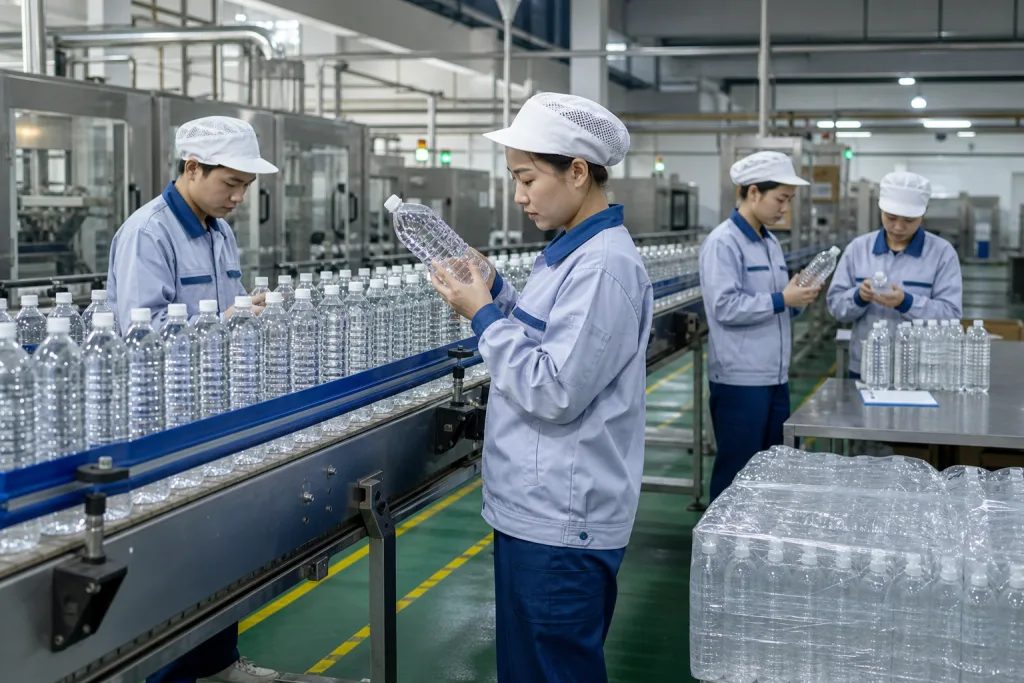
At our Zhejiang factory, we settle the hard points before the mold shop cuts steel: PP material spec, bottle structure, logo method, compliance level, and packing route. This is where buyers sometimes ask the wrong question. “Can you make it cheaper?” matters less than “Will this pass my retailer’s test and ship on the 18th?” China can move fast on custom drinkware when the canteen manufacturer gets clear targets. BottleForge Industrial in Hangzhou runs PP and stainless drinkware programs with typical MOQ from 3,000 units per color and sample lead time around 7-12 days; last week QC pulled a PP cap sample with 0.35 mm flash on the thread, and the line stopped it before packing.
Start with the use case
The first decision is not the logo. It is where the bottle will be used. A custom made polypropylene bottle for a school sports program does not need the same cap, wall thickness, or packing as a canteen promotional giveaway, a hiking custom canteen, or a distributor drinkware line sold through retail chains. Last April, a buyer sent us 6 logo files before telling us the bottle was for 8-year-old students. QC pulled the sample, and the flip cap was too stiff.
Polypropylene, usually marked PP or material code 5, is a practical resin for lightweight bottles. It has good impact resistance, low density around 0.90 g/cm³, and better heat tolerance than PET. On the line, we run PP bodies with different wall thickness, often 1.2-1.8 mm on standard sports bottle molds. PP bottles can handle warm liquid around 80-100°C depending on cap gasket and wall thickness, but do not sell them as vacuum flasks or boiling-water thermos products. If your project needs 12-hour heat retention, you are in stainless steel territory, not PP. The math doesn't work any other way.
For B2B sourcing, define the use case in one sentence before you request quotation. For example: 650 ml PP sports bottle for gym membership gift, leak-resistant flip cap, one-color logo, EU REACH compliant, packed 1 pc/polybag, FOB Ningbo. That sentence beats a mood board with ten references. Our sales team can check mold number, MOQ, carton size, and logo method from one clean line; a PO with “blue bottle” and no Pantone code usually costs 2 extra emails.
The trade-off is simple. Standard PP molds keep cost and lead time down. A standard 500-750 ml bottle may quote around USD 0.75-1.60 FOB China depending on cap, color, logo, and packaging. A unique silhouette or special canteen customized shape can improve retail differentiation, but you add tooling cost, engineering time, and more sample rounds. We have seen this go sideways when a buyer approved a 3D render but skipped the hand sample; the shoulder radius looked good on screen and trapped water after washing. If you are testing a new market, start with a proven mold. If you are a canteen distributor building a long-term product family, private tooling can make sense.
Choose the right PP specification
PP is not one material, and “food grade plastic” is too loose for a purchase order. Ask the canteen supplier to write the resin route clearly: virgin PP, recycled-content PP, or a stated blend ratio. For food-contact bottles sold in Europe or North America, virgin food-contact PP is the safer default unless your compliance team has already signed off the recycled resin file. We have seen this go sideways when a PO said only “PP bottle” and QC pulled the incoming resin bag with no lot number, no melt index, and no food-contact declaration.
For Europe, buyers normally ask for LFGB or EU food-contact migration documentation, plus REACH and RoHS where relevant. For the United States, FDA food-contact suitability and California Proposition 65 review may be needed depending on your channel. Children’s drinkware may also require ASTM F963 or CPSIA-related checks. The exact test plan depends on age grade, market, and claims printed on packaging. Ask early. If the artwork says “kids,” “BPA free,” or “dishwasher safe,” the lab scope changes, and we have had buyers flag this only 6 days before shipment booking.
Wall thickness is the detail buyers miss. For PP squeeze or canteen-style bottles, a body wall around 1.0-1.8 mm is common; on our line, we usually check it with a digital thickness gauge at the shoulder, waist, and base. Thinner walls cut resin cost, but they can feel cheap, deform during hot filling, or crack near the shoulder under drop testing. Thicker walls improve hand feel and durability, but cycle time and resin consumption go up. The math matters. A 0.2 mm change across 30,000 units can move the price more than a small logo change.
Color matching needs a real sample, not a screenshot. PP does not behave like coated metal or glass, and Pantone matching shifts between translucent and opaque PP under warehouse lighting, sunlight, and e-commerce photography. For a canteen customizable program, approve a physical color chip or pre-production sample before bulk molding. Our Zhejiang QC team checks molded color against the signed sample under standard light before packing; one buyer once rejected 4,800 pcs because the approved screen image looked cooler than the molded PP under a D65 light box.
Cap design decides complaints
Most after-sales claims on a custom made polypropylene bottle come from the cap, not the bottle body. We see it on the line all the time: the print file gets three rounds, the lid gets two minutes. That is the wrong question to ask. A bottle that looks sharp but leaks in a school bag turns into a claim, a refund, or a distributor calling at 9 p.m.
Common cap options include screw caps, flip-top caps, push-pull sports caps, straw lids, and wide-mouth closures. Screw caps are simple and steady, though they slow the drink-down on sports use. Flip-top caps feel more polished, but the hinge pin and gasket need real control; QC pulled one sample last week and found a 0.3 mm gap at the hinge. Straw lids work for kids and gym sets, but they add parts, assembly labor, and cleaning complaints. A wide-mouth canteen custom design is easier to fill and wash, while a narrow mouth drinks more comfortably on the move.
Ask your canteen factory for three checks: leak test, torque test, and drop test. On a basic production check, we fill the bottle, invert it for 30 minutes, and press the side wall by hand. For retail programs, we run vacuum or pressure-assisted tests in a chamber. Torque matters on screw lids; too loose causes leakage, too tight strips threads and annoys buyers. One buyer pushed back on a 0.4 N·m spec, so we ran the sample on a torque meter for 200 open-close cycles and sent the data back. Drop testing from 1.0-1.2 meters onto common impact points gives a useful read on cap and shoulder strength.
Gasket material is part of the decision too. Silicone sealing rings cost more than basic TPE options, but they hold up better under heat and keep sealing after repeat washing. If your customized canteen will go through daily cleaning, ask whether the gasket comes out by hand and whether replacement parts are stocked. QC once found a TPE ring swell after a 60°C wash cycle, and that was enough to kill the order. For a canteen manufacturer, the cap is where discipline shows. For you, it is where complaints start or stop.
Branding method and surface reality
Decoration on PP needs straight expectations. PP has low surface energy, so ink grip is weaker than on stainless steel or coated aluminum if the surface is not treated right. On our line, QC checks the treated bottle with a dyne pen, usually 38-42 dynes/cm before silkscreen. A reliable canteen vendor should say clearly whether they run flame treatment, corona treatment, or a PP-matched ink system before printing. If they just say “normal ink is fine,” we’ve seen this go sideways.
Silkscreen printing is the workhorse for custom drinkware and customizable drinkware orders. It is cost-effective for one or two solid colors and works well on cylindrical bottles or a light curve under 3 mm across the print area. A one-color logo may add roughly USD 0.05-0.15 per unit depending on size and order quantity. For example, a 60 mm x 45 mm logo on a 5,000 pcs PP canteen order normally fits one screen setup without drama. Multi-color registration is possible, but the buyer flagged 0.3 mm line gaps on one job last season, and the math did not work after two reprints. Fine lines, gradients, or photo-style artwork are better handled with heat transfer, in-mold labeling, or a sleeve label if the design and volume justify it.
Laser engraving is not usually the first choice for PP because it gives limited contrast or a shallow surface mark, not the crisp look you get on coated stainless steel. For a canteen promotional order, silkscreen is usually enough. Simple wins. For a retail customized drinkware program, ask for a stronger print test plan: 3M tape pull, cross-hatch adhesion, 20-cycle dishwasher simulation, and 500 g abrasion rubs with a cotton cloth. QC pulled the sample after 24 hours drying on one PP bottle order because the ink passed tape pull but failed at the shoulder radius.
Private label buyers should look past the bottle logo. Carton marks and retail barcode already create enough mistakes without adding vague artwork notes. Hang tag, instruction leaflet, warning text, and FNSKU label can all affect the shipment. A distributor canteen order going to Amazon FBA has different label rules from a pallet shipped to a European wholesaler; one wrong FNSKU position can hold 80 cartons at the forwarder. If you provide artwork in AI or PDF vector format with Pantone codes and exact print position in millimeters, China production moves faster and with fewer arguments. We ship cleaner when the PO says “logo center 72 mm below cap seam,” not “place nicely on front.”
MOQ, tooling, and landed cost
A low unit price only works when it fits the buying plan. For standard PP bottle molds, canteen suppliers in China usually quote MOQ around 3,000-5,000 units per color; on our line, one Pantone resin change means purging the barrel and cleaning the hopper before the next run. Custom color, a special cap match, or a new grip texture pushes MOQ up because resin mixing and printing setup both carry fixed costs. Small orders look simple on email. They are not simple at the machine.
Private mold development changes the math. A simple new cap or body insert may cost USD 1,500-3,000 in tooling. A full custom growler-style PP body with matching lid and handle system can reach USD 4,000-10,000 depending on complexity and cavity count. Multi-cavity tools cut unit cost at high volume but cost more upfront, and the mold trial still needs gauge checks on wall thickness, lid fit, and shrinkage after cooling. If your annual forecast is only 5,000 units, private tooling is usually a vanity expense. If your forecast is 80,000-150,000 units per year, it can become a real asset.
When comparing quotes from canteen manufacturers, break the quote into separate lines: bottle FOB price, logo charge, packaging charge, testing charge, mold charge, sample charge, and inland freight. Ask what each line includes. A quote of USD 0.98 may be worse than USD 1.08 if the cheaper one excludes color box, gasket upgrade, or inspection support. We have seen buyers flag this after PO release, especially when the PO says “retail box included” but the supplier quoted bulk pack. For North America, check carton dimensions and weight as well, because freight and warehouse handling can wipe out a small FOB saving.
Payment terms for new B2B buyers are often 30% deposit and 70% before shipment after inspection. Production lead time is commonly 30-45 days after final sample and deposit, with peak-season pressure before summer and year-end promotional campaigns. BottleForge Industrial’s Hangzhou production network can support about 300,000-500,000 drinkware units per month across PP and stainless programs, but capacity still needs booking; last May, QC pulled samples from three PP bottle runs in one week because buyers all wanted the same ship window. A serious canteen distributor should share forecast by month, not just ask for the lowest price today. That is the wrong question to ask if the launch date is fixed.
Quality control before shipment
Quality control belongs in the PO and pre-production file before we run the line. For PP bottles, we check resin grade, color match against the signed Pantone chip, capacity, gram weight, wall consistency in mm, cap fit, leakage, odor, printing adhesion, surface defects, and carton packing. QC pulled one 650 ml sample last month that passed capacity but was 6 g under the approved weight. That is why waiting until final inspection to set the standard is too late.
AQL inspection is common for export orders. On export PP bottle orders, about 8 out of 10 buyers we work with use AQL 2.5 for major defects and 4.0 for minor defects, with critical defects set at 0. Critical defects include sharp edges, contamination, wrong material, serious leakage, or unsafe packaging. Major defects include obvious print misalignment, cap malfunction, severe color deviation, or bottle deformation. Minor defects include small scuffs within an approved limit, such as one light mark under 3 mm on a non-logo area. The buyer flagged this once because the PO said “blue lid” while the artwork file said black lid; that small typo stopped packing for half a day.
Odor needs a separate check. PP itself can pass, but poor resin storage, contaminated masterbatch, or packing bottles while they are still warm can leave a smell that consumers notice as soon as they open the polybag. Ask your canteen supplier to air finished bottles before sealing cartons if needed, especially for 10,000 pcs promotional orders packed in polybags. We usually leave suspect cartons open for 12 hours before a second smell check. For kids or fitness channels, odor complaints kill repeat orders faster than a small scratch.
Pre-shipment inspection can be done by your own agent, a third-party inspection company, or our internal QC team with photos, carton count, drop test notes, and sealed sample comparison. For first orders, third-party inspection is not an insult; it is normal risk control. A good canteen vendor will not resist it. We ship smoother when the inspection sheet states the exact rules: AQL level, leak test time, sample size, logo tolerance, carton marks, and acceptable scuff limit. Without that, the math does not work, and we have seen this go sideways at the loading door.
Pick the supplier by capability
The cheapest spreadsheet row does not tell you who can keep a PP bottle running after the first complaint. You need a canteen factory that knows PP molding, cap design, decoration, export packing, and the paperwork that sits behind FDA, LFGB, REACH, BSCI, and ISO 9001 files. Trading-only vendors can handle simple mixed orders, but when a gasket slips, the mold needs a 0.2 mm tweak, or a retailer asks for new migration test reports, they start passing the ball.
Ask direct questions. How many PP injection or blow molding lines are running today, 6 or 10? What is the normal monthly output, 300,000 pcs or 800,000 pcs? Which lab do they send to? Can they issue BSCI, ISO 9001, REACH, LFGB, or FDA-related documents where applicable? What is the sample lead time, 5 days or 12 days? Who signs off the golden sample? How do they hold the masterbatch shade between shifts? On our floor, QC pulled the sample and checked cap torque at 1.6 N·m; that tells you more than a glossy catalog.
If you are buying distributor growler, customizable growler, or customized growler items alongside PP bottles, check whether the same supplier can run mixed material programs. A partner that handles plastic and stainless custom drinkware can keep artwork control, carton specs, like a 6 pcs/ctn master carton, and shipment consolidation in one file. We have seen this go sideways when a buyer asks one weak plant to cover both a stainless lid and a PP body. Ask for the in-house list. If the factory cannot show the line, the pad printer, or the sub-supplier map, do not force it.
For B2B buyers in Europe and North America, Zhejiang is a solid sourcing base because Ningbo and Shanghai ports are close, supplier density is high, and export documents are routine. We run the line here every week, and a typo on a PO, like 5,000 pcs typed as 500 pcs, gets caught fast if you send the right file set. China rewards clear specs and punishes vague approval. Define the bottle use case, PP grade, cap test, branding method, MOQ plan, and inspection criteria early, and your custom made polypropylene bottle order stays a manufacturing job, not a guessing game.
Send your PP bottle specification for factory pricing
Share capacity, color, cap type, logo artwork, market, and target quantity. We will return practical MOQ, FOB pricing, and sampling options.
Frequently asked questions
What MOQ should I expect for a custom made polypropylene bottle?
For standard molds, a realistic MOQ is usually 3,000-5,000 units per color. If you need a custom Pantone body color, special cap color, or retail packaging, the factory may ask for 5,000 units to cover resin mixing and line setup. Private mold projects are different: tooling can cost USD 1,500-10,000, and the practical first order is often 10,000-30,000 units. Small test runs below 1,000 units are possible only from stock colors and stock caps, but the FOB price and logo cost will be higher.
Is PP safe for food-contact drinkware in Europe and North America?
Virgin food-contact PP is commonly used for bottles, lunch boxes, and caps, but safety depends on resin source, color masterbatch, additives, and testing. For Europe, ask for EU food-contact migration, LFGB if Germany is a key market, and REACH documentation. For the United States, FDA food-contact suitability and Prop 65 review may apply. Children’s products may need additional CPSIA or ASTM-related checks. Do not accept only a verbal “BPA free” claim; request test reports that match the actual material and color you will order.
How long does production take after I approve the sample?
For a standard custom canteen or PP sports bottle, sample preparation usually takes 7-12 days after artwork and color details are confirmed. Mass production is commonly 30-45 days after deposit and golden sample approval. Add 3-7 days for third-party inspection and booking before vessel departure. If you need private mold development, add about 20-35 days for tooling and first mold trial before normal sample approval. Peak season orders should be booked earlier, especially before summer campaigns or Q4 promotional schedules.
Which logo method is best for polypropylene bottles?
Silkscreen printing is usually the best starting point for PP bottles because it is economical and works well for one to three solid colors. Expect about USD 0.05-0.15 per unit for a typical one-color logo, depending on size and quantity. PP needs proper surface treatment and compatible ink, so ask for adhesion testing, not just a photo. Heat transfer or labels can work for complex artwork, gradients, or full-wrap retail graphics. Laser marking is less common on PP because the contrast is usually weaker than on coated metal.
What should I check before paying the final balance?
Before final payment, check a pre-shipment inspection report against your approved sample and purchase order. Key points include quantity, carton count, body color, capacity, bottle weight, cap fit, leakage, odor, logo position, print adhesion, barcode or FNSKU accuracy, and packing method. Use AQL 2.5 for major defects and 4.0 for minor defects if you do not have your own standard. For first orders, inspect at least when 80% of goods are packed. Photos alone are not enough for leakage and odor; those need physical checking.