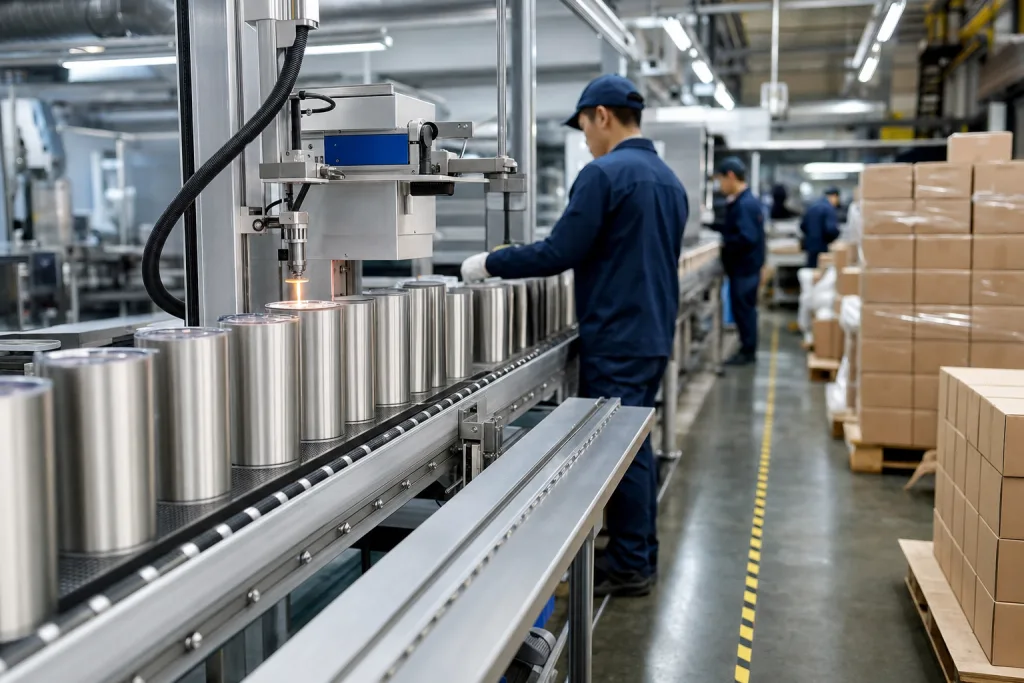
Key Takeaways
- A retail-grade custom made insulated tumbler usually needs 0.5 mm inner steel, 0.6 mm outer steel, and AQL 2.5 inspection.
- MOQ for new colors is commonly 1,000-3,000 units per SKU, while stock-color logo orders can start near 500 units.
- Powder coating adds about USD 0.35-0.70 per unit versus polished stainless, depending on color and defect tolerance.
- For Europe and North America, check LFGB or FDA food-contact testing, REACH for coatings, and carton drop-test results.
A custom made insulated tumbler looks simple on a quotation sheet: capacity, 304 stainless steel, lid, logo, carton. Then two prices come back 18% apart, and both factories say “same quality.” That is where buyers get trapped. The gap is usually in 0.4 mm vs 0.5 mm steel, vacuum pass rate, powder coating thickness, lid mold fit, AQL 2.5 inspection time, or whether one worker spends 14 seconds or 28 seconds packing each cup.
We manufacture drinkware in Zhejiang, China, and we see the mistakes before mass production starts. QC pulled a sample last month where the PO said matte black, but the approved sample card was Pantone 426C gloss; the buyer flagged it only after cartons were booked. A canteen supplier may work for a low-cost giveaway, while a canteen manufacturer with tighter welding and coating control makes more sense for retail shelves. Cheapest cup? Wrong question. Match the spec to the sales channel, the claim rate, and the price point your customer can actually defend.
Start With The Sales Channel
The right custom made insulated tumbler starts with the sales channel. A distributor program for corporate gifts does not need the same build as a retail shelf item, and a rugged outdoor custom growler is another spec again. Ask three canteen vendors for “best quality” and you will get three answers, usually with a USD 0.60-1.40 gap between the lowest and highest quote. Wrong first question. We ask where it will be sold, who opens the carton, and how long the buyer expects it to stay in use.
For promotional use, buyers usually watch three things: lead time in days, logo color drift, and landed cost. A canteen promotional order may use 201 stainless steel outer walls, 304 stainless inner walls, a standard slider lid, and one-color silkscreen printing. We run these jobs often at 3,000-10,000 pcs, with logo tolerance checked against a Pantone book under the light box before mass printing. That build can be acceptable when the tumbler is a campaign item with a 6-12 month use expectation.
Retail is less forgiving. If you sell through boutiques, online marketplaces, or distributor canteen channels, the tumbler needs stronger coating adhesion, cleaner rim polishing, tighter lid fit, and steadier insulation performance. QC pulled one retail sample last season because the powder coat chipped after a 3M tape cross-cut test on the bottom edge. Returns are expensive in North America and Europe. Saving USD 0.25 at FOB China can turn into a USD 6.00 replacement cost after freight, handling, and customer service.
For outdoor and premium beverage use, compare the tumbler against a customized growler or customizable growler specification. Buyers often request a 60-90 mm mouth, thicker body steel, leak-resistant caps, and handle options with real grip clearance. These details raise unit cost, but they cut complaints from users who throw the product into a vehicle, gym bag, or camping box. We have seen this go sideways when the cap looks strong in the photo but fails the 24-hour upside-down leak test on the line.
Good sourcing starts with the use case, not with the catalog photo.
Spec Table Buyers Should Demand
Compare a custom made insulated tumbler by spec, not by soft names like “premium,” “eco,” or “pro.” Ask each canteen factory to quote from the same measurable spec table. If a vendor leaves one line blank, we treat it as a cost-down choice; last month QC pulled the sample and found the “304 outer” was actually 201 on the XRF gun.
| Spec Item | Economy Promotional | Retail Standard | Premium Outdoor |
|---|---|---|---|
| Capacity | 12-20 oz | 20-30 oz | 30-40 oz |
| Inner steel | 304, 0.4 mm | 304, 0.5 mm | 304, 0.5-0.6 mm |
| Outer steel | 201 or 304, 0.4-0.5 mm | 304, 0.5-0.6 mm | 304, 0.6 mm |
| Insulation | 6-8 hours hot | 8-12 hours hot | 12+ hours hot |
| Finish | Polished or basic paint | Powder coat | Powder coat plus texture |
| Logo | Silkscreen | Laser or UV print | Laser, emboss, or full-wrap print |
| MOQ | 500-1,000 units | 1,000-3,000 units | 3,000+ units |
This table comes from the line, not a catalog. In Zhejiang drinkware production, wall thickness and coating type change cost fast. A 0.1 mm steel difference looks harmless on a PO, but across 10,000 units it changes material weight, drop-test denting, and hand feel; we check it with a micrometer before polishing, because after powder coating the reading is messy.
Ask whether the quote is FOB Ningbo, FOB Shanghai, or EXW factory. Ningbo works well for drinkware cartons, and we ship 40HQ containers there almost every week, but some China suppliers quote EXW so the unit price looks lower. Put every offer on the same Incoterm and carton quantity. Otherwise the math does not work, and we have seen buyers approve a “cheaper” tumbler that became 12 days late after local trucking and port charges were added.
Body Construction Versus Price
The vacuum body carries most of the hidden cost. A custom made insulated tumbler starts with two stainless steel shells, then the line welds the mouth or base, pulls the vacuum, seals the exhaust point, and sends the body through polishing and powder coating. Cheap tumblers look fine in a catalog photo. Put a 0.38 mm outer wall next to a 0.50 mm wall, though, and QC will see the difference after the first drop test: dents near the bottom radius, warmer outer skin, and cold retention that misses the buyer’s spec.
For most customized drinkware programs, 304 stainless steel inner walls are the baseline. We do not recommend 201 stainless steel for any food-contact inner surface. The math looks tempting on the quotation sheet, but corrosion resistance is weaker with lemon water, coffee, and sports drinks. Outer 201 stainless can work for low-budget canteen customized projects, and we have shipped it when the buyer’s target was under USD 3.00 FOB. For retail or outdoor use, 304 outer steel is the cleaner choice, and fewer complaints come back after salt-spray and dishwasher abuse.
Vacuum testing also matters. A responsible canteen manufacturer should test every unit after vacuum sealing, then test again after coating or assembly by sampling. At our Zhejiang facility, a normal insulated tumbler line can produce about 450,000 units per month, but yield control beats line speed. We run the vacuum station with a helium leak tester and a hot-water screen; if the operator rushes sealing by 2 seconds per piece, the cartons may pass visual inspection and still fail in customer use. We have seen this go sideways.
Ask for the real performance method. A common check is filling the cup with 95°C water, closing the lid, and measuring after 6 or 12 hours at room temperature. For cold testing, buyers often use 4°C water and ice retention checks. “Keeps hot all day” is not a specification. Ask for the target temperature after a fixed number of hours, the test room temperature, the lid type, and the sample size; last month a buyer flagged a report because the PO said 12 hours but the lab sheet showed 6 hours.
If you are comparing custom canteen, custom drinkware, and distributor growler projects together, separate the body requirements. A tumbler needs good hand feel, stable cup-holder fit, and a lid that does not splash during commuting. A customized growler needs stronger sealing, a carry handle that survives a 20 kg pull test, and capacity accuracy within the agreed tolerance. One factory can make both. Copying the same test sheet for both is the wrong question to ask.
Lids, Threads, And Leak Claims
Lids create more complaints than steel. On a 10,000 pcs run, QC may pull 80 bodies with cosmetic marks, but 300 lid issues if the slider gap or silicone ring is off by 0.3 mm. A tumbler body can pass vacuum testing and still get blamed because the sip cover rattles, the straw hole tears, or the gasket smells. Before you place a custom made insulated tumbler order, write the claim clearly: spill-resistant, splash-resistant, or leakproof. These are not the same thing.
Most travel tumbler lids are not truly leakproof if they use a sliding sip opening. They are built for desks, cup holders, and walking, not for lying upside down in a backpack next to a laptop. If your sales copy says leakproof, request a screw lid with silicone gasket and a 180-degree inversion test for at least 30 minutes; we run this over white tissue paper so small drips show fast. For children’s or sports use, check ASTM mechanical safety where relevant, especially for small removable parts.
Here is the practical head-to-head fit:
- Slider lid: low cost and fast assembly on the line, good for promotional tumbler orders, not fully leakproof when the cup is inverted.
- Straw lid: strong for gym and commuter use, but the straw spec must be controlled by material and diameter, usually PP or Tritan.
- Flip lid: better spill control in a car cup holder, with more moving parts, spring checks, and higher mold and defect risk.
- Screw cap: best for outdoor use and customizable canteen programs, slower to drink from, stronger when the buyer needs a real leak claim.
For a canteen customizable project, lid tooling can make or break the order. Existing public molds keep cost down and speed up sampling to 7-12 days. Private tooling gives brand differentiation but can add USD 1,500-8,000 depending on structure. We had one buyer push for a new flip lid on a 1,000 pcs trial, and the math did not work after mold fee, testing, and spare parts. If you are a canteen distributor testing a new line, start with an existing lid mold and spend money on coating, packaging, and QC first.
Check whether replacement lids are available. Distributor drinkware buyers often forget this, then the buyer flagged it after the first container landed. If a lid breaks and the factory cannot supply spare parts after six months, your customer service team inherits the problem. We usually suggest ordering 1%-2% spare lids with the first PO, packed in a separate carton with a clear SKU sticker.
Decoration Methods Compared Honestly
Decoration is the part brand owners like, and the part that makes the line slow down. A logo file can look perfect on a 27-inch monitor, then lose a 0.3 mm line on curved stainless steel or sink into orange-peel powder coating. We check artwork at 1:1 size before opening the screen. A custom made insulated tumbler with a weak logo is hard to move, even when the insulation test shows 6 hours hot performance.
Silkscreen printing is the lowest-cost reliable choice for one- or two-color logos. It suits canteen promotional campaigns and large distributor canteen orders when the artwork is bold, with text above 1.2 mm stroke width. Expect a setup charge around USD 35-80 per color, depending on artwork and factory practice. The weak points are fine detail and wraparound alignment; QC pulled one sample last month because the back seam drifted 2 mm, and the buyer flagged it right away.
Laser engraving is cleaner for stainless steel and powder-coated bodies. No ink adhesion risk. It works well for corporate customized canteen orders where the buyer wants the logo to survive daily office use and dishwasher mistakes, even if the care label says hand wash. The cost is usually higher than simple printing, but the result lasts longer. On dark powder coating, laser marks usually look crisp; on some light colors, the contrast can be flat, so we run a 3-piece laser test before confirming mass production.
UV printing supports full-color artwork, so it fits customizable drinkware sold online with names, mascots, or small batch designs. It is the wrong choice for rough outdoor promotion unless abrasion testing passes. For retail, request a cross-hatch adhesion test and alcohol rub test; we use 3M tape and 75% alcohol during sample checking. For Europe, ask the canteen supplier to confirm REACH compliance for coating and inks before the PO is signed, not after cartons are packed.
Full-wrap heat transfer or 3D printing can look strong in a catalog, but defect rates climb fast when the artwork has gradients or tiny text. If your design needs exact color matching, approve a physical pre-production sample. A Pantone code helps, but color can shift between raw stainless steel and matte powder coating, and glossy coating reflects light differently under the inspection lamp. In China production, approve the actual sample under neutral light; a phone photo from the factory floor is not enough, and we have seen that go sideways on 5,000 pcs orders.
Factory Fit And Compliance Checks
Not every canteen manufacturer fits every buyer. We see 3 common factory types: low-cost promo lines that run one-color logos all day, retail-ready lines with barcode control and printed gift boxes, and color shops that can hold Pantone tolerance across repeat orders. A good canteen supplier should also say no. If your order needs 6 SKU colors with mixed lids and Amazon labels, a factory built for bulk giveaway cartons is the wrong match. We have seen this go sideways when QC pulled the sample and found the logo jig was set for a 70 mm print area, not the 85 mm artwork on the PO. That honesty saves money.
For Europe and North America, request food-contact and social compliance documents before deposit, not one week before shipment. Common requirements include FDA or LFGB food-contact testing, REACH for coating and chemical safety, BSCI or Sedex for social audits, and ISO 9001 for quality management. If you are selling to children, testing becomes stricter, and you may need CPSIA or related checks depending on market and age grading. Ask for the actual report number, tested material, and expiry date; we have had buyers send a “stainless bottle LFGB” report that covered the silicone straw only. Wrong file. Wrong risk.
Inspection should be written into the purchase order. For most customized drinkware shipments, AQL 2.5 for major defects and AQL 4.0 for minor defects is a practical starting point. Critical defects should be zero. Define what counts as major: leaking lid, failed vacuum, sharp rim, wrong logo, incorrect barcode, carton shortage, or coating peel. We run a 24-hour vacuum hold check on insulated tumblers, and the line marks failed pieces with a red grease pencil before packing. Without clear definitions, inspection arguments become subjective, and the buyer’s inspector will not care that production says “this is normal.”
Packaging is also a factory capability issue. A distributor growler or tumbler carton for e-commerce needs stronger protection than a bulk promotional carton. If you ship to marketplace warehouses, check FNSKU labeling, master carton dimensions, gross weight under 15-18 kg where possible, and drop-test results. We ship plenty of cartons at 12-14 kg because parcel hubs are rough on corners. A carton that saves USD 0.12 can cost much more if it arrives crushed after ocean freight and domestic parcel handling, especially when the buyer flagged one dented retail box as unsellable stock.
Our own standard lead time in Zhejiang, China is usually 25-35 days after deposit and sample approval for repeat custom drinkware, with 40-55 days for new molds or special coatings. If a canteen vendor promises 12 days for a new color, new logo, custom box, and inspection, ask what step they are skipping. The math doesn't work. A normal flow needs artwork confirmation, film or laser setup, coating cure time, logo trial, packing test, and final QC booking; even a small typo on a PO color code can burn 2 days before the line starts.
Which Specification Should You Buy
For a low-cost event, buy a stock-shape tumbler with 304 inner steel, a standard lid, one-color silkscreen logo, and neutral carton. Keep the MOQ at 500-1,000 units when the body color is already in our warehouse. Fast lane. We run these orders with an existing silk screen frame, and QC usually checks logo position with a 0.5 mm tolerance gauge before packing. This spec fits canteen promotional orders where delivery date and budget beat shelf reputation.
For a retail or distributor drinkware line, step up to 304 stainless inner and outer, 0.5-0.6 mm walls, powder coating, laser or UV logo, individual color box, and AQL inspection. MOQ will normally sit between 1,000 and 3,000 units per SKU. The FOB China price may be USD 3.20-6.80 depending on size, lid, coating, and packaging. We see that range on 20-30 oz tumblers, but the math does not work for every custom mold or gift-box build. On the line, powder coat thickness often reads 45-65 μm with the coating meter; below that, the buyer may flag scratches after carton drop testing.
If your customer needs outdoor use, check whether a custom growler or customizable canteen format fits better. A handle and screw cap matter more than a slim car-cup base when the item goes into a backpack or brewery cooler. We have seen this go sideways: the buyer approved a 30 oz tumbler, then the end user complained the mouth was too narrow for ice. For camping, brewery merchandise, and rugged corporate gift sets, a wide mouth and thicker body are usually the safer call.
The best buyer move is to send one clean RFQ to two or three canteen suppliers, using the same spec table, compliance list, artwork, target packing, Incoterm, and inspection requirement. Then compare the price against the questions each supplier sends back. Strong canteen vendors challenge weak specifications; weak vendors say yes, then blame the artwork, the lid mold, or a PO typo like “matte black” written once as “matt black.” QC pulled the sample too late is not a sourcing strategy.
Send Your Tumbler Specs For Factory Review
Share capacity, logo, lid type, target MOQ, and market. We will check feasibility, pricing gaps, and production risks before sampling.
Frequently asked questions
What MOQ should I expect for a custom made insulated tumbler?
For stock shapes and stock colors, many China factories can start around 500 units with laser engraving or one-color printing. For custom powder coating, the realistic MOQ is usually 1,000-3,000 units per color because coating lines need setup time and color-change cleaning. If you need a private lid or body mold, expect 3,000-5,000 units for the first run, sometimes more. A canteen factory may accept a lower trial order, but the unit price will rise because setup, sampling, and inspection costs are spread across fewer units.
How much should a retail-grade insulated tumbler cost FOB China?
For a 20-30 oz retail-grade tumbler with 304 stainless steel, vacuum insulation, powder coating, standard lid, logo, and color box, a normal FOB China range is about USD 3.20-6.80 per unit. The low end usually means a simpler lid and standard packaging. The high end may include thicker steel, better coating, UV print, extra accessories, or stronger cartons. Freight, duty, inspection, and warehousing are not included in FOB pricing. Always compare the same Incoterm, carton count, and decoration method before judging a canteen supplier as expensive.
Is laser engraving better than silkscreen printing?
Laser engraving is more durable because it removes or marks the surface instead of adding ink. It is a good choice for corporate gifts, retail customized drinkware, and powder-coated tumblers. Silkscreen printing is cheaper and works well for simple one- or two-color logos, especially on canteen promotional orders above 1,000 units. The trade-off is detail and abrasion resistance. If the tumbler will be washed often, carried outdoors, or sold at retail, laser usually gives fewer complaints. If the order is a short-term campaign item, silkscreen may be the more sensible spend.
Can one supplier handle tumblers, canteens, and growlers?
Yes, but you should check whether the supplier actually manufactures those categories or only trades them. A true canteen manufacturer can explain body welding, vacuum testing, coating, lid assembly, and inspection for each format. Tumblers need hand feel and lid convenience. A custom canteen needs better sealing and carry performance. A custom growler needs capacity, strong threading, and better drop resistance. Ask for factory photos, production capacity, test reports, and recent shipment references. One capable Zhejiang drinkware factory may handle all three, but the specifications should be separate.
What documents do I need for Europe or North America?
For North America, ask for FDA food-contact documentation for stainless steel and plastic parts, and confirm any state-level chemical requirements if your retailer asks for them. For Europe, LFGB food-contact testing and REACH compliance for coating and inks are common. Retailers may also request BSCI, Sedex, or ISO 9001 documents. If the product is for children, additional safety requirements may apply. Do not wait until shipment week to request paperwork. Put required standards on the purchase order before deposit, and confirm whether the test report covers the exact material, coating, and lid used.