Key Takeaways
- A cheap glass bottle under FOB USD 1.20 usually needs tight limits on capacity, wall thickness, cap material, and decoration area
- For promotional orders, request AQL 2.5 for major defects and AQL 4.0 for minor defects before production starts
- MOQ of 3,000-5,000 pieces is the practical floor for custom logo glass bottles with stable unit cost
- Carton drop testing and sleeve protection can reduce breakage from 3-5% to below 1% on normal export shipments
The cheapest promotional glass bottle is not the one with the lowest line-item price. It is the one that gets through filling, printing, packing, ocean freight, and your customer’s first week without a claim. We’ve seen this go sideways. A 12-cent saving looks good on the quote sheet, then the math breaks when QC opens a 20 kg export carton and finds 8% of bottles scratched around the shoulder or leaking at the cap.
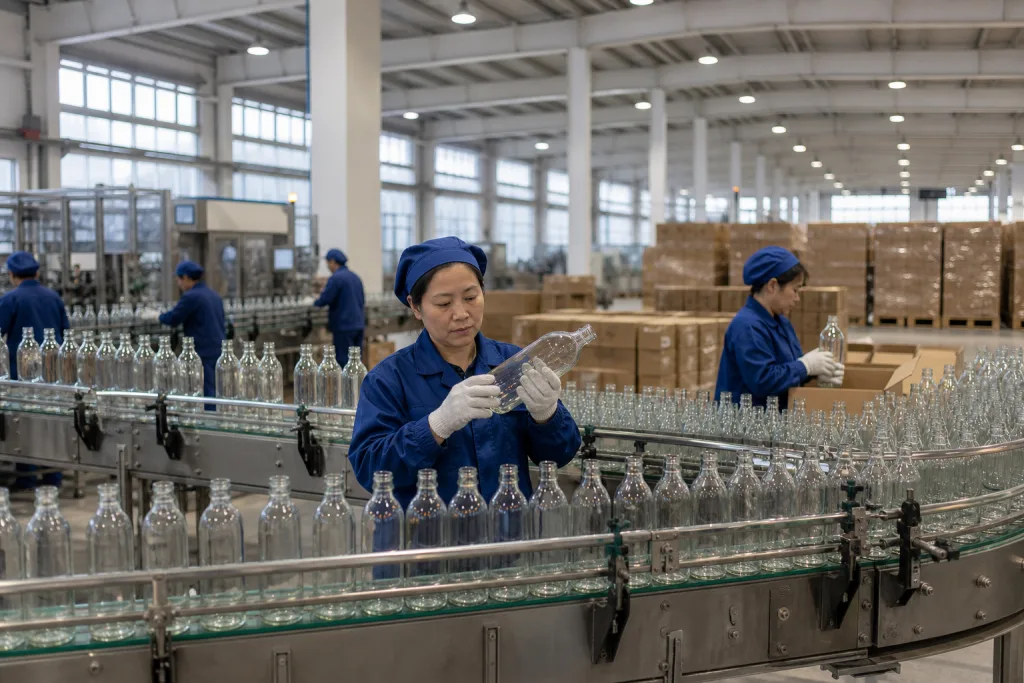
From our factory network in Zhejiang, China, we see the same failures every month: glass blown too thin at the base, caps that fail a simple torque check, decals rushed before full curing, cartons with loose dividers, and purchase orders that say “logo as artwork” but miss the Pantone code. BottleForge Industrial produces and sources custom drinkware at export scale, with typical glass bottle MOQ from 3,000 pieces and sample lead time around 7-10 days depending on decoration. Small detail, big claim risk.
The price trap starts with glass
Most buyers ask for the cheapest promotional glass bottle and send a photo, capacity, and logo file. That is not enough. This is the wrong question to ask. Glass cost moves with weight, mold complexity, neck finish, wall thickness, and defect tolerance. On our line, a 500 ml bottle can come out at 230 g or 360 g, and the pallet looks the same until QC pulls the sample and checks the neck with a go/no-go gauge. Filling, packing, and user handling are not the same at all.
The common failure is over-thinning. A canteen factory trying to hit a low target price will shave body weight or make the base too thin. You save a few cents, then star cracks show around the bottom after a 12-day transit. For a basic promotional glass bottle, we normally want a base thickness around 8-12 mm and body wall thickness around 2.0-2.8 mm, depending on shape. Below that, run a drop test and thermal shock test, not a promise from the sales desk.
If you are a canteen distributor or drinkware buyer, do not approve by appearance alone. Ask for the actual gram weight tolerance, for example 280 g ± 15 g. Put it on the purchase order. We once had a buyer flag a PO typo where 280 g was typed as 208 g, and the factory made the wrong lot without guessing. If the supplier ships 240 g bottles against a 280 g approved sample, you have a clean claim.
China can produce low-cost glass, but low-cost does not mean unspecified. Zhejiang trading offices and factories handle a lot of promotional programs, and the good ones will talk weight, annealing marks, bubbles, and bottle mouth tolerance before they ask for your deposit. We ship enough of these to know the math has to work on paper first. If the seller skips the caliper reading and the light-box check, walk away.
Caps leak before bottles fail
On cheap promotional glass bottles, the cap usually fails first. Buyers spend 3 email rounds on logo size and Pantone, then approve the sealing system from one blurry photo. Bad move. A low-grade PP cap, soft silicone ring, or loose thread tolerance can turn a giveaway into a complaint batch. We had QC pull 32 samples from a 5,000 pcs run last spring; the glass looked clean, but 4 bottles leaked at the thread after 20 minutes in a test bag.
Specify the cap the same way you specify the bottle. For a screw cap, ask for food-grade PP or a stainless steel outer shell with PP inner liner. The gasket should be silicone, not “rubber” written on a quote sheet, and removable only if your market accepts that design. For North America and Europe, request LFGB or FDA food-contact documentation where applicable. If the bottle is promoted as BPA-free, make sure the statement covers the plastic cap and straw parts, not only the glass body; one buyer flagged this after the PO said “BPA free glass,” which makes no sense.
A practical leak test is simple: fill the bottle to 90%, tighten to normal hand torque, invert for 30 minutes, then shake 10 times and check the thread area. We run this on random samples under AQL, then add a tighter check on the first 200–300 pcs off the line. Use a torque wrench if the cap design is new. Guessing by hand is where the math doesn’t work.
This matters for custom canteen, customized canteen, and canteen promotional projects too. About 7 out of 10 canteen manufacturers use similar cap systems across glass bottles and sports bottles, so one weak gasket design can follow you into the next SKU. If your canteen supplier cannot define the cap material and gasket hardness in Shore A, you are not buying a controlled product. You are buying hope with a logo on top.
Decoration is where cheap gets ugly
The cheapest promotional glass bottle usually gets one-color silkscreen because the line can run it fast: 6,000 to 9,000 pcs per shift on a straight-wall bottle, depending on logo size. That is fine when the artwork is simple, the print area is flat, and the buyer accepts normal registration tolerance of about ±1 mm. Trouble starts when a buyer sends a 360° wrap, a 5 mm QR code, or four-color artwork and still wants the same low unit price. We see this go sideways.
Silkscreen works best for bold logos above 0.3 mm line width. Small text and graduation marks need a different process, or the math does not work after rejects. For premium branding, look at decal for detailed artwork, heat transfer for wider color coverage, or laser marking on a coated metal cap. Each one fails in its own way. Silkscreen scratches when ink curing is short; QC pulled samples last month where the oven was set 8 minutes too low. Decal can wrinkle or leave a visible edge line. Heat transfer can skew on tapered bottles by 2 to 3 mm. Laser marking lasts, but only on the right coated or metal surface.
For customized drinkware, we ask for a pre-production sample using the final ink color, not a clean digital mockup. Mockups lie. Pantone matching on glass changes with transparency, wall thickness, and the liquid behind it. A white logo on empty clear glass looks sharp on the buyer’s screen, then turns weak when the bottle is filled with tea, juice, or blue promotional water. Last week a buyer flagged this after seeing one sample under a D65 light box and another under warehouse LEDs.
Set an adhesion test before shipment. A basic 3M tape test after curing catches weak prints before cartons leave Hangzhou; we usually pull 5 pcs per color from the finished lot. For higher-risk programs, add a 50-cycle rub test with a dry cloth and another 50 cycles with a damp cloth. If you are buying customizable drinkware for events, schools, or brand campaigns, the bottle may be handled 2,000 times in the first week. A logo that scratches during unpacking is not a decoration issue. It is a sourcing failure.
Packing decides your real landed cost
Glass is unforgiving in export cartons. A quotation that looks cheap turns expensive when the packing spec is too thin. We once received a buyer-approved sample plan for 24-piece cartons using single-wall board, no dividers, and bottles touching shoulder-to-shoulder. QC pulled the sample after a short shake test on the packing table; the printed shoulders were already marked. That setup might pass a 200 km domestic truck route in China. It will not hold up through container loading and port handling, then parcel sorting in Europe or North America.
For a low-cost promotional bottle, we usually run one bottle in a polybag or paper sleeve, then either an individual white box or an egg-crate divider, packed into a 5-ply master carton. Carton gross weight should usually stay below 15 kg for glass drinkware. Our packing team checks this on a 30 kg platform scale before sealing the first master carton. If the product will ship to individual consumers later, ask for a 76 cm carton drop test or your retailer's own ISTA-style requirement. Do it before mass production. After packing, the math does not work.
Cheap does not mean bare glass. A simple paper sleeve may add USD 0.03-0.06 per unit but can cut shoulder scuffing and breakage in a real shipment. We have seen buyers reject 6 cartons because the bottles rubbed against dividers during a 40HQ move. Individual color boxes cost more, often USD 0.12-0.25 depending on size and print coverage, but they make sense for distributor growler, customizable growler, or gift-pack programs where the buyer opens the carton in front of customers.
Ask your canteen vendor for carton dimensions before confirming the order. This controls container loading and warehouse palletization, and it hits Amazon-style fulfillment cost if you resell online. A 500 ml glass bottle might load 15,000-22,000 pieces in a 40HQ depending on shape and packaging. We also ask buyers to confirm outer carton marks at this stage; one PO typo turned “500 ml” into “50 ml” and delayed carton printing by 2 days. That loading range changes landed cost more than 8 out of 10 first-time promo buyers expect.
Compliance cannot be guessed later
Promotional buyers sometimes treat compliance as paperwork to collect after production. Wrong order. The cheapest promotional glass bottle still touches mouths, liquids, and, in some orders, children. If your market is the EU, REACH and food-contact expectations matter. For the US, FDA food-contact suitability and, for children's products, CPSIA-related concerns may apply. If the bottle is for kids, do not treat it like a generic event giveaway; last March, QC pulled a 420 ml sample with a cartoon print, and the buyer had marked it “adult promo” on the PO to save test cost.
Ask what parts need testing: glass body, coating, ink, cap, gasket, straw, sleeve, and packaging if there are claims. A clear soda-lime glass body is usually straightforward. Painted glass and metallic ink are not. Bamboo-style caps, colored silicone, and soft-touch coatings add risk because the supplier may change the ink or gasket source between samples and mass production. We run incoming checks with a digital caliper, tape test, and 3M 600 pull on printed samples; low-cost coatings can fail migration or heavy metal limits if nobody locks the ink batch before the line starts.
Factory audits also matter. BSCI, ISO 9001, or a customer-specific audit will not guarantee perfect bottles, but they show whether the canteen manufacturer has a documented quality system. At BottleForge Industrial in Hangzhou, Zhejiang, we separate quotation review from compliance review because the cheapest workable route is not always the cheapest quoted route. We have seen this go sideways: a cap change saved USD 0.06 per piece, then cost 14 days for retesting and held 38 cartons in our finished-goods area.
If you are a canteen vendors list manager or sourcing for multiple canteen distributors, create a standard compliance packet. Include material declarations, test reports less than 12 months old when possible, factory business license, audit certificates, and product photos matching the tested item. China suppliers can move quickly, but tell them which market rules apply before they buy caps, inks, and packaging. The buyer flagged it too late on one 5,000 pc order, after the PO typo changed “LFGB required” to “LFGB requested”; the math does not work when testing starts after packing.
Purchase orders must block substitutions
Bad orders usually start with loose specs, not bad intent. In our last 20 complaint files on cheap promo bottles, 14 traced back to a PO that left room for swapping. The buyer approved a clean sample, then bulk ran with a thinner cap, 18 g less glass, a weaker K=K carton, or ink that looked close under office light but failed tape test on the line. If the PO says only “500 ml glass bottle with logo,” the math doesn't work when QC pulls the sample and the supplier says it is “same style.”
Your PO should lock the commercial and technical points: capacity tolerance measured to the fill line, glass weight in grams, cap material, gasket material, logo method with print area in mm, Pantone number, packaging structure, carton strength, barcode or FNSKU if needed, inspection standard, and approved sample reference with date. For promotional glass bottles, we commonly use AQL 2.5 for major defects and AQL 4.0 for minor defects. Critical defects, such as broken glass, sharp edges, contamination, or severe leakage, should be zero tolerance. We run these checks with a digital scale, caliper, torque tester, and 24-hour upside-down leakage test, so the PO must give QC something measurable.
Add a defect list. Do it before deposit. Major defects include leakage, wrong logo, incorrect capacity, cracked mouth, loose cap fit, and serious print peeling after 3M tape pull. Minor defects include small bubbles under 1 mm, slight mold lines, tiny black dots away from the logo area, or printing position variation within an agreed tolerance, such as ±2 mm. This stops the usual final-inspection argument where the buyer flags 120 bottles and the factory calls them “normal glass character.”
For custom growler, customized growler, canteen custom, and canteen customizable programs, substitutions happen fast because caps, silicone rings, swing tops, and carry sleeves often have 6 to 10 near-matching versions in the parts bins. Tell your canteen suppliers that any change from approved sample requires written approval. We have seen this go sideways: one PO typo changed “black PP cap” to “black PE cap,” and 5,000 units arrived close enough for photos but wrong for the buyer’s retail shelf. That one sentence protects you from stock that is technically close but commercially unsellable.
What a workable cheap spec looks like
If you want the cheapest promotional glass bottle that still behaves like a B2B product, make the design boring on purpose. We would run a straight-wall 400-550 ml clear glass bottle, standard screw neck, one-color logo, simple cap, and export-safe packing. Skip special shapes and full-wrap artwork unless the campaign budget can absorb extra mold risk, slower decoration, and higher reject rates. On the line, a 0.3 mm logo misregistration is easy to catch; a warped custom handle becomes a carton-by-carton argument.
A realistic entry-level specification could be: 500 ml clear soda-lime glass, 280 g ± 15 g body weight, PP screw cap with silicone gasket, one-color silkscreen logo within 60 x 80 mm, individual paper sleeve, 5-ply master carton with dividers, AQL inspection before shipment, and FOB Ningbo or Shanghai terms. At 3,000-5,000 pieces, this can often sit in a practical promotional price band, while still giving you enough control to avoid ugly surprises. QC pulled the sample last month on a similar order because 11 caps in one carton had loose gaskets; without AQL, those bottles would have shipped.
For distributor canteen and distributor drinkware programs, build a small platform instead of chasing a new cheapest item every time. Use one bottle body, two cap options, three logo methods with clear size limits, and standard cartons. Your reorder lead time can move from about 18 days to 12 days when the cap, carton, and screen setup stay the same. The canteen supplier also has fewer excuses for inconsistency. Our Zhejiang, China production partners can normally handle 80,000-150,000 glass drinkware units per month depending on decoration mix and seasonal load, but the math does not work if every repeat order changes the neck finish by 1 mm.
The lowest safe cost comes from removing unnecessary choices, not from removing quality controls. Cheap is fine. Fragile is not. We have seen this go sideways when a buyer cuts the divider board from 5-ply cartons to save a few cents, then flags 3% breakage after the container lands.
Send your target price and bottle spec
We will check the weak points, quote a realistic China production route, and flag where cheap becomes risky before you place the order.
Frequently asked questions
What is a realistic MOQ for the cheapest promotional glass bottle?
For a custom logo glass bottle, 3,000 pieces is usually the practical MOQ. Some China suppliers may quote 1,000 pieces, but the unit price often rises by USD 0.20-0.50 because printing setup, carton purchasing, and inland handling are spread over fewer units. If you need a custom mold, the MOQ often moves to 10,000-30,000 pieces, with tooling charges from roughly USD 800 to USD 3,000 depending on shape. For most promotional buyers, use an existing mold and customize the logo, cap color, sleeve, or box.
How cheap can a promotional glass bottle be without being risky?
For a simple 400-550 ml clear glass bottle with one-color logo, basic cap, and export carton, a workable FOB China range is often around USD 0.85-1.50 at 5,000 pieces. Below that, check what has been removed: glass weight, gasket quality, individual protection, inspection, or compliance testing. A very low quote may still be usable for a short local event, but it may not be suitable for retail, distributor growler assortments, or long-distance parcel shipping. Always compare specifications, not just the FOB line.
Is glass better than stainless steel for cheap custom drinkware?
Glass is usually cheaper for a clean promotional look, especially when you need transparency and one-color branding. Stainless steel is stronger and better for insulation, but a double-wall vacuum bottle costs more and has more production steps. For a low-budget campaign, glass works well if you control cap leakage and packing. For outdoor, gym, school, or travel use, stainless may have lower complaint risk. If your buyer asks for canteen customized products, clarify whether they mean a glass bottle, sports canteen, or insulated flask before quoting.
What inspection standard should I use for promotional glass bottles?
Use AQL inspection with clear defect definitions. A common setup is AQL 2.5 for major defects and AQL 4.0 for minor defects, with critical defects at zero tolerance. For glass, critical defects include sharp edges, broken pieces, severe cracks, contamination, and unsafe mouth finish. Major defects include leakage, wrong print, incorrect capacity, cap mismatch, and serious scratches. Ask the inspector to perform leak testing, logo adhesion testing, carton drop checks, barcode scanning if used, and quantity verification. Inspection should happen after packing, not only on loose production samples.
How long does production take for customized drinkware from China?
For an existing glass bottle mold with standard cap and one-color logo, samples usually take 7-10 days after artwork confirmation. Mass production commonly takes 25-35 days after sample approval and deposit, depending on order size and decoration workload. Add another 3-7 days for final inspection, booking, and export handling. Sea freight to North America or Europe can add 25-45 days port-to-port. If you have a fixed event date, work backward and leave at least 10 days of buffer for testing, packing changes, or vessel delay.