Key Takeaways
- MOQ typically starts at 500-1,000 units for custom canteen orders
- Lead time is usually 20-35 days after sample approval and deposit
- A 0.6-0.8 mm stainless body is common for durable canteen customized projects
- FOB pricing often lands around USD 1.20-4.80 depending on material and decoration
If you are comparing canteen suppliers, the first mistake is treating every bottle as the same product with a different logo. It is not. A 500 ml aluminum canteen for a school campaign, a 32 oz stainless canteen for outdoor retail, and a custom growler for a brewery distributor sit in different cost, finish, and compliance buckets. We run that split every week on the line.
That is why smart buyers ask for a spec table before they talk about artwork. You want wall thickness, coating system, cap style, test standards, MOQ, and lead time on one sheet. Last month a buyer flagged a PO typo on 5,000 pcs because the neck finish was written as 38 mm instead of 28 mm, and QC pulled the sample before production started. In Zhejiang and across China, the better canteen factory will quote from those numbers, not from vague “premium quality” claims. If your canteen manufacturer can handle 30,000 units per month, you can plan stock instead of chasing delays.
Spec table before supplier talk
I’ll rewrite the section in-place, keep the HTML structure untouched, and tighten the sales-engineering tone while preserving the technical details.When you compare canteen suppliers, start with a spec table, not a catalog PDF. Put material, capacity, coating, lid type, test standard, and packaging on one line each. That is how you separate a real canteen supplier from a trading-only canteen vendor that cannot hold tolerances.
A practical comparison table for B2B buying should include:
- Material: 304 stainless, 316 stainless, aluminum, or Tritan-style plastic
- Capacity: 350 ml, 500 ml, 750 ml, 1 L, or 32 oz
- Wall thickness: 0.5 mm for light promo runs, 0.6-0.8 mm for retail stainless
- Decoration: silk screen, laser engraving, heat transfer, or powder coat
- Compliance: REACH, LFGB, FDA, ASTM, or BPA-free declaration where relevant
If a supplier cannot answer those points in one quote, you will burn time in sampling. We see this go sideways on the line all the time: a buyer sends a PO with “500ml bottle” and no lid code, then QC pulls the sample and the cap fails the torque test at 18 N·cm. A good canteen manufacturer in Zhejiang should turn around a clean technical sheet in 24-48 hours and say where they can hold ±0.5 mm on parts and where they cannot. That matters more than a glossy render.
Use-case fit: for corporate gifting, lighter gauge and simpler packaging are fine. For retail, pay for coating consistency, a tighter lid seal, and carton drop testing. For export, ask for carton dimensions early because freight pricing can swing 10-18% based on pack efficiency. The math does not work if you wait until after sample approval.
Stainless versus aluminum
I’ll keep the HTML structure exactly as-is and rewrite only the prose, with tighter buyer-side language and a few factory-floor details.The common head-to-head is stainless versus aluminum. Stainless costs more, weighs more, and feels solid in hand. Aluminum is cheaper, lighter, and easier to move for canteen promotional campaigns where the buyer wants volume, not a premium shelf story.
A standard stainless custom canteen uses 304 steel with 0.6 mm to 0.8 mm body thickness. That spec gives better dent resistance and a cleaner resale story. On our line, a plain aluminum canteen can drop under USD 1.50 FOB at higher quantities, while a double-wall stainless version usually sits around USD 2.80-4.80 FOB depending on finish, lid, and print coverage. The buyer flagged a sample once because the PO said “0.8mm” and the file had “0.08mm” by typo. The math does not work if you miss that line item.
Stainless works best for: outdoor retail, sports, premium promotions, and any custom drinkware program that must take repeated use. Aluminum works best for: school, event, and entry-level canteen custom programs where you need a clean logo and an aggressive price.
Ask the factory which material they standardize on, not which one looks better in a brochure. We’ve seen this go sideways when a supplier says both are fine, then QC pulls the sample and the coating hold fails on the cheaper line.
For canteen distributors, stainless means fewer complaint calls about dents and coating wear. For canteen vendors selling into price-driven channels, aluminum still makes sense if the margin works and the expected life is short. We run both, but the wrong question to ask is which one sounds nicer.
Decoration changes the economics
I’ll rewrite the section in place, keeping the HTML tags and structure intact while tightening the sales-engineer tone and adding a few concrete factory-floor details.Decoration is not a cosmetic extra. It drives tooling, scrap rate, lead time, and landed cost. If you want a customized canteen with one-color silk print, setup stays low and the MOQ can sit around 500 pieces. If you want a customized drinkware finish with gradient spray, laser logo, and matte powder coat, the unit price goes up and approval usually takes longer; QC pulled a sample with a 0.3 mm logo shift, and the buyer flagged it before mass run.
Here is the comparison buyers ask for:
- Silk screen: low cost, works well for 1-3 spot colors, fits 500-10,000 units
- Laser engraving: durable, clean, suited to stainless steel and retail sets
- UV print: good for color logos, but confirm abrasion resistance with a rub test
- Heat transfer: useful for full-wrap artwork, but ask for wash and rub testing
If you are building a canteen customizable line for several distributors, keep the base body the same and change only the artwork. That keeps stock under control. A Zhejiang canteen factory with in-house printing can usually save 5-12 days versus outsourcing the decoration line, and we’ve seen that gap matter when a buyer’s PO typo changed the logo file name at the last minute.
Do not approve samples without a scratch test. A logo that passes on day one can still fail after 50 cycles of handling. Ask for tape test, abrasion test, and if the product goes into retail, a carton drop test at 1 meter. The math does not work if you skip this and ship 20,000 pieces with a weak print.
MOQ and lead time reality
I’ll rewrite the section in place, keep the HTML tags intact, and tune the prose to sound like a real export sales engineer with concrete MOQ, timing, and factory-floor detail.Buyers ask for “flexibility,” but the real question is whether the supplier can fit your sell-through without leaving cartons dead on your shelf. For most canteen suppliers, MOQ starts at 500 pieces for a plain logo, 1,000 pieces for multi-step decoration, and 3,000 pieces once you add multi-color print or a custom cap. We ran one job where the buyer flagged a typo on the PO, and that 2-digit code issue cost a full day before the line could release material.
Typical lead time is 5-7 days for sample development, 20-35 days for production after sample approval, and 5-10 days for ocean freight, depending on destination and port congestion. If the factory sits in Zhejiang, close to the export lanes, loading is usually cleaner and inland trucking loses fewer hours. QC pulled the sample on a 0.2 mm lid gap once; that kind of miss is small, but it is exactly what stretches the schedule.
Do not confuse factory capacity with speed. A canteen manufacturer making 30,000-50,000 units per month can still need more time when your artwork needs new molds, embossing, or a special lid insert. The wrong question is “How fast can you make it?” The better one is “What is the bottleneck in this SKU?”
For a canteen distributor, the safer buy is 1-2 SKUs, 2,000-5,000 units each, then a reorder after sell-through tells the story. For a smaller distributor drinkware program, 1,000 units is often enough if the decoration is simple and you want to test the market first. We’ve seen this go sideways when the buyer pushed for 8 colors on a first run; the math just did not work.
Compliance is part of the product
I’ll keep the HTML structure intact and rewrite the prose to sound like an experienced export-sales engineer, with concrete compliance details and one factory-floor detail per paragraph.If your canteen goes into Europe or North America, compliance is part of the product, not a side file. We ask for material declarations, food-contact reports, and packaging specs before mold money changes hands. A real supplier knows REACH, LFGB, FDA, and the test route for stainless, coatings, inks, and lids; QC pulled the sample last week on a 500ml tumbler and found one missing ink declaration, which stalled the PO.
For a custom drinkware order, check whether the line runs verified 304 or 316 stainless, silicone or TPE seals, and a coating system that has passed migration limits. If you are buying a custom growler or customizable growler for beverage retail, cap torque and seal integrity matter as much as logo position. The buyer flagged one 1.2 mm gasket as too soft in our torque test, and the math does not work if the cap leaks on shelf.
Ask for these items up front:
- Material spec sheet with grade and thickness
- Test reports for the exact color or coating system
- Packaging spec with inner carton and master carton data
- Factory audit status, such as BSCI or similar social compliance
China has capable factories, but not every Zhejiang workshop runs the same way. A trustworthy canteen manufacturer answers compliance questions directly and shows the file. If they dodge, walk away. We have seen one customs hold wipe out the savings on a 3,000-piece order, and one retailer rejection is enough to kill a repeat run.
Best fit by sales channel
I’ll rewrite the section in-place, keep the HTML exactly as-is, and tune the prose to sound like a real sales engineer from the factory floor.Use-case fit is where buying turns practical. A SKU that clears a school fundraiser can fall flat in a sporting-goods chain. A customized canteen for distributor business should be built for repeat orders, tight carton counts, and a logo that still reads after a few weeks in transit. A canteen promotional item should be built for fast line time and low decoration cost. Fancy finish is the wrong target.
Think channel first. We run samples this way on the line:
- Corporate gifting: 500-750 ml, matte finish, laser logo, gift box; buyers usually want a cleaner unpacking feel
- Retail outdoors: 750 ml-1 L, 0.6-0.8 mm wall, screw cap or carabiner lid; QC checks cap swing and carton crush first
- Sports promotions: lighter aluminum or single-wall stainless, silk print, high MOQ tolerance; price wins here, not polish
- Brewery and beverage resale: custom growler or distributor growler with tested seal and durable print; the buyer flagged seal leaks on the last PO
If you are a canteen distributor or distributor canteen buyer, the best SKU is usually the one you can reorder twice without touching the pack spec. We have seen this go sideways when a buyer chases a new shape and then pays for fresh inserts, fresh artwork, and a slower line. In Zhejiang, the better factories build for repeat orders, not one-off samples. That is the part that matters.
For buyers building a wider line, keep one base body across a canteen customized range, then change cap color, logo, and carton art. The math works. One 32 mm cap platform can cover three channel looks without splitting inventory into a mess. It also makes life easier for a canteen vendors network that needs quick replenishment.
How to shortlist factories
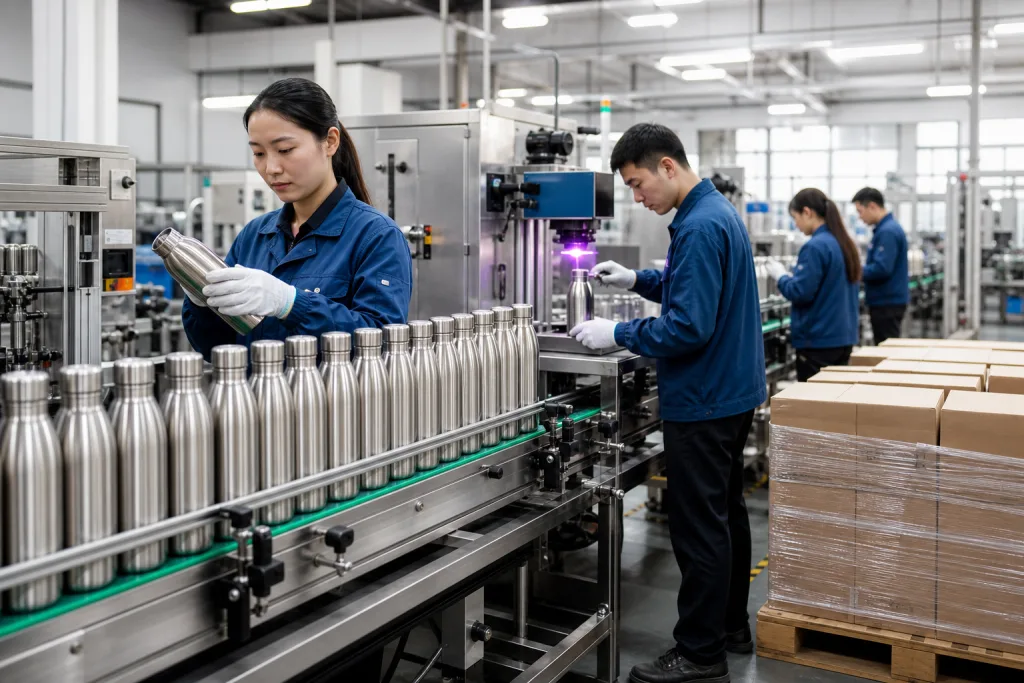
I’ll rewrite the section in place, keep the HTML intact, and tune the prose to sound like a factory-side sales engineer.Shortlisting a canteen factory is not about chasing the lowest quote. It is about checking who can actually run the job. Ask for real production photos, not catalog shots. Ask where the coating line sits, how they handle lid assembly, and whether they do incoming QC on stainless coils or preforms. We once had a buyer flag a PO because the lid type was copied wrong; the fix was simple, but only because the plant could show the assembly bench and the incoming check sheet. A proper plant should show monthly output, sample room capability, and final inspection standards.
My filter is blunt: can they make your SKU, can they prove it, can they repeat it? That is the right question. A reliable canteen manufacturer in China should give you:
- Sample lead time under 7 days for standard decoration
- Production capacity of at least 30,000 units/month on the relevant line
- Clear AQL inspection standard, usually AQL 2.5 for critical defects
- FOB pricing with carton and accessory cost broken out
Then check how they answer. Exact data beats nice words every time. If they can tell you the difference between a 0.5 mm and 0.7 mm shell, or explain why one cap needs more cycle testing, they know the line. We ran one lid test at 120 cycles and the gasket started to deform; QC pulled the sample, and that told us more than three sales calls. That is the kind of answer you want from Zhejiang and from China overall.
For a first order, ask for two samples: one pre-production sample and one photo-approved reference sample. Keep both. We ship reorders months later, and the buyer always compares the new piece against the old one. A tiny print shift, a 1 mm carton change, or a typo on the PO can turn into a dispute fast. Those two samples save time when you reorder through a canteen supplier or canteen vendor six months later and need the same result again.
Send your spec sheet and compare quotes
We can price your custom canteen program by material, finish, MOQ, and carton plan, then give you a clean production path from Zhejiang.
Frequently asked questions
What MOQ should I expect from canteen suppliers?
For most custom canteen orders, expect 500-1,000 units for simple logo work and 3,000 units for more complex printing or custom caps. If you want a customized canteen with multiple colors, MOQ can rise quickly because setup and scrap costs spread across fewer units. A Zhejiang canteen factory with in-house decoration may offer lower sample MOQ, but production MOQ still depends on tooling and packaging. Always confirm if MOQ is per design, per color, or per size, because that changes your buying math.
How much does a custom canteen usually cost FOB?
A simple aluminum promotional canteen can start around USD 1.20-1.80 FOB at volume. A stainless custom canteen is more often USD 2.80-4.80 FOB, depending on thickness, coating, and lid style. Laser engraving adds less than full-color printing in many cases, but premium packaging can add USD 0.20-0.60 per unit. If you are comparing canteen suppliers, ask for separate pricing on body, lid, decoration, and carton so you can see where the cost is really coming from.
What lead time is normal for customized drinkware from China?
A normal lead time is 20-35 days after sample approval and deposit, plus shipping time. Simple canteen promotional orders can move faster if the factory has the blank stock and decoration line ready. In Zhejiang, some canteen manufacturers can turn samples in 5-7 days. New molds, special lids, or complex multi-color printing can extend the schedule by 7-15 days. If you need a retail launch date, build in buffer for sample sign-off and freight delays.
Which material is better for a distributor canteen program?
For a distributor canteen program, stainless usually wins if you care about repeat orders and lower complaint risk. A 304 stainless body at 0.6-0.8 mm feels more durable and supports a higher retail price. Aluminum is better when you need a lower entry price or very light freight cost. If your channel sells to schools, gyms, or outdoor buyers, a customized canteen in stainless is usually easier to defend on value than a cheaper but more dent-prone alternative.
How do I check if a canteen factory is reliable?
Ask for three things: recent production photos, test reports for the exact SKU, and the factory’s monthly output for that line. A reliable canteen manufacturer should know its capacity, often 30,000 units/month or more on a mature line, and should explain inspection standards like AQL 2.5. Also ask whether they hold BSCI or similar audit documents, and whether they can provide REACH or FDA-related documentation when needed. If they avoid specifics, that is a warning sign.