Key Takeaways
- For custom BPA-free plastic bottles, a realistic MOQ is 3,000-5,000 units per color, not 300 units
- Material proof matters: ask for LFGB, FDA, REACH, or test reports tied to the actual resin batch
- AQL inspection should check leakage, print adhesion, torque, capacity, barcode readability, and carton drop strength
- FOB China pricing can shift 8-18% depending on lid design, wall thickness, packaging, and decoration method
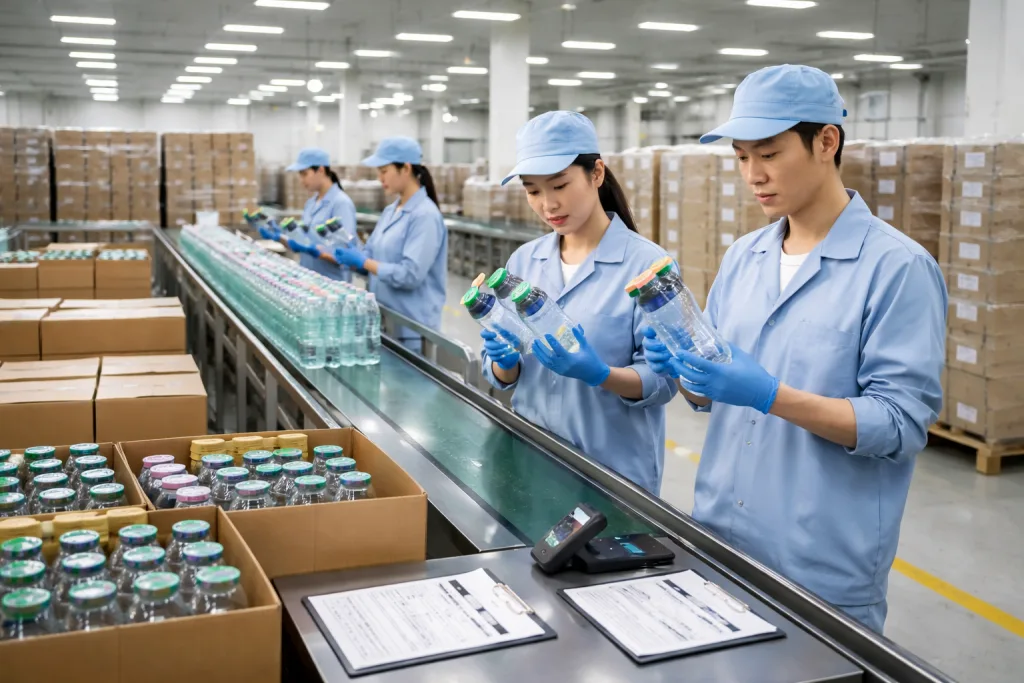
You need to place a BPA-free water bottle bulk order for a retail launch, corporate program, or distributor catalog. Price is only one line on the PO. We have seen a 0.3 mm lid tolerance cause slow leaks, a resin code typed wrong on the spec sheet, and GS1 barcodes placed 8 mm too close to the carton edge. The math does not work if the first shipment gets stuck in rework.
Take a normal buyer case: 5,000 bottles, two colors, printed logo, packed for North America and Europe. BottleForge Industrial runs production in Hangzhou, Zhejiang, and our line sees this pattern about 6 times a month: buyers compare bulk drinkware by unit price, then QC pulled the sample and finds the logo rub test fails after 30 strokes. Cheap gets expensive fast.
Start with the selling format
The first question is not “what is your cheapest bottle?” It is where the bottle will be sold and how the user will carry it. A marathon giveaway and a retail bottle for a national chain do not carry the same risk. Different job. Different bottle. For this example, we would build the brief around a 750 ml BPA-free sports bottle with a flip lid, silicone carry loop, one-color logo, and individual retail box; on the line, QC pulled the sample to check lid snap force and box rub marks before we even talked about carton packing.
That sounds simple, but those 4 choices already lock in most of the cost. A 750 ml bottle in Tritan, PP, or HDPE will not land at the same price. Tritan gives clearer walls and better drop resistance, but the resin cost is higher than PP by about 18-25% on orders we run. PP works for 5,000-piece promotion jobs, though buyers often flag the cloudy look when they expect a retail shelf product. HDPE is tough for a bulk canteen or outdoor program, but the math does not work if the brand wants a glossy lifestyle look with tight color matching under a D65 light box.
If your catalog also includes canteen wholesale, wholesale growler, beer tumbler wholesale, or alcohol flask wholesale items, keep the positioning clear. Do not ask one supplier quote sheet to cover every category with the same assumptions. We have seen this go sideways when a buyer used the same PO note for a plastic BPA-free bottle and a stainless steel bulk growler; even the carton label typo was copied. A plastic BPA-free bottle, a stainless steel bulk growler, and an alcohol flask in bulk need separate checks for compliance, tooling, sealing parts, and migration or contact testing.
For a normal custom order from Zhejiang, China, we would quote 5,000 units as the clean starting MOQ for two colors, with 25-35 days production after sample approval. BottleForge can produce around 450,000 drinkware units per month across stainless steel, plastic, glass, and mixed-material SKUs, but your delivery still depends on approved artwork, component availability, and packaging confirmation. Artwork delays hurt. If the logo AI file arrives 3 days late or the retail box dieline changes from 300 gsm to 350 gsm after sample sign-off, we ship 12 days later, not 3.
Translate the idea into specs
A good RFQ is short, but it must be specific. Ask 5 China factories for the “best wholesale drink bottle” and you will get 5 different bottles, 5 mold drawings, and 5 prices that cannot sit in the same comparison sheet. Send a spec sheet, even a rough one. We still see buyers attach only a logo JPG; our engineer then has to pull out a digital caliper and guess the mouth diameter from an old sample.
For the 750 ml BPA-free bottle order, your request should spell out material, capacity tolerance, bottle weight, lid type, leakproof test, color reference, logo size, packing method, carton quantity, compliance market, and Incoterm. Be direct. For a canteen bulk program for outdoor retail, add strap width in mm, cap retention method, and cold-temperature resistance, such as 4 hours at -10°C with no cracking. For beer growler in bulk or beer tumbler in bulk, send a separate RFQ; the math does not work when plastic bottle drop checks get mixed with food-contact stainless steel testing and insulation tests. QC pulled one sample last month where the PO said “750 ml” but the artwork file said “700 ml,” and that typo stopped the line for half a day.
- Body material: Tritan copolyester, BPA free, clear smoke gray; state if recycled content is not allowed.
- Capacity: 750 ml nominal, plus or minus 3% measured to overflow line.
- Wall thickness: target 1.8-2.2 mm depending on mold design, checked at shoulder and base with a thickness gauge.
- Lid: PP flip lid with food-grade silicone seal; confirm hinge cycle target if the buyer wants retail-grade testing.
- Decoration: one-color silkscreen, 45 x 60 mm, Pantone reference required.
- Compliance: FDA 21 CFR for US, LFGB or EU 10/2011 if selling into Europe, REACH for restricted substances.
In 6 out of 10 RFQs, procurement leaves carton and barcode details until the deposit is paid. Bad timing. If the goods are going to Amazon FBA, club retail, or a distributor warehouse, put FNSKU placement, carton marks, master carton dimensions, gross weight limit, and drop-test expectations into the RFQ before the proforma invoice is issued. We ship drinkware every week, and we have seen this go sideways when a buyer flags a 19.8 kg carton after production, then asks us to repack to 14 kg cartons with no change to the ship date.
Price the order like a factory
Buyers comparing drinkware wholesale quotes often stare at the FOB unit price first. Wrong question. We cost the bottle from resin, lid assembly, line labor, decoration, packaging, inspection, scrap allowance, and trucking to Ningbo or Shanghai. On a 5,000-unit BPA-free bottle order, a workable FOB Ningbo or Shanghai target might sit around USD 1.35-2.10 per unit depending on material and packing; last month QC pulled a 620 ml sample that was 18 g lighter than the spec sheet, and that “cheap” quote suddenly made sense.
The gap shows up in the small parts. A simple polybag pack may save USD 0.12-0.25 per unit versus a printed retail box. A silicone loop can add USD 0.08-0.18, especially if the mold leaves flash we need to trim by hand on the line. Upgrading from PP to Tritan can add USD 0.25-0.55 depending on bottle weight. A two-color logo costs more than one-color silkscreen because we run two screens, two drying passes, and more rejects if the registration shifts by 1 mm. Laser marking does not belong on transparent plastic the way it does on stainless steel.
If your wider line includes growler wholesale, beer growler wholesale bulk, beer tumbler wholesale bulk, or alcohol flask wholesale bulk, do not price them like plastic sports bottles. Stainless steel costing follows steel grade, vacuum insulation failure rate, polishing standard, and gauge. A 64 oz beer growler bulk order in 304 stainless steel may use 0.5-0.6 mm inner wall and 0.6-0.7 mm outer wall; our vacuum test bench and polishing room drive more cost there than the cap assembly ever will on a BPA-free plastic bottle.
Do not ask a supplier to “match the lowest quote” unless you are willing to match the lowest construction. A lower bottle weight, thinner carton, or no batch test can remove cost quietly.
For first orders, we recommend the right construction at a moderate MOQ instead of chasing a big discount. The math doesn't work. A failed 20,000-unit drinkware bulk order costs more than a controlled 5,000-unit launch, especially after the buyer flags leaking lids at AQL 2.5 and the cartons are already stacked in a 40HQ.
Approve samples without guessing
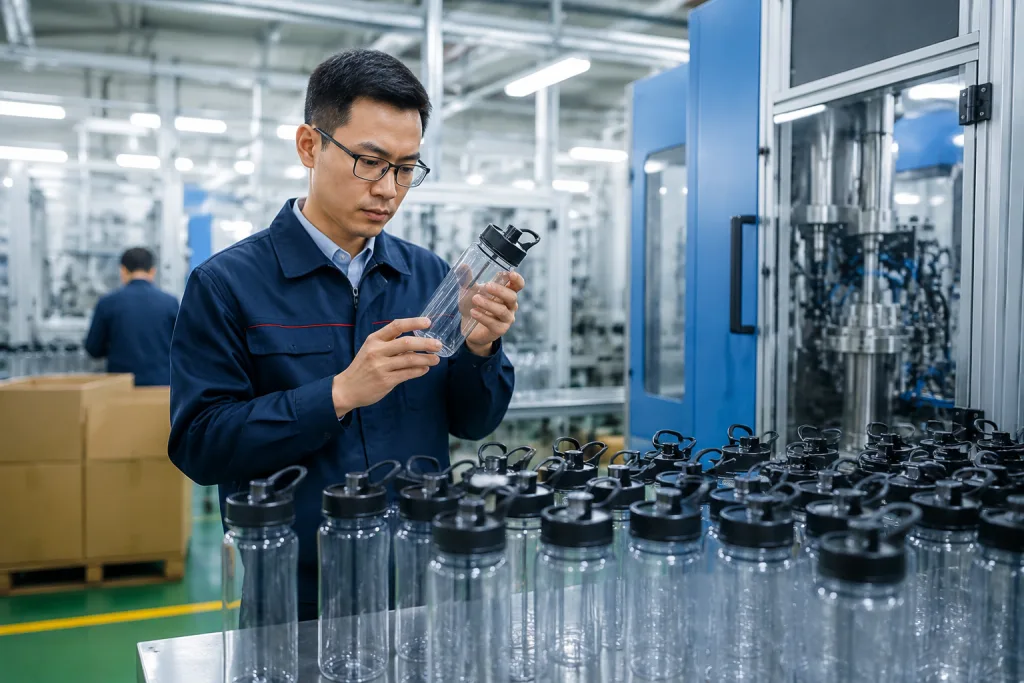
Sampling is where you catch mistakes while they still cost RMB 200, not a rejected container. For a custom BPA-free bottle, approve two items: the physical bottle and the branded production look. A stock sample proves shape, lid feel, thread fit, and basic molding quality. A pre-production sample proves your exact Pantone color, logo size, retail box, polybag warning, and component match. We run this on the sample bench with calipers, a torque tester, and the same lid gasket planned for mass production.
In our scenario, the factory sends two clear stock samples within 5-7 days, then branded pre-production samples in 10-14 days after artwork and Pantone colors are confirmed. Check grip comfort, lid opening force, visible sink marks, mold parting line, odor, bottle standing stability, and whether the logo stretches on the curved wall. QC pulled one sample last month where the logo looked fine flat, then gained 3 mm of distortion after pad printing on a 72 mm diameter bottle. The buyer flagged it. Good catch.
For color, do not approve from phone photos. That is the wrong question to ask. Ask for Pantone reference and daylight photos, but translucent materials shift color with wall thickness, background, and even the white table under the bottle. If brand color matters, approve a physical color chip or resin sample. Zhejiang factories can control color well, but only against a real standard; our color room uses a D65 light box, and we still reject batches when the chip sits one shade off.
Run simple buyer-side checks before giving written approval. Fill the bottle with room-temperature water, close the lid, lay it on white paper for 4 hours, and then shake it upside down for 30 seconds. Rub the printed logo with a wet cloth and then with a dry cloth. Put the bottle in a backpack pocket and open the lid 50 times. These checks do not replace lab tests, but they expose bad seals, weak hinges, and poor print adhesion fast; we have seen a 0.6 mm gasket mismatch pass a photo review and fail on the first shake test.
Your approval email should list the sample version, date, photos, and any allowed changes. “Looks good” is not enough for a purchase order that may ship across the ocean. Write “PP sample V2 approved, 2026-03-12, logo 38 mm, lid color per Pantone Black C, box barcode corrected,” or the line will follow the old file by mistake. One typo on a PO can turn into 5,000 wrong cartons.
Lock compliance before production
BPA free is a claim, not a compliance program. Match the proof to the market. For the US, most importers ask for FDA food-contact compliance, and 3 out of 10 also ask us for California Proposition 65 screening before deposit. For Europe, LFGB, EU 10/2011, and REACH are common. For children’s bottles, ASTM and CPSIA requirements may apply depending on age grading and design. On the line, our material card for Tritan, PP, and silicone is checked against the BOM before we open the mold trial.
Ask the supplier whether the test report covers the same material, colorant family, and component type on your PO. A report for clear Tritan body material does not cover a black PP lid; a 42 mm silicone sealing ring; printed ink on the logo area; or a dyed carrying strap. We have seen this go sideways on wholesale drinkware programs with 6 colors, where the buyer approved the clear sample but the lab later questioned the dark pigment.
At BottleForge in China, we separate compliance files by material and component because buyers often start with one bottle, then add canteen wholesale, growler bulk, or beer tumbler wholesale 2 seasons later. The wrong question is “Do you have an FDA report?” Ask which exact part it covers. Our ERP links the report number to the SKU, lid code, gasket code, and color masterbatch, so QC can pull the file before packing starts.
If a retailer requires third-party reports under your brand name, put the timing into the order plan. Lab testing can take 5-10 working days for standard food-contact checks; if one item fails migration and needs a retest, we have seen 12 days turn into 18 days. Do not approve mass production and then find out the report cannot support your label claim. QC once caught a PO typo that said “BAP free” on the sticker artwork, and that 10-minute check saved a full carton relabel job.
Check factory audits early too. BSCI, Sedex, ISO 9001, or a customer audit may be required by your channel. Audit readiness does not guarantee product quality, but it cuts social compliance surprises and makes your procurement file easier to defend when internal stakeholders ask why this China supplier was selected. Before one US chain audit, the buyer flagged missing emergency-light photos; we fixed the audit room file the same day, before the inspector arrived.
Inspect the shipment by risk
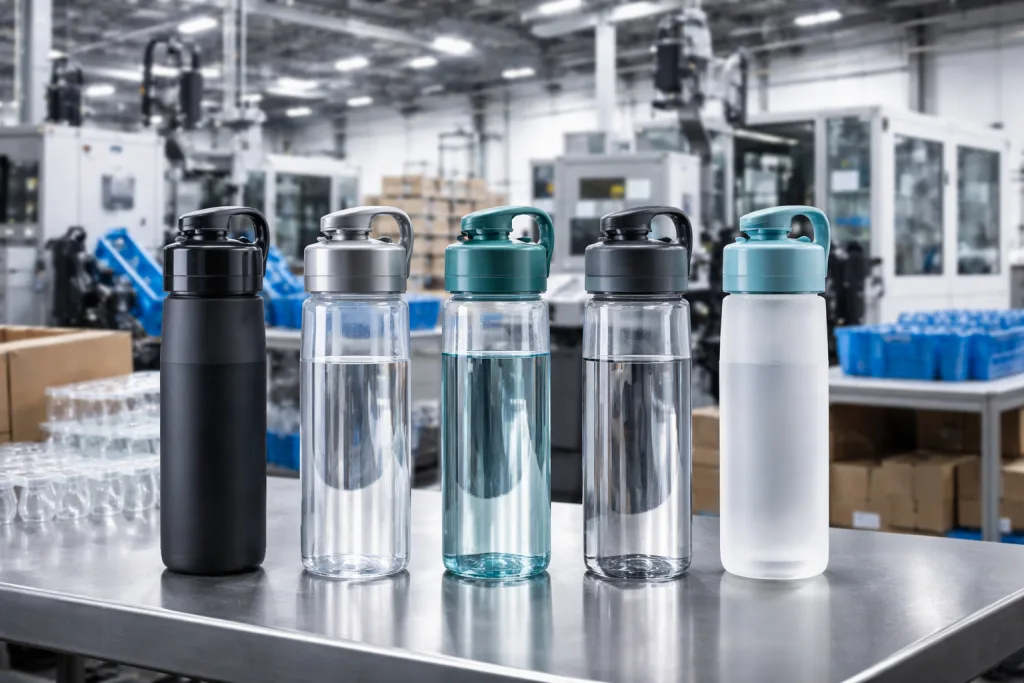
Final inspection should happen when at least 80% of the order is packed and 100% of the goods are produced. For a 5,000-unit order, we usually run ANSI/ASQ Z1.4 General Inspection Level II with AQL 2.5 for major defects and 4.0 for minor defects. Critical defects, such as unsafe sharp edges or wrong material, should have zero tolerance. QC pulled one BPA-free bottle sample last month with a 0.4 mm burr on the drinking spout. Small defect? No. The buyer would reject that on safety before discussing price.
Your checklist should match the product, not a template copied from another PO. For BPA-free plastic bottles, check capacity with a graduated cylinder, weight on a 0.1 g scale, lid fit, leakage, odor, color consistency, logo position, print adhesion, barcode scanning, carton drop performance, and packing quantity. For wholesale canteen or bulk canteen orders, add strap pull strength and cap retention; we test strap pull at the line because loose rivets show up after packing. For beer growler wholesale or beer tumbler bulk orders, add vacuum insulation, surface dents, weld marks, and internal rust risk. For alcohol flask bulk orders, check cap threading, seam finishing, and inner cleanliness. We once caught a PO typo calling for matte black caps while the approved sample had glossy black, and the buyer flagged it before shipment.
Do not rely only on a visual inspection. Ask the inspector to perform a 100% leakage check if the design is new or if the lid has a flip straw, silicone ring, or two-step lock. We run the filled bottle upside down for 30 minutes on white tissue; it is slow, but it finds problems. If 100% is not practical, use a tightened sample plan and accept the risk in writing. A leaking rate of even 1% means 50 bad units in a 5,000-unit shipment, and that is enough to damage a distributor relationship. The wrong question is “does it look fine?” The right question is “will it survive the first customer complaint photo?”
Cartons matter. A weak five-layer carton with low bursting strength can fail before the product reaches your warehouse. For export, we normally specify 5-ply cartons, clear shipping marks, dry inner packaging, and palletization if the buyer’s warehouse requires it. On one 12 kg master carton, QC found corner crush after a 76 cm drop test, so we changed the flute and added a 3 mm divider before booking the vessel. If you are shipping to Amazon, barcode readability and carton weight limits are as important as the bottle itself. The math does not work if the bottle passes inspection but FBA rejects 300 cartons for unreadable labels.
Ship clean and reorder smarter
Once inspection passes, the order moves to shipping documents and final payment. For FOB China terms, you or your forwarder cover ocean freight, insurance, customs clearance, duties, and final delivery. We issue the commercial invoice, packing list, and usually the bill of lading draft after the vessel sails; last month QC held one file because the PO showed “matte balck” while the carton mark said “matte black.” Small typo. Big delay. If your buyer record needs certificate of origin, test reports, audit documents, or carton photos, ask for them before releasing the final balance.
For the 5,000-unit BPA-free bottle scenario, production runs 25-35 days after pre-production sample approval, with 7-14 days before that for sampling. Ocean transit to the US West Coast is usually 15-25 days port-to-port; Europe is 30-40 days depending on routing and season. Add 5-8 days for customs, truck appointments, and retail DC booking. The buyer often asks, “Can we ship 12 days earlier?” Sometimes yes, but if the line is waiting on 0.6 mm silicone rings or a Pantone-matched lid, the math does not work.
The first shipment should give you reorder data, not just inventory. Track complaints by defect type: leaking, broken hinge, print scratch, color mismatch, damaged carton, missing barcode, or odor. QC pulled the sample from carton 38 on one order and found a lid torque issue at 1.2 N·m, which explained the leak photos from Amazon returns. If returns are below 0.5% and sell-through is good, moving to 10,000 or 20,000 units can make sense. If returns are 2-3%, fix the design before chasing a lower unit price.
A good supplier should help you build a product family, not just ship one SKU. Your BPA-free sports bottle can expand into drinkware bulk sets, wholesale drink bottle programs, wholesale growler lines, beer tumbler in bulk, or a seasonal canteen bulk promotion. Keep each product’s spec sheet, compliance file, approved sample, and inspection history in one folder; we label ours by item code, capacity in ml, and mold number. We have seen this go sideways when a buyer reorders from an old photo instead of the signed sample. That is how emergency buying becomes controlled sourcing.
Send your bottle spec for a factory quote
Share capacity, material, logo, packing, target market, and quantity. We will return a practical MOQ, FOB price, and QC plan.
Frequently asked questions
What MOQ should I expect for a BPA free water bottle buy in bulk order?
For a custom BPA-free plastic bottle, a practical MOQ is usually 3,000-5,000 units per color. If you use an existing mold and a simple one-color logo, some factories may accept 1,000-2,000 units, but the unit price will be higher and color options may be limited. For new molds, expect much higher commitments because tooling, trial runs, and scrap must be absorbed. At BottleForge in Zhejiang, we normally recommend 5,000 units for a first serious retail order because it gives better component control, reasonable FOB pricing, and enough volume for proper AQL inspection.
Is BPA free enough for selling bottles in the US and Europe?
No. BPA free only addresses one chemical claim. For the US, you should ask for FDA food-contact documentation and consider California Proposition 65 screening if you sell nationally. For Europe, buyers often request LFGB, EU 10/2011, and REACH documentation. The reports should cover the actual bottle body, lid, silicone seal, colorant, and printing ink where relevant. If the bottle is for children, CPSIA and ASTM requirements may apply. A responsible China supplier should tell you exactly which components are covered by existing reports and which require new testing.
How much does a custom BPA free bottle cost FOB China?
For a 5,000-unit custom BPA-free bottle, a normal FOB China range is about USD 1.35-2.10 per unit for a 600-800 ml plastic sports bottle. The final price depends on material, bottle weight, lid construction, silicone parts, decoration, packaging, and inspection requirements. A retail box can add USD 0.12-0.25, while a more complex lid can add USD 0.15-0.35. Tritan usually costs more than PP, but it gives better clarity and impact resistance. Always compare quotes against the same spec sheet, not just the headline unit price.
Can I combine BPA free bottles with growlers, tumblers, or flasks in one order?
You can combine shipment, but do not treat the products as one technical order. A BPA-free plastic bottle, beer growler wholesale order, beer tumbler wholesale bulk program, and alcohol flask wholesale bulk order use different materials, tests, and QC points. Stainless steel items need checks for steel grade, welding, polishing, rust risk, and vacuum performance if insulated. Plastic bottles need resin, odor, leakage, and print adhesion checks. Combining products can save freight, but each SKU should have its own approved sample, compliance file, packing spec, and AQL checklist.
What should I inspect before paying the final balance?
Before final payment, inspect product function, appearance, packaging, and documents. For a BPA-free bottle, check leakage, capacity, odor, lid fit, logo position, print adhesion, color, barcode scanning, carton marks, and packed quantity. Use ANSI/ASQ Z1.4 with General Inspection Level II, AQL 2.5 for major defects and 4.0 for minor defects as a common baseline. Critical safety issues should be zero tolerance. Also review commercial invoice, packing list, test reports, carton photos, and bill of lading details. Once the container leaves China, fixing mistakes becomes expensive.