Key Takeaways
- A realistic BPA-free plastic bottle MOQ starts around 3,000 pcs per color, while stainless models often start at 1,000 pcs
- Bulk price changes sharply with lid complexity, wall thickness, printing method, and compliance tests
- For Europe and North America, request LFGB, FDA, REACH, ASTM, or Prop 65 documents before deposit
- AQL 2.5/4.0 inspection plus a 20-30 pcs golden sample hold prevents most shipment disputes
You are not buying “a bottle.” You are buying a retail-ready SKU that has to pass compliance, survive a 1.2 m carton drop test, look consistent on shelf, and still leave margin after freight, duty, and platform fees. A bpa free water bottle bulk price request with no capacity, material, lid type, logo method, carton plan, or test standard is the wrong question to ask. Last month, a buyer sent us a PO with “sports bottle, blue” and QC pulled the pre-production sample because the cap gasket spec was missing.
At our Zhejiang factory, the same 750 ml bottle can quote at USD 1.35, USD 2.10, or USD 4.80 depending on resin, stainless grade, wall thickness, cap tooling, decoration, and AQL level. We run the cost sheet from BOM weight, mold time, logo setup, inner box, export carton, and inspection level; a 0.3 mm wall change can move both price and dent rate. China sourcing works well, but only when you specify the order like a procurement file, not a product mood board.
Start with the real SKU
A brand owner in Germany asked us for the bpa free water bottle bulk price on a 750 ml sports bottle for a summer retail program. The first email said only: “BPA free, custom logo, good price, 20,000 pieces.” We see this about 6 times a month. It is normal, but our costing clerk cannot quote from that and still protect the buyer.
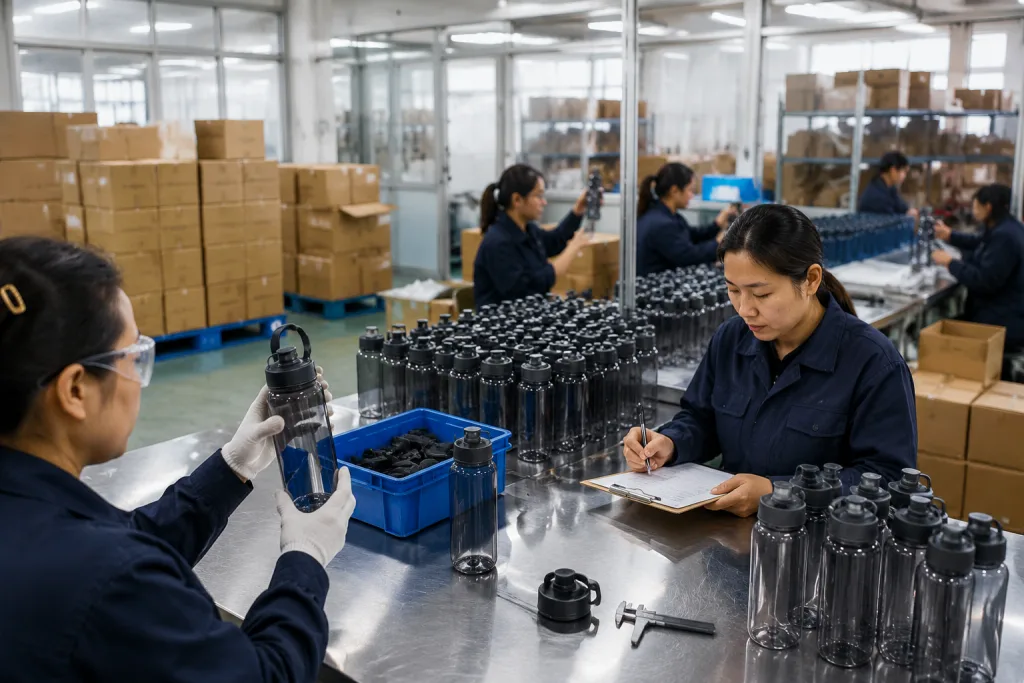
We turned it into a buyer file. Capacity: 750 ml. Material: Tritan or PP, both BPA free, with different cost and hand feel. Cap: flip straw lid with silicone seal, 42 mm neck finish. Body: translucent smoke grey, single-color pad print logo. Packaging: individual polybag plus 24 pcs export carton. Market: EU retail, so LFGB food contact testing and REACH heavy metals screening were required. Target ship date: 45 days after deposit and artwork approval. QC pulled the sample from our shelf and checked the lid fit with a digital caliper before we priced the mold set.
That one file separates a serious bulk drinkware RFQ from a loose inquiry. If you are comparing wholesale drinkware, canteen wholesale, or a seasonal bulk canteen program, use the same discipline. State the real use case. A gym bottle, school bottle, camping canteen, beer tumbler, and insulated growler do not share the same BOM, even at 750 ml. The buyer flagged “good price” twice, but that is the wrong question to ask before the cap structure and carton drop requirement are fixed.
For this 20,000 pcs bottle, our Hangzhou, Zhejiang team quoted two options: PP at about USD 1.28 FOB Ningbo and Tritan at about USD 1.72 FOB Ningbo, before lab testing and final carton optimization. Both were BPA free. The Tritan version had clearer body color, better low-temperature drop resistance, and a stronger retail feel after we ran a 1.2 m drop check on the line. The PP version was cheaper and fine for a promotion. For a premium shelf program, the math did not work.
Price drivers buyers underestimate
The base body is only one piece of the bpa free water bottle bulk price. In China, a small spec change can move the quote by 8-25%. We see this on the line every week: change a flip lid from 3 parts to 7 parts, and the assembly station needs another worker plus a spring jig. Some procurement teams call the lid an accessory. Wrong question. On many BPA-free bottles, the lid is the hardest part to mold, assemble, and pass leak testing.
For a BPA-free sports bottle, the key cost drivers are:
- Material: food-grade PP keeps cost down; Tritan costs more because the resin price is higher, but buyers get clearer walls and better drop resistance. QC pulled one PP sample last quarter with stress whitening after a 1.2 m drop.
- Wall thickness: a 1.6 mm body feels light in hand, while a 2.0 mm body uses more resin and holds shape better after hot filling. The caliper does not lie.
- Lid parts: straw, spring, lock button, carry loop, silicone plug, dust cover, and each small pin create tolerance risk. One 0.2 mm mismatch on the lock button can slow the line from 900 pcs/hour to 620 pcs/hour.
- Decoration: one-color silkscreen may add USD 0.06-0.12 per piece; laser engraving on stainless takes longer at the fixture, but the mark survives dishwasher testing better than ink.
- Packaging: white box and color box are not the same job. Barcode label, FNSKU, and drop-test carton mean extra packing time, scanner checks, and paper cost; we once had a PO typo showing “FNSKU on bottle” instead of “on box,” and it burned half a day.
This gets more sensitive when the range moves into drinkware bulk categories. A beer tumbler bulk order may need powder coating plus a sliding lid, and powder loss during spraying is real when the color is matte black. A beer growler bulk order may need 18/8 stainless steel, vacuum insulation, and pressure-related leakage checks. A wholesale growler is not priced like a simple bottle just because both hold liquid. We have seen this go sideways when a buyer compares a single-wall promo bottle against a vacuum growler and asks for the same FOB.
For stainless steel items, we normally specify 304 inner wall, 201 or 304 outer wall depending on price target, 0.4-0.5 mm sheet thickness, copper lining for vacuum performance on premium models, and a 12-hour temperature retention test. A 64 oz bulk growler can range from USD 6.20 to USD 11.50 FOB depending on finish, cap, handle, and packaging. If a supplier quotes far below that range, ask what grade, gauge, and test plan they removed. Our vacuum test rack catches this fast: after 12 hours, a weak unit shows the number before the carton ever reaches AQL 2.5 inspection.
Build the quote table properly
For the German buyer, we built the quote table with three columns: value, standard retail, and premium. One price too early is the wrong question to ask. The table needs MOQ, unit price, mold fee if there is one, sample fee, logo cost, packaging cost, lab test estimate, lead time, payment terms, and Incoterm. We also add a remarks cell for factory notes, because one PO once said “FOB Shanghai” while the buyer’s forwarder had already booked Ningbo.
Our Zhejiang factory’s normal MOQ is 3,000 pcs per color for plastic bottles with existing molds, 1,000 pcs per color for many stainless tumblers and canteens, and 5,000 pcs when a custom color must be matched by resin batch. We run about 600,000 drinkware units per month across plastic, stainless, and glass assembly lines. Still, capacity cannot save a late approval. Last April, QC pulled the pre-production sample at 2.5 mm logo shift, and the job moved from 12 days waiting time to 18 days before the line opened again.
For the 750 ml Tritan bottle, the buyer’s quote read like this: 20,000 pcs, USD 1.72 FOB Ningbo, one-color logo included, individual polybag, 24 pcs per carton, production lead time 35-40 days after deposit, LFGB test charged at actual cost, and 30% deposit with 70% balance before shipment after inspection. A retail color box added USD 0.18-0.32 depending on paper weight and print coverage. The buyer flagged the polybag as “too cheap-looking,” so we priced 300 gsm white card and 350 gsm kraft separately instead of hiding packaging inside the unit price.
If you compare nearby items like wholesale canteen, canteen bulk, alcohol flask wholesale, or alcohol flask wholesale bulk, ask for the same quote format. For an alcohol flask in bulk order, ask whether the inner surface is electropolished and whether the cap seal is food-grade silicone; we check that with a flashlight and a 0.5 mm feeler gauge when the first samples arrive. For alcohol flask bulk promotions, check if the gift box can survive a 76 cm drop test. Low unit price does not work if 6% of retail boxes arrive crushed.
Samples are not souvenirs
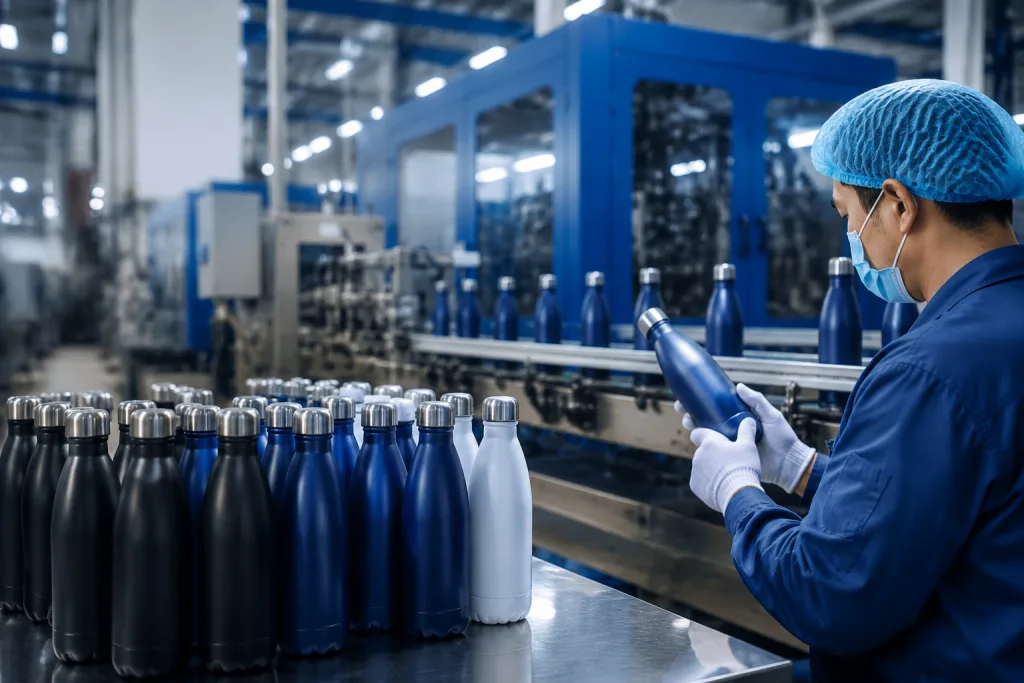
Samples are engineering tools. Treat them that way. For this BPA-free bottle order, we sent two pre-production samples in Tritan and two in PP, each marked with a red sample tag and cavity number. The buyer checked hand feel, color, lid operation, straw length, print position, and carton size. We checked assembly torque with a digital torque meter, leakage after 30 minutes inverted, and drop performance from 1.0 m on three orientations. QC pulled the sample after the second drop because the flip lid showed a 0.6 mm stress mark.
A proper sample approval defines the golden sample. Not a photo. The buyer should sign off on a physical sample or a sealed sample set with date, SKU, color code, and lid version written on the label. We normally keep 20-30 pcs from pilot production in the QC room in Zhejiang, packed in a clear bin so the line can grab them during startup. The production line, inspection team, and sales engineer all compare mass production against that approved reference. We have seen this go sideways when a buyer approves by WhatsApp photo and then rejects 3,000 pcs for “different gloss.”
Color is where 7 out of 10 drinkware wholesale disputes start in our factory. Pantone on screen is not enough. For plastic, resin color can shift slightly between batches; our injection tech checks the first 10 shots beside the light box before the line runs full speed. For powder-coated stainless, oven temperature and coating thickness affect appearance. If you are ordering beer tumbler wholesale or beer tumbler wholesale bulk, request a coating thickness check, usually around 60-90 microns for a durable powder coat. Too thin chips easily; too thick may affect lid fit, and the math does not work if you only find that after AQL 2.5 final inspection.
Logo approval also needs numbers. Do not write “logo should be centered.” Write “logo centerline 82 mm from bottle base, print width 45 mm, tolerance plus/minus 1.5 mm.” We run the first print with a steel ruler and a transparent positioning jig on the table, then QC signs the artwork sheet before bulk printing. If you plan mixed SKUs such as beer tumbler in bulk, kids bottles, and growler wholesale, create one artwork sheet per SKU with print method, color, and placement view. China factories move fast; precise artwork prevents fast mistakes. One buyer once typed 54 mm instead of 45 mm on the PO, and the buyer flagged it only after the carton photos were sent.
Compliance before mass production
BPA free is one claim. It is not a full compliance file. For Europe, ask for food contact testing under LFGB or EU 10/2011 for plastics, based on the material and how the bottle will be used. For the United States, FDA food contact suitability is the usual starting point. If the bottle is sold for children, the buyer may also need CPSIA and ASTM F963. For California sales, check Prop 65 before artwork is locked. EU buyers often ask for REACH on restricted substances, and our QC team keeps the test sample, color chip, and 30 g silicone ring from the same lot in the file.
For the buyer’s 750 ml bottle, we recommended testing the final production material and the colored parts, not just a generic resin certificate. This is where projects go sideways. A resin supplier document helps, but it does not prove the finished cap, silicone seal, pigment, and printed ink are safe for the shipped item. Last month QC pulled the sample after the buyer flagged a BPA free icon printed on the carton, while the report only covered clear Tritan body material. If your packaging says BPA free, the test report should match the actual bottle in the carton.
For stainless categories like beer growler wholesale, beer growler wholesale bulk, and bulk growler, compliance moves to metal composition, extractable heavy metals, coating adhesion, and the lid material that touches liquid. We run 304 stainless verification by material certificate first, then confirm risky parts if the order size justifies the lab cost. For a beer growler in bulk program, we also suggest pressure-style leakage checks if the product may hold carbonated beer for short periods, even when the selling page does not call it a pressure vessel. The math does not work if a USD 0.18 cheaper lid causes 3% leakage in a 10,000 pcs shipment.
Audits matter too. About 7 out of 10 North American and European buyers we quote ask for BSCI, Sedex, ISO 9001, or a retailer-specific factory audit before they release deposit. Our China export team handles audit files before deposit whenever possible, including the business license scan, last audit date, corrective-action photos, and the food contact test history. Small detail, big delay: one PO had “LFGB” typed as “LFBG,” and the buyer’s compliance desk held approval for 2 days. If a supplier refuses to share a business license, audit status, or food contact test history, do not cover that gap with optimism. Change supplier, or cut the first order to a safer MOQ.

QC plan for the shipment
Before mass production, we wrote the inspection checklist with the buyer and signed it off against the golden sample. The standard used AQL General Inspection Level II, with Critical 0, Major 2.5, Minor 4.0. Critical defects included sharp edges, contamination, wrong material, serious leakage, or lid breakage that could hurt the user. Major defects covered wrong logo placement, visible color mismatch under the light box, cap malfunction, carton quantity error, or barcode failure on the handheld scanner. Minor defects were small cosmetic marks inside the agreed limit, checked with a 30 cm viewing distance on the QC table.
For the 20,000 pcs order, inline inspection started when about 20% of goods were assembled. Final random inspection happened when 100% was produced and at least 80% packed. The inspector checked function, appearance, quantity, packaging, carton marks, drop test, smell, barcode scan, and basic capacity with a measuring jug. We also pulled samples for hot water smell testing at 85°C for 30 minutes, even though the product was not an insulated bottle. Short test. Useful result.
If your program includes mixed wholesale drinkware such as plastic bottles, stainless canteens, beer tumbler bulk, or alcohol flask wholesale bulk, do not use one lazy checklist for all. This is the wrong place to save half an hour. A canteen needs strap pull strength, so we run a 10 kg pull on the line. A tumbler needs lid fit and coating adhesion, checked with 3M tape after the coating cools. A flask needs cap thread smoothness and inner cleanliness because metal dust near the neck is a common finding. A growler needs handle strength plus leak resistance after upside-down storage.
Carton quality is part of QC. For export from Zhejiang or other China regions, we normally use 5-ply cartons for heavier stainless items and specify gross weight below 15 kg when possible. Amazon-style shipments may need FNSKU labeling, suffocation warning on polybags, master carton barcode, and pallet height limits. We ship these orders every month, and the buyer usually flags label position before they flag bottle quality. Your bulk price should include these packing tasks if you need them; if not, the “cheap” quote gets expensive during packing week.
From deposit to reorder
The buyer placed the order after approving the Tritan sample and the final price. We ran a plain timeline: 3 days for proforma invoice and deposit, 5 days for final artwork and color confirmation, 7 days for material preparation, 18 days for molding and assembly, 5 days for printing and packing, 2 days for final inspection, and 3 days for trucking to Ningbo after balance payment. Total: about 43 days from deposit to port handover. On the PI, the buyer flagged one typo in the lid color code before payment; fixing it then saved a messy argument on the line.
The first shipment was not perfect. No honest factory should promise that. Final inspection found 1.1% minor scuff marks and 0.4% print position deviation, both inside the agreed AQL. QC pulled the sample under a 600 mm light box and measured the logo shift with a caliper, not with someone’s thumb on a phone screen. The buyer accepted the shipment because the defects were checked against written standards, not argued through phone photos at midnight. This is where cheap sourcing often goes sideways.
After arrival, the buyer reordered 30,000 pcs with two new colors and a color box. Because the tooling, artwork, golden samples, and compliance file already existed, the reorder price dropped by USD 0.04 per unit and lead time reduced to 32-35 days. We did not need to reopen the mold trial or retest the resin claim, so the math worked. The second order moved faster because the first order left a clean file on the factory side: approved Pantone numbers, box dieline, barcode position, and signed golden sample.
Whether you are buying a BPA-free plastic bottle, wholesale canteen for outdoor sets, growler bulk for beer programs, beer tumbler wholesale for event channels, or trying to build the best wholesale drink bottle for your account, the buying logic is the same. Define the SKU. Control the sample. Test the claim, inspect the shipment, and keep every decision in writing. The lowest unit price is the wrong question to ask if the goods come back with rework, refunds, or compliance surprises.
Send your bottle spec for a real factory quote
Share capacity, material, lid, logo, quantity, market, and target ship date. We will price the order like a production file.
Frequently asked questions
What is a realistic bpa free water bottle bulk price for 2026 orders?
For existing molds, a basic 500-750 ml BPA-free PP bottle often quotes around USD 0.95-1.45 FOB China at 10,000 pcs. Tritan usually runs higher, around USD 1.55-2.40 depending on lid structure, wall thickness, logo, and packaging. A straw lid with lock, silicone seal, and carry loop can add USD 0.25-0.60 compared with a simple screw cap. Color box packaging may add USD 0.18-0.35. Lab testing, inspection, domestic trucking, duty, and ocean or air freight are normally outside the unit price unless clearly stated.
What MOQ should I expect for custom BPA-free bottles?
For most existing plastic bottle molds, expect 3,000 pcs per color as a workable MOQ. Some factories accept 1,000-2,000 pcs for stock colors with simple logo printing, but the unit price will be higher because setup labor is spread over fewer units. Custom resin colors usually need 5,000 pcs or more per color to control material waste. For stainless canteen wholesale or beer tumbler wholesale bulk programs, MOQ is often 1,000 pcs per color if the mold already exists. New mold development can require 10,000 pcs annual volume to make commercial sense.
How do I prove the bottle is really BPA free?
Ask for test reports linked to the finished product material, not only a generic statement. For EU sales, LFGB or EU 10/2011 testing may be needed for plastic food contact parts. For the US, FDA food contact documentation is common, and children’s bottles may require CPSIA or ASTM-related checks. The report should identify the material, color, supplier, and test date. If the cap, straw, silicone seal, and printed ink contact liquid or mouth areas, include them in the compliance review. For serious retail orders, budget USD 300-900 for relevant lab testing.
Can I mix bottles, canteens, tumblers, and growlers in one order?
Yes, but do not expect one MOQ or one QC checklist. A BPA-free plastic bottle, stainless wholesale canteen, beer growler wholesale item, and alcohol flask bulk promotion use different production lines and inspection points. Mixed orders are practical when the total volume is meaningful, for example 5,000 plastic bottles, 1,000 tumblers, and 1,000 growlers shipping together. You may save on consolidation and documentation, but each SKU still needs its own golden sample, barcode, carton mark, and defect standard. Confirm whether all goods ship from one Zhejiang facility or require consolidation from multiple China factories.
Should I buy FOB, EXW, or DDP for bulk drinkware?
FOB Ningbo or FOB Shanghai is usually the cleanest term for experienced importers because you control the forwarder, freight cost, insurance, and destination charges. EXW can look cheaper, but you must manage China pickup, export declaration, and local handling. DDP is convenient for small buyers, but compare carefully because duty, VAT, and delivery risk may be hidden in the price. For drinkware bulk orders above 5-8 CBM, FOB is usually more transparent. Always confirm carton dimensions, gross weight, HS code suggestion, and ready date before booking freight.