Key Takeaways
- A realistic MOQ for a customized thermos is 1,000 units per SKU, with 35-45 days lead time after sample approval
- Borosilicate glass walls usually run 1.2-1.8 mm; thin walls cut cost but raise breakage risk
- For export, target leak test, thermal retention, and drop test checks on at least AQL 2.5 level
- A factory thermos quote should show unit price, logo method, carton spec, and FOB Ningbo or Shanghai clearly
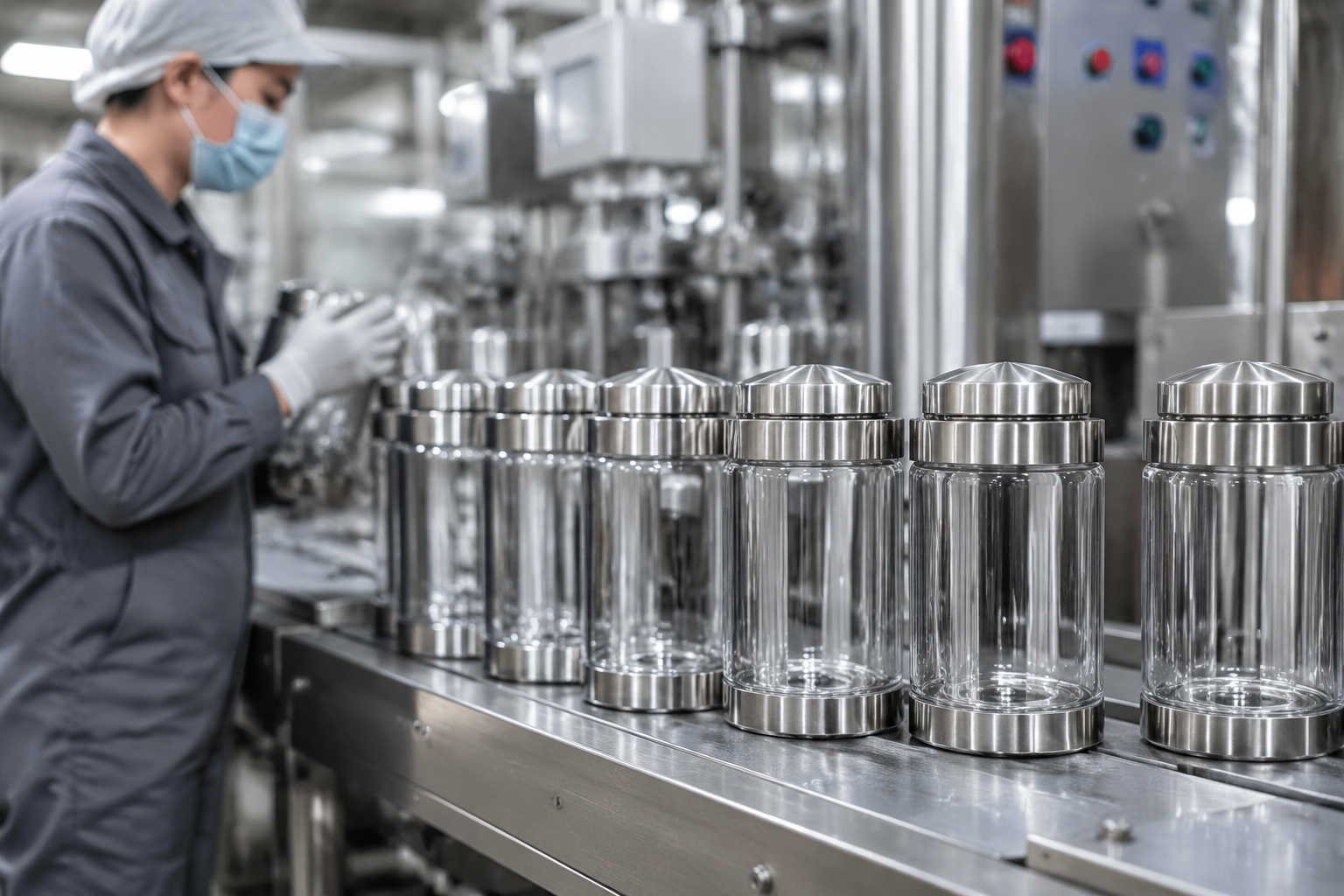
You are not buying a “nice bottle.” You are buying a spec that has to survive freight, shelf handling, and actual customer use. If you source from a borosilicate glass vacuum flask factory, the first question is not color or logo. It is whether the bottle holds heat, passes leak tests, and lands in North America or Europe without a stack of breakage claims.
At our Zhejiang factory, we handle a custom thermos order as a process, not a catalog picture. A 5,000-unit bulk thermos run can look clean on paper and still go sideways if the glass wall is 2.0 mm instead of 2.4 mm, the stopper is loose, or the carton fails a 60 cm drop test. We run the line this way for outdoor retailers and promotional brands: choose the body, lock the print, approve samples, QC the first mass production, then ship FOB with paperwork customs and distributors can actually clear.
Start with the buyer use case
I’ll rewrite the section in place, keep the HTML structure untouched, and make the prose sound like a real factory-side sales engineer.The cleanest way to source a borosilicate glass vacuum flask factory is to start with the end use. An outdoor retailer wants a stable vacuum, decent heat hold, and cartons that survive e-commerce drops. A promo brand usually cares more about logo area and landed cost than premium shelf performance. Skip that step, and the thermos quote looks cheap until it misses the channel.
We ask four things first: capacity, target retail price, decoration method, and destination market. A 500 ml glass liner flask for Europe may need different carton sizing and safety labels than a 1,000 ml promotional thermos for a North American distributor. We’ve seen this go sideways in Zhejiang more than once: the buyer asks for “one sample,” then comes back needing three versions for distributor thermos, promotional thermos, and gift-box retail. That means three packaging molds, three art files, and usually one more week on the line.
For a serious bulk thermos program, your opening brief should include:
- Capacity: 350 ml, 500 ml, 750 ml, or 1,000 ml
- Target ex-factory or FOB price: often USD 2.10-4.80 depending on finish
- Logo method: silk screen, laser, pad print, or heat transfer
- Market compliance: REACH, food-contact declaration, and carton markings
That gives the supplier thermos team enough data to quote straight, not guess. QC pulled the sample, checked the carton drop edge at 600 mm, and the math works only when the brief is this tight.
Choose glass, steel, or hybrid
I’ll rewrite just the HTML prose, keep the tags and structure intact, and tune the wording to sound like a factory-side sales engineer.The wording matters. A borosilicate glass vacuum flask factory is a different animal from a stainless-only thermos maker. Borosilicate gives clear sight lines, no metal taste, and a cleaner premium look on the shelf. Stainless takes hits better and ships easier. Hybrid builds try to split the difference, but sealing gets trickier and the cost jumps.
For outdoor buyers, this is a durability-versus-display call. If the item sits in a retail shelf, gift box, or campaign set, borosilicate glass is often the better pick. If it gets stuffed into a backpack every day, I would steer you to stainless or a better-protected structure. We had a buyer flag a PO once because the carton spec missed 6-sided foam; with a glass liner, the outer wall cushioning and drop test need tighter control than a plain steel vacuum flask.
Typical export specs we see in Zhejiang:
- Borosilicate inner liner wall: 1.2-1.8 mm
- Vacuum retention target: 6-12 hours hot, depending on structure
- Stainless outer shell gauge: 0.35-0.45 mm if it is a steel jacket model
- Stopper material: PP, silicone, or stainless cap assembly
If your channel is promotional thermos gifting, the cleaner move is usually a simpler body with a bigger print panel. For a premium thermos custom program, the glass body can price higher and still sell, but plan for more QC pulls and a lower transit damage allowance. The math does not work any other way.
Lock the quotation line by line
I’ll rewrite the section in place, keeping the HTML tags and list structure unchanged, and tighten the pricing language so it reads like a factory-side quote note.Most pricing trouble starts with a vague RFQ. A proper thermos factory quote should split out body cost, stopper, decoration, packaging, and freight terms. If a thermos supplier gives you one number only, that is not a quote; it is a placeholder.
For a common 500 ml borosilicate glass vacuum flask, FOB China pricing usually sits around USD 2.10-3.60 for basic branding, depending on order quantity and box spec. Add a gift box, a one-color logo, and a better stopper, and the figure can move to USD 3.20-4.80. The gap is not random. In Zhejiang, the cost changes with glass tube grade, print setup, inner plug quality, and carton size. We run 5,000 units on the line, and the piece price drops fast versus a 1,000-unit custom thermos order, but only when artwork and packaging are locked before production starts.
When you compare thermos manufacturers, ask for each quote to show:
- Unit price by quantity tier: 1,000 / 3,000 / 5,000 / 10,000
- Sample fee and whether it is refundable on order
- Logo setup cost and print area size
- Carton pack-out: 24 pcs, 12 pcs, or retail single box
- Trade term: FOB Ningbo, FOB Shanghai, or EXW
Good sourcing rule: if the supplier changes the carton spec but keeps the price the same, check breakage risk before you approve. QC pulled a sample at 1.8 m once, and the outer box split on the second drop.
That is where real distributor thermos buyers save money. Not by chasing the lowest quote, but by cutting out hidden packaging and repack costs. The math does not work any other way.
Sample before you commit
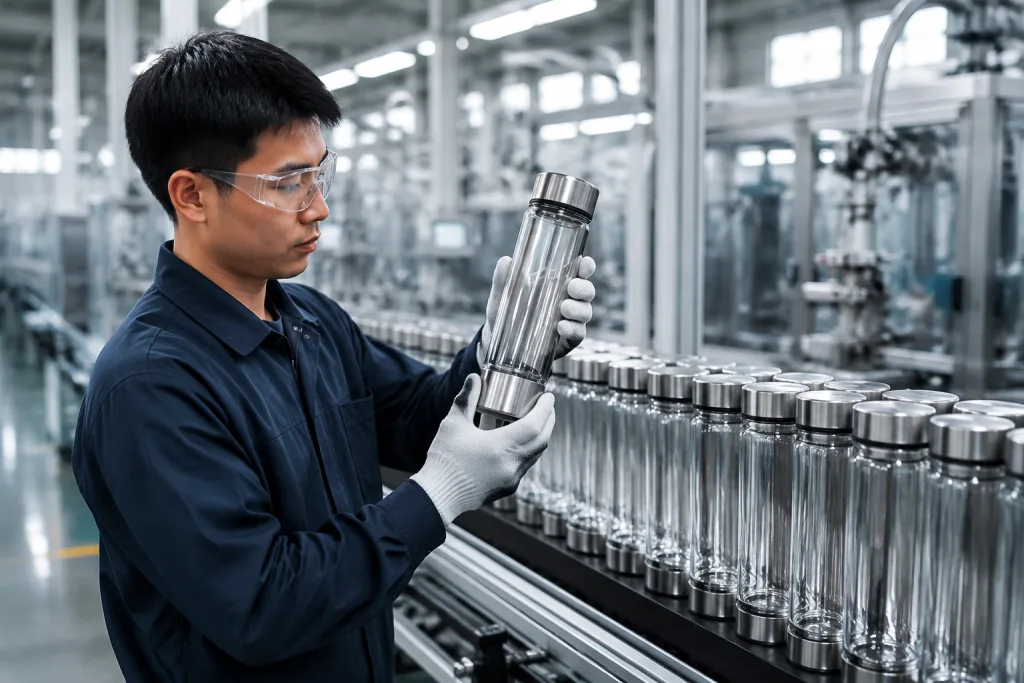
I’ll rewrite the prose tightly, keep the HTML exactly as-is, and make it sound like a factory-side sales engineer with concrete checks and numbers.Do not release a mass order until you have a physical sample that matches the final spec. A proper customized thermos sample should confirm glass wall thickness, vacuum seal, stopper fit, logo position, and carton size. If the sample is close but not exact, treat it as a design sample, not a production reference.
We run three sample checks before PO confirmation. First is appearance: print alignment, gloss, and color match. Second is function: fill with hot water, check for leakage after inversion for 10 minutes, then measure heat loss after 6 hours. Third is packing: one unit, inner box, master carton, then a drop test from 80 cm to see whether the liner holds. QC pulled the sample on the line with a caliper and a 500 ml fill mark; that is basic discipline for a borosilicate glass vacuum flask factory in Zhejiang. Anything less gets messy fast.
Ask the manufacturer thermos team to mark the approved sample with:
- Artwork version number
- Capacity tolerance, usually ±3%
- Logo Pantone reference or laser spec
- Packaging code and carton count
If you are buying thermos bulk for a distributor program, keep one sealed pre-production sample, one signed QC sample, and one archive sample at your office. We’ve seen this go sideways when the reorder comes 6 months later and the buyer flags the logo 2 mm higher. That is the wrong question to ask after the PO is already on the line.
Run QC like a buyer, not a tourist
I’ll keep the HTML structure intact and rewrite the prose with a more buyer-facing, factory-floor tone. I’m treating this as a single-pass edit, so I’ll preserve the tags, the existing technical numbers, and the list structure exactly.By the time mass production starts, the question is not whether the design looks good. It is whether the line can hold the same result across 1,000 or 20,000 units. We run the first lot against a signed inspection plan before production, then again before shipment. That is the only way to keep the buyer out of trouble.
For a standard AQL program, many buyers use AQL 2.5 for major defects and 4.0 for minor defects. On a promotional thermos order, major defects mean leakage, broken liner, missing parts, or an unreadable logo. Minor defects are small print shifts, tiny box dents, or light surface marks. For outdoor retail, leakage is the wrong place to compromise. We have seen one loose stopper fit wipe out a full channel.
Our factory checks include:
- 100% visual check for cracks before packing
- Random vacuum and leak test by batch
- Carton compression and drop test on export packaging
- Logo rub test for printed units
We also track yield. On a stable line, a good Zhejiang supplier thermos operation can keep breakage within 1-2% on glass liner work once tooling and packaging are fixed. If the line is running above that, the problem is usually not random; it is carton fit, handling, or an over-tight stopper that puts stress on the liner. QC pulled the sample, and the crack always showed up in the same corner. A buyer should ask for that data before paying the balance.
Ship, label, and reorder cleanly
I’ll rewrite the section in-place, keep the HTML structure intact, and make the prose sound like a factory-side sales engineer wrote it.The job is not finished when the cartons hit the warehouse. If you ship into the US or Europe, the label pack and carton docs matter as much as the flask itself. We’ve had a buyer flag a 3 mm barcode mismatch on the first run, and that held up receiving for two days. A thermos distributor usually needs carton size, gross weight, country of origin, HS code support, and, for Amazon-style fulfillment, FNSKU labels. Even off Amazon, clean barcodes and master carton marks speed up the line.
For FOB shipments out of China, lock the port, loading window, and document set before the cargo leaves Zhejiang. A normal lead time for a custom thermos order is 35-45 days after sample approval, then another 5-8 days for booking and export paperwork, depending on season. We keep the old die, artwork, and packing spec on file for reorders; that is the part that saves time. Without that, the math does not work for a fast repeat order.
Before shipment, ask for:
- Final packing list with carton count and net/gross weight
- Photo proof of labels, barcode, and master carton marks
- Pre-shipment inspection report with defect notes
- Replacement policy for breakage above the agreed limit
That is the gap between a one-off custom thermos buy and a supplier relationship that ships cleanly every time. In our shop, QC pulled the sample, checked the outer carton at 580 x 380 x 260 mm, and caught one typo on the PO before it went out. A good Zhejiang factory quotes fast, samples right, and handles reorder work without making you chase the same fixes again.
Send your thermos spec for a factory quote
Give us capacity, logo, carton, and target price. We will quote your custom thermos order from our Zhejiang line with clear MOQ and lead time.
Frequently asked questions
What is the MOQ for a borosilicate glass vacuum flask factory order?
For most custom thermos projects, MOQ starts around 1,000 units per design and color. If you need a special stopper, gift box, or multi-color print, 3,000 units is more efficient. A smaller test order is possible, but the unit price usually rises 15-30% because setup costs stay the same. For repeat distributor thermos programs, 5,000 units gives you much better carton and print economy.
How long does a custom thermos order take in China?
A normal order from sample approval to ready shipment is 35-45 days. If the artwork is simple and the packaging is standard, some Zhejiang factories can move faster. If you change the mold, cap, or gift box, plan closer to 50-60 days. Add 5-8 days for export booking and document release. During Q4, China factory schedules tighten, so reorder earlier if you need holiday stock.
How much should I budget for a bulk thermos run?
For a 500 ml borosilicate glass vacuum flask, a basic FOB China price often sits around USD 2.10-3.60 per unit at 3,000-5,000 pieces. With nicer packaging and more refined print, USD 3.20-4.80 is common. A premium promotional thermos with stronger carton protection can go higher. Freight, duties, and local fulfillment are extra, so do not judge the project only by ex-factory price.
What QC checks should I require before shipment?
Ask for leak testing, hot-water retention testing, visual crack checks, and carton drop tests. For mass production, many buyers use AQL 2.5 for major defects and 4.0 for minor defects. If the product is a customized thermos with glass liner, insist on stoppered inversion testing and a breakage report by batch. For export, photo evidence of packaging and labels is worth asking for too.
Can I order a promotional thermos with my logo only?
Yes, and that is usually the fastest path. A single-color logo on the body or cap is the simplest thermos custom option. It keeps setup low, often shortens lead time, and helps control cost for distributors thermos programs. If you want stronger shelf impact, add a gift box, sleeve, or laser mark. Just remember that each extra decoration step adds cost and may affect MOQ.