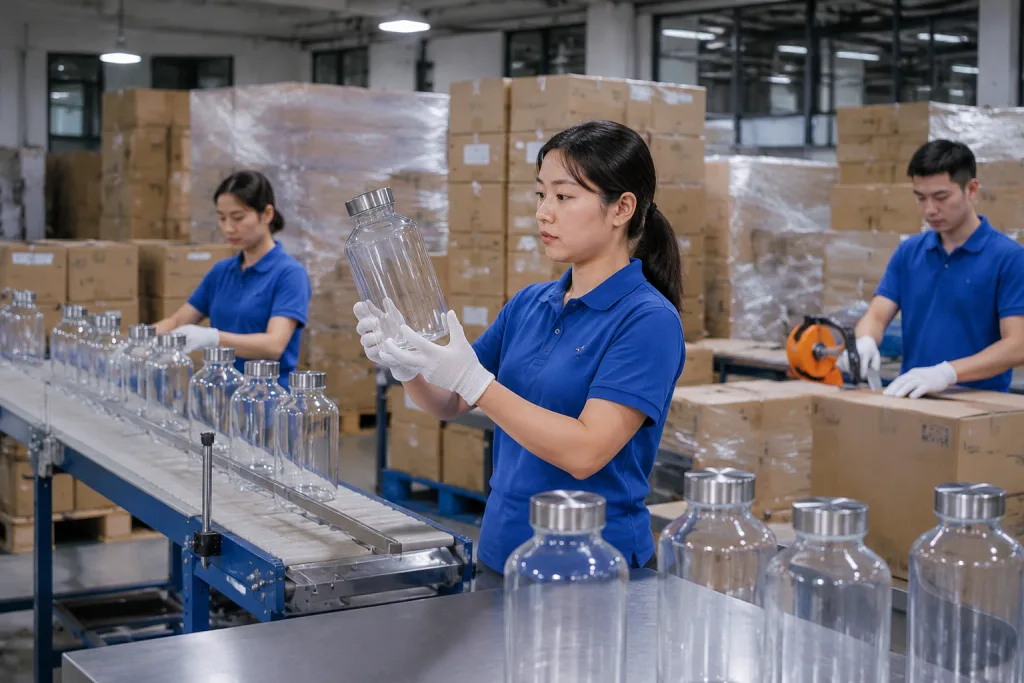
Key Takeaways
- A typical borosilicate glass vacuum flask custom MOQ starts at 1,000 units, with lead time around 25-35 days after sample approval.
- For a 500 ml glass vacuum flask, target double-wall glass thickness is usually 1.2-1.8 mm and carton drop testing should be confirmed before mass production.
- FOB China pricing for a basic custom thermos with one-color print often lands at USD 3.20-5.80 per unit at 3,000+ pieces, depending on lid and packaging.
- QC should include AQL 2.5 for appearance and 1.5 for critical defects, plus vacuum retention, lid seal, and breakage checks.
You are not buying a mug. You are buying a product that has to survive warehouse stacking, a 1.2-meter drop test, a brand review, and a late reprint because someone missed the Pantone code on the PO. That is why a borosilicate glass vacuum flask custom order needs tighter control than a standard stainless thermos buy. Glass changes the risk: better taste neutrality, yes, but wall thickness, vacuum quality, and carton design all need closer checks.
If you are an outdoor retailer or a promo brand, the real question is not whether a custom thermos can be made. The math is whether your factory thermos partner in Zhejiang can run 5,000 or 20,000 units with stable QC, a workable MOQ, and packaging that survives freight abuse. In Hangzhou, we see this every week on the line: the buyer wants a customized thermos that looks premium, ships safely, and still lands under target cost. That works only when you specify the order like an engineer, not like a mood board.
Start With the Use Case
I’ll rewrite the section in-place, keeping the HTML tags and structure unchanged while making the prose sound like a factory-side sales engineer.When a buyer asks for a borosilicate glass vacuum flask custom program, the first mistake is going straight to artwork. Start with the use case. Is this a promotional thermos for office gifting, a distributor thermos for retail, or an outdoor retail SKU that has to survive backpacks, condensation, and repeated washing? That choice changes the bottle body, lid, and carton.
For outdoor retail, I usually push buyers toward a 350-500 ml body, a screw lid with a silicone gasket, and a carry loop or cup lid only if the insulation target still holds. We checked one 420 ml sample on the line last month; QC found the lid leak at 48°C after a 1.2 m drop, so the buyer changed the cap spec. For promotional brands, logo space matters more than headline insulation numbers. A customized thermos for campaigns can run with a simpler finish and a lower-cost carton. If you are sourcing thermos bulk for two channels, split the spec into a base custom thermos for volume and a premium thermos customized version for retail display. The math does not work any other way.
In Zhejiang, the costly errors are not in the glass. They show up when a buyer mixes gift-grade expectations with outdoor retail demands. We ship both, but not off one vague sheet. A factory thermos supplier in China needs volume, lid style, insulation target, and target retail price before quoting; last quarter one PO even typed 4500 ml instead of 450 ml, and that typo wasted a full day. Set those points first, then the sample tells you if the project is real.
Lock the Glass Structure
I’ll rewrite the section in-place, keep the HTML exactly as-is, and tune the prose to sound like a factory-side sales engineer.Borosilicate glass vacuum flask custom work lives or dies on the glass spec. We run this every week: borosilicate takes thermal shock better than soda-lime, and that is the difference between a clean handoff and a cracked bottle when a buyer pours boiling water into a cold flask. For a 500 ml flask, ask the thermos manufacturer to confirm the inner and outer wall thickness, usually 1.2-1.8 mm depending on the shape and target cost. Too thin, and breakage climbs fast. Too thick, and the bottle gets heavy, while heat retention can shift in a way the buyer will flag.
Do not accept a vague statement like “high borosilicate.” Ask for the material grade, forming method, and whether the glass bulb is tested for vacuum loss. QC pulled the sample on one job because the supplier wrote “borosilicate” on the PO but never stated the grade, and the math did not work. A solid thermos factory should give you thermal retention figures, such as 6 hours above 70°C and 12 hours above 55°C, based on fill temperature and lid design. That is not marketing copy; it is what your distributor thermos customer will ask after the first complaint.
What to confirm in the sample stage:
- Wall thickness by caliper, not estimate
- Vacuum seal integrity after 24-hour hold test
- Glass neck finish and lid thread match
- No visible bubbles, chips, or stress marks
If the project is a thermos custom retail launch, ask for at least 2 sample rounds. We have seen this go sideways when a buyer approved round one, then found the neck thread was 0.5 mm off and the lid sat crooked in carton test. Good suppliers in China do not fight that request. They know one-sample approval on glass looks cheap until the first box cracks in transit.
Choose the Lid and Seal
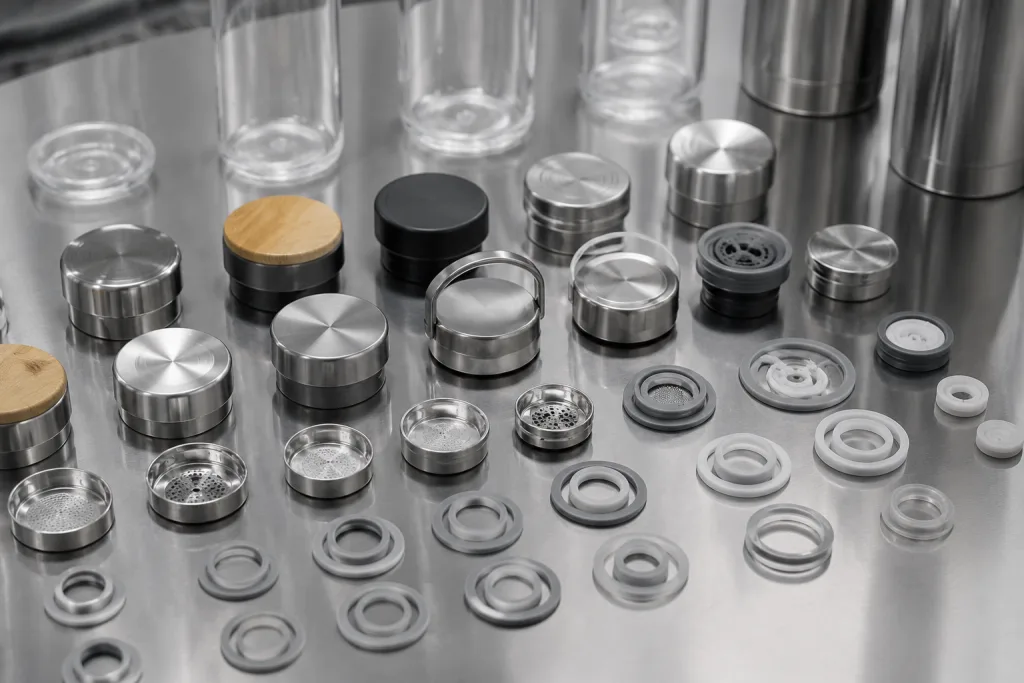
I’ll rewrite the section in-place, keep the HTML exactly as-is, and tune the copy to sound like a factory-side sales engineer.The lid is where a custom thermos becomes a product, not just a glass tube in a sleeve. A weak cap ruins insulation, leaks in transit, and triggers a bad review even when the bottle body passes. For a promo run, a PP screw cap with a silicone ring is enough. For outdoor buyers, we run a tighter lid with deeper thread engagement and a food-grade silicone seal. If the bottle is for tea or infusions, the lid also has to survive 200 open-close cycles without warping.
Ask your thermos supplier to state the gasket hardness and material on the spec sheet. We usually quote 50-60 Shore A for silicone seals. That gives the right compression and wear life. If the lid has a metal shell or stainless accent, check whether it is 304 stainless or plated plastic. The buyer flagged a plated cap once in QC because the surface smelled off after a 48-hour heat test, and that kind of issue lands badly in North America and Europe.
For thermos bulk programs, keep the lid family simple. One body mold and one lid family can cover several logos and colors. That keeps MOQ under control. If you load the lid with magnets, flip tops, and extra inserts, lead time stretches and the rejection rate climbs. We’ve seen that go sideways at the line more than once. Simple structures ship better and break less.
Treat Decoration Like QC
I’ll rewrite the section in-place, keep the HTML tags intact, and tune the copy to sound like a factory-side sales engineer.Logo placement is not a creative afterthought; it is a process risk. On glass, we run screen printing, decal, laser on an outer stainless sleeve if present, or a printed wrap on the carton. For a borosilicate glass vacuum flask custom order, I usually push one-color silkscreen or a fired decal if you want better wear resistance. Multi-color graphics are possible, but the scrap rate climbs fast and the unit price follows. QC once caught a 1.2 mm logo shift on a 500 pcs trial, and that batch was still cheaper to stop than to rework.
For a custom thermos aimed at promotional use, keep the logo area clear and the print count low. One logo. One side. One Pantone reference. That sounds basic, but this is where buyers burn a week on back-and-forth. If you are buying from a thermos supplier in China, send vector artwork, Pantone codes, and line spacing requirements in the first email. A good manufacturer thermos team can turn that into a proof in 48 hours; we have seen POs stall because the buyer typed “Pantone 186C” as “186 C” and the line went silent.
Print durability should be tested before mass production. We run tape adhesion, dishwashing check if the print is claimed washable, and an abrasion check on the sleeve or box. For a customized thermos that will go through retail, I also ask for a rub test after 24 hours curing. If you are planning a thermos promotional campaign, do not let the decoration add more than 3-5% to the landed cost unless the branding payoff is obvious. The math does not work otherwise, and we have seen it go sideways on a 10,000 pcs order when the buyer added a second color late.
Buyers who treat decoration as part of QC, not design, usually save one production cycle.
Run the Right Factory Checks
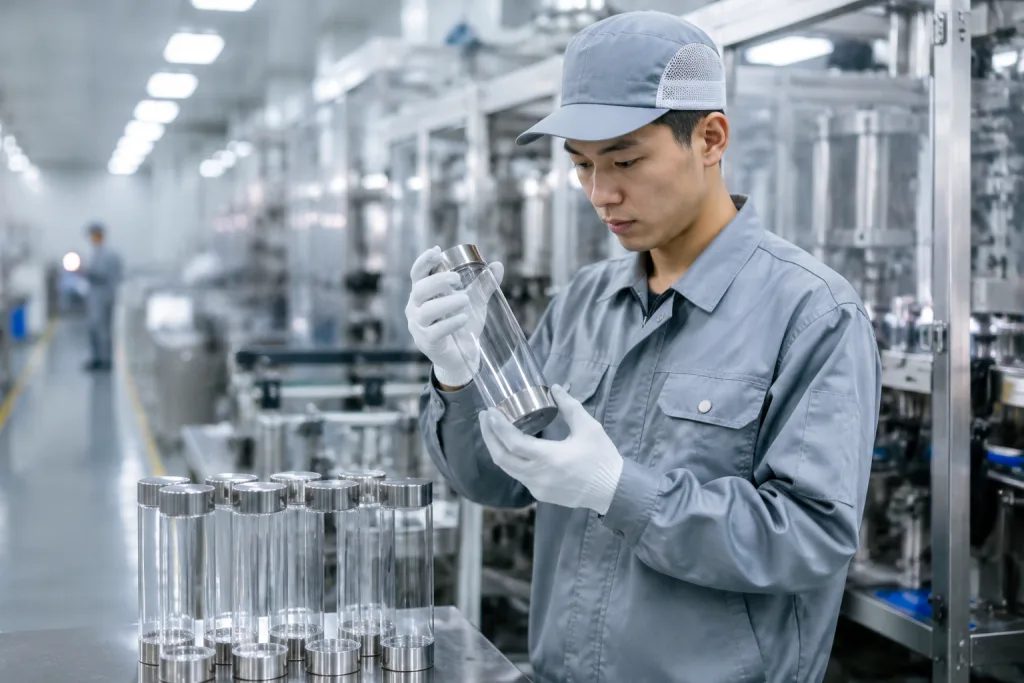
I’ll rewrite the section in-place, keeping the HTML tags and list structure unchanged while making the prose sound like a factory-side sales engineer wrote it.At sample stage, ask the thermos factory to show the inspection plan, not just the finished unit. We want the line covered on appearance, vacuum retention, lid fit, packing integrity, and drop performance. For a glass flask, I ask for the AQL in writing. AQL 2.5 works for minor appearance marks; critical defects should sit at 0 or AQL 1.5, depending on the buyer and market. QC pulled one sample last month with a 1.2 mm lid gap, and that would have turned into a return.
A proper QC flow for a thermos manufacturer is straightforward: incoming glass bulb inspection, in-process assembly check, vacuum sampling, 100% lid fit check, then carton audit before shipment. On one Zhejiang order, the buyer flagged a carton print typo at 9 p.m.; we stopped the line before loading, and that saved a full rework. If the order is large, add a pre-shipment random inspection through your own third party or a local team in Zhejiang. The math works. Paying for one inspection is cheaper than replacing broken retail stock in Europe or North America.
Ask for these test items in the PO:
- Hot water retention test at 95°C fill
- Leak test with inverted hold for 30 minutes
- Drop test from 80-100 cm in packed condition
- Carton compression check for export stacking
If you buy from China, ask the supplier thermos team to share a production photo set with timestamp and batch number. Sounds bureaucratic, but it catches a label mix-up before the pallet leaves Hangzhou. We’ve seen this go sideways on a 5,000-piece order because one carton code was typed wrong on the PO.
Package for Freight, Not Shelf Only
I’ve got the section and constraints. Next I’m rewriting the prose in-place, keeping the HTML and structure untouched while making it sound like a factory-side sales engineer wrote it.Buyers often spend too much time on retail artwork and too little on export pack. For a borosilicate glass vacuum flask, that is the wrong call. The inner box needs to hold the bottle, and the master carton needs the right cube size and pallet pattern. We ran a 60 cm drop test on one shipment last season; the shelf box looked fine, the glass did not.
For custom thermos orders going to Europe or North America, we usually choose a molded pulp tray or a tight EPE insert, depending on target cost. If you want stronger shelf appeal, print the retail box in 4C plus one spot color and confirm the FNSKU or barcode position before proofing. Amazon-style programs need a clean barcode zone, and we’ve had buyers flag POs because the label panel was drawn after artwork lock.
Typical packaging targets for thermos bulk:
- Inner box crush resistance matched to packed weight
- Master carton with at least 5-ply structure for glass items
- 10-12 units per carton when size allows
- Clear carton mark with item code, color, and quantity
If your thermos distributor plan includes mixed SKUs, use separate carton labels and do not overfill the case. We can usually fix the packing layout in one round on the line, but only after you give us carton limits and retailer rules upfront. The math does not work any other way.
Price the Order Like a Buyer
I’ll rewrite the section in place, keep the HTML exactly as-is, and tighten the pricing language so it reads like a factory sales engineer wrote it.For borosilicate glass vacuum flask custom sourcing, build the price from structure, decoration, packing, and freight. Don’t ask for a single unit price and call it done. Ask for FOB China, sample cost, mold cost if any, print cost, and carton cost. A basic 500 ml order at 3,000 units usually lands around USD 3.20-5.80 FOB, and the spread comes from glass thickness, lid quality, and package spec. We run this every week. Add premium print or retail packaging, and the number moves fast.
MOQ is usually 1,000 units for a standard shape, but custom color lids or special cartons can push it to 3,000 units. Lead time is usually 25-35 days after sample approval, and that is the real schedule for a solid Zhejiang factory if artwork is locked. QC pulled the sample on a 2 mm wall version last month and found a lid fit issue, so no one should be selling you a 7-day fully customized glass thermos. That math does not work.
When comparing a thermos supplier, use the same benchmark every time: 1,000 units, one logo position, one box design, FOB Ningbo or FOB Shanghai, and the same vacuum target. The buyer flagged a PO typo on carton size once, and the quote comparison got messy because one factory padded the pack-out. This is the wrong question to ask if you want a clean comparison. A proper factory thermos quote should tell you if the job is a margin play, a channel filler, or a promotional thermos run with tight risk and quick turnover.
Send your spec, get a real factory quote
Share volume, lid style, print file, and target market. We’ll price your custom thermos order with MOQ, lead time, and QC points up front.
Frequently asked questions
Can a borosilicate glass vacuum flask custom order compete with a stainless thermos on retail shelves?
Yes, if your buyer values taste neutrality, a clean look, and a lower gift-style retail price. In practice, a 500 ml borosilicate glass vacuum flask custom SKU usually lands below a premium stainless thermos on FOB price by about 10-20% when the structure is simple. The tradeoff is breakage risk, so you need stronger inserts and better carton design. For outdoor retail, glass works best in controlled use cases, not heavy abuse channels. For promotional brands, it is often the better visual choice because the logo reads clearly and the product looks premium without using a heavy stainless shell.
What MOQ should I expect from a thermos manufacturer in China?
For a standard borosilicate glass vacuum flask custom shape, expect 1,000 units MOQ if the lid and carton are standard. If you want a custom lid color, special gift box, or multi-color decoration, 3,000 units is more common. Some Zhejiang factories can sample at 500 pieces, but the per-unit cost is usually poor. If your program is truly thermos bulk, say 10,000 units or more, you should negotiate pricing on a tiered basis and lock the artwork early so the lead time stays near 25-35 days after approval.
What QC points matter most for glass vacuum flasks?
Focus on vacuum retention, lid seal, glass wall consistency, and packed drop performance. I would ask for AQL 2.5 on appearance defects and AQL 1.5 or stricter on critical issues like cracks, leaks, or poor sealing. For a 500 ml unit, confirm wall thickness around 1.2-1.8 mm depending on design, and require an inverted leak test plus carton drop test. If the thermos supplier cannot show you a simple QC sheet with batch numbers and test results, treat that as a warning sign, especially for export to North America or Europe.
How do I keep decoration durable on a customized thermos?
Use one-color silkscreen or a fired decal if the logo needs to survive handling. For a promotional thermos, one clean logo is often better than a complicated print that chips or wears off. Ask for tape adhesion and abrasion checks, and if the product is claimed dishwasher-safe, confirm that in writing before production. In China, many suppliers can print anything you ask for, but a good thermos factory will also tell you when the artwork is too detailed for the material and target price.
What lead time should I plan for from sample to shipment?
A realistic plan is 7-10 days for samples, then 25-35 days after sample approval for mass production. If the order needs new molds, special cartons, or a custom molded insert, add another 7-15 days. Freight booking can add time during peak season, so build that into your launch calendar. For a thermos distributor working with retail deadlines, I would not promise shelf stock without at least a 6-8 week window from final sign-off to arrival, especially if you are shipping from Zhejiang to Europe or North America.