Key Takeaways
- Borosilicate glass vacuum flask bulk orders usually start at 1,000 pcs MOQ with 35-45 day lead time from Zhejiang.
- For promo programs, expect custom printing to add 3-5 days and packaging upgrades to add $0.25-$0.80 per unit.
- AQL 2.5 for major defects and 4.0 for minor defects is a sensible QC baseline for thermos bulk shipments.
- A well-built custom thermos spec should lock wall thickness, vacuum performance, drop-test standard, and carton strength before production.
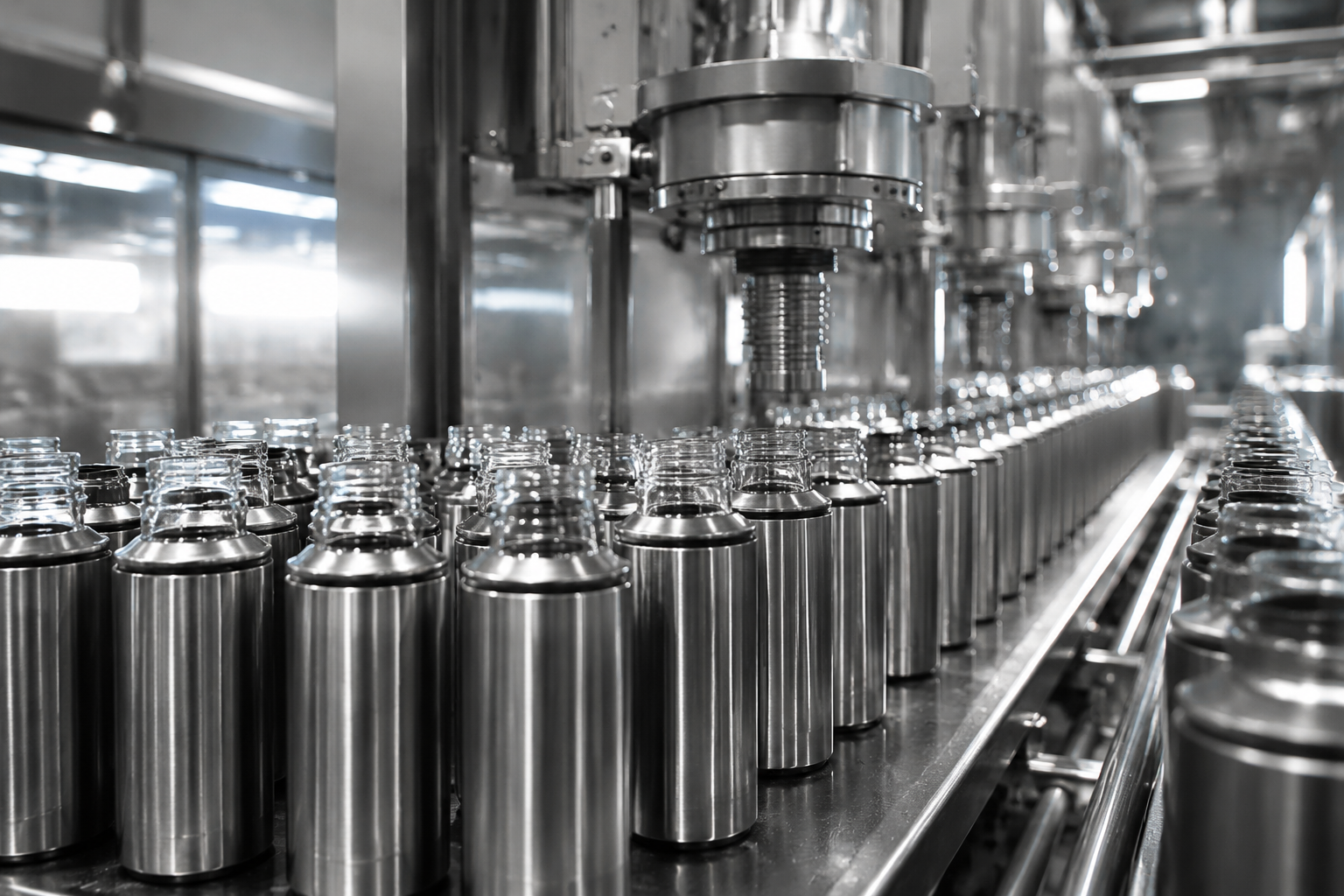
You do not start with a product page. You start with a ship date, a target cost, and a buyer who wants “premium” without a premium return rate. That is where borosilicate glass vacuum flask bulk orders get real. A glass-lined vacuum flask can look sharp on a sales sample, but the hard questions are breakage rate, insulation numbers, carton strength, and whether the custom thermos survives a mixed warehouse load with no drama.
If the order is for outdoor retail or a promo run, the wrong question is “what looks best?” The real job is to spec the right factory thermos, lock the print method, and check the units before they leave Zhejiang. At BottleForge in Hangzhou, we run up to 180,000 units per month across stainless and glass-lined lines, with MOQ from 1,000 pcs for standard borosilicate formats and 35-45 day lead times depending on printing and packaging. QC pulled a 24-hour leak sample on the line last week; that is the kind of detail that keeps a supplier thermos order from blowing up in Europe or North America.
Start With the Buyer Use Case
I’ll rewrite the three paragraphs in-place, keeping the HTML tags and the section structure intact while making the copy read like an experienced factory sales engineer.Before you ask for a quote, pin down the job first. A gift buyer wants shelf impact, print area, and carton count. An outdoor retailer wants drop resistance, lid feel, and steady heat retention in the field. Those are different buying patterns, and if you mix them up, you spec the wrong custom thermos for the channel.
For a borosilicate glass vacuum flask bulk order, the brief needs hard numbers: capacity, lid style, insulation target, and carton spec. A 500 ml glass-lined flask with a stainless outer shell, PP lid, and silicone seal can keep 70°C water above 55°C after 6 hours if the vacuum layer and stopper are built right. QC pulled one sample at 6 hours and the thermometer read 56°C, which is the kind of detail that matters. Ask the thermos factory for the test method, fill temperature, and ambient condition; a fast quote is not the same thing as a real test report.
For distributors thermos programs, define the resale path too. Is this one SKU, or do you need three colorways for different thermos distributors? If you are comparing supplier thermos options, look at shelf appeal and breakage in the same breath. Glass-lined vacuum flasks sell well at premium price points, but they do not forgive rough mixed freight. We’ve seen that go sideways on a 1.2 m drop test. Spec it properly, and the line runs clean.
Choose the Flask Structure
I’ll keep the HTML intact and rewrite the prose to sound like a factory-side sales engineer, with tighter specifics and a few field details.Now you narrow the build. Borosilicate glass vacuum flask bulk usually means a glass inner liner with vacuum insulation and an outer shell, most often stainless steel or plastic. Borosilicate glass takes thermal shock better than soda-lime glass, but it is still glass, so we ask for liner thickness, neck reinforcement, and whether the bottom cushion is molded or bonded. On our line, a common spec lands around 1.2-1.8 mm wall thickness, depending on capacity and shape.
If the buyer wants a custom thermos for outdoor retail, I usually push a stainless outer shell with a borosilicate liner instead of an exposed glass body. It keeps the look premium and cuts handling damage during carton drops; we saw that on a 1.2 m drop test when the bare-glass sample chipped at the base. For promotional thermos use, keep the lid plain: PP or ABS cap, silicone gasket, and a closure that works with gloves on. A lid with too many moving parts is the wrong question to ask, because leakage claims after shipment cost more than the nicer tooling.
What to lock in the spec sheet:
- Capacity: 350 ml, 500 ml, or 750 ml
- Liner material: borosilicate glass grade and thickness
- Outer shell: stainless steel 201, 304, or painted metal
- Lid seal: silicone hardness and leak test requirement
- Packaging: inner box, egg crate, or molded pulp
Do not let a thermos manufacturer swap materials without approval. We had one buyer flag a PO typo on “304” versus “201,” and that tiny line item changed the cost more than the whole lid set. A good thermos supplier asks for the use case first, then recommends the lowest-risk structure that still hits price. That is how we keep the relationship useful, not just polite.
Price the Order Correctly
I’ll rewrite just the prose inside the three `` tags, keep every tag as-is, and tune the tone to sound like an export sales engineer with concrete factory details.
Pricing on borosilicate glass vacuum flask bulk orders is usually about risk, not just the bottle. A basic 500 ml model in standard finish often lands at USD 2.20-3.10 FOB Ningbo or Shanghai at 1,000-3,000 pcs. One-color silk print usually adds USD 0.10-0.25. A full-color wrap, gift box, or premium carton moves the number fast. If you want a customizable thermos with spot UV or laser mark on a stainless sleeve, budget for it, because the line slows down and reject rate goes up. We once caught a PO typo on a 20,000 pcs order where the buyer wrote 520 ml instead of 500 ml; that kind of miss changes tooling, cartons, and the quote.
Do not compare unit price alone. Compare landed cost. A thermos bulk program with a 5% breakage allowance is not the same as a product that ships with 1% damage or less. The math does not work. In one distributor thermos job, the lower FOB price lost because the carton wall was only 3-ply and the bottles arrived chipped; QC pulled the sample and found two neck cracks after a simple 60 cm drop test. Ask your thermos manufacturer for carton drop-test results, outer carton dimensions, and how many units fit per master carton. Shipping density matters, especially on North American container lanes where one extra cm on carton length can cut pallet count.
If you are buying promotional thermos stock, lead time has a real cost. A 7-day delay can kill a seasonal campaign. We’ve seen that go sideways on spring promo runs. A reliable thermos supplier should give you a production calendar: artwork approval in 2 days, sample in 5-7 days, bulk production in 35-45 days, and pre-shipment inspection in the final 3-5 days. On our side, we run this with a sample cabinet, 24-hour artwork feedback, and a packed-carton check before the booking is released. That is normal for Zhejiang factories handling export volume, not just domestic orders.
Send a Sample That Can Be QCed
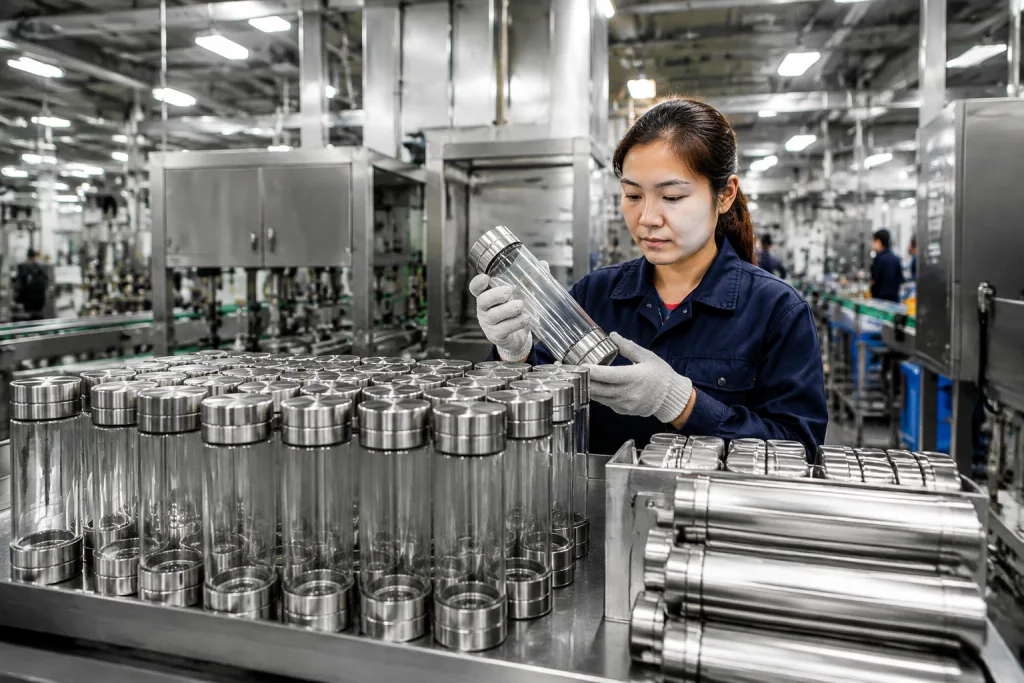
I’ll keep the HTML intact and rewrite just the prose with a more field-tested, buyer-facing voice. Then I’ll return only the cleaned HTML.Do not approve from a flat mockup alone. For a custom thermos or thermos custom order, ask for a pre-production sample with the exact liner, lid, print, and carton. We run the sample against a simple matrix: capacity tolerance, lid torque, leak test, surface finish, and drop integrity. If you own the brand, this is where your logo gets protected. If you are a distributor, this is where your reorder speed gets protected.
We usually suggest three checks on a borosilicate glass vacuum flask bulk sample. First, fill it with 95°C water and check insulation at 2, 4, and 6 hours. Second, run a 1-meter drop test on packed units, six faces, one drop per face; retail handling is rough, and the carton on the line takes a beating. Third, inspect print durability with a 50-cycle abrasion rub, especially if you want a promotional thermos that gets handled every day.
“If the sample cannot survive basic logistics, the bulk order will not magically improve.”
This is where a good manufacturer thermos partner earns the margin. A solid thermos factory will flag weak welds, loose lid fit, print misregistration, or cartons that crush at stack load. We’ve seen a buyer approve a sample with a lid torque typo on the PO, then blame the factory when the launch went sideways. In China, especially in Zhejiang, the exporters that ship clean are usually the ones that stay boring about QC. That is a compliment. You want boring.
Set the QC Rules Before Production
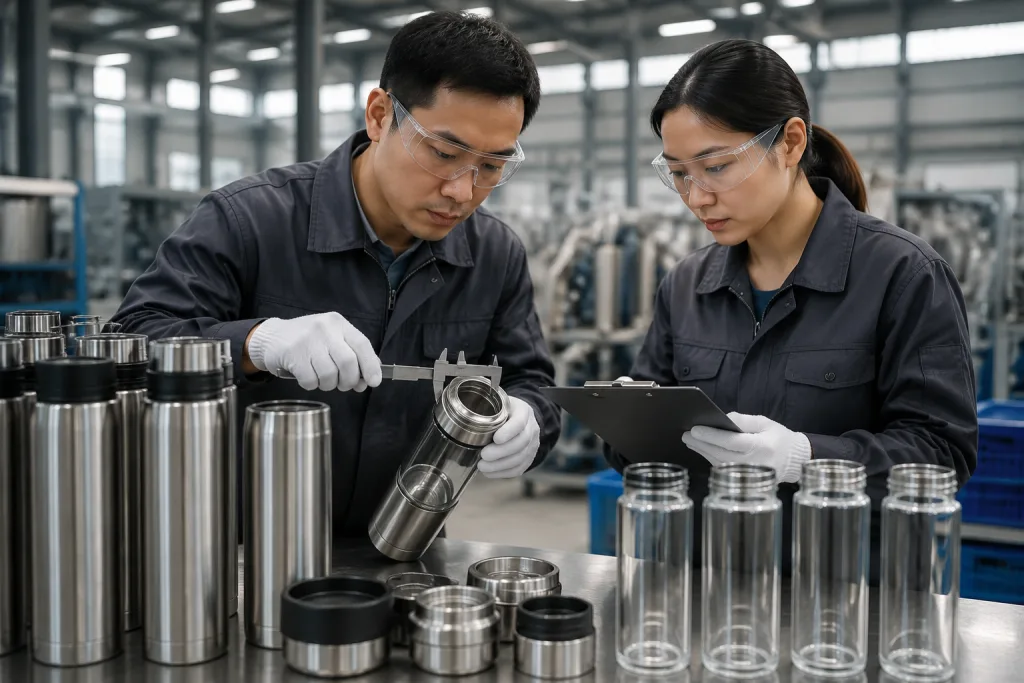
I’ll rewrite the section in place, keep the HTML exactly as-is, and tighten the sales-engineer tone with concrete QC details and fewer AI-style phrases.One of the fastest ways to lose money in thermos bulk sourcing is treating QC as a side note. Put the acceptance criteria in the PO. For export-grade borosilicate glass vacuum flask bulk, we run AQL 2.5 for major defects and AQL 4.0 for minor defects, with zero tolerance for leakage, broken liners, wrong artwork, or missing accessories. If the bottle ships as a custom thermos gift set, spell out insert orientation and carton print accuracy. The buyer flagged a 3 mm logo shift on one reorder, and that kind of miss becomes a claim fast.
Use measurable standards. Leak test at 80-95°C for 5 minutes inverted. Visual inspection under 750-1,000 lux. Vacuum performance must stay within your approved sample window. If the bottle has a stainless outer shell, check coating adhesion and edge finishing with a cross-hatch tape test and a 0.2 mm burr limit. If the decoration is laser etched, inspect depth consistency and contrast. If it is silk screen, verify ink cure before boxing. This is the wrong question to ask after shipment; QC should catch it on the line.
Typical export QC package:
- Incoming material check for glass liner and seals
- In-process inspection at lid assembly and vacuum sealing
- Final inspection on appearance, function, and cartons
- Pre-shipment report with photos and defect counts
Good suppliers thermos programs in China keep a retained sample for each shipment. We keep one carton, one lid, and one finished flask per PO code for 12 months. That matters when a distributor thermos customer asks six months later whether a logo position changed or a carton code was updated. In Zhejiang, serious thermos manufacturers file the lot sheet and QC photos because reorders go smoother when the paper trail is clean.
Plan Packaging for Real Freight
I’ll rewrite the section in place, keep the HTML tags intact, and tighten the freight/packaging advice so it reads like a factory-side sales engineer.Glass-lined goods usually fail in transit, not in testing. Packaging is part of the product. For a borosilicate glass vacuum flask bulk shipment, we run an inner retail box with a molded pulp tray or a high-density insert, then a 5-ply or 7-ply master carton with corner boards for ocean freight. QC pulled a drop sample from the line at 1.2 m, and the carton held up only after we raised the insert thickness to 18 mm. For export cartons, 12 kg stack load is the floor; if the retailer’s DC is rough on pallets, go higher.
If the order is for a promo brand, cut the dead air. Less void space means lower freight and fewer broken necks. If it is for outdoor retail, the box still has to look clean on shelf. That is the real trade-off. Packing too loose is a mistake. Packing too heavy is another. We saw a buyer flag a PO typo on carton size, 48x36x32 cm instead of 48x35x32 cm, and the math stopped working fast. A custom thermos with weak packaging becomes a chargeback later.
For distributors thermos orders, the pallet plan needs the same attention. Ask the thermos supplier for cartons per pallet, target pallet height, and whether carton marks follow the FNSKU or SKU system if the goods go through North American distribution. Even if you are not selling on Amazon, barcode discipline keeps the warehouse calm. A manufacturer thermos that ships with mixed carton labels creates rework at receiving, and rework costs money. If you want a thermos supplier that acts like a partner, have them own the pack-out logic from the start.
Confirm Factory Fit Before You Order
I’ll rewrite the three paragraphs in-place, keep the HTML untouched, and make the copy sound like a real sales engineer from the line.Not every thermos factory fits every program. For 1,000-3,000 pcs of a promo thermos with tight artwork timing, we run a line that can handle small to mid-size export orders without turning it into a project. For 20,000 pcs across three colorways, you need tooling, packing space, and a shipping desk that can keep pace. Our Hangzhou facility in Zhejiang handles both, and the buyer pushback we hear most is simple: the factory choice matters more than polished sales talk.
Ask direct questions. How many units per month can you ship on a real schedule? What is your MOQ for one color and one logo? Can you keep custom thermos reorders aligned across two production runs? Do you have BSCI, REACH, or food-contact files ready for EU buyers? For North America, can you pass ASTM-style drop testing or meet retailer carton rules? We had one PO typo on a 5,000 pcs order that showed the wrong carton count, and QC pulled the sample before it left—serious thermos manufacturers answer with numbers, not nice words.
For a distributor thermos account, repeatability is the whole game. The best thermos distributors do not want a one-off hero sample. They want the same print position, the same carton spec, the same leak rate, and the same warehouse label logic on every reorder. If the first shipment is clean, the second one is where the margin shows up. We've seen this go sideways when a supplier changed the label size by 8 mm without warning.
Spec your bulk thermos order with confidence
Send us your target capacity, logo method, and carton requirement. We will quote a clean Zhejiang export spec, not a vague sales promise.
Frequently asked questions
What MOQ should I expect for borosilicate glass vacuum flask bulk?
For a standard borosilicate glass vacuum flask bulk order, a realistic MOQ is 1,000 pcs per color and design. If you need a special lid, new mold, or multi-color print, expect 3,000 pcs or more. For a promotional thermos run with simple one-color branding, some Zhejiang factories can stay near 1,000 pcs if the structure is off-the-shelf. Lead time is usually 35-45 days after sample approval, with 5-7 more days if you add premium cartons or gift boxes.
How much does a custom borosilicate thermos cost FOB?
A common FOB range for a 500 ml custom thermos with borosilicate liner is USD 2.20-3.10 per unit at mid-range volumes. One-color print may add USD 0.10-0.25, while gift packaging can add USD 0.25-0.80 depending on carton and insert type. If you choose a higher-grade stainless outer shell, laser engraving, or a more complex lid, the price rises. The lowest quote is not always the best thermos supplier quote if breakage or packaging defects are higher.
How do you QC a glass-lined vacuum flask order?
Use clear acceptance rules before production. For export orders, many buyers use AQL 2.5 for major defects and AQL 4.0 for minor defects. Check leak resistance, print alignment, vacuum performance, carton compression, and drop resistance. For packed units, a 1-meter drop test on six faces is a practical baseline. Also confirm that the liner is borosilicate glass with the approved thickness, often 1.2-1.8 mm depending on the design. Good QC avoids claims after the shipment reaches your distributor thermos warehouse.
Can I order custom branding on promotional thermos units?
Yes. Most thermos factory lines support silk screen, pad print, laser engraving, or heat-transfer decoration depending on the shell material. For a promotional thermos, one-color print is usually the fastest and cheapest option. If you need a customized thermos with multiple logos or retail packaging, plan on a longer sample cycle. Artwork approval usually takes 2 days, samples 5-7 days, and bulk production 35-45 days. If you are selling through thermos distributors, keep the logo placement consistent across reorders.
Should I choose glass-lined or all-stainless for outdoor retail?
If the product will face rough handling, all-stainless is usually safer. If your customer wants a premium look and you can control packaging and freight, borosilicate glass vacuum flask bulk can still work well. A glass-lined model is better when the perceived value matters and the retailer can manage breakage risk. For hiking, camp, and event use, many buyers choose a stainless outer shell with a borosilicate liner so the bottle feels premium but stays more protected than exposed glass. That is usually the sweet spot for a thermos manufacturer quote that still protects margin.