Key Takeaways
- Borosilicate glass usually fits premium desk use; stainless wins for outdoor retail and drop-prone promo campaigns.
- Typical MOQ for custom thermos orders is 1,000 pcs, with 20–30 day lead time in Zhejiang factories.
- A 304 stainless body at 0.5 mm wall thickness is far more forgiving than glass in shipping and field use.
- For logo work, laser engraving on stainless is more durable than printed decoration on a customized thermos with glass.
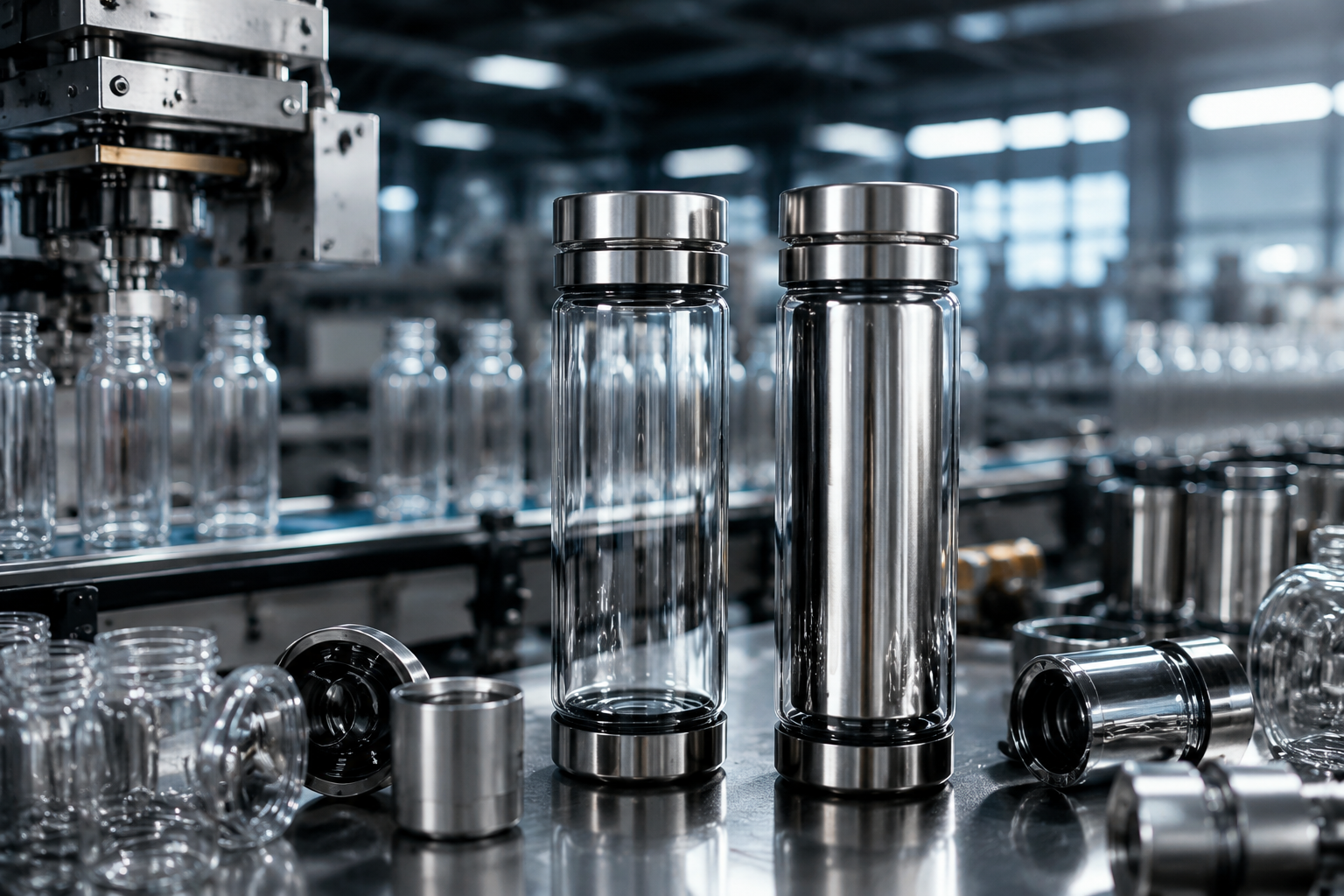
If you buy drinkware for outdoor retail or promo programs, the ugly truth shows up fast: the “best” bottle depends on where it will be used, how it will be packed, and how much risk your brand can take. A borosilicate glass vacuum bottle supplier sells clarity, clean taste, and a premium hand feel. A stainless thermos factory sells impact resistance, lower breakage risk, and easier field use. Both can be right. Not for the same buyer.
In Zhejiang and across China, the better suppliers do not force one material onto every brief. They ask about drop tests, decoration method, carton count, and whether you need 3,000 units or 30,000. That is the real conversation. At BottleForge in Hangzhou, our monthly output reaches 600,000 units, with typical MOQ at 1,000 pieces and lead time around 20–30 days for standard builds. We once saw a PO typo change “matte black” to “mirror black”; QC pulled the sample, the buyer flagged it, and the line stopped before packing. If you are comparing supplier thermos options, start with the use case, then pick glass or stainless on facts, not habit.
Glass vs stainless at a glance
I’ll rewrite the section in place, keeping the HTML exactly as-is and tightening the sales-engineer voice.Buyers ask for a spec sheet first. Fair enough. Use the table below to cut the field before you request samples from any manufacturer thermos or supplier thermos source in China.
| Spec | Borosilicate glass vacuum bottle | Stainless thermos | Use-case fit |
|---|---|---|---|
| Impact resistance | Low to medium | High | Outdoor retail, travel, field use |
| Taste neutrality | Excellent | Very good | Coffee, tea, flavored water |
| Heat retention | Good with vacuum wall | Good to excellent | Daily commute, camping, gift sets |
| Typical wall build | 2.0–2.5 mm glass inner wall | 0.4–0.6 mm 304/316 stainless | Bulk thermos sourcing |
| Decoration durability | Printed logo, limited abrasion resistance | Laser, silkscreen, emboss options | Custom thermos programs |
| Risk in transit | Higher breakage risk | Lower breakage risk | Distributor thermos orders |
The point is not that glass is weak and stainless is magic. The point is that a borosilicate glass vacuum bottle supplier solves a different buying problem than a thermos manufacturer built for rough field use. We run this split all the time on the line: if the buyer wants a home-unboxing moment, with tea leaves visible and a clean look, glass wins. If the bottle is going into a backpack or pallet-shipped in mixed cartons, stainless is the safer call. For thermos bulk orders, that one choice can move the return rate by a lot. We’ve seen that go sideways when the buyer picked glass for a travel promo and the first carton test came back with chipped rims.
Where borosilicate glass wins
I’ll rewrite just the prose, keep the HTML structure intact, and make the copy sound like a factory-side sales engineer wrote it.Borosilicate glass fits when the buyer is selling perception as much as heat retention. It holds no coffee smell from yesterday, shows the drink clearly, and looks premium without a lot of shaping. We run these for office gifting, wellness kits, tea brands, and subscription boxes. The fill line matters too; for fruit water, tea leaves, and herbal infusions, the end user wants to see what is inside.
From the sourcing side, the offer has to be clear. A real borosilicate glass vacuum bottle supplier in Zhejiang should give you glass thickness, lid gasket material, and carton plan on the first quote. QC pulled a sample on the line last month and the buyer flagged a weak cap fit, so we stopped treating that as a minor point. Ask for:
- Inner wall thickness: 2.0 mm or 2.5 mm
- Lid seal: silicone, food-grade, usually 40–50 Shore A
- Leak test: 8–12 hours inverted at room temperature
- Packing: individual box plus 24 pcs/carton, if shipping LCL
For a customized thermos in premium gifting, glass works when the pack-out is tight and the route is gentle. We have seen this go sideways in a 1.2 m drop test, so the carton and insert matter as much as the bottle. If the buyer wants a distributor thermos for hardware stores, hiking outlets, or warehouse clubs, stainless is the better call.
Why stainless wins outdoors
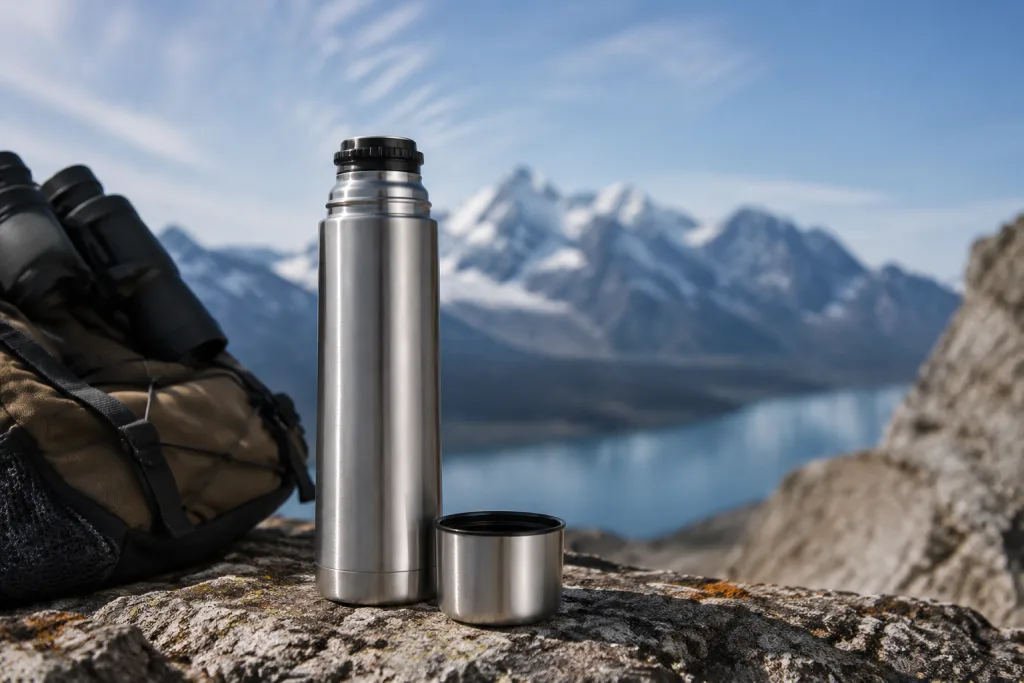
I’m rewriting the section in-place and keeping the HTML tags intact. I’ll tighten the sales-engineer tone, add a couple of factory-floor specifics, and strip the AI-style filler.Outdoor retailers should think like risk managers. Stainless takes the knocks that crack glass on the first rough handling cycle. For trail, gym, car cup holder, and jobsite use, 304 stainless at 0.5 mm wall thickness is the sane spec. We run that gauge all the time; QC pulled a sample after a drop test from 1.2 m and the glass body failed, while the stainless shell held shape. If the bottle will sit in salty air, high humidity, or a premium line, 316 stainless earns its keep, even with a unit cost bump of USD 0.40–0.90 depending on volume and lid build.
As a factory thermos, stainless also gives more room for decoration. Laser engraving stays on the body, while silk-screen or UV print still works for short campaigns. We had a buyer flag a PO typo on the artwork size once, and the laser save was the only reason the order did not stall. That matters when you are placing thermos custom inventory for a national promo. A simple 500 ml stainless bottle from a Zhejiang manufacturer can land around USD 2.60–4.20 FOB at 3,000 pcs, while an insulated borosilicate design with a more complex lid may sit higher once packaging and breakage allowance are added.
The practical point is simple: if your customer is a distributor thermos buyer serving outdoor retail, stainless cuts claims. Fewer cracked bodies. Fewer damaged cartons. Fewer write-offs. The math does not work any other way. That is why most thermos distributors keep stainless as the core SKU and glass as a niche line. A good thermos supplier in China will say that straight, not sell you a trendy shape that looks nice on a sample table and gets ugly in a 6,000 pcs shipment.
Decoration and branding choices
I’ll rewrite the section in-place, keep the HTML structure intact, and tighten the sales-engineer tone while preserving the technical meaning.Branding is where a lot of custom thermos jobs go sideways. Teams pick the bottle first, then the logo method fails in real use. Glass and stainless behave differently, so decoration has to be settled before the mold and cap tooling are frozen.
Glass decoration
On borosilicate glass, the usual options are one-color silkscreen, UV print, or decal branding. We run a 1,000-piece lot with a 2 mm logo band, and QC pulled a sample that looked fine on day one but scuffed fast after bag rub testing. If the bottle rides with keys and chargers, that logo can wear before the body does. Fine for a 3-month promo run. Wrong choice for a retail SKU that has to stay on shelf for 12 months.
Stainless decoration
On stainless, laser engraving is the cleanest pick for a customized thermos that needs to last. It stays put on brushed or powder-coated surfaces, and it does not fade. Silkscreen costs less on large promotional thermos orders, but the ink needs tighter viscosity control and cure checks on the line. For bulk thermos orders, ask for 24-hour water immersion and a 50-cycle dishwasher simulation if the market asks for it.
If you are buying thermos custom merchandise for trade shows or distributor thermos programs, the lowest decoration cost is not the smartest move. We have seen the buyer flag a PO typo and then argue over a USD 0.08 saving while the logo lost visibility after 6 months. That math does not work.
What to ask the factory
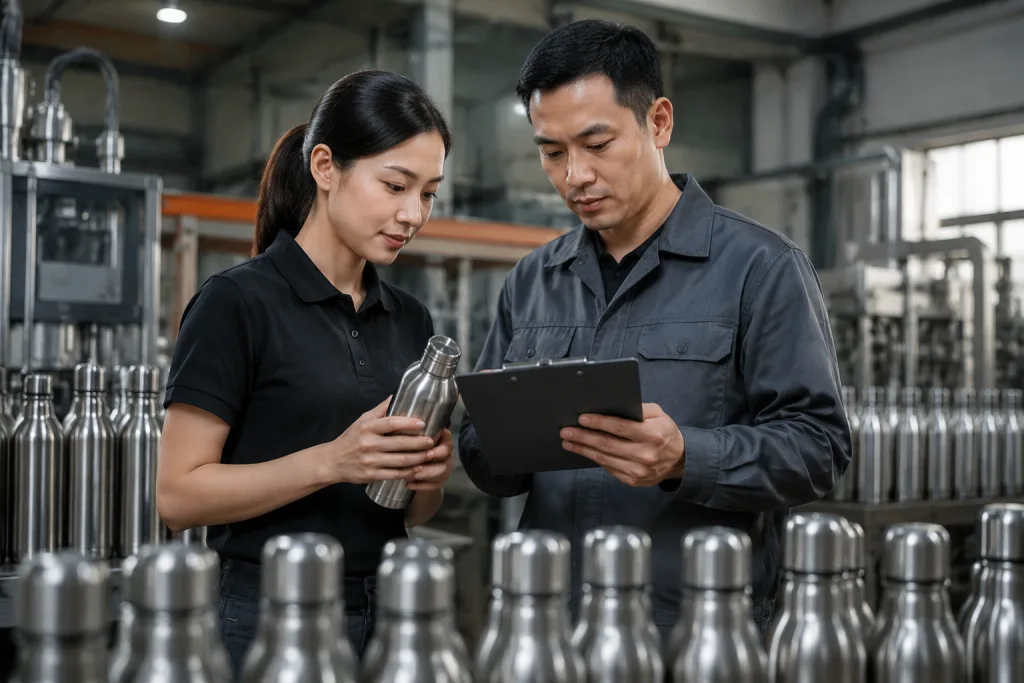
I’ll rewrite the section in-place, keeping the HTML exactly as-is and tightening the sales-engineer tone. I’ll make the questions sharper, add concrete factory-floor detail, and strip the AI-ish filler.Do not place an order with a thermos vendor until you get straight answers on quality control. A real manufacturer in China should talk about materials, packaging, and test standards without flipping through a script. If the answer is fuzzy, you pay for it later.
Ask these questions in every RFQ:
- Is vacuum performance checked with a 24-hour retention test, and what ambient temperature do you use?
- What AQL do you use for appearance and leakage inspection?
- Do you run 304 or 316 stainless, and can you send a mill certificate?
- For glass, what annealing process do you use, and what thermal shock limit do you test to?
- Can you support BSCI, REACH, or food-contact compliance for Europe and North America?
A competent supplier in Zhejiang should also show carton drop-test data, usually 76 cm or 80 cm for export packing. We run that test on the line with a corner drop, and the buyer flags it fast if the bottle neck or cap ring cracks. For a borosilicate glass vacuum bottle supplier, push harder on inner-bottle breakage rate; that is where the hidden cost sits. For a stainless thermos manufacturer, watch lid leakage and coating adhesion instead. Ask for sample reports, not promises. We have seen this go sideways when a PO typo changed the lid color code and QC pulled the wrong sample.
Choosing by channel and budget
I’ll rewrite this section in a more lived-in factory-sales voice, keep the HTML intact, and sharpen the numbers and channel logic without changing the structure.Your channel decides the spec faster than any pitch deck. I’ve seen buyers spend two weeks debating lid color, then the first carton crush test fails because the outer box was only 3 layers. If you sell through outdoor retailers, shelf appeal matters, but the bottle still has to survive handling. If you sell through promo brands, price and logo area usually beat thermal claims. Different math. Different brief.
For premium tea sets, office gifts, and e-commerce bundles, a borosilicate glass vacuum bottle supplier can ship a product that looks upmarket without blowing the budget. For hiking shops, gas stations, travel stores, and sports accounts, stainless is still the safe default. On a 1,000-piece custom thermos order, we usually see USD 3.20–6.80 FOB, depending on vacuum structure, lid parts, and print coverage. If the buyer wants gift-box packaging for cross-border shipping, add USD 0.20–0.45 and don’t argue with the carton spec—QC pulled a sample once and the edge crush value was short by 8 kg.
If your program is true thermos bulk and the goal is low risk, choose stainless. If the program is design-led and the end user cares about drink presentation, glass has a place. The wrong question is “which is better.” The right question is which SKU fits the channel, MOQ, and target margin. A good thermos manufacturer keeps those three lined up so the same China sourcing process ships fewer headaches and sells through faster.
Compare your thermos spec before you buy
Send your target channel, MOQ, and artwork file. We will tell you whether stainless or borosilicate fits your bulk thermos brief.
Frequently asked questions
Is borosilicate glass safe for hot drinks?
Yes, borosilicate glass is made for thermal stability and handles hot-fill conditions much better than ordinary soda-lime glass. For a quality bottle, I would expect the supplier to specify 2.0 mm to 2.5 mm glass wall thickness and test the vacuum seal at 100°C fill conditions. It is safe when manufactured correctly, but it is still glass, so the real concern is impact and shipping damage, not heat. For outdoor retail or distributor thermos channels, that physical risk matters as much as performance.
What MOQ should I expect for custom thermos orders?
For standard OEM work in Zhejiang, 1,000 pcs is a normal MOQ for a custom thermos or customized thermos program. Some thermos suppliers will quote 500 pcs, but the unit cost usually rises sharply, sometimes by 15% to 30%. If you need custom packaging, logo printing, or a new lid mold, the tooling or setup cost can add USD 150 to USD 1,500 depending on complexity. For thermos bulk pricing, ask for FOB terms and confirm whether the quote includes carton marks and export packing.
Which is better for promotional thermos campaigns?
For most promotional thermos campaigns, stainless is the safer choice because it tolerates handling, shipping, and event giveaway use much better. A laser-engraved or printed stainless body also gives you wider branding options than glass. Borosilicate glass works when the campaign is premium and controlled, like office gifting or tea-brand mailers. If you expect the item to be carried daily, thrown into bags, or distributed in large volume, stainless usually lowers breakage and claim rates by a meaningful margin.
Can a glass bottle still work for outdoor retail?
It can, but only in specific segments. If your outdoor retail customer is buying for car camping, picnic sets, or low-impact lifestyle use, glass can work. If the bottle is meant for hiking, cycling, or general field use, stainless is the better manufacturer thermos option. I would also require upgraded packaging, usually an inner box plus outer carton and stronger dividers. That adds cost and weight, so your landed price can move up by USD 0.25 to 0.60 per unit depending on carton design.
How do I check a supplier thermos factory in China?
Start with documents and sample behavior. Ask for BSCI, REACH, and food-contact paperwork, then verify whether the factory can explain its AQL levels, leak testing, and carton drop tests. A serious thermos supplier should also provide lead time, usually 20 to 30 days for standard items, and monthly capacity. In Zhejiang, a stronger factory can often support 300,000 to 600,000 units per month across several product lines. If they cannot discuss materials, vacuum testing, and packaging in numbers, keep looking.